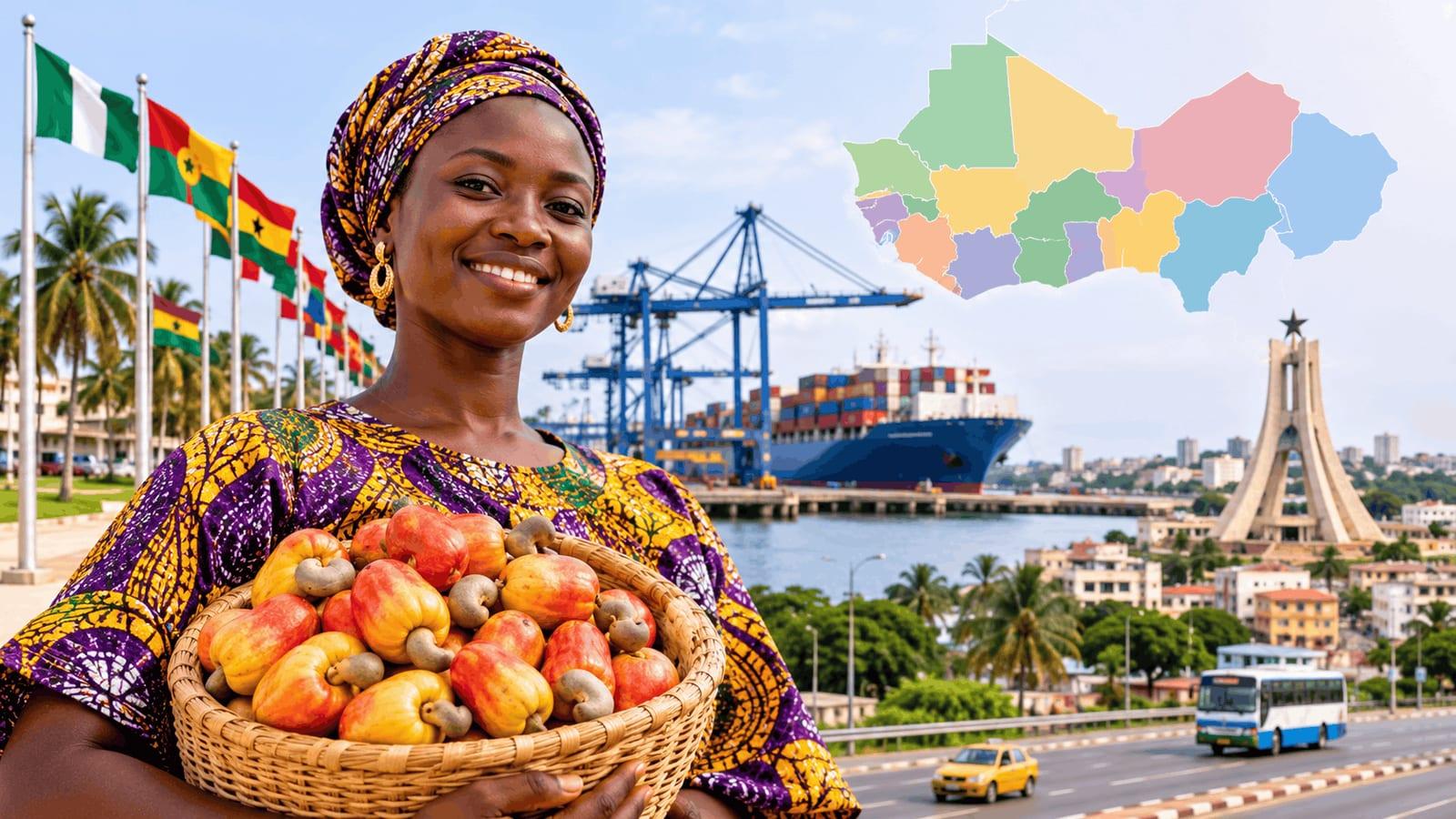
Compare 15 West African economies by GDP, growth, exports, currencies, trade agreements and ports. Understand the markets and trade routes connecting the region.
One region, 15 very different economies
In this section
Ghana and Côte d'Ivoire follow, with economies worth approximately US$129 billion and US$110 billion respectively.
West Africa has 15 countries in this comparison, but their economies differ considerably in size, production, trade and access to international markets.
Using the October 2026 projections from the International Monetary Fund (IMF), their combined nominal GDP comes to approximately US$866 billion. Nigeria accounts for about US$387 billion, or 45% of the total. Ghana and Côte d'Ivoire follow, with economies worth approximately US$129 billion and US$110 billion respectively. Together, these three countries account for about 72% of the combined GDP.
The remaining 12 economies range from Guinea, at approximately US$45.3 billion, to Guinea-Bissau, at US$2.9 billion.
This comparison covers the 15 countries that belonged to the Economic Community of West African States (ECOWAS) before Mali, Burkina Faso and Niger withdrew in January 2025. Mauritania, which is also geographically part of West Africa, is not included.
In this series, we have examined each of these countries individually, from Nigeria to The Gambia. This article brings the 15 profiles together to show how their economies compare, what they produce, where their goods move and the regional arrangements that affect businesses operating across their borders.
The figures come from the IMF's October 2026 World Economic Outlook (WEO). That edition does not include figures for Senegal, so Senegal's numbers come from the April 2026 edition. Guinea's economy also looks much larger than in earlier estimates because the country revised how it measures its GDP, a step that raised the size of its economy by about half.
The 15 economies at a glance
In this section
A note on the table: The export column covers merchandise, not every source of foreign exchange.
The countries are listed from largest to smallest by nominal GDP. GDP and real GDP growth figures are IMF projections for 2026 from the October 2026 WEO, except Senegal, which uses the April 2026 WEO.
A note on the table: The export column covers merchandise, not every source of foreign exchange. Tourism, remittances, transport and other services are discussed separately. Re-exports are also different from goods produced within a country.
WAEMU is the West African Economic and Monetary Union. AES refers to the Alliance of Sahel States, formed by Mali, Burkina Faso and Niger.
Size, income and growth
In this section
Niger's economic outlook has also been affected by its oil sector and the export route through Benin.
The size of an economy does not tell us how much money its residents earn or how much they can afford to spend. Nigeria is West Africa's largest economy, but its large population means that its GDP per person is much lower than that of some smaller countries.
Cabo Verde, for example, has a much smaller economy but a higher GDP per person. Tourism, services and money sent home by its diaspora are important to its economy.
GDP per person is calculated by dividing a country's total economic output by its population. It is useful when comparing economies of different sizes, but it is not the same as average wages or household income.
Growth also tells a different story from economic size. A smaller country can record a higher growth rate than a much larger neighbour.
Using the figures in the table, Guinea has the highest projected growth at 7.2%, followed by Benin and Niger at 7.0% each and Côte d'Ivoire at 6.0%. Ghana's forecast has also risen, to 5.7%, helped by gold export earnings.
Guinea's growth outlook is linked partly to its mining sector. The Simandou iron ore project began exporting in December 2025, adding a new source of mineral exports to an economy already known for bauxite and gold. Production is expected to increase as the mines, railway and port infrastructure develop.
Benin's growth outlook reflects activity across several sectors, including agriculture, construction, trade and transport. Niger's economic outlook has also been affected by its oil sector and the export route through Benin.
At the other end of the table, Senegal has the lowest projected growth among the 15 countries, at 2.2% in the IMF's April figures. Its economy has faced fiscal and debt pressures following the discovery of previously unreported public borrowing. At the same time, oil and gas production has added new activity to its economy.
Nigeria's projected growth of 4.2% is lower than that of several smaller economies. The country is still adjusting to the removal of fuel subsidies in 2023 and changes to its foreign exchange system, which contributed to a sharp fall in the naira's value.
Based on these figures, the 15 economies together have a weighted growth projection of approximately 5.0%. Excluding Nigeria, the remaining 14 economies have a combined weighted growth rate of about 5.6%.
The eight countries that use the West African CFA franc account for approximately US$285 billion, or 33% of the combined GDP in this comparison. Mali, Burkina Faso and Niger, the three AES countries, account for about US$91 billion, or 10.5%.
These totals are calculations from the individual country figures, not separate IMF regional forecasts.
What the region sells
In this section
Agriculture remains important across the region, both as a source of export earnings and as a source of employment.
West Africa's exports are concentrated in a few broad areas: minerals, oil and gas, agricultural products and manufactured goods. However, each country has its own mix of products and levels of production.
Gold and other minerals
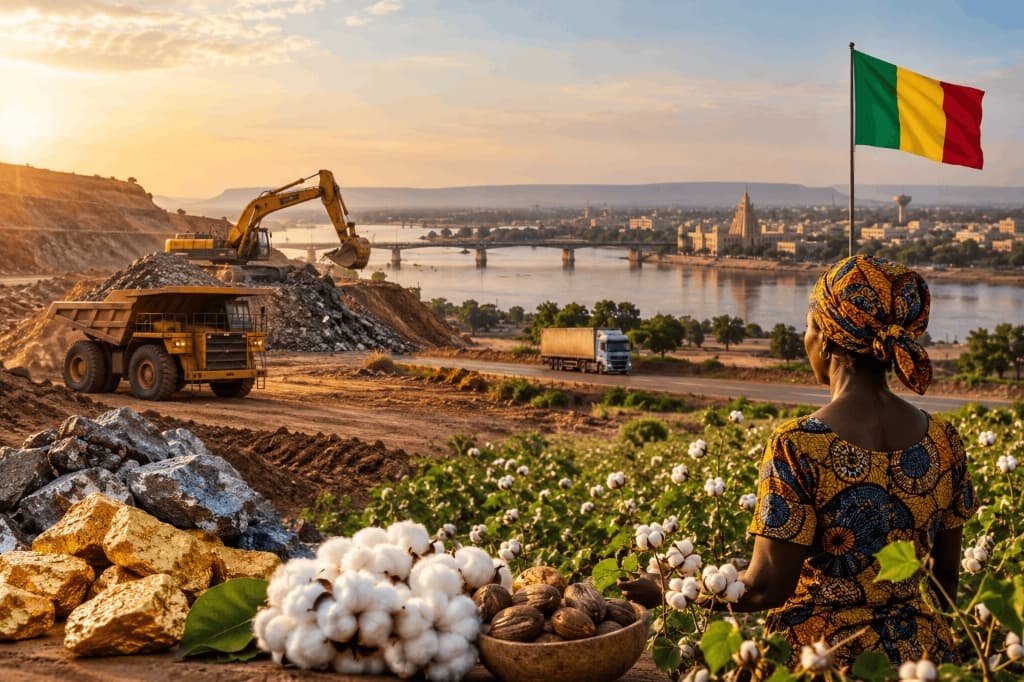
Gold is an important export for several West African countries, including Ghana, Côte d'Ivoire, Senegal, Mali, Burkina Faso, Guinea, Niger and Liberia.
Ghana is Africa's leading gold producer. Its production increased to approximately 5.94 million ounces in 2025, according to the Ghana News Agency. Small-scale mining accounted for a significant part of that increase.
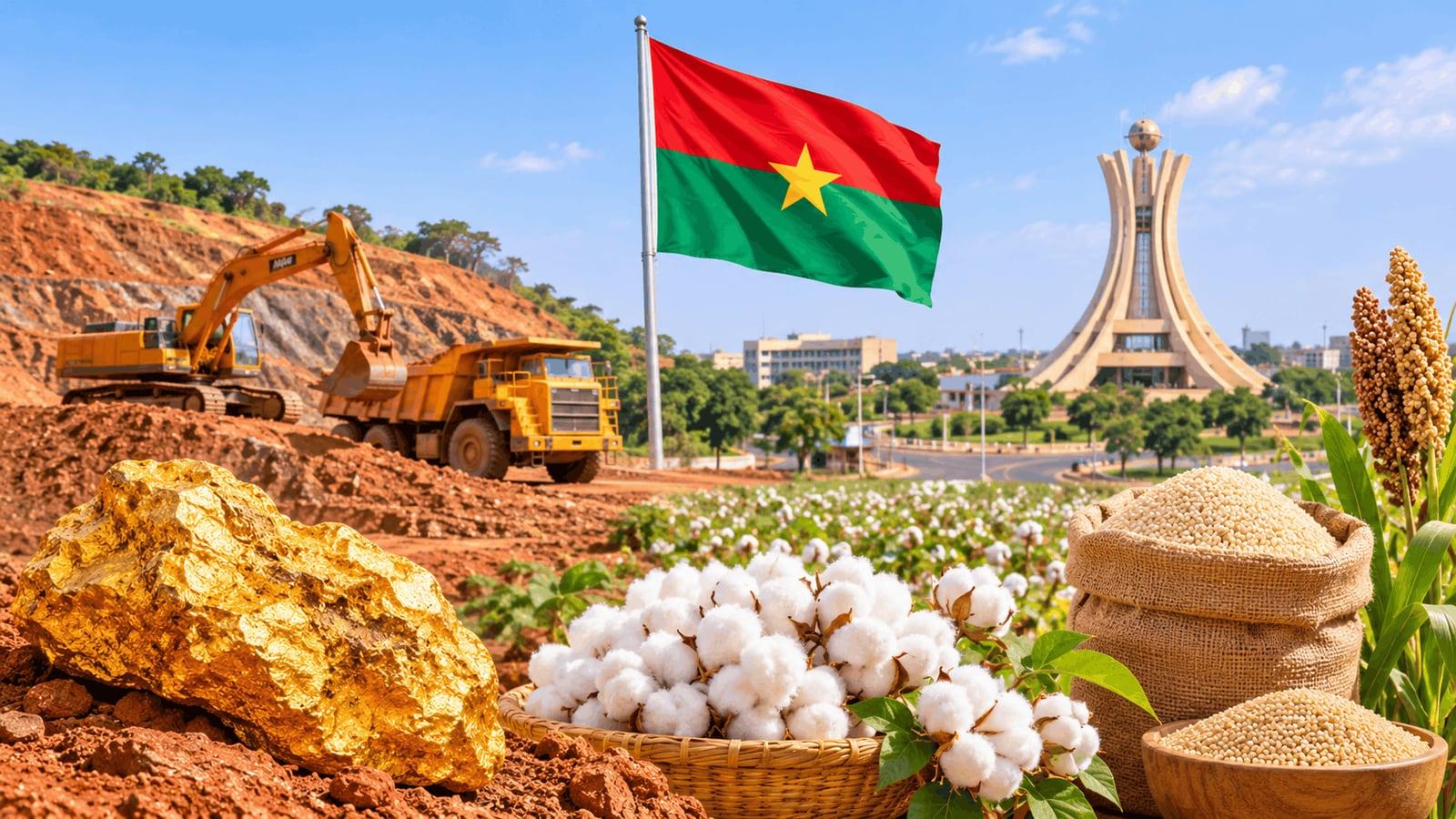
Mali and Burkina Faso also depend heavily on gold exports. Mining contributes to government revenue, foreign exchange earnings and employment in both countries. However, the sector has also been the subject of disputes between governments and foreign mining companies over taxes, licences and ownership.
Guinea has a particularly important position in the mineral trade. It is the world's leading bauxite producer and has large deposits of iron ore. The Simandou project is expected to expand its role in the global iron ore market.
Sierra Leone and Liberia also export iron ore, while Togo and Senegal produce and export phosphates.
Niger has a long history of uranium production, although its recent uranium exports have been affected by political and mining-sector disputes. Crude oil has also become an important part of its export economy.
Cocoa, cashews and other agricultural products
Agriculture remains important across the region, both as a source of export earnings and as a source of employment.
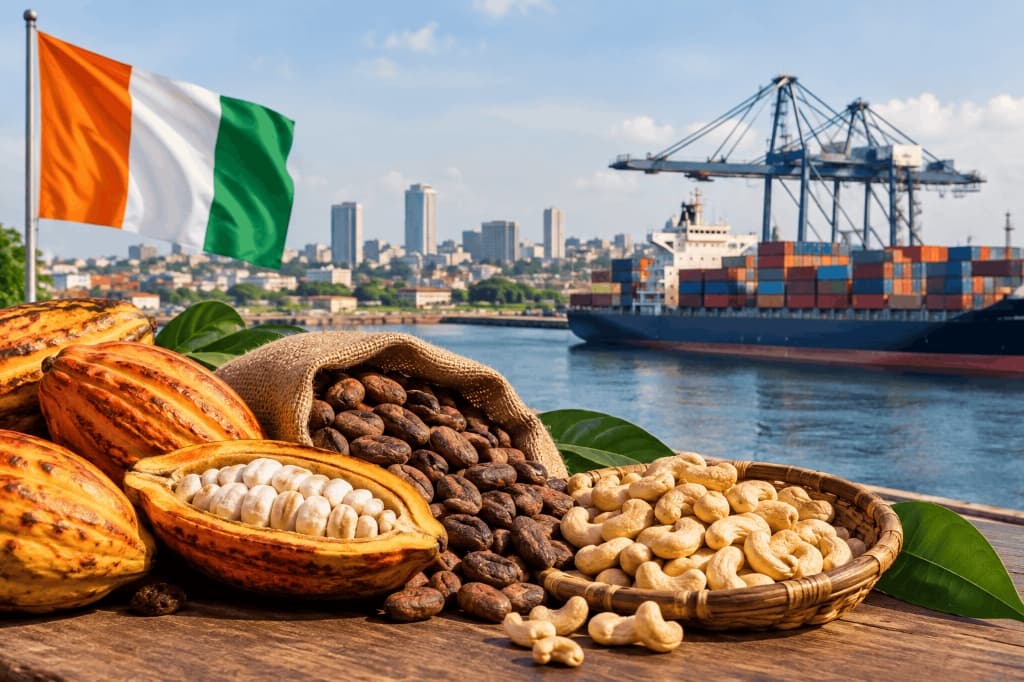
Côte d'Ivoire and Ghana are the two leading cocoa producers in West Africa. Based on the International Cocoa Organization's 2024/25 production estimates, Côte d'Ivoire produced approximately 1.681 million tonnes and Ghana approximately 600,000 tonnes. Together, they accounted for about 48% of global cocoa production.
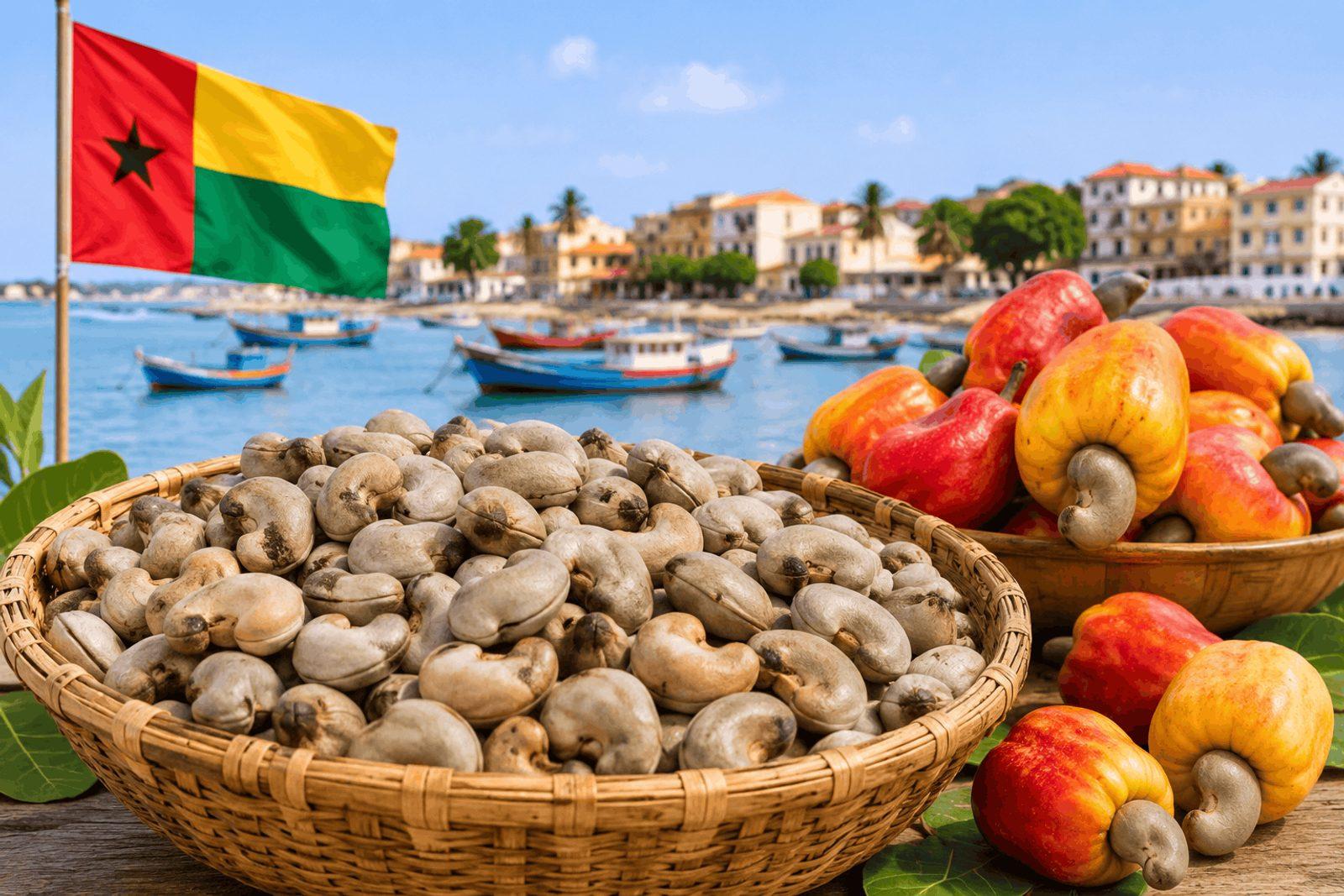
Côte d'Ivoire is also the world's largest producer and exporter of raw cashew nuts. Cashew production is important in several other West African countries, including Guinea-Bissau, Benin, Ghana and Burkina Faso.
Cotton is an important crop in Benin, Burkina Faso, Mali and Togo. Senegal and The Gambia produce groundnuts, while Nigeria and Burkina Faso are among the countries that produce sesame.
However, producing an agricultural commodity and processing it locally are two different things.
A significant share of West Africa's agricultural output is still exported with limited processing. This leaves opportunities for investment in processing facilities, storage, packaging and manufacturing.
There is already progress in some countries. Côte d'Ivoire, for example, has expanded its cashew-processing industry, while Ghana and Côte d'Ivoire have continued to develop their cocoa-processing sectors.
The level of processing differs by country and commodity, but adding more value before export remains an important opportunity for the region.
Oil and gas
Nigeria remains West Africa's largest oil and gas producer. Crude oil and natural gas are major parts of its export economy.
Ghana is also an established oil producer. Senegal has entered the oil-producing group following the start of production from the Sangomar offshore field in 2024. Its gas sector has also developed through the Greater Tortue Ahmeyim project shared with Mauritania.
Niger has expanded its oil production and developed a pipeline route through Benin to an export terminal at Sèmè-Kpodji. The Niger-Benin pipeline is approximately 1,980 kilometres long.
These developments have increased the importance of energy infrastructure in the region. Pipelines, terminals, storage facilities and export agreements now play a larger role in the trade activities of several West African countries.
Services, tourism and remittances
Not every country depends mainly on merchandise exports.
Tourism is a major source of foreign exchange for Cabo Verde and The Gambia. Cabo Verde's economy also depends on transport, services and money sent home by its diaspora.
Remittances are important across West Africa. Nigeria receives the largest amount in the region. World Bank data on personal transfers recorded approximately US$21.8 billion in receipts for Nigeria in 2025.
Remittances also contribute significantly to household spending and foreign exchange earnings in countries such as The Gambia, Liberia and Cabo Verde.
Togo and Benin have another important source of economic activity: trade and logistics. Their ports handle cargo moving into their domestic markets and, in some cases, goods intended for neighbouring countries.
These activities should be considered alongside merchandise exports when comparing how the countries earn foreign exchange.
Money, trade blocs and politics
In this section
AfCFTA aims to reduce trade barriers and create a larger market for goods and services produced across Africa.
Businesses moving goods or expanding operations across West Africa have to understand more than the size of each market. Currencies, trade agreements and political arrangements also affect how easily they can operate.
Eight countries, one currency
Eight of the 15 countries use the West African CFA franc:
Benin
Burkina Faso
Côte d'Ivoire
Guinea-Bissau
Mali
Niger
Senegal
Togo
The currency is issued by the Central Bank of West African States (BCEAO), headquartered in Dakar. It has a fixed exchange rate of 655.957 CFA francs to one euro, supported by a guarantee from the French Treasury.
For businesses, this arrangement removes exchange-rate differences between the eight countries and reduces currency risk against the euro.
It does not mean that inflation, business costs or purchasing power are the same in all eight countries. Their economies and domestic markets remain different.
The other seven countries use their own currencies:
Nigeria uses the naira.
Ghana uses the cedi.
Guinea uses the Guinean franc.
Sierra Leone uses the leone.
Liberia uses the Liberian dollar alongside the US dollar.
Cabo Verde uses the escudo, which is pegged to the euro.
The Gambia uses the dalasi.
These currency arrangements affect how businesses price products, receive payments, manage imports and transfer money across borders.
WAEMU and OHADA
The eight CFA franc countries in this comparison are members of WAEMU, which coordinates monetary and economic policy among its members.
They are also members of OHADA, the Organisation for the Harmonisation of Business Law in Africa.
OHADA has 17 member states, including Guinea, which uses its own national currency. Its purpose is to harmonise important areas of business law and provide a common legal framework for companies operating in member countries.
This can make some aspects of regional expansion easier, but it does not remove differences in national tax systems, licences, customs procedures or how regulations are applied.
ECOWAS and its withdrawal
For many years, all 15 countries in this comparison belonged to ECOWAS.
The organisation was established to promote economic cooperation, regional trade, free movement and political coordination among West African countries.
Mali, Burkina Faso and Niger announced their withdrawal in January 2024 following disagreements with ECOWAS after military takeovers in the three countries. Their withdrawal became effective on 29 January 2025.
The three countries had already formed the Alliance of Sahel States, known as AES, and subsequently established a confederation.
Their departure did not immediately end all arrangements for movement and trade. ECOWAS announced transitional measures requiring member states to continue recognising relevant national passports and identity cards, allow visa-free movement and continue treating goods and services from the three countries under its Trade Liberalisation Scheme until further notice.
In October 2026, ECOWAS and the AES held their first ministerial meeting on cooperation in Dakar. Both sides agreed to establish working groups to discuss a possible cooperation agreement.
This is an important development for businesses that depend on trade between the Sahel and coastal countries. The future arrangements will affect how people, goods and services move across these borders.
The three AES countries also remain members of WAEMU and continue to use the West African CFA franc.
The proposed eco
ECOWAS has long planned to introduce a common currency called the eco.
The idea is to create a shared currency for participating West African economies, but the project has faced repeated delays.
Countries would need to meet agreed economic conditions and coordinate monetary and fiscal policies before introducing a common currency.
As of November 2026, the eco has not been introduced. The existing national currencies and the West African CFA franc remain in use.
The African Continental Free Trade Area
All 15 countries in this comparison have signed the African Continental Free Trade Area (AfCFTA) agreement.
As of 4 September 2026, 14 had deposited their instruments of ratification. Benin was the only one of the 15 that had signed but not yet ratified the agreement.
AfCFTA aims to reduce trade barriers and create a larger market for goods and services produced across Africa.
For a West African business, this could make it easier to reach customers in other parts of the continent. However, companies still have to meet applicable rules of origin, product standards, customs requirements and national regulations.
ECOWAS and WAEMU arrangements remain important for trade within West Africa, while AfCFTA provides a wider continental framework.
Political conditions
Political conditions differ across the region.
Since 2020, successful military coups have taken place in Mali, Guinea, Burkina Faso and Niger. Guinea-Bissau also experienced a military takeover in 2025.
These developments have affected government institutions, regional relations and business conditions.
Other countries have continued to hold elections and transfer power through civilian political processes, although political tension and security concerns remain in parts of the region.
There are also important elections scheduled for the final months of 2026.
Cabo Verde's presidential election is scheduled for 15 November 2026, followed by The Gambia's presidential election on 5 December 2026.
Guinea-Bissau's presidential and legislative elections, which had been scheduled for 6 December, were postponed following an announcement by the transitional government on 8 October. No replacement date was announced at the time of the announcement.
Security concerns are also relevant to businesses operating in the region. Armed groups active in the Sahel have affected trade routes and communities, with insecurity extending into parts of northern Benin and Togo.
These conditions make it important for businesses to assess the political and security situation in each country before entering a market or planning cross-border operations.
Ports and corridors
In this section
Goods can travel from Abidjan to inland markets by road and through the Abidjan-Ouagadougou railway connection.
Three countries in this comparison are landlocked: Mali, Burkina Faso and Niger.
Without direct access to the sea, they depend on neighbouring coastal countries for many of their imports and exports. Their access to international markets therefore depends heavily on roads, railways, ports and border procedures in other countries.
This makes the coastal ports important to the economies of the entire region.
The main ports
Lomé, Togo
The Port of Lomé is an important deep-water port and container transshipment hub in West Africa.
It serves Togo's domestic market and provides access to inland countries, including Burkina Faso, Mali and Niger. Its location and port facilities have helped it develop a role in regional cargo movement.
Abidjan, Côte d'Ivoire
The Port of Abidjan is one of the region's major commercial ports. It serves Côte d'Ivoire and acts as an important gateway for cargo moving towards Burkina Faso and Mali.
Goods can travel from Abidjan to inland markets by road and through the Abidjan-Ouagadougou railway connection.
Tema, Ghana
Tema is Ghana's main commercial port and handles a large share of the country's international cargo.
It also provides an alternative route for goods moving towards Burkina Faso and other inland markets.
Dakar, Senegal
The Port of Dakar serves Senegal and provides a route for cargo moving between the coast and Mali.
Senegal is also developing the Port of Ndayane, approximately 50 kilometres south of Dakar.
The new deep-water port is not yet operational. DP World announced in July 2026 that major dredging works had been completed ahead of schedule. Construction is continuing, with completion planned for 2028.
Cotonou, Benin
The Port of Cotonou serves Benin and has historically handled cargo for Niger and other inland markets.
Trade between Benin and Niger has been affected by political tensions and border restrictions since Niger's 2023 coup. The port remains an important part of Benin's trade infrastructure.
Lekki, Nigeria
Nigeria's Lekki Deep Sea Port was officially inaugurated in January 2023.
Located near Lagos, it adds container and cargo-handling capacity to Nigeria's largest commercial market and provides another route for international trade.
Other ports in the region include Conakry in Guinea, Freetown in Sierra Leone, Monrovia in Liberia, Bissau in Guinea-Bissau, Banjul in The Gambia and Praia in Cabo Verde.
These ports serve their domestic markets, while Conakry also plays an important role in Guinea's mineral exports.
The main transport corridors
The Abidjan-Lagos corridor connects five coastal countries: Côte d'Ivoire, Ghana, Togo, Benin and Nigeria.
The existing coastal route links major commercial centres across these countries and carries passenger and freight traffic.
A separate project aims to develop a six-lane highway of approximately 1,028 kilometres along the corridor.
In October 2026, road ministers from the five countries endorsed the first sections to proceed towards the construction stage. The African Development Bank is leading efforts to mobilise financing, while land acquisition and other preparations remain part of the work ahead.
Other important routes connect the coastal ports to inland markets:
Lomé and Cotonou to Niamey and Ouagadougou.
Abidjan and Tema to Ouagadougou and Bamako.
Dakar to Bamako.
The Niger-Benin oil pipeline provides another important link. At approximately 1,980 kilometres, it connects oil production in Niger to an export terminal at Sèmè-Kpodji on the Beninese coast.
What slows goods down?
Moving goods across West Africa can involve long waiting times, several border checks, different customs procedures and additional transport costs.
Road checkpoints, administrative delays and informal payments can also increase the time and cost of moving goods.
One-stop border posts are intended to reduce some of these problems by bringing the border agencies of two neighbouring countries together to coordinate checks and procedures.
Examples include the Noepe border post between Ghana and Togo and the Seme-Krake border between Benin and Nigeria.
These facilities are part of wider efforts to make cross-border trade more efficient, although their presence does not mean that all border delays have been removed.
The closure of Nigeria's land borders from 2019 to 2020 and the restrictions affecting the Benin-Niger border after the 2023 coup also showed how political decisions can interrupt established trade routes.
For businesses, the condition of a transport corridor is therefore about more than the quality of its roads. Border procedures, political relations and access to ports also affect the cost and reliability of moving goods.
What this means for an African business
In this section
Businesses involved in freight, storage and distribution can serve several markets through these locations.
West Africa offers several different markets, and a business looking to enter the region needs to understand how they connect.
Nigeria is the largest economy in this comparison. Its domestic market is substantial, but businesses must consider its currency, import rules, regulation, distribution costs and competition.
The eight WAEMU countries offer some advantages for regional expansion. They share a currency, a central bank and a common monetary framework. They are also members of OHADA, which harmonises important areas of business law.
These arrangements can make some parts of doing business across the eight countries easier. However, national tax systems, licences, product standards and operating conditions still differ.
Ghana and Côte d'Ivoire are also important markets. Ghana has a large services and consumer market, while Côte d'Ivoire has a strong agricultural, mining and industrial base.
For businesses considering the smaller economies, the right entry point will depend on the product or service being offered, the available customers, local regulations and distribution arrangements.
The comparisons in this article point to several areas worth examining:
Agricultural processing: Cocoa, cashews, cotton, groundnuts and other agricultural products provide opportunities for processing, packaging, storage and manufacturing.
Mining and related services: Gold, bauxite, iron ore and other minerals support demand for equipment, engineering, transport, maintenance and supporting services.
Energy: Oil and gas developments, electricity supply and renewable energy create opportunities in infrastructure, distribution and related services.
Logistics and warehousing: Ports in Lomé, Abidjan, Tema, Cotonou and Dakar serve both domestic markets and inland countries. Businesses involved in freight, storage and distribution can serve several markets through these locations.
Food and consumer goods: West Africa has a large population and growing urban centres. Demand for food, household products and other everyday goods creates opportunities, although purchasing power and competition differ between countries.
Payments and financial services: Cross-border trade creates demand for payment systems, currency management, business financing and other financial services.
These are areas to investigate, not guarantees of commercial success. A company's decision about where to enter should also consider its customers, costs, competitors, regulations and access to distribution.
West Africa is connected by trade, roads, ports, currencies and regional agreements, but each country still has its own business conditions. Understanding those differences is an important part of deciding where to operate and how to expand.
Each of the 15 countries has its own profile in this series, with more information about its economy, trade partners, exports, industries and business conditions.
The next stage of Africa's Markets, Country by Country moves to East Africa, beginning with Ethiopia.
Sources
Economic data
International Monetary Fund, World Economic Outlook, October 2026, with the April 2026 edition for Senegal
International Cocoa Organization, May 2026 Quarterly Bulletin of Cocoa Statistics
International Cocoa Organization, Annual Report 2024/2025
Ghana News Agency, Ghana's Gold Output Surges in 2025
US Geological Survey, Mineral Commodity Summaries
World Bank, Personal Transfers Received: Nigeria
Currencies, regional agreements and politics
BCEAO, Central Bank of West African States
OHADA, General Overview and Member States
ECOWAS, Statement on the Withdrawal of Mali, Burkina Faso and Niger
ECOWAS, October 2026 Meeting with the AES Confederation
tralac, AfCFTA Ratification Status, September 2026
Reuters, Guinea-Bissau Election Postponement, 8 October 2026
National Democratic Institute, Elections Calendar
Ports and transport
DP World, Port of Ndayane Construction Update, July 2026
ECOWAS, Abidjan-Lagos Corridor Highway Update, November 2026
Benin Ministry of Water and Mines, Niger-Benin Export Pipeline
Nigerian State House, Lekki Deep Sea Port Inauguration
Country-level information
The 15 country profiles linked in the table above provide additional country-specific information and sources. Figures and claims should be read alongside their stated reference years and the original publications.