Discover how Liberia makes its money through gold, iron ore, rubber, shipping and trade, and what its economy means for businesses entering the market.
A country with more ships registered to its flag than most people would expect
In this section
Much of the country's export income comes from what it produces underground, particularly gold and iron ore.
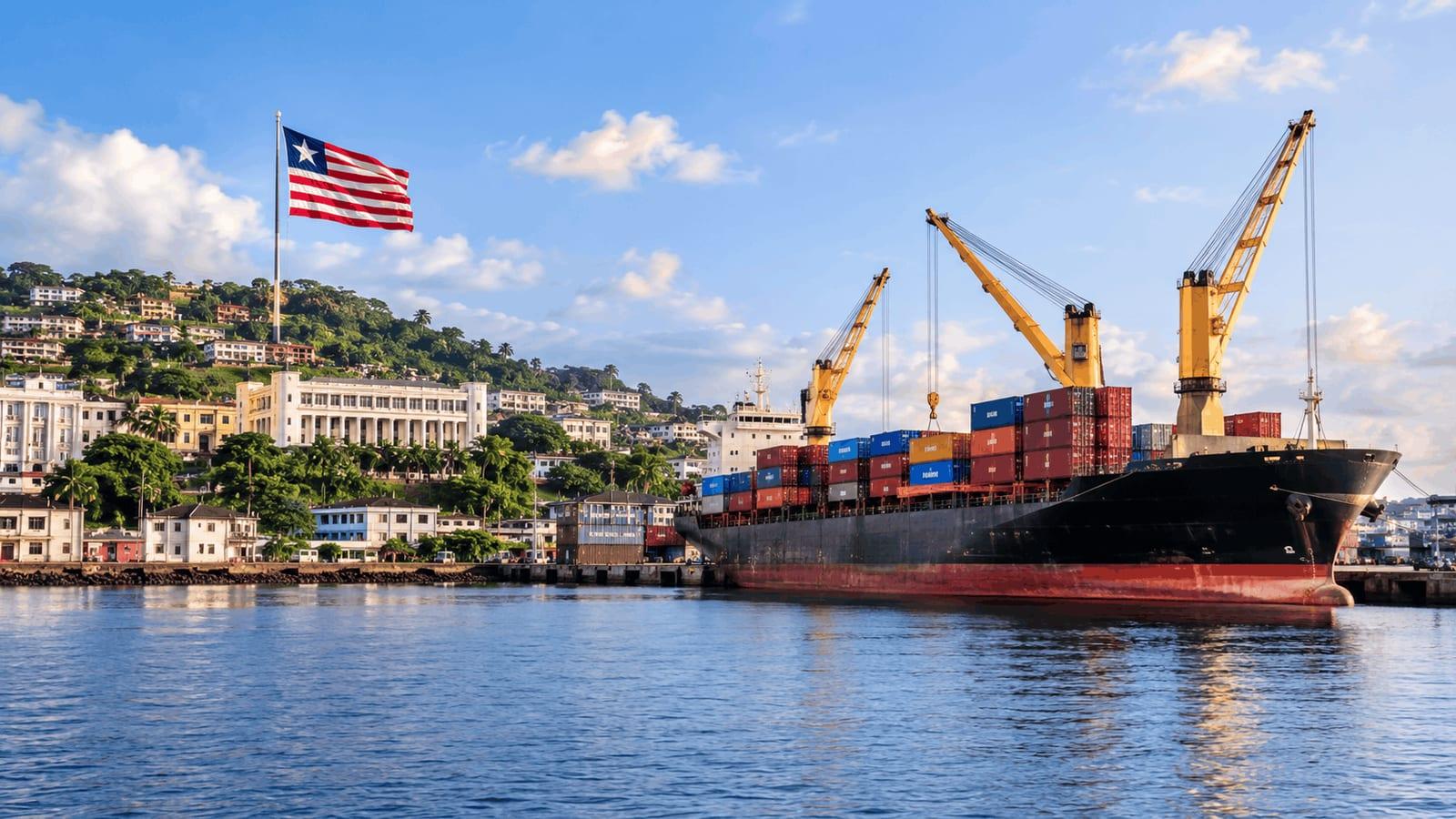
More than 6,200 vessels carrying over 300 million gross tons are registered under Liberia's flag. That represents about 18% of the world's merchant fleet by tonnage, according to the Liberian Registry.
Most of these ships belong to international shipping companies. They do not need to visit Liberia or use its ports to sail under its flag. Their owners register them in Liberia and pay the fees associated with registration and maritime services. The registry is administered by the Liberia International Ship and Corporate Registry (LISCR), a company based in Virginia, United States, on behalf of the Liberian government.
The arrangement gives Liberia a place in international shipping that goes well beyond the size of its own shipping industry. It also generates income through vessel registration and related services, although a reliable current figure for the amount received by the Liberian government is not publicly established.
But shipping registration is only one part of how Liberia makes money. Much of the country's export income comes from what it produces underground, particularly gold and iron ore.
In August 2026, Liberia exported goods worth approximately US$241 million. Gold accounted for US$162.76 million, while iron ore contributed US$60.31 million. Together, these two minerals represented more than 92% of the month's export earnings, according to the Central Bank of Liberia.
Mining has also attracted large foreign investments. ArcelorMittal is expanding its iron ore operations in Nimba County, with plans to increase annual shipments from about five million tonnes to 20 million tonnes. The expansion involves a new processing facility, railway improvements and upgrades to the Port of Buchanan.
This is the seventeenth country profile in our series, Africa's Markets, Country by Country, following Sierra Leone.
Liberia has an estimated population of about 5.85 million, according to the IMF's October 2026 projections. Its economy is projected to be worth approximately US$5.72 billion in 2026, with GDP per person of about US$976. These are estimates, not final national accounts figures.
The economy grew by 5.1% in 2025, supported mainly by mining and services. The IMF expects growth to reach 5.5% in 2026. However, the World Bank says the country still faces a major challenge: turning economic growth into more jobs and better living conditions for its people.
Liberia at a glance
Measure
Figure
Period and source
Nominal GDP
About US$5.72 billion
2026 projection, IMF October 2026
GDP per person
About US$976
2026 projection, IMF October 2026
Real GDP growth
5.1%
2025, World Bank
Expected GDP growth
5.5%
2026 projection, IMF September 2026
Inflation
4.6%
August 2026, Central Bank
Monetary Policy Rate
16.0%
August 2026, Central Bank
Exchange rate
L$181.18 per US dollar
August 2026 average
Public debt
55.1% of GDP
2025, World Bank
Fiscal deficit
2.1% of GDP
2025, World Bank
Exports
US$241.04 million
August 2026
Imports
US$294.75 million
August 2026
Gross international reserves
US$971.95 million
August 2026
Import cover
3.2 months
August 2026
Shipping registry
Over 6,200 vessels and 300 million gross tons
Liberian Registry
Currencies
Liberian dollar and US dollar
Both in circulation
Trade groups
ECOWAS, Mano River Union and AfCFTA
Liberia is a member and AfCFTA state party
How the economy is built
In this section
Services cover activities such as trade, transport, electricity supply and other business activities.
Liberia's economy depends on mining, agriculture, forestry and services. Mining provides most of the country's merchandise export earnings, particularly through gold and iron ore. Rubber remains an important agricultural industry, while palm oil, cocoa, coffee and timber also contribute to production and trade.
Services cover activities such as trade, transport, electricity supply and other business activities. They are also important to the country's economy, particularly in Monrovia, where much of its commercial activity takes place.
The World Bank reports that Liberia's economy grew by 5.1% in 2025. Mining expanded by 17%, while services grew by 4.6%. Agriculture grew by 2.6%.
These figures show how much mining has contributed to recent growth. However, the benefits have not spread evenly across the economy. Large mining projects require substantial investment in equipment and infrastructure, but they do not employ as many people as some other industries. The World Bank says Liberia needs more businesses and productive activities that can create jobs across different sectors.
The government's finances have also improved. The overall budget deficit narrowed from 2.5% of GDP in 2024 to 2.1% in 2025. Public debt fell from 56.4% to 55.1% of GDP over the same period.
However, Liberia still depends partly on external grants and concessional financing to support public spending. The IMF has identified declining donor support, changes in commodity prices and climate-related shocks as risks to the country's economic outlook.
Liberia also uses two currencies: the Liberian dollar and the US dollar. Both circulate in the economy. The US dollar is widely used in commercial transactions, while the Liberian dollar is also used for everyday purchases.
In August 2026, the average exchange rate was approximately L$181.18 to US$1. The Central Bank reported inflation of 4.6% and maintained its Monetary Policy Rate at 16%.
What Liberia sells, buys and who it trades with
In this section
The country produces gold through industrial mining operations as well as smaller-scale and artisanal mining.
Mining dominates Liberia's export earnings. The Central Bank's August 2026 figures show that gold and iron ore together accounted for most of the country's merchandise exports.
Here is what Liberia exported during the month.
Export
Value, August 2026
Gold
US$162.76 million
Iron ore
US$60.31 million
Rubber
US$10.81 million
Palm oil
US$3.26 million
Cocoa beans
US$1.96 million
Diamonds
US$0.74 million
Other commodities
US$1.21 million
Total exports
US$241.04 million
Source: Central Bank of Liberia, Monthly Economic Review, August 2026.
Gold
Gold is Liberia's largest export earner. The country produces gold through industrial mining operations as well as smaller-scale and artisanal mining.
One of the major industrial operations is Bea Mountain Mining Corporation, which operates in Kinjor, Grand Cape Mount County. Another company, MNG Gold Liberia, is associated with the Kokoya gold mine in Bong County. These are separate mining operations and should not be confused.
Gold exports have become particularly important to Liberia's foreign earnings. In August 2026, gold exports were valued at US$162.76 million.
Europe is Liberia's leading export destination. Switzerland alone accounted for US$155.89 million of total Liberian exports in August. The Central Bank's trade figures identify Switzerland as the country's largest individual export destination for that month.
Iron ore
Iron ore is Liberia's second-largest export and one of its most important industrial activities.
ArcelorMittal mines iron ore in Nimba County, particularly around Tokadeh. The company transports the mineral by rail to the Port of Buchanan, where it is prepared for export.
In January 2026, the Liberian government and ArcelorMittal signed a new agreement extending the company's mining agreement to 2050, with an option for another 25 years.
The company's expansion project is valued at US$1.8 billion. This is part of its total investment of US$3.5 billion in Liberia.
The expansion includes an iron ore concentration facility, improvements to the railway and upgrades to the port at Buchanan. ArcelorMittal expects the project to increase annual iron ore shipments from historical levels of about five million tonnes to 20 million tonnes in 2026.
The agreement also provides for a multi-user railway arrangement. Other companies that want to use the infrastructure will have to invest in the additional capacity they require. An independently operated railway is expected to be established from October 2030.
This is relevant beyond ArcelorMittal. Ivanhoe Atlantic has a ratified agreement with the Liberian government that provides for transporting iron ore from its Kon Kweni project in Guinea through Liberia to Buchanan using the Yekepa-Buchanan railway. The project still has development and regulatory steps to complete, so its export start date should not be treated as confirmed.
These arrangements could give Liberia a greater role in transporting minerals from neighbouring countries to international markets.
Rubber and palm oil
Rubber has been part of Liberia's economy for almost a century.
One of the best-known operations is Firestone Liberia, located in Harbel, Margibi County. The company began operating in Liberia in 1926. Its plantation covers approximately 118,990 acres and is described by Firestone as the world's largest contiguous natural rubber operation.
Rubber is also produced by smaller farmers. It remains an important source of agricultural activity and employment, although production can be affected by the condition of rubber trees, weather and international prices.
The Central Bank recorded rubber exports worth US$10.81 million in August 2026. Rubber production during the same month was estimated at 5,270 tonnes, 26.4% lower than in August 2025.
Palm oil is another agricultural export. However, its export value was much smaller than that of gold and iron ore, reaching US$3.26 million in August 2026.
Palm oil production involves both local and foreign-owned plantation operations. Land rights and the effects of plantation concessions on surrounding communities have been important issues in discussions about the sector.
What Liberia buys
Liberia imports a wide range of goods, including rice, fuel, machinery, transport equipment, medicines, construction materials and manufactured products.
Rice is particularly important because it is a major part of the country's food supply. Despite having land suitable for agriculture, Liberia continues to import rice.
Mining also creates demand for imported machinery, vehicles, fuel and equipment.
In August 2026, Liberia's imports were valued at US$294.75 million. Machinery and transport equipment accounted for US$124.09 million, making them the largest import category.
Other major import categories included:
Minerals, fuel and lubricants: US$50.47 million.
Food and live animals: US$41.97 million.
Manufactured goods classified by materials: US$34.54 million.
Asia was the largest regional source of imports, accounting for US$185.94 million. China supplied US$69.40 million, while India supplied US$28.37 million. Côte d'Ivoire was another important supplier, with imports worth US$34.78 million.
On the export side, Europe accounted for US$213.42 million of Liberia's August exports, with Switzerland taking the largest individual share.
Exports to other African countries were much smaller. The Central Bank recorded US$2.53 million in exports to African destinations during August, approximately 1% of total exports.
This shows that Liberia's current export trade is directed mainly towards markets outside Africa, even though the country belongs to regional trade groups.
Trade agreements and how goods move
In this section
The independent railway operator is expected to take over from October 2030 under the ArcelorMittal agreement.
Liberia belongs to several regional and international trade arrangements. These agreements influence where its goods can be sold, the conditions under which they enter other markets and how businesses operate across borders.
ECOWAS and the Mano River Union
Liberia is a member of the Economic Community of West African States (ECOWAS), which brings together countries in West Africa to promote regional economic cooperation and trade.
It also belongs to the Mano River Union, alongside Guinea, Sierra Leone and Côte d'Ivoire.
These memberships give Liberia a place in regional discussions on trade, movement of people and economic cooperation. For businesses operating in West Africa, they also provide a starting point for understanding how Liberia connects with neighbouring markets.
Liberia uses the Liberian dollar and US dollar rather than the CFA franc used by several West African countries.
African Continental Free Trade Area
Liberia ratified the African Continental Free Trade Area (AfCFTA) agreement in July 2023.
AfCFTA aims to reduce trade barriers between African countries and make it easier for businesses to sell goods and services across the continent.
For Liberia, the agreement offers an opportunity to develop trade with other African markets. However, membership alone does not remove every barrier. Businesses still need to understand customs procedures, product standards, transport costs and the rules that apply to particular goods.
Trade with the European Union
Liberia is classified as a least-developed country and benefits from the European Union's Everything But Arms arrangement.
This gives eligible Liberian exports duty-free and quota-free access to the EU market, except for arms and ammunition.
Europe is the main destination for Liberian exports. But much of that trade, gold in particular, goes to Switzerland, which is not a member of the European Union, so the Everything But Arms rules do not cover it.
Ports
Liberia's ports are important to its export and import activities.
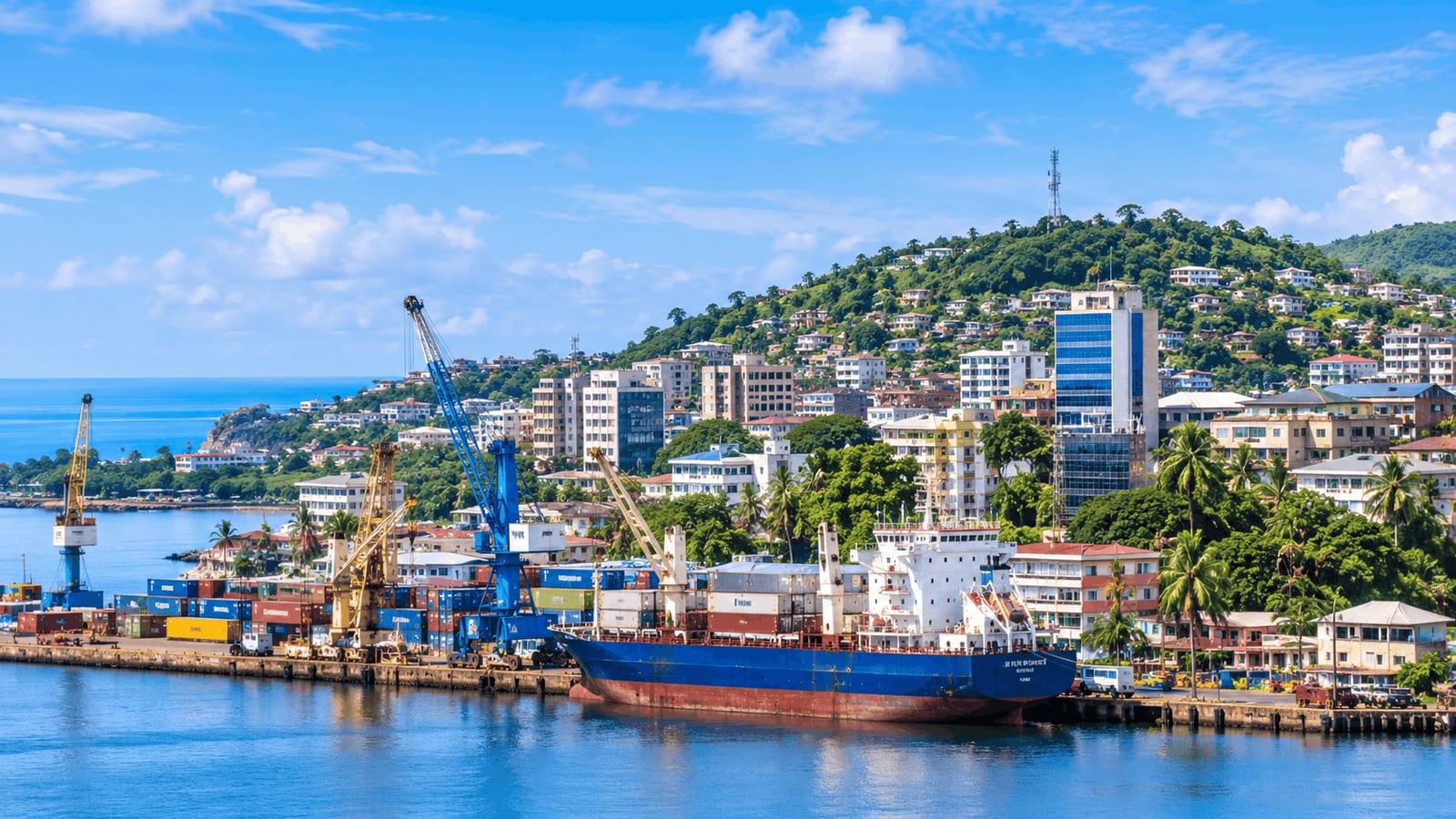
The Freeport of Monrovia handles much of the country's containerised trade. It operates under a government concession managed by APM Terminals Liberia.
The port handles imported goods such as rice, machinery, fuel and construction materials, as well as cargo leaving the country.
Buchanan is particularly important to the mining industry because it serves as the export point for ArcelorMittal's iron ore. Its infrastructure is also part of the wider plans to support additional mining operations.
Other ports, including Greenville and Harper, serve coastal communities and regional economic activities.
The Yekepa-Buchanan railway
The railway connecting the Nimba mining area to Buchanan is one of Liberia's most important industrial transport routes.
It carries iron ore from the mines to the coast for export. The new agreement with ArcelorMittal provides for the development of a multi-user system, allowing other companies to seek access to the railway.
Ivanhoe Atlantic's agreement to move iron ore from Guinea through Liberia is one example of how this infrastructure could serve businesses beyond the country's existing mining operations.
The arrangement will require further investment and coordination. The independent railway operator is expected to take over from October 2030 under the ArcelorMittal agreement.
Roads
Road transport remains important for farmers, traders and businesses moving goods within Liberia.
However, poor road conditions outside major urban centres can increase the cost of moving products. Roads that are difficult to use during the rainy season can also affect access to farms, markets and border communities.
For companies operating outside Monrovia, transport costs and road conditions need to be considered when planning distribution and supply chains.
Shipping registry
Liberia's shipping registry is another part of its international trade activity.
Unlike the country's ports, which handle physical cargo entering and leaving Liberia, the registry provides a legal framework for ships owned by international companies to sail under the Liberian flag.
The Liberian Registry handles vessel registration and related maritime services. Its published figures show more than 6,200 vessels and over 300 million gross tons.
This gives Liberia a significant position in global shipping administration, even though most of the registered vessels operate internationally rather than visiting Liberian ports.
Sectors with room to grow and doing business
In this section
The government has announced plans to expand solar generation capacity further and install battery storage.
Liberia has opportunities beyond mining. Some of these are connected to existing industries, while others involve areas where the country still imports goods or needs more infrastructure.
Mining services and logistics
The expansion of ArcelorMittal's operations and the development of other mining projects create demand for businesses that can supply equipment, maintain machinery, provide transport and support construction.
There may also be opportunities in catering, security, accommodation and other services required by mining companies and their contractors.
Companies considering this market need to understand the procurement requirements of the mining operators and the standards required to work on large industrial projects.
Agriculture
Liberia has agricultural potential, but it continues to import a significant amount of its food.
Rice production is one area that could benefit from greater investment. Other areas include cocoa, coffee, palm oil and rubber processing.
Processing agricultural products locally could give farmers and businesses more opportunities to sell products beyond their raw form.
For example, instead of exporting only raw agricultural materials, businesses could invest in processing, packaging and distribution.
However, these opportunities depend on access to land, reliable electricity, transport, finance and markets.
Forestry and timber
Liberia has extensive forest resources, which support local livelihoods and provide opportunities for timber-related activities.
The challenge is to manage these resources in a way that allows economic activity without damaging forests or creating conflicts with communities.
The country's Voluntary Partnership Agreement with the European Union under the FLEGT initiative is intended to improve forest governance and ensure that timber exported to Europe comes from legal sources.
Sustainable timber production and properly managed forest-related projects are areas businesses can examine, provided they meet the relevant environmental and legal requirements.
Electricity supply remains an important issue for businesses operating in Liberia.
The country has made progress in restoring and expanding its electricity infrastructure. In June 2026, the Mount Coffee Hydropower Plant returned to its full installed capacity of 88 megawatts after repairs to a damaged turbine.
A 20-megawatt solar photovoltaic facility was also commissioned at the Mount Coffee complex.
The government has announced plans to expand solar generation capacity further and install battery storage.
The CLSG regional electricity interconnection, which links Côte d'Ivoire, Liberia, Sierra Leone and Guinea, is another important part of regional power infrastructure.
For businesses, access to reliable and affordable electricity remains an important consideration, particularly in manufacturing, processing and other activities that depend on continuous power.
Doing business in Liberia
Foreign businesses can invest in many sectors of Liberia's economy, but there are restrictions on certain activities.
The Liberia Investment Act of 2010 allows foreign investors to own businesses in many sectors, subject to the conditions set out in the law.
However, some activities are reserved exclusively for Liberians. These include peddling, travel agencies, taxi operations, gas stations, block making, the supply of sand and the retail sale of rice and cement.
In May 2026, Liberia's Ministry of Commerce and Industry issued a notice confirming the enforcement of these restrictions.
This is important for foreign companies planning to enter the market. Before registering a business, investors should check whether the activity they intend to undertake is open to foreign ownership and whether additional investment conditions apply.
Companies register through the Liberia Business Registry, while the National Investment Commission provides information and support for investors.
English is the official language, and Liberia's legal system follows common-law traditions.
The general corporate income tax rate is 25%, although specialised sectors may have different rates.
The Goods and Services Tax also changed in 2026. From May 1, the updated rate on services became 13%, while telecommunications services are subject to 15%. Businesses should check the tax treatment of their particular products and services with the Liberia Revenue Authority.
The Investment Act also provides for the transfer of lawful profits, dividends and investment proceeds, subject to applicable tax and legal requirements.
For companies entering Liberia, some of the main operating challenges include road conditions, electricity costs, access to finance, land rights and administrative procedures. These should be assessed before committing to a project.
Risks and trade-offs
In this section
The World Bank has identified job creation and private-sector development as important priorities for Liberia.
Liberia has valuable natural resources and opportunities in several industries, but there are economic and operational issues businesses need to understand.
Dependence on gold and iron ore
Gold and iron ore account for most of Liberia's merchandise export earnings.
This concentration exposes the country to changes in international commodity prices. A fall in gold or iron ore prices, a production problem at a major mine or delays to a large mining project could affect export earnings and foreign exchange availability.
Developing agriculture, manufacturing and other export industries would help broaden the country's sources of income.
Growth and employment
Liberia's economy grew by 5.1% in 2025, but this has not created enough jobs across the wider economy.
Mining contributed strongly to growth, yet large industrial projects do not employ as many people as labour-intensive sectors can.
The World Bank has identified job creation and private-sector development as important priorities for Liberia.
This means businesses should look beyond the headline growth figures when assessing the domestic market. Household purchasing power, employment and the ability of local suppliers to meet demand are also important.
Dependence on external support
Foreign grants and concessional financing have supported Liberia's public finances and development programmes.
The IMF has identified declining donor support as a risk. Reduced external funding can place more pressure on government spending and make it harder to finance public infrastructure and services.
Liberia also needs to strengthen its foreign reserves. Although reserves improved to US$971.95 million in August 2026, the Central Bank reported import cover of 3.2 months.
Concentration in mining infrastructure
ArcelorMittal has invested heavily in Liberia's mining, railway and port infrastructure.
Its operations are important to the country's iron ore exports. However, the concentration of major infrastructure in the hands of a small number of operators creates questions about access for other businesses.
The planned multi-user railway system is intended to allow additional companies to use the route, but its success will depend on investment, regulation and implementation.
Infrastructure outside Monrovia
Roads, electricity and other basic services remain important challenges for businesses operating outside the capital.
A company may find an opportunity in agriculture, mining support or manufacturing but still face high costs when transporting goods or securing reliable power.
These costs need to be included in business plans rather than treated as minor operating expenses.
What this means for an African business
In this section
For businesses elsewhere in Africa, opportunities include supplying food, machinery, fuel and consumer goods.
Liberia is a relatively small domestic market, but its natural resources, port infrastructure and position in West Africa give it several areas worth examining.
For businesses elsewhere in Africa, opportunities include supplying food, machinery, fuel and consumer goods. There are also openings in mining services, construction, transport, agriculture, processing and energy.
Its membership of ECOWAS, the Mano River Union and AfCFTA gives it connections to neighbouring and wider African markets. Its trade arrangements with the European Union also provide access for eligible Liberian products.
However, businesses need to understand the country's restrictions on foreign ownership, the cost of operating outside Monrovia and the requirements involved in importing and distributing goods.
The dependence on gold and iron ore also means that Liberia's export performance is exposed to changes in commodity markets. While mining projects can create opportunities for suppliers and service providers, the benefits do not automatically extend to every part of the economy.
For an African company considering Liberia, it is worth looking at the country alongside Sierra Leone, Guinea and Côte d'Ivoire. These markets have different industries, regulations and infrastructure, but their geographical proximity and regional trade arrangements make them relevant when planning operations in the Mano River region.
Liberia earns much of its export income from what comes out of its mines, but its economy also depends on agriculture, services, trade and international shipping. Understanding how these activities work, and where the country still relies on imports, gives businesses a clearer basis for assessing the market.
The next profile in our series is Cabo Verde, an island nation off the coast of Senegal.
Sources
Central Bank of Liberia, Monthly Economic Review, August 2026
World Bank, Liberia Economic Update, November 2026
IMF, Liberia Fourth Review and First Review under the Resilience and Sustainability Facility, September 2026
IMF World Economic Outlook, October 2026
The Liberian Registry
ArcelorMittal, Government of Liberia and ArcelorMittal Sign New Long-Term Mineral Development Agreement, January 2026
Liberia Revenue Authority, Adjustment to Goods and Services Tax Rates, April 2026
Liberia Ministry of Commerce and Industry, Reserved Businesses Exclusively for Liberians, May 2026
UNCTAD, Liberia Investment Act of 2010
PwC, Liberia Corporate Tax Summary, September 2026