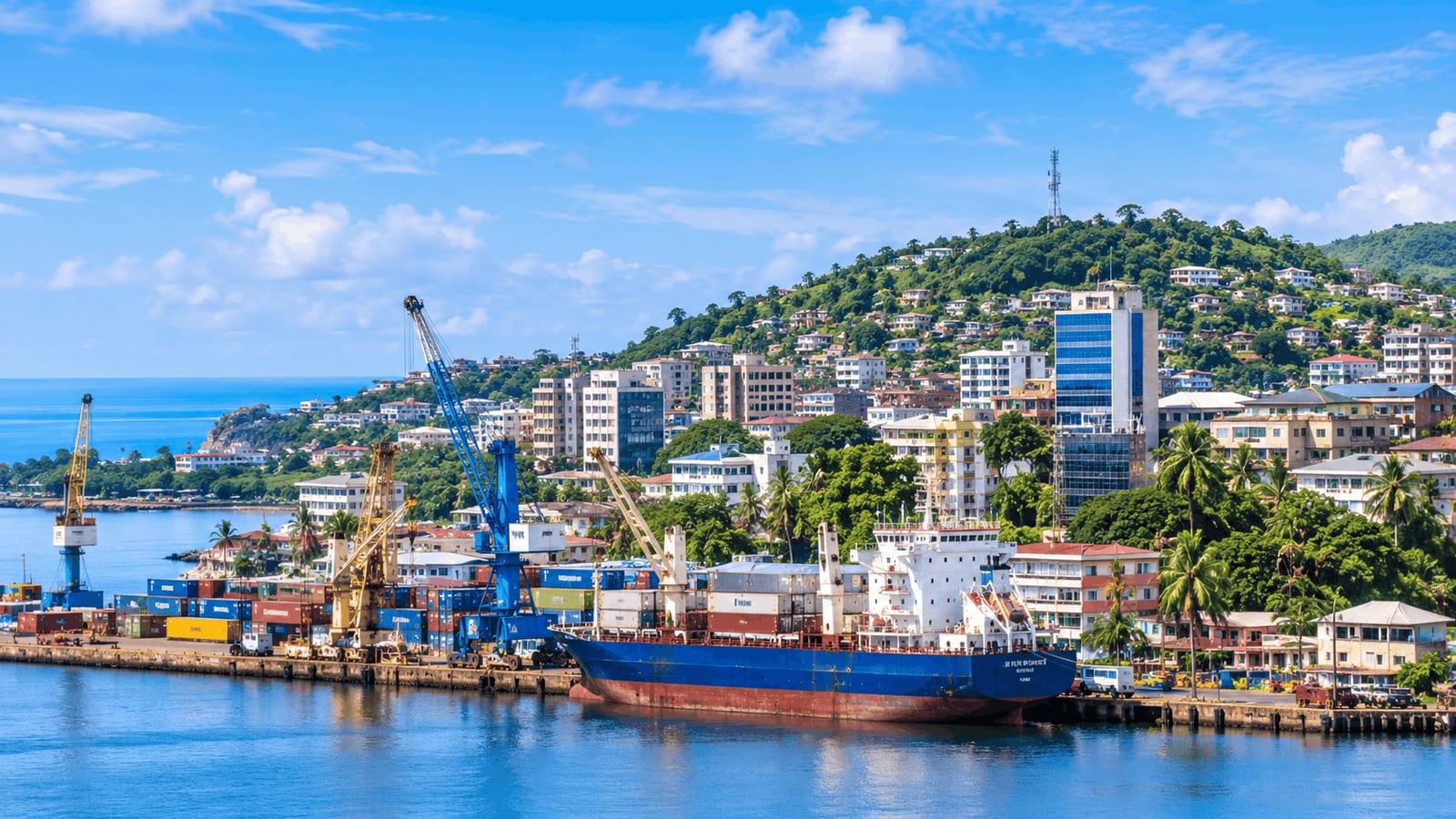
How Cabo Verde earns, spends and trades through tourism, fish exports, remittances and its links to Europe, including the challenges of doing business across its islands.
More than 1.2 million hotel guests in a country of about 527,000 people
In this section
Cabo Verde's hotels recorded more than twice the number of guests as there were residents in the country.
Cabo Verde welcomed 1,248,052 guests at its hotel establishments in 2025, according to the country's National Statistics Institute (INE). That was a 6% increase from 2024 and the highest figure recorded at the time. These guests accounted for more than 6.1 million overnight stays, while hotel bed occupancy increased from 60% to 72%.
The numbers are striking when compared with the country's population of about 527,000. Cabo Verde's hotels recorded more than twice the number of guests as there were residents in the country. This does not mean that every guest was a different international visitor, but it gives an idea of how important tourism has become to the economy.
Most of these guests came from Europe. The United Kingdom was the largest source market, accounting for 29.3% of non-resident hotel guests. Portugal, Germany, France, Belgium and the Netherlands were also important markets. The islands of Sal and Boa Vista received most of the guests, accounting for 57.7% and 24.4% of hotel arrivals respectively.
Tourism is a major reason Cabo Verde has become one of the more prosperous countries in West Africa. It contributes about 25% of the country's gross domestic product (GDP) directly. When its wider effects on other businesses and services are included, the contribution can reach 44%, according to the World Bank.
The economy grew by 6.3% in 2025, supported largely by tourism, stronger household spending and investment. The World Bank expects growth to moderate to 4.8% in 2026.
But tourism is only part of the story.
Cabo Verde also earns money from services, fish exports and remittances sent by people living abroad. Its currency is linked to the euro, its main trading connections are with Europe, and its membership of ECOWAS and participation in the African Continental Free Trade Area (AfCFTA) give it links to the wider African market.
There are also challenges. The country imports much of what it consumes, carries a high public debt burden and has difficulty moving people and goods between its islands. These issues affect the cost of living, the growth of local businesses and the opportunities available to investors.
This is the eighteenth country profile in our series, Africa's Markets, Country by Country. After Liberia, we turn to Cabo Verde, an island country off the coast of West Africa, to understand where its money comes from, what it trades and what doing business there involves.
Cabo Verde at a glance
Measure
Figure
Population
Approximately 527,326
Number of islands
10, with 9 inhabited
Real GDP growth
6.3% in 2025
Expected GDP growth
4.8% in 2026, World Bank projection
Tourism contribution to GDP
About 25% directly; up to 44% including indirect effects
Hotel guests
1,248,052 in 2025
Overnight stays
6,120,204 in 2025
Average hotel stay
4.8 nights in 2025
Hotel bed occupancy
72% in 2025
Unemployment
6.2% in 2025
Public debt
100.7% of GDP in 2025
Budget balance
Surplus of 1% of GDP in 2025
Foreign reserves
€975 million in 2025
Reserve cover
7.1 months of prospective imports
Remittances
11.7% of GDP in 2025
Currency
Cabo Verdean escudo (CVE)
Exchange rate
€1 = CVE 110.265
Regional trade groups
ECOWAS and AfCFTA
Sources: World Bank 2026 Economic Update, World Bank country data, INE and World Bank remittance data. Figures refer to the periods stated and should not be treated as forecasts unless identified as such.
How Cabo Verde's economy is built
In this section
A hotel room, restaurant meal, boat trip or guided excursion can generate income from international customers.
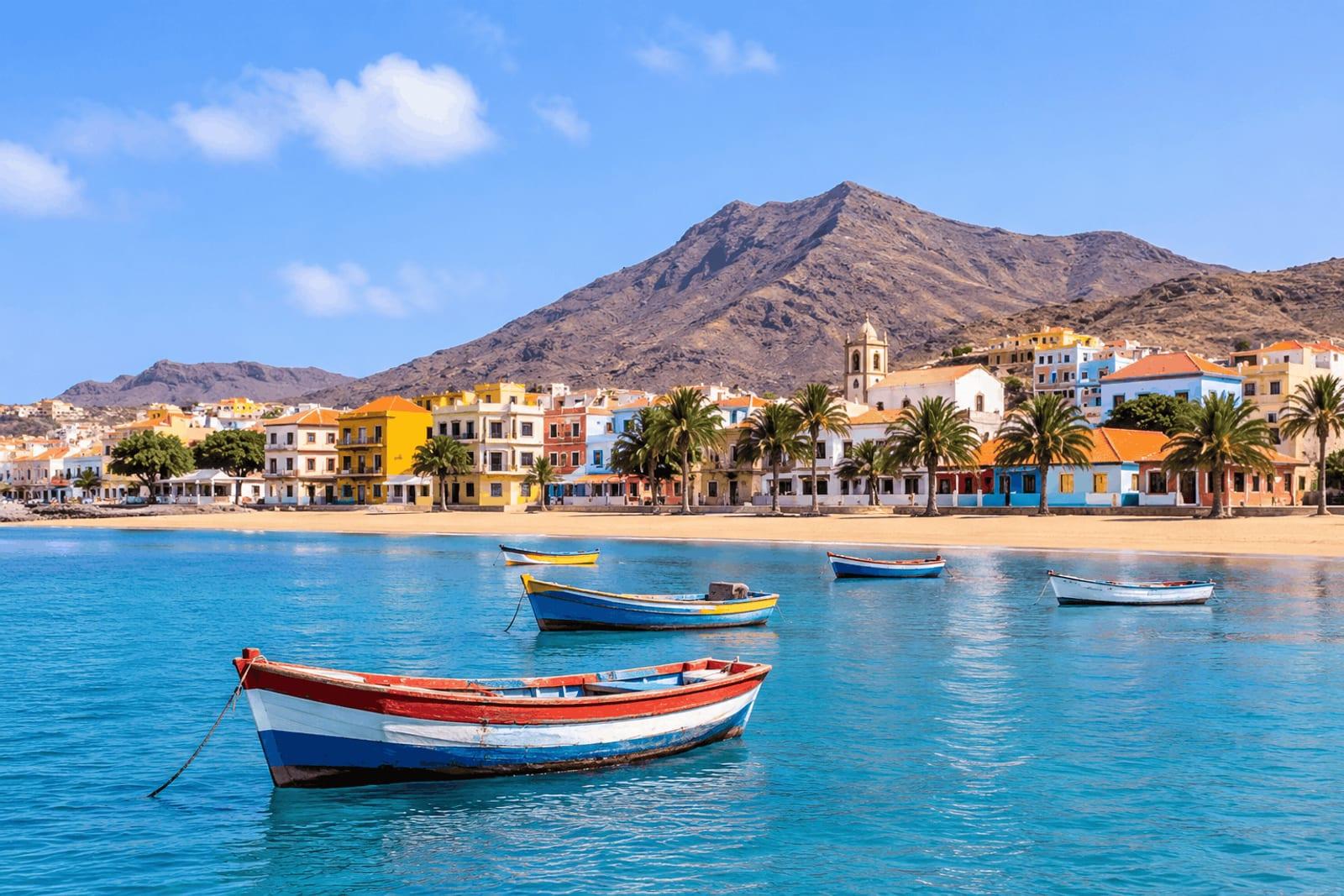
Cabo Verde is an archipelago of ten volcanic islands in the Atlantic Ocean, approximately 500 kilometres off the west coast of Africa. Nine of its islands are inhabited. Its location gives it connections to Europe, the Americas and mainland West Africa, but its geography also creates challenges for trade and transport.
The country has limited natural resources, little rainfall and a small agricultural sector. It does not have the large mineral deposits or extensive agricultural land that support some other African economies. As a result, services account for most of its economic activity.
Tourism is the largest part of this sector. Hotels, restaurants, transport companies, tour operators and other businesses earn money from visitors. The industry also creates demand for construction, food supplies, retail, entertainment and other services.
Praia, the capital on Santiago Island, is an important centre for government, banking, commerce and administration. Mindelo, on São Vicente, is known for its port, fishing and cultural activities.
Fishing, fish processing, small-scale agriculture and manufacturing also contribute to the economy, although they are much smaller than tourism and other services.
One important feature of Cabo Verde's economy is its connection to people living abroad. The country has a long history of emigration, with large Cabo Verdean communities in countries such as Portugal, the United States, France and the Netherlands.
Money sent home by these communities supports families, pays for household expenses and helps finance construction and small businesses. According to World Bank data, personal remittances received by Cabo Verde were equivalent to 11.7% of GDP in 2025.
This makes remittances an important source of money entering the country, alongside tourism earnings and other foreign investment.
Why the economy depends so much on services
Cabo Verde's geography helps explain why services play such a large role.
The islands have limited land for agriculture, and water availability is a major concern. Farming is possible, but it is affected by irregular rainfall, drought and the cost of irrigation.
Manufacturing also faces challenges. Businesses need to bring in raw materials, machinery, fuel and other supplies from abroad. Moving these products between islands adds further costs.
Tourism, on the other hand, allows Cabo Verde to earn money from visitors without depending on large-scale production of physical goods. A hotel room, restaurant meal, boat trip or guided excursion can generate income from international customers.
However, the benefits are not spread equally across the country. Sal and Boa Vista receive most of the hotel guests, while other islands have a smaller share of the tourism market.
The World Bank identifies this concentration, together with weak transport connections between the islands, as an obstacle to creating more jobs and expanding economic activity across the archipelago.
What Cabo Verde sells, buys and who it trades with
In this section
Businesses also depend on imported fuel, machinery, construction materials, vehicles, medicines and equipment.
Cabo Verde earns money from tourism, services, fish exports and remittances. Its merchandise exports are relatively small, so the country relies heavily on service earnings to bring foreign currency into the economy.
There are three important parts of this picture: tourism, fisheries and money sent home by the diaspora.
1. Tourism is its biggest source of export earnings
When people from another country visit Cabo Verde and pay for hotels, meals, transport, entertainment and other services, that spending brings money into the country.
In international trade statistics, this is recorded as an export of services.
Tourism is Cabo Verde's largest source of export earnings. The sector contributes directly to about a quarter of GDP and supports other businesses that supply hotels and serve visitors.
The 2025 tourism figures show how important the industry has become. Hotels recorded more than 1.24 million guests and over 6.1 million overnight stays. The average stay increased from 4.6 nights in 2024 to 4.8 nights in 2025.
Sal and Boa Vista are the country's leading tourism destinations. Both have beach resorts and receive a large share of visitors from Europe.
The United Kingdom is the largest source market. Portugal, Germany and France are also important, reflecting Cabo Verde's close tourism connections with European countries.
The busiest period for tourism includes the European winter months, when visitors travel to warmer destinations.
Hotels and resorts are only one part of the industry. Airlines, airport services, restaurants, car rental companies, tour operators, shops and local transport businesses also benefit from visitor spending.
For local suppliers, tourism creates demand for food, furniture, construction materials, cleaning services, laundry, maintenance and other goods and services.
However, the industry has a supply problem. A significant amount of what hotels and restaurants use has to be imported. This means that some of the money visitors spend eventually leaves the country to pay for imported products.
Increasing the amount of food, materials and services that local businesses can supply to hotels would allow more tourism income to circulate within Cabo Verde.
2. Fish processing contributes to goods exports
Fishing is another part of Cabo Verde's economy.
The country is surrounded by the Atlantic Ocean, and its marine resources support fishing, fish processing and related businesses. Tuna is particularly important to its processed fish exports.
Unlike tourism, which is recorded as a service export, fish sold to another country is recorded as a merchandise export.
According to World Bank WITS data based on UN Comtrade, Cabo Verde exported approximately US$30 million worth of prepared or preserved tuna, skipjack and bonito in 2025. Spain was the largest destination, receiving about US$19.5 million. Italy followed with approximately US$10 million.
These figures show that fish processing has an established export market, particularly in Europe.
However, the country's total goods exports remain small compared with its service exports. Fish processing is important, but it does not yet provide the same level of foreign earnings as tourism.
There is room for further activity in fisheries and related industries, including better processing facilities, storage, packaging and transport. Any expansion would need to consider the condition of fish stocks, sustainable fishing practices and the costs of reaching export markets.
3. Remittances from the diaspora support the economy
Cabo Verde has a large population living outside the country. Emigration has been part of its history for generations, and communities abroad maintain strong family and economic connections with the islands.
Many people send money to relatives at home. These transfers are known as remittances.
The money is used for everyday needs such as food, housing, education and healthcare. It can also support home construction, property improvements and small businesses.
In 2025, personal remittances received by Cabo Verde were equivalent to 11.7% of GDP, according to World Bank data.
This is a significant contribution for a country with a small domestic economy.
Remittances also bring foreign currency into Cabo Verde. This is useful because the country depends on imports for many of the goods its households and businesses need.
However, remittances are not the same as export earnings. They are private transfers from people abroad, rather than payments for goods or services sold by businesses.
They still play an important role in supporting household spending and the wider economy.
What Cabo Verde buys from other countries
Cabo Verde imports a large share of the goods it consumes.
Its climate and limited agricultural production mean that local farmers cannot meet all the country's food needs. Businesses also depend on imported fuel, machinery, construction materials, vehicles, medicines and equipment.
Fuel is particularly important because it is needed for electricity generation, transport and other economic activities.
The dependence on imports makes Cabo Verde vulnerable to changes in international prices. When the cost of fuel, food or shipping rises, households and businesses can face higher expenses.
For businesses, imported materials and equipment can also increase the cost of setting up and operating.
The country has strong commercial connections with Europe, but it also imports goods from other parts of the world. Its trade with mainland African countries remains limited compared with its European connections.
This is partly because of geography. Cabo Verde is an island country, and shipping goods between its islands and mainland Africa requires reliable routes, affordable freight and regular services.
For an African business considering the market, these transport costs need to be included when calculating the final price of a product.
Trade agreements and how goods move
In this section
For Cabo Verde, AfCFTA provides an opportunity to strengthen its commercial connections with African markets.
Cabo Verde belongs to regional and international trade arrangements that give it access to different markets. However, membership in a trade agreement does not automatically make trade easy. Businesses still need to consider shipping costs, customs procedures, product standards and the rules that apply to their goods.
Cabo Verde joined the Economic Community of West African States (ECOWAS) in 1977. Its membership connects it to a regional group of 15 West African countries, although the country's island location has made trade with mainland members more difficult.
Cabo Verde has also ratified the African Continental Free Trade Area (AfCFTA). The agreement aims to reduce trade barriers between participating African countries and make it easier for businesses to sell goods and services across the continent.
For Cabo Verde, AfCFTA provides an opportunity to strengthen its commercial connections with African markets. However, the benefits will depend partly on improvements in transport, shipping and trade procedures.
Cabo Verde is not a member of the West African Economic and Monetary Union (WAEMU). It therefore does not use the West African CFA franc. Instead, it has its own currency, the Cabo Verdean escudo, which is linked to the euro.
Trade with Europe and the United States
Europe is an important trading partner for Cabo Verde. The country has long-standing economic, political and cultural connections with European markets.
Its relationship with the European Union includes a special partnership and preferential trade arrangements.
Cabo Verde graduated from the United Nations' least developed country category in 2007. As a result, it no longer qualifies for the EU's Everything But Arms arrangement, which provides duty-free and quota-free access to the EU market for eligible least developed countries.
However, Cabo Verde is a beneficiary of the EU's Generalised Scheme of Preferences Plus (GSP+).
This arrangement gives eligible products preferential access to the European market through reduced or zero import duties, provided they meet the applicable rules of origin and other requirements. The current GSP+ framework is valid through 2027.
The United States is another market with which Cabo Verde has trade connections. It is eligible for benefits under the African Growth and Opportunity Act (AGOA), including textile and apparel benefits, according to the Office of the United States Trade Representative.
For businesses looking to export from Cabo Verde, these arrangements can help reduce the cost of entering certain markets. However, eligibility depends on the product, its origin and the specific requirements of each trade arrangement.
Airports and international connections
Air transport is important to Cabo Verde because of its location and the distance between its islands.
The country has four international airports, located on Santiago, Sal, Boa Vista and São Vicente. It also has three domestic airports serving other islands.
In July 2022, the government signed a 40-year airport concession agreement with Cabo Verde Airports, a company established by VINCI Airports and ANA Aeroportos de Portugal. VINCI holds 70% of the concession company, while ANA holds 30%.
The agreement covers the financing, operation, maintenance and development of all seven airports.
These airports support international tourism, domestic travel and the movement of goods.
Sal is particularly important to the tourism industry because of its large number of hotel guests and international connections. Praia's airport serves the capital and the country's main administrative and commercial centre.
For an island country, reliable air services are essential. Businesses need to move employees, customers, supplies and equipment between islands. Tourism operators also depend on flights to bring visitors to different destinations.
However, domestic air travel can be expensive and unreliable. This makes it difficult for businesses to operate across several islands.
Ports and transport between the islands
Airports are only part of the transport system. Cabo Verde also depends on its ports and ferry services to move passengers and goods.
Porto Grande in Mindelo, on São Vicente, is one of the country's main ports. The port of Praia on Santiago is another important point for commercial activity. Other islands also have ports that support local transport and trade.
For businesses, the ability to move products between islands is essential. A food supplier on Santiago, for example, needs reliable transport to reach hotels and shops on Sal or Boa Vista.
The same applies to construction companies, fishing businesses, retailers and manufacturers.
However, transport between the islands remains a major challenge.
The World Bank's 2026 Economic Update identifies weak domestic air and maritime connections as a constraint on economic growth. It highlights expensive and unreliable flights, ageing ferry fleets and irregular ferry services.
These problems increase the cost of doing business. They can also make it difficult for farmers, fish processors and other producers to reach customers on different islands.
This affects tourism as well. Sal and Boa Vista receive most of the country's hotel guests, while other islands have fewer visitors. Better transport could make it easier for tourists to visit other parts of the country and for businesses outside the main resort areas to reach the tourism market.
For Cabo Verde, improving connections between the islands is important to the growth of tourism, agriculture, fisheries and trade.
The currency: Why Cabo Verde's escudo is linked to the euro
In this section
The arrangement began with a currency cooperation agreement signed between Cabo Verde and Portugal in March 1998.
Cabo Verde uses the Cabo Verdean escudo (CVE).
Unlike some African countries that have floating exchange rates, Cabo Verde maintains a fixed exchange rate between its currency and the euro.
The arrangement began with a currency cooperation agreement signed between Cabo Verde and Portugal in March 1998. At the time, the agreement linked the escudo to the Portuguese currency. When Portugal adopted the euro, the exchange-rate arrangement was adjusted.
Since January 1999, the official fixed rate has been €1 = CVE 110.265.
The Bank of Cabo Verde explains that the currency cooperation agreement was designed to support exchange-rate stability, trade and investment between the two countries.
Having a fixed rate against the euro gives businesses and individuals a more predictable exchange rate when dealing with European customers and suppliers.
For example, a Cabo Verdean business importing equipment from Portugal does not have to deal with the same level of exchange-rate uncertainty that would exist under a freely floating currency.
The arrangement also has limitations.
Cabo Verde cannot independently adjust its exchange rate to respond to economic difficulties. Its monetary policy has to take the fixed exchange rate into account.
This means that the country has less freedom to use currency movements to support exports or respond to external economic shocks.
The arrangement has helped maintain a stable currency relationship with Europe, but it does not remove the country's exposure to changes in global prices, interest rates or the cost of imports.
Sectors with room to grow and opportunities for business
In this section
Businesses outside the main resort destinations also have difficulty attracting customers and receiving supplies.
Cabo Verde's economy has a strong tourism industry, established European connections and a growing services sector. However, it also has areas where local production and business activity could expand.
Some of these opportunities are connected to the challenges the country already faces, particularly its dependence on imported goods and the cost of moving products between islands.
1. Tourism beyond Sal and Boa Vista
Sal and Boa Vista receive most of Cabo Verde's hotel guests. Their beaches and established resort facilities make them the leading destinations for international tourism.
But the country has eight other islands, each with its own geography, communities and activities.
Santiago has Praia, the capital, as well as historical sites and cultural attractions. São Vicente is known for Mindelo and its music and cultural activities. Santo Antão has mountainous landscapes and hiking routes, while Fogo is known for its volcanic landscape.
These islands offer opportunities for accommodation providers, restaurants, tour operators, guides, transport companies and other tourism businesses.
The challenge is making them easier and more affordable to reach.
Without reliable flights and ferry services, it becomes harder for visitors to include several islands in one trip. Businesses outside the main resort destinations also have difficulty attracting customers and receiving supplies.
Improving inter-island transport could help more tourism businesses reach visitors and allow tourism spending to benefit a wider range of communities.
2. Fisheries and the blue economy
Cabo Verde's location in the Atlantic gives it access to marine resources that support fishing and fish processing.
There are opportunities in areas such as fish storage, cold-chain transport, processing, packaging and aquaculture. These activities could support local employment and help businesses supply both domestic and international markets.
The wider blue economy also includes maritime services, port operations, marine research and renewable energy from ocean resources.
However, developing these industries requires investment in equipment, infrastructure, technical skills and sustainable management of marine resources.
The country also needs reliable transport to move seafood between islands and to export markets.
For businesses considering Cabo Verde, fisheries and related services are worth examining, particularly where they can meet an existing demand from local consumers, hotels or international buyers.
3. Renewable energy
Cabo Verde depends on imported fuel for much of its energy supply. This exposes the country to changes in international fuel prices and adds to the cost of electricity.
At the same time, its location provides opportunities to generate electricity from wind and solar power.
Renewable energy projects, battery storage, energy efficiency and improvements to electricity distribution could help reduce dependence on imported fuel.
There are opportunities for companies involved in solar installations, wind power, energy storage, equipment supply and technical services.
The World Bank is already supporting renewable energy and improved utility performance projects in the country, including investments in renewable generation and battery storage.
For investors, the sector requires an understanding of the country's energy regulations, project financing arrangements and the cost of connecting new generation capacity to the electricity network.
4. Digital services
Digital services are another area worth watching.
Cabo Verde has connections to international telecommunications networks and is working to improve digital public services, connectivity and digital skills.
Businesses providing software, IT support, online services, digital training and other technology-related services could find opportunities in the local market.
The country's Portuguese-speaking population also provides a connection to Portuguese-speaking markets, including Portugal, Angola, Mozambique, Guinea-Bissau and São Tomé and Príncipe.
However, this should not be taken to mean that Cabo Verde already has a large technology export industry. Businesses considering this sector need to assess the availability of skilled workers, internet access, operating costs and the size of the market.
The World Bank's Digital Cabo Verde Project is supporting improvements in digital infrastructure, skills, entrepreneurship and public services.
5. Food production and processing
Cabo Verde imports much of the food it consumes. Limited rainfall, water shortages and the availability of agricultural land make local food production difficult.
This creates a need for businesses that can supply food consistently and at prices that households, restaurants and hotels can afford.
Opportunities may exist in food processing, storage, packaging, irrigation, water-efficient farming and agricultural technology.
For example, a business that can produce and supply certain vegetables, processed foods or other agricultural products locally may be able to serve hotels, restaurants, supermarkets and households.
There are also opportunities to improve how locally produced food is stored and transported between islands.
However, food production in Cabo Verde has to account for water availability, the cost of energy and the price of imported agricultural inputs. These costs can affect whether local production is commercially viable.
The opportunity is not necessarily to replace all food imports. It is to identify products that can be produced locally at a competitive cost and supplied consistently.
Doing business in Cabo Verde
In this section
Portuguese is the official language of Cabo Verde, while Cabo Verdean Creole is widely spoken in everyday life.
Cabo Verde has a relatively stable political and economic environment, established connections with Europe and a government that has made attracting investment part of its development plans.
Its small market, however, means that businesses need to be clear about what they want to achieve before entering the country.
The first thing to understand is that Cabo Verde is not a large consumer market. Its population is approximately 527,000, spread across nine inhabited islands. A business selling directly to households will have a different opportunity from one supplying hotels, restaurants, construction companies or other businesses.
Setting up a business
Cabo Verde has an investment promotion agency, Cabo Verde TradeInvest, which provides information and support to investors interested in establishing businesses in the country.
Business registration and administrative procedures are also handled through government services, including the country's one-stop shop arrangements.
Foreign investors should check the requirements that apply to their chosen sector, including registration, licences, tax obligations and any additional approvals.
Investment incentives are available under different legal arrangements, including those covering tourism, industry and other priority sectors. However, the incentives available depend on the type of investment and the applicable requirements.
It is important to confirm the current conditions with Cabo Verde TradeInvest and the relevant government authorities before making financial commitments.
Taxes and business costs
Businesses operating in Cabo Verde are subject to corporate taxation, VAT and other applicable taxes.
The standard VAT rate is 15%. Corporate taxation depends on the applicable tax rules and business arrangements, so investors should confirm the current rate and any available exemptions with a local tax adviser or the tax authorities.
Energy, imported equipment, raw materials and transport can add considerably to operating costs.
For a company that needs to move goods between islands, shipping costs and delivery times should be included in its business calculations. A product that is affordable to supply in Praia may cost more to deliver to a customer on another island.
These expenses can affect profit margins, particularly for businesses operating on a small scale.
Language and business relationships
Portuguese is the official language of Cabo Verde, while Cabo Verdean Creole is widely spoken in everyday life.
Companies entering the market should consider language when communicating with customers, employees, suppliers and government offices.
The country's Portuguese-speaking connections can also be useful for businesses looking to work across other Portuguese-speaking markets.
For companies from English-speaking African countries, having local partners or staff who understand Portuguese can help with communication and market entry.
Risks and challenges to consider
In this section
Companies may need to bring in machinery, packaging, raw materials, food ingredients and other supplies from abroad.
Cabo Verde has opportunities for businesses, but there are also economic and operational challenges that should be considered before entering the market.
Dependence on European tourism
Tourism is a major source of income, but the industry depends heavily on visitors from Europe.
According to the World Bank, European markets account for approximately 93% of tourist arrivals. Sal and Boa Vista also receive most of the country's hotel guests.
This concentration creates a risk.
If European households reduce their travel spending, airline routes become more expensive or international events disrupt tourism, Cabo Verde could experience a decline in visitor numbers.
The COVID-19 pandemic demonstrated how quickly international travel restrictions can affect countries that depend heavily on tourism.
Expanding tourism to other source markets and islands could help reduce some of this dependence.
High public debt
Cabo Verde has made progress in improving its public finances, but government debt remains high.
The World Bank reported public debt at 100.7% of GDP in 2025. Although this was lower than the levels recorded after the pandemic, debt servicing continued to absorb 34.2% of government revenue. The figure would rise to 46.3% if obligations linked to state-owned enterprises were included.
The government recorded a budget surplus of 1% of GDP in 2025, its first overall surplus since 2007.
However, part of this improvement came from a one-off payment connected to the airport concession, alongside stronger tax collection. It should not be interpreted as a permanent source of government income.
The national airline is also a source of financial risk for the government. The World Bank has identified its financial obligations and guarantees as concerns for public finances.
For businesses, high public debt can limit the government's room to increase spending on infrastructure and public services.
Climate and water shortages
Cabo Verde has a dry climate and limited freshwater resources.
Drought and irregular rainfall affect agriculture and make food production more difficult. Water supply is also important to hotels, households, restaurants and other businesses.
Climate change creates additional risks through rising sea levels, coastal erosion and extreme weather.
For an economy that depends heavily on tourism and coastal infrastructure, these issues require long-term planning and investment.
Businesses in agriculture, tourism, construction and energy need to consider water availability and climate risks when planning projects.
A small market with high operating costs
Cabo Verde's population is relatively small and spread across several islands. This means that businesses cannot always serve the entire country from one location without additional transport and distribution costs.
Import dependence also affects prices. Companies may need to bring in machinery, packaging, raw materials, food ingredients and other supplies from abroad.
These costs can make it difficult for smaller businesses to compete with established importers or larger companies.
For investors, the size of the local market and the cost of reaching customers should be considered alongside the opportunities available.
What this means for an African business
In this section
For African businesses, some of the opportunities are connected to the goods and services the country already needs.
Cabo Verde offers a different kind of market from many mainland African economies.
It has a relatively small population, a strong tourism industry, close economic connections with Europe and a currency linked to the euro.
For African businesses, some of the opportunities are connected to the goods and services the country already needs.
Food producers and processors could examine opportunities to supply hotels, restaurants and retailers. Construction companies may find demand linked to tourism facilities and infrastructure. Renewable energy businesses could explore projects involving solar power, wind energy and storage.
There may also be opportunities in fisheries, maritime services, digital services and transport.
For businesses from Portuguese-speaking African countries, Cabo Verde's language and historical connections may make commercial communication easier. Companies from other African markets can also use its membership of ECOWAS and AfCFTA as part of their regional trade considerations.
However, it is important to understand the limitations.
Cabo Verde is not a large market where a company can assume that demand will be enough to support any product or service. Its dependence on imports creates opportunities, but shipping costs, energy prices and the size of the customer base all affect commercial viability.
Its connections with Europe are also stronger than its direct trade links with many mainland African countries. Businesses looking to supply the country need to examine actual shipping routes, delivery costs and the requirements for importing their products.
For an African company considering Cabo Verde, the tourism supply chain, food processing, renewable energy, fisheries and specialised services are worth examining. The best opportunity will depend on the company's products, operating costs and ability to serve the market consistently.
The bigger question for Cabo Verde's economy
In this section
The next country profile in our series is Guinea-Bissau, Cabo Verde's historic partner from the independence struggle.
Cabo Verde has built an economy that earns a significant amount from international visitors, services and money sent home by its diaspora.
Its tourism industry has grown, its currency arrangement provides a stable link to Europe, and its international trade relationships give it access to markets beyond the islands.
But the country still faces questions about how to spread economic activity beyond its main tourism destinations, increase local production and reduce the cost of doing business.
The World Bank's 2026 Economic Update places particular emphasis on transport between the islands. Better air and maritime connections could help businesses reach more customers, allow farmers and fish processors to supply other islands and make it easier for tourism to grow beyond Sal and Boa Vista.
This is important because economic growth in Praia, Sal and Boa Vista does not automatically create the same opportunities for businesses and communities elsewhere in the country.
Cabo Verde also needs to manage its public debt, strengthen its state-owned enterprises and reduce some of the risks that come with relying heavily on European tourism.
For businesses elsewhere in Africa, Cabo Verde is worth understanding as a small, service-led economy with strong international connections and specific needs in food supply, tourism, energy and transport.
Its market size and operating costs require careful consideration, but there are opportunities for companies that understand the country's needs and can supply the market at a competitive cost.
The next country profile in our series is Guinea-Bissau, Cabo Verde's historic partner from the independence struggle.
Sources
World Bank, Cabo Verde 2026 Economic Update
World Bank, Cabo Verde Economic Update 2026 press release
National Statistics Institute of Cabo Verde (INE), 2025 Tourism Statistics
World Bank, Cabo Verde Country Overview
World Bank, World Development Indicators: Personal remittances received
World Bank WITS and UN Comtrade, Cabo Verde tuna exports, 2025
Bank of Cabo Verde, Currency cooperation agreement with Portugal