How does Togo make its money? Explore Lomé Port, phosphate mining, agriculture, re-exports, regional trade and business opportunities.
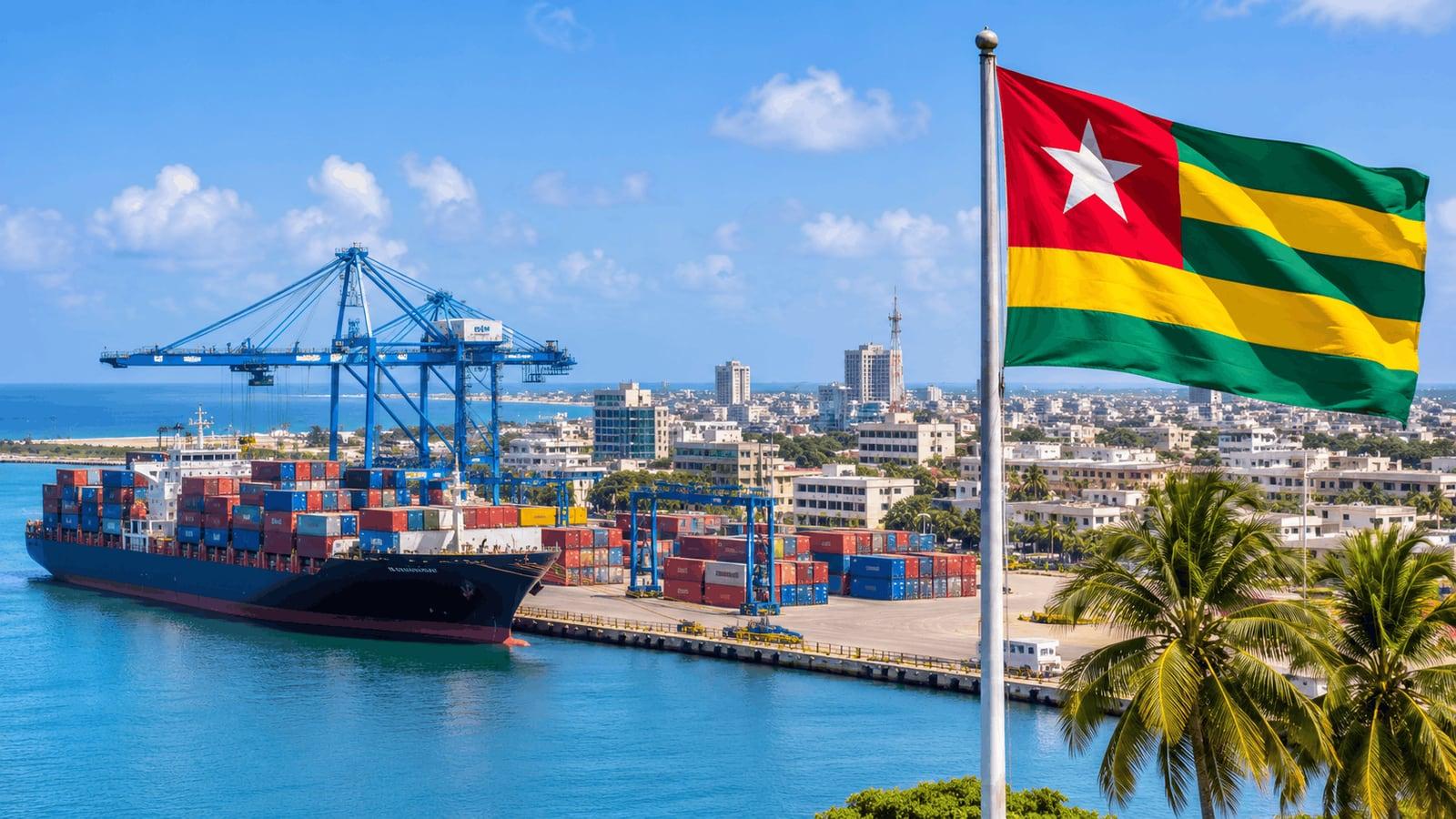
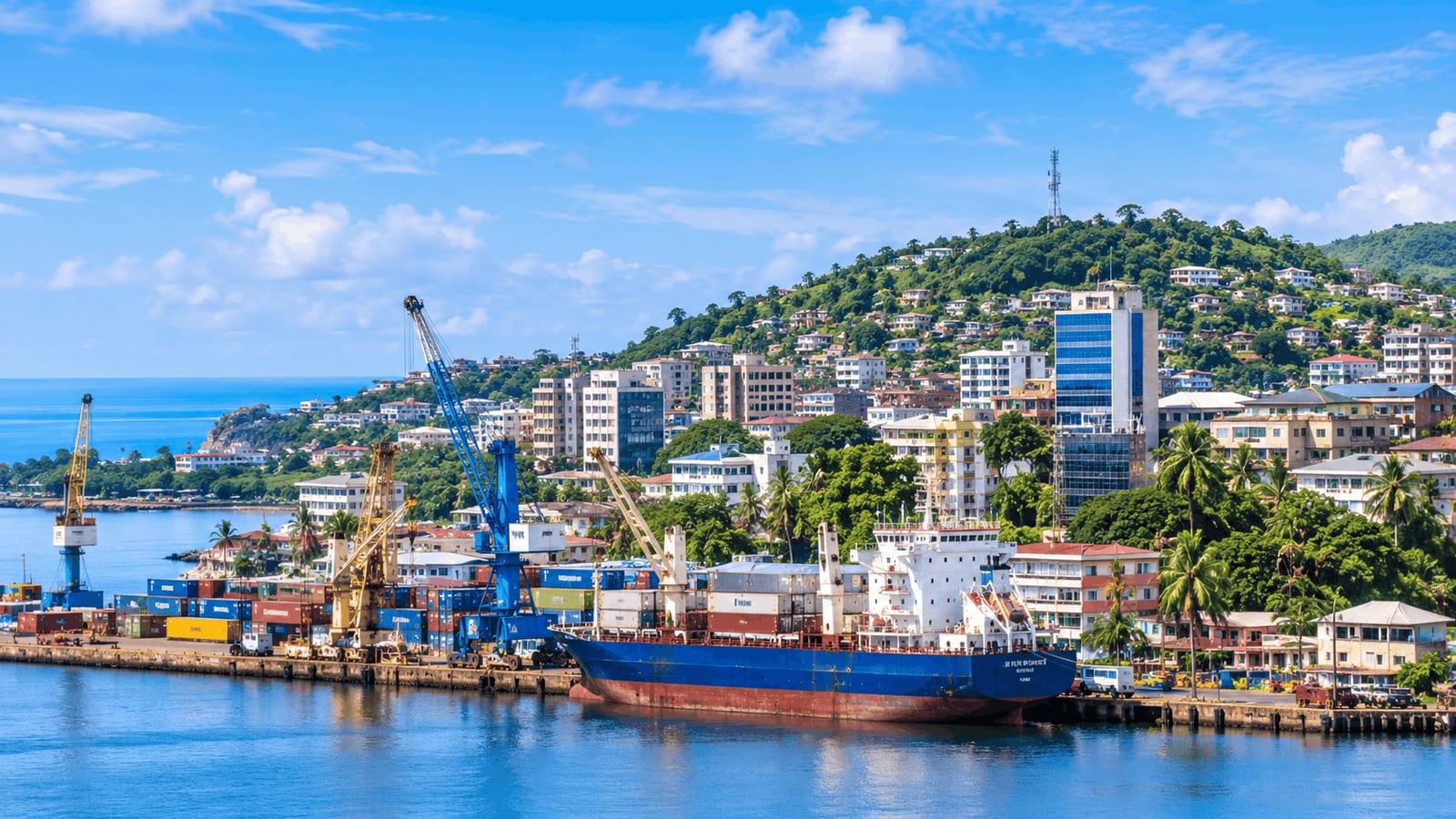
A small country with one of West Africa's major container ports
In this section
The improvements allow fully laden container ships carrying between 19,000 and 24,000 TEU to call at the terminal.
Togo is a relatively small country, but its position on the Gulf of Guinea has given it an important role in West African trade.
The Port of Lomé handled approximately 2.4 million twenty-foot equivalent units (TEU) in 2025, compared with 2.006 million in 2024. This represents an increase of about 19.6%. The 2025 figure is provisional, but it shows how much container traffic the port handles.
The port also plays a major role in transshipment. This happens when containers arrive on large ships, are unloaded and transferred to other vessels for delivery to different ports.
In 2024, the Port of Lomé handled 30.6 million tonnes of cargo. About 20.2 million tonnes, or 66%, came from transshipment. In 2025, transshipment accounted for approximately 80.4% of the port's container traffic. These percentages measure different things: the first is based on cargo weight, while the second is based on container movements.
Lomé's location and deep-water access help explain its importance. In 2025, dredging at Lomé Container Terminal deepened the access channel to 18.6 metres and widened the turning area for large vessels. The improvements allow fully laden container ships carrying between 19,000 and 24,000 TEU to call at the terminal.
The port also serves countries that do not have direct access to the sea, particularly Burkina Faso, Mali and Niger. Goods arriving in Lomé can be transported by road to these countries, giving businesses there another route for importing and distributing products.
Togo has built much of its trade activity around this position. Shipping companies, freight forwarders, transport businesses, warehouses and financial institutions all benefit from the movement of goods through Lomé. However, not every container passing through the port belongs to a Togolese importer or exporter. A large part of the activity involves goods travelling to other countries.
This is the fifteenth country profile in our series, Africa's Markets, Country by Country, following Niger.
Togo is a narrow country of approximately 10 million people, located between Ghana and Benin. The IMF's October 2026 projections put its nominal GDP at approximately US$13.1 billion, with real economic growth projected at 5% for 2026.
Beyond its port, Togo produces and exports phosphates, agricultural products, cement clinker and other manufactured goods. Lomé is also home to Ecobank's group headquarters and the West African Development Bank, giving the city an important role in regional finance.
Politically, the country has been governed by the Gnassingbé family since 1967. Faure Gnassingbé has led the government since succeeding his father in 2005.
Togo at a glance
Measure
Figure
Nominal GDP
About US$13.1 billion
Real GDP growth
5% projected for 2026
Population
About 10 million
Lomé container traffic
About 2.4 million TEU in 2025, provisional
Lomé total cargo traffic
30.6 million tonnes in 2024
Transshipment share
About 66% of total cargo tonnage in 2024
Currency
West African CFA franc
Exchange rate
655.957 CFA francs to €1
Regional trade groups
ECOWAS, WAEMU and AfCFTA
GDP figures are based on the IMF's October 2026 projections. Port figures cover different reporting periods, as indicated.
How the economy is built
In this section
Ecobank Transnational Incorporated, the parent company of the Ecobank Group, has its headquarters in the city.
Togo's economy has several important parts. Agriculture provides employment and produces food and export crops. Mining supplies phosphates for international markets. Manufacturing produces cement clinker, processed agricultural goods and other products. Trade and logistics support the movement of goods through the Port of Lomé, while financial and business services serve companies operating in Togo and neighbouring countries.
Agriculture and food production
Agriculture remains an important part of the Togolese economy. Farmers grow maize, cassava, yams, sorghum, rice and beans for local consumption.
The country also produces crops for commercial markets. These include cotton, coffee, cocoa, soybeans and cashews.
Cotton has a long history in Togo's agricultural sector. It is grown by farmers in different parts of the country and supplies the textile industry. The government has also supported efforts to process more cotton locally rather than exporting all of it in raw form.
Soybeans have become another important agricultural product. Togo exports soybean seeds and processed products, including soybean oilcake, which is used in animal feed.
The country's agricultural exports also include cocoa beans, cashews and other products. However, the quantities and export values vary from one year to another, depending on production, prices and demand.
Agriculture therefore serves two purposes. It supplies food for the domestic market and provides raw materials and products for businesses involved in processing and international trade.
Phosphate mining
Phosphates are among Togo's most important mineral exports.
The deposits are found in the Hahotoé-Kpogamé mining area. The state-owned Société Nouvelle des Phosphates du Togo (SNPT) is involved in the extraction and processing of the mineral.
After extraction, the phosphate is transported to Kpémé, a coastal processing facility located east of Lomé. There, it undergoes treatment to remove clay and other unwanted materials before being dried and prepared for export.
Phosphate is used mainly in the production of fertilisers, which are needed by farmers around the world.
In the second quarter of 2026, natural calcium phosphates were Togo's largest individual export product, with a reported value of CFAF 46.7 billion. This represented about 15.8% of merchandise exports for that quarter.
The country has also expressed interest in developing more domestic processing capacity. Producing fertiliser from its phosphate resources could allow Togo to sell more processed products instead of relying mainly on the export of phosphate materials.
However, expanding into fertiliser production requires investment in industrial facilities, energy, transport and access to buyers.
Manufacturing and industrial production
Togo's manufacturing sector includes cement and clinker production, plastics, food processing, beverages and other consumer goods.
Clinker is particularly important to the country's export trade. It is an intermediate material used in cement production and can be sold to cement manufacturers in other countries.
In the second quarter of 2026, clinker exports were valued at CFAF 22.3 billion. Other notable export products included refined petroleum products, soybean products, motorcycles, plastic packaging and personal care products.
The country has also invested in industrial infrastructure to encourage businesses to process more local agricultural produce and manufacture goods for regional and international markets.
One of these investments is the Plateforme Industrielle d'Adétikopé, commonly known as PIA.
The Adétikopé Industrial Platform
Located about 15 kilometres north of Lomé, the Plateforme Industrielle d'Adétikopé was launched in 2021. It is a partnership between the Togolese government and ARISE IIP.
The platform covers approximately 400 hectares and includes industrial areas, warehouses, storage facilities, a container yard and parking for trucks.
One of its main objectives is to increase the amount of Togolese cotton processed within the country. This includes developing textile and garment production rather than exporting cotton mainly as an unprocessed agricultural product.
The platform also has facilities intended to support other industrial and commercial activities.
Its location is important because businesses can operate close to the Port of Lomé and use its transport and logistics infrastructure to move goods to regional and international markets.
For manufacturers, this can reduce some of the difficulties involved in transporting raw materials and finished products. However, the actual benefits depend on the cost of production, access to electricity, labour, financing and demand for the finished goods.
Trade, transport and financial services
The Port of Lomé supports a large part of Togo's service economy.
Its activities create demand for shipping services, freight forwarding, customs brokerage, warehousing, trucking, insurance and other businesses involved in moving goods.
Some companies handle cargo that enters Togo for local consumption. Others work with goods that are transferred to different vessels or transported by road to neighbouring countries.
Lomé also has an established financial services sector. Ecobank Transnational Incorporated, the parent company of the Ecobank Group, has its headquarters in the city. The West African Development Bank (BOAD) is also based there.
These institutions serve markets beyond Togo, giving the country a role in regional banking and development finance.
Economic growth has remained relatively strong in recent years. The IMF projected real GDP growth of 5% in 2026. It also projected average consumer price inflation of 2.8% for the year.
Togo has been working with the IMF under a 42-month Extended Credit Facility arrangement approved in March 2024. The programme supports economic reforms, public financial management and efforts to improve debt sustainability.
Public debt has been an important concern for the government, particularly following increased spending in response to economic shocks and security needs.
In October 2026, Togo and China signed 12 agreements and memorandums covering seven areas of cooperation. One of the agreements concerns the partial cancellation of Togo's public debt to China. The package also covers trade, agriculture, customs, industry, education, media and security.
The financial value of the debt cancellation has not been specified in the government announcement, so its effect on the country's debt position should not be assumed.
What Togo sells, buys and who it trades with
In this section
The country also exports products such as motorcycles, personal care products and refined petroleum products.
Togo's trade includes agricultural products, minerals, manufactured goods, petroleum products and goods that pass through the country on their way to other markets.
According to Togo's National Institute of Statistics and Economic and Demographic Studies (INSEED), merchandise exports reached CFAF 295.7 billion in the second quarter of 2026. This was approximately 29.5% higher than the CFAF 228.4 billion recorded in the same quarter of 2025.
The increase was driven by several products, including phosphates, clinker, petroleum products and soybean products.
Phosphates
Phosphates are one of Togo's leading individual export products.
In the second quarter of 2026, natural calcium phosphates were worth CFAF 46.7 billion in exports. This made them the largest individual product category for that quarter.
The mineral is used in fertiliser production, making international demand closely linked to agricultural activity.
Togo's phosphate exports serve buyers outside the country, including markets in Asia. India is also one of Togo's major overall export destinations.
The government has an interest in expanding the processing of phosphate within Togo. Producing more processed phosphate products and fertilisers could create additional industrial activity and supply agricultural markets in West Africa.
Cotton is one of Togo's established commercial crops. It is grown by smallholder farmers and supplies the country's textile industry, as well as export markets.
Soybeans are another important part of the country's agricultural trade. Togo exports both soybean seeds and soybean oilcake, which is used in animal feed.
Other agricultural exports include cocoa beans, cashews and coffee.
The country's export figures show that agricultural products do not all leave Togo in the same form. Some are exported as raw crops, while others are processed into products that can be sold to manufacturers and consumers.
For example, soybean oilcake is a processed product, while cotton is often exported as fibre.
This creates opportunities for businesses involved in agricultural production, storage, processing, packaging and distribution.
Cement, clinker and manufactured goods
Togo also exports cement clinker, plastics, packaging materials, petroleum products and other manufactured goods.
Clinker is used by cement manufacturers and is an important part of Togo's industrial exports.
In the second quarter of 2026, clinker exports were valued at CFAF 22.3 billion. Plastic bags and packaging materials were also among the country's leading export products.
The country also exports products such as motorcycles, personal care products and refined petroleum products.
These exports show that Togo's trade is not limited to minerals and agricultural produce. Its manufacturing and processing industries also supply products to regional and international markets.
Re-exports and transit trade
A significant part of the activity around the Port of Lomé involves goods that are not produced in Togo.
Some goods arrive at the port and are transferred to smaller vessels for delivery to other ports. This is known as transshipment.
Other goods are imported into Togo before being transported by road to neighbouring countries. Some are intended for businesses and consumers in those countries, while others may be handled by wholesalers and distributors operating in Togo.
These activities support transport companies, warehouses, freight forwarders, customs agents and other service providers.
However, it is important to distinguish between transshipment, transit cargo and re-exports.
A container transferred from one ship to another is not automatically a Togolese export. Likewise, goods passing through Togo for another country should not be treated as goods produced by Togolese manufacturers.
The country earns economic value from the services involved in handling and moving these goods, even when their final destination is elsewhere.
What Togo imports
Togo imports a wide range of products, including fuel, machinery, vehicles, industrial equipment, food products, medicines, textiles and consumer goods.
According to 2024 trade data from the World Trade Organization and UN Comtrade, China was Togo's largest individual import partner, accounting for 22.6% of imports.
The European Union accounted for 21.6%, followed by India at 6.3% and Nigeria at 6%.
The European Union is a group of countries rather than an individual trading partner, so its share should be understood as a combined figure.
On the export side, India was Togo's largest individual destination in 2024, accounting for 16.6% of exports. Côte d'Ivoire and Burkina Faso each accounted for approximately 11.3%, followed by Mali, Benin, Ghana and Niger.
These figures show that Togo trades with both international markets and its West African neighbours.
Trade agreements and how goods move
In this section
Togo also benefits from preferential access to the European Union under the Everything But Arms arrangement.
Togo's position in regional trade is supported by its membership of several African and international trade arrangements.
ECOWAS and WAEMU
Togo belongs to the Economic Community of West African States (ECOWAS) and the West African Economic and Monetary Union (WAEMU), also known by its French name, UEMOA.
These organisations have different responsibilities.
ECOWAS promotes economic and political cooperation across West Africa. Its work includes regional trade, movement of people and economic integration.
WAEMU is a monetary and economic union. Its members share the West African CFA franc and operate within a common monetary framework. The union also has a customs arrangement that supports trade between member countries.
Togo shares this currency with seven other WAEMU members: Benin, Burkina Faso, Côte d'Ivoire, Guinea-Bissau, Mali, Niger and Senegal.
Burkina Faso, Mali and Niger withdrew from ECOWAS on 29 January 2025. However, they remain members of WAEMU.
This is important for Togo because it maintains established monetary and economic links with these landlocked countries, which are also important markets for goods transported through Lomé.
The CFA franc is pegged to the euro at a fixed rate of 655.957 CFA francs to one euro. The arrangement provides exchange-rate stability against the euro, although it does not remove the effects of changes in international prices or other economic pressures.
AfCFTA and access to international markets
Togo has ratified the African Continental Free Trade Area (AfCFTA).
The agreement aims to increase trade between African countries by reducing tariffs on eligible goods, improving trade rules and supporting the development of regional supply chains.
For businesses in Togo, AfCFTA creates opportunities to sell eligible products in other African markets under the agreement's preferential trade arrangements.
However, tariff reductions depend on the agreed product schedules and rules of origin. Goods do not automatically qualify for preferential treatment simply because they are exported from one African country to another.
Togo also benefits from preferential access to the European Union under the Everything But Arms arrangement.
As a least developed country, Togo can export eligible products to the EU without import duties or quotas under this arrangement, except for arms and ammunition. Exporters must still meet the relevant rules of origin and product requirements.
Togo has also been eligible for the United States' African Growth and Opportunity Act (AGOA) programme. However, the legislation signed in February 2026 reauthorised AGOA only through 31 December 2026. Businesses considering the US market should check the programme's subsequent status and Togo's eligibility before relying on these preferences.
The Port of Lomé
The Port of Lomé is one of Togo's most important economic assets.
Its location on the Gulf of Guinea and its ability to receive large container ships make it useful for international shipping lines serving West Africa.
Lomé Container Terminal (LCT) is an important part of the port's container operations. It was developed by Terminal Investment Limited, a company within the MSC Group, under a 35-year concession.
In September 2025, LCT completed dredging work that deepened its access channel to 18.6 metres and widened its turning circle to 550 metres.
The terminal also announced an investment programme running to 2027, with plans to increase its annual handling capacity from approximately 2 million to 2.5 million TEU.
Another facility at the port is Togo Terminal, which handles import and transit containers. It was historically operated by the Bolloré group, whose African transport and logistics business was later acquired by MSC.
The port's development is important for Togo, but it also faces competition from other regional ports, including Tema in Ghana, Abidjan in Côte d'Ivoire and Cotonou in Benin.
Shipping companies and traders consider several factors when choosing a port, including vessel access, handling costs, waiting times, shipping connections and the condition of road corridors leading to inland markets.
The Lomé-Ouagadougou corridor
The road connecting Lomé to Ouagadougou in Burkina Faso is an important trade route for landlocked countries in the Sahel.
From Lomé, goods can travel north through Togolese towns such as Atakpamé, Sokodé, Kara and Dapaong before reaching the border at Cinkassé.
From there, the road continues into Burkina Faso, with further connections to other inland markets.
The corridor supports the movement of imported food, fuel, vehicles, machinery, construction materials and consumer goods.
Togo's road connections are important because Burkina Faso, Mali and Niger depend on neighbouring coastal countries for access to international shipping routes.
However, security conditions have become a concern, particularly in northern Togo and neighbouring Burkina Faso. Attacks by militant groups operating in the Sahel have affected parts of the region and created additional risks for transport and trade.
Businesses using the corridor need to consider security conditions, transport costs, border procedures and possible delays.
Regional finance
Lomé also has an established regional financial presence.
Ecobank Transnational Incorporated, the parent company of the Ecobank Group, is headquartered in the city. The group operates across several African markets and provides banking services to individuals, businesses and institutions.
The West African Development Bank (BOAD) is also based in Lomé. It finances development projects across WAEMU member countries, including infrastructure, agriculture, energy and private-sector activities.
Having these institutions in the capital gives Togo a role in regional financial services beyond its domestic market.
Sectors with room to grow and doing business
In this section
Developing local production could therefore serve both Togolese farmers and buyers in neighbouring countries.
Togo has opportunities in several industries, particularly those connected to trade, manufacturing and agriculture.
Logistics and transshipment
The Port of Lomé gives Togo a strong position in maritime trade and cargo handling.
Businesses can find opportunities in warehousing, freight forwarding, trucking, customs brokerage, cold storage and other services needed to move goods.
The growth of trade with landlocked Sahel countries also creates demand for transport and distribution services.
However, businesses need to consider competition from other West African ports and the security conditions along inland transport routes.
Agro-processing at Adétikopé
Togo produces agricultural goods such as cotton, soybeans and cashews. Processing more of these products locally could create additional manufacturing activity.
The Adétikopé Industrial Platform provides infrastructure for companies interested in manufacturing, storage and processing.
Cotton processing is one of its main areas of focus, particularly textile and garment production.
Businesses involved in food processing, agricultural storage, packaging and other manufacturing activities may also find opportunities in the country's industrial development plans.
Fertiliser production
Togo's phosphate resources give it an opportunity to develop more activity around fertiliser production.
At present, phosphate is an important export product. Processing more of it into finished or intermediate fertiliser products could allow the country to retain more value from the mineral.
West African agriculture depends on access to fertilisers, and many countries import a large share of their requirements.
Developing local production could therefore serve both Togolese farmers and buyers in neighbouring countries.
However, this opportunity depends on investment, production costs, access to energy and the ability to compete with established international suppliers.
Regional financial and business services
Ecobank and BOAD give Lomé an established presence in regional finance.
This creates opportunities for businesses providing financial services, insurance, accounting, legal support and other professional services.
Companies operating across several West African markets may also find Lomé useful as a base for managing some of their regional activities.
Doing business in Togo
Togo has taken steps to make company registration easier.
The Centre de Formalités des Entreprises (CFE) provides a centralised process for registering businesses. The Togolese government's public service portal lists a processing time of 10 to 30 minutes for the company creation procedure.
This is the stated processing time for the registration procedure. Investors should still allow for document preparation and any additional requirements that apply to their business.
Togo is also a member of OHADA, the Organisation for the Harmonisation of Business Law in Africa. OHADA provides a shared legal framework for business activities across its member countries, including rules covering company formation, commercial law and accounting.
The country's Investment Code, established under Law No. 2019-005 of 17 June 2019, provides incentives for eligible investments. These may include tax and customs benefits, depending on the type of investment and the applicable conditions.
Companies operating at the Adétikopé Industrial Platform may also qualify for specific incentives under the relevant industrial and investment arrangements.
Investors should check the current tax rules before setting up a business. Togo's General Tax Code is amended through annual finance laws, so corporate tax, VAT and other obligations should be checked against the 2026 Finance Law rather than relying on older published rates.
Foreign investors can transfer eligible profits and capital abroad through authorised financial institutions, subject to applicable foreign-exchange rules and documentation.
French is the official language used in government and is widely used in business administration. Companies entering the market should therefore consider their ability to communicate with government agencies, suppliers, customers and business partners in French.
Risks and trade-offs
In this section
The country also exports clinker, petroleum products, plastics, soybean products and other manufactured goods.
Togo has advantages for businesses involved in trade and regional distribution. However, there are also risks to consider before entering the market.
Political tension
Togo's 2024 constitutional revision changed the country's political system from a presidential to a parliamentary arrangement.
Under the revised system, the President of the Council of Ministers holds substantial executive authority. Faure Gnassingbé was designated to the position on 3 May 2025.
The change attracted strong criticism from opposition parties and civil society groups, some of which described it as a constitutional coup. Critics argued that the new arrangement could allow the Gnassingbé family to maintain its hold on power.
The political debate has also led to public protests and concerns about democratic accountability.
For businesses, political stability and the way government decisions are made are important considerations. Companies should understand the regulatory environment and follow changes that may affect licences, concessions, investment approvals and public contracts.
Insecurity in the north
Northern Togo faces security threats linked to militant activity in the Sahel, particularly attacks spreading across the border from Burkina Faso.
The Savanes region has been under a state of emergency since June 2022. In February 2026, parliament approved another 12-month extension, beginning on 13 March 2026.
The security situation affects communities and creates risks for businesses and transport operators using routes in the north.
Companies moving goods towards Burkina Faso and other Sahel markets need to consider security arrangements, transport routes and possible disruptions.
Dependence on transit trade
A significant part of the Port of Lomé's activity comes from goods moving through the country to other destinations.
This creates opportunities for logistics and transport businesses, but it also means that changes in regional trade routes can affect the volume of cargo handled at the port.
Togo competes with other coastal countries for shipping lines, transit cargo and distribution business.
Changes in political relations, border arrangements, transport costs or security conditions in neighbouring countries could influence which routes traders choose.
A limited range of major export products
Phosphates, cotton and agricultural products remain important to Togo's export economy.
The country also exports clinker, petroleum products, plastics, soybean products and other manufactured goods.
However, some of its major exports depend on international commodity prices and demand. A fall in prices or a reduction in production can affect export earnings.
The country also needs to continue developing local manufacturing and processing so that more of its agricultural and mineral resources can be turned into higher-value products.
What this means for an African business
In this section
Togo's membership of WAEMU provides access to a shared currency and monetary framework with seven other countries.
Togo has a domestic market of approximately 10 million people. Its commercial importance, however, extends beyond its own population.
The Port of Lomé connects the country to international shipping routes and provides access to landlocked markets such as Burkina Faso, Mali and Niger.
For an African business, this creates opportunities in logistics, distribution, manufacturing, agricultural processing and regional services.
A company looking to distribute products in the Sahel may consider Lomé because of its port infrastructure and road connections. A manufacturer may consider the Adétikopé Industrial Platform for its industrial facilities and access to transport services. A company providing financial or professional services may also find opportunities in Lomé because of its established regional institutions.
Togo's membership of WAEMU provides access to a shared currency and monetary framework with seven other countries. Its participation in ECOWAS and AfCFTA also connects it to wider regional trade arrangements.
However, these advantages do not remove the need to understand the market. Businesses must consider competition, transport costs, local regulations, language, security and the requirements of individual countries they intend to serve.
Togo is worth considering for businesses that need a West African port, a base for regional distribution or access to markets in the Sahel. It is not automatically the right choice for every business, and companies should assess the costs and conditions of operating there before committing resources.
The article draws on official government information, international institutions and trade statistics.
The article draws on official government information, international institutions and trade statistics. The figures should be read with their stated reporting periods because annual data, quarterly data and projections are not directly interchangeable.
Macroeconomic data and public finances
IMF: Togo Country Information. Population, projected GDP growth and IMF engagement.
IMF: Togo Third and Fourth Reviews Under the Extended Credit Facility, July 2026. Economic outlook, public finances and debt sustainability.
IMF World Economic Outlook Database. GDP and economic projections.
Togo Ministry of Finance: Agreements Signed with China, 17 October 2026. Partial debt cancellation and bilateral cooperation agreements.
Port and logistics
Togo Official: Port of Lomé Handles 30.6 Million Tonnes in 2024.
InterCom Togo: Port Container Traffic Statistics. 2024 and provisional 2025 container throughput.
Togo First: Port of Lomé Dredging at LCT. Channel depth, vessel capacity and terminal investment.
Terminal Investment Limited: Lomé Container Terminal. Terminal concession and operations.
Trade and exports
World Trade Organization: Togo Trade Profile. Import and export partners, product categories and trade values for 2024.
INSEED Togo: Quarterly Merchandise Export Statistics. Q2 2026 exports and leading product categories.
SNPT: Phosphate Processing Facilities. Phosphate processing at Kpémé.
Industry and investment
ARISE IIP: Adétikopé Industrial Platform. Industrial park, infrastructure and cotton-processing plans.
Togo Public Service Portal: Company Registration. Company creation procedure and official processing time.
Togo Ministry of Finance: 2026 Finance Law. Current fiscal and tax legislation.
Togo General Tax Code. Tax framework and amendments.
Politics and regional integration
Library of Congress: Togo's New Constitution. Constitutional reform and changes to the political system.
Presidency of the Council: Faure Gnassingbé's Investiture, May 2025. Appointment and responsibilities of the President of the Council.
Togo Official: Extension of the State of Emergency in Savanes, March 2026.
ECOWAS: Withdrawal of Burkina Faso, Mali and Niger, January 2025.
Tralac: AfCFTA Ratification Status, September 2026.
US Trade Representative: AGOA Reauthorisation, February 2026.
Regional financial services
Ecobank: Group Headquarters. Ecobank Transnational Incorporated's headquarters in Lomé.