Compare 14 East African economies by GDP, growth, exports, trade blocs and transport corridors. Explore the markets, industries and business opportunities across the region in 2026.
Fourteen economies, different markets and routes to trade
In this section
The grouping also reflects the African Union's regional classification used in its work on African economic development.
East Africa is one of Africa's fastest-growing economic regions, but its countries have very different economies. Kenya and Ethiopia have large domestic markets, Tanzania has a growing manufacturing and services base, and Uganda is developing its oil industry alongside established agricultural exports. Further east, Mauritius and Seychelles have relatively high incomes per person and economies strongly supported by services, while Comoros depends heavily on remittances and a small range of agricultural exports.
The African Development Bank projected that East Africa would grow by 5.9% in 2026, following estimated growth of 6.6% in 2025. Investment, household spending, agriculture and services have supported this performance, although higher energy costs, geopolitical tensions and pressure on public finances remain concerns. The Bank continues to identify East Africa as Africa's fastest-growing region, a position it has held for two consecutive years.
The economic size of the countries varies considerably. Kenya, Ethiopia, Tanzania and Uganda account for almost 79% of the combined nominal GDP of the 13 countries in this comparison for which the IMF provides October 2026 estimates. Kenya alone accounts for approximately 27%. At the other end, Comoros and Seychelles have much smaller economies, although their economic activities and income levels are quite different.
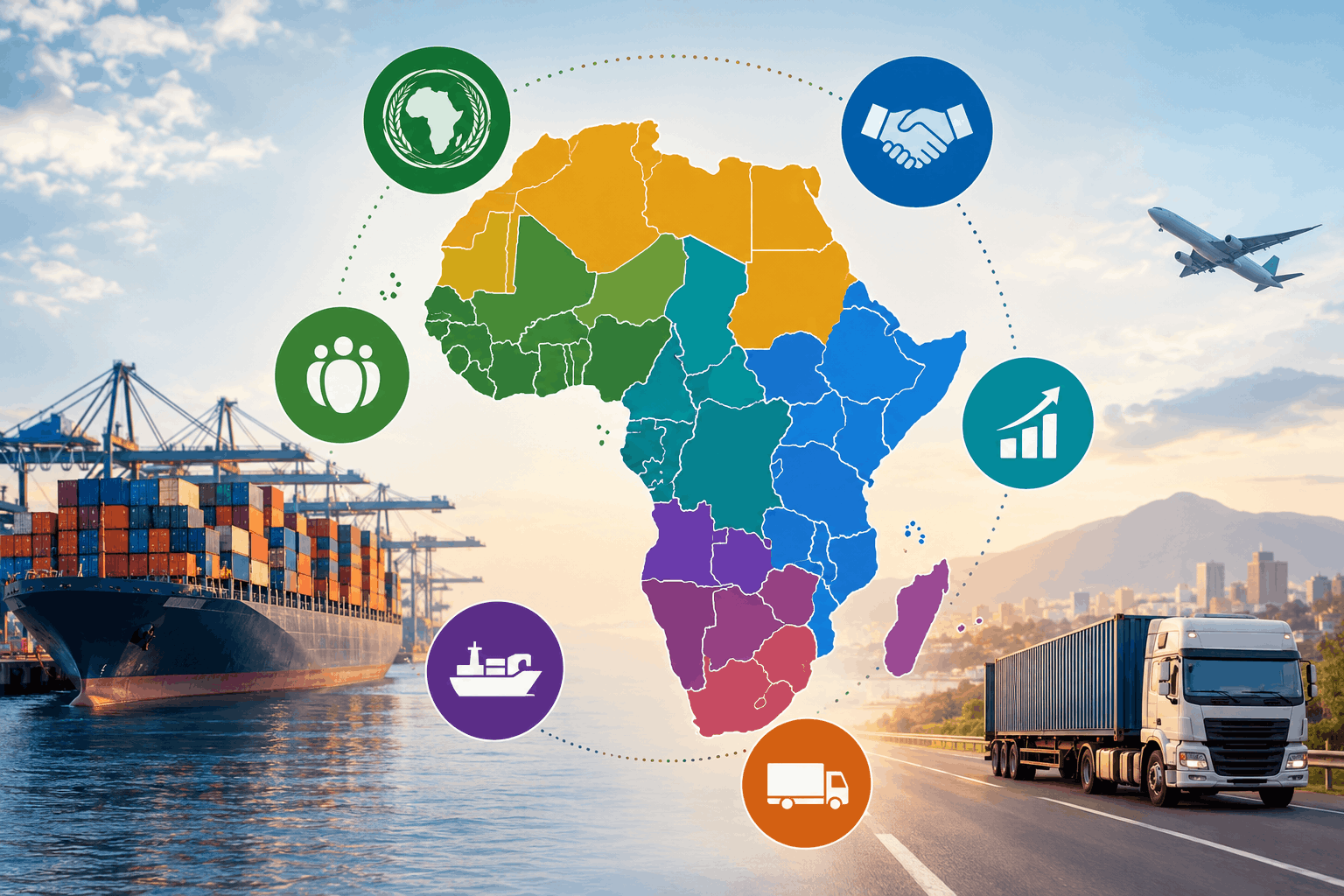
This article follows the 14-country East African grouping used in this series, covering Kenya, Ethiopia, Tanzania, Uganda, Sudan, Madagascar, Rwanda, Mauritius, Somalia, South Sudan, Djibouti, Eritrea, Seychelles and Comoros. The grouping also reflects the African Union's regional classification used in its work on African economic development.
We have already examined each country individually, beginning with Kenya and ending with Comoros. Here, we bring those profiles together to examine their economic size, main exports, currencies, regional trade arrangements and access to international markets.
Unless otherwise stated, the economic figures in the comparison come from the IMF's October 2026 World Economic Outlook. GDP refers to nominal GDP at current prices in US dollars, GDP per person means GDP per capita at current prices, and growth refers to the projected annual change in real GDP. These are estimates and projections, not final accounts for the full year.
Eritrea is included in the country comparison, but the IMF does not provide a comparable 2026 GDP, GDP per capita or growth estimate for the country in this edition. It is therefore excluded from the combined GDP calculation.
The 14 economies at a glance
In this section
Sudan's projected 7% growth also needs to be weighed against the severe damage caused by the ongoing war.
The countries are arranged by economic size, using the October 2026 IMF figures wherever available.
Source: IMF, October 2026 World Economic Outlook. Eritrea's comparable figures are not available in this edition. GDP figures are rounded, and growth figures are projections.
The 13 countries with comparable IMF GDP estimates have a combined nominal GDP of approximately US$565.9 billion. This is a calculation from the individual country figures, not an official IMF regional total.
The growth projections also need to be read in context. South Sudan's projected 10.5% growth, for example, does not mean that its economy is larger or more diversified than those of its neighbours. Its forecast reflects a possible recovery from earlier disruptions, particularly those affecting oil production and exports. Sudan's projected 7% growth also needs to be weighed against the severe damage caused by the ongoing war.
The GDP per person figures offer another comparison, although they should not be mistaken for average salaries or household incomes. Seychelles and Mauritius have the highest figures in this group, while Sudan, South Sudan and Madagascar have some of the lowest.
Differences in population also matter. Ethiopia has a much larger population than Kenya, for example, even though its nominal GDP is smaller. A company looking at these two countries therefore needs to look beyond the size of the economy and examine the number of potential customers, their buying power and the cost of reaching them.
Growth, economic size and income
In this section
A projected recovery from a very low base does not mean that normal business activity has resumed across the country.
East Africa's economic performance comes from several different sources. Agriculture remains important across much of the region, while services, construction, mining, transport and manufacturing contribute to growth in different proportions.
Ethiopia has the highest projected growth among the larger economies in this comparison, at 9.2%. The country has been carrying out major economic reforms, including changes to its foreign exchange system in July 2024. It also recorded strong export earnings from gold and other commodities. The Ministry of Trade reported goods export earnings of more than US$10.7 billion in the 2025/26 financial year, including US$5.5 billion from gold.
Uganda is projected to grow by 6.2%, supported by domestic demand, investment, agriculture and expanding economic activity. Its oil industry is approaching an important stage, although commercial production and exports through the East African Crude Oil Pipeline should not yet be treated as an established source of national export revenue.
Tanzania's projected growth of 6% reflects continued activity in construction, transport, mining, agriculture and services. The country has invested heavily in railways, ports, roads and energy, which support both domestic economic activity and its role as a regional trading route.
Rwanda's economy is projected to grow by 7.4%. Investment, construction, services, tourism and regional trade have supported its expansion. Its small domestic market means that businesses often need to consider the country's wider regional connections when judging its commercial potential.
Djibouti is projected to grow by 5.6%, supported by port operations, logistics and services connected to Ethiopia's international trade. The country's position on the Red Sea, near the Gulf of Aden, gives it an important role in shipping and regional transport.
At the lower end of the growth comparison, Seychelles is projected to grow by about 1%, while Mauritius is projected to grow by 2.7%. Their slower projected rates do not mean that these economies are less developed. Both have relatively high GDP per person and rely heavily on services, particularly tourism.
Sudan's 7% projection needs particular caution. The country has suffered extensive damage to its infrastructure, businesses, farming and public services since fighting began in April 2023. A projected recovery from a very low base does not mean that normal business activity has resumed across the country.
South Sudan's projected 10.5% growth is also highly uncertain. Oil production, pipeline operations, public finances and political stability all affect its outlook. A high growth rate in one year does not necessarily lead to a broad improvement in living conditions.
The differences between the countries are therefore considerable. Kenya and Ethiopia have the largest economies in this group, but Mauritius and Seychelles have much higher GDP per person. Uganda and Rwanda have strong growth projections, while Djibouti's economy depends heavily on trade-related services. Each market needs a different approach.
What East African countries sell
In this section
Somalia's livestock industry serves markets in the Gulf, with sheep, goats and camels among its main exports.
East Africa exports a mix of agricultural products, minerals, manufactured goods and services. The products vary from country to country, although gold, coffee, tea, livestock and farm commodities appear in several national export profiles.
Gold has become particularly important in the region's export figures. Ethiopia, Uganda, Tanzania and Sudan all report significant gold exports, while Rwanda and Eritrea also have mineral exports that include gold.
However, reported gold exports do not always represent gold mined within the exporting country. Uganda, for example, has become an important gold processing and trading centre, handling bullion from neighbouring countries as well as its own production. Uganda's gold exports reached US$5.8 billion in 2025, overtaking coffee, although a large part of the trade involves gold sourced from outside Uganda.
Ethiopia also recorded strong gold export earnings in its 2025/26 financial year. Its government reported US$5.5 billion in gold exports, making gold one of the country's most important sources of foreign exchange.
Agriculture remains another major source of export earnings. Kenya is an important international supplier of tea, cut flowers, coffee, fruit and vegetables. Its horticulture industry has established links with European and other international markets, supported by production, processing, packaging and air freight.
Ethiopia is a major coffee producer and exports coffee alongside oilseeds, flowers and other farm products. Uganda also exports large quantities of coffee, while Tanzania earns foreign exchange from coffee, cashews, tobacco and other crops.
Madagascar is known internationally for its vanilla, cloves and other farm products. It also has a significant mining industry, including nickel and cobalt. Mauritius has a more diversified export base, with clothing, sugar and seafood among its goods exports, alongside services such as tourism and finance.
Comoros has a much narrower export base. Ylang-ylang, vanilla and cloves are among its best-known exports. These products connect the islands to international fragrance, food and cosmetics industries, although their small production base limits the country's overall export earnings.
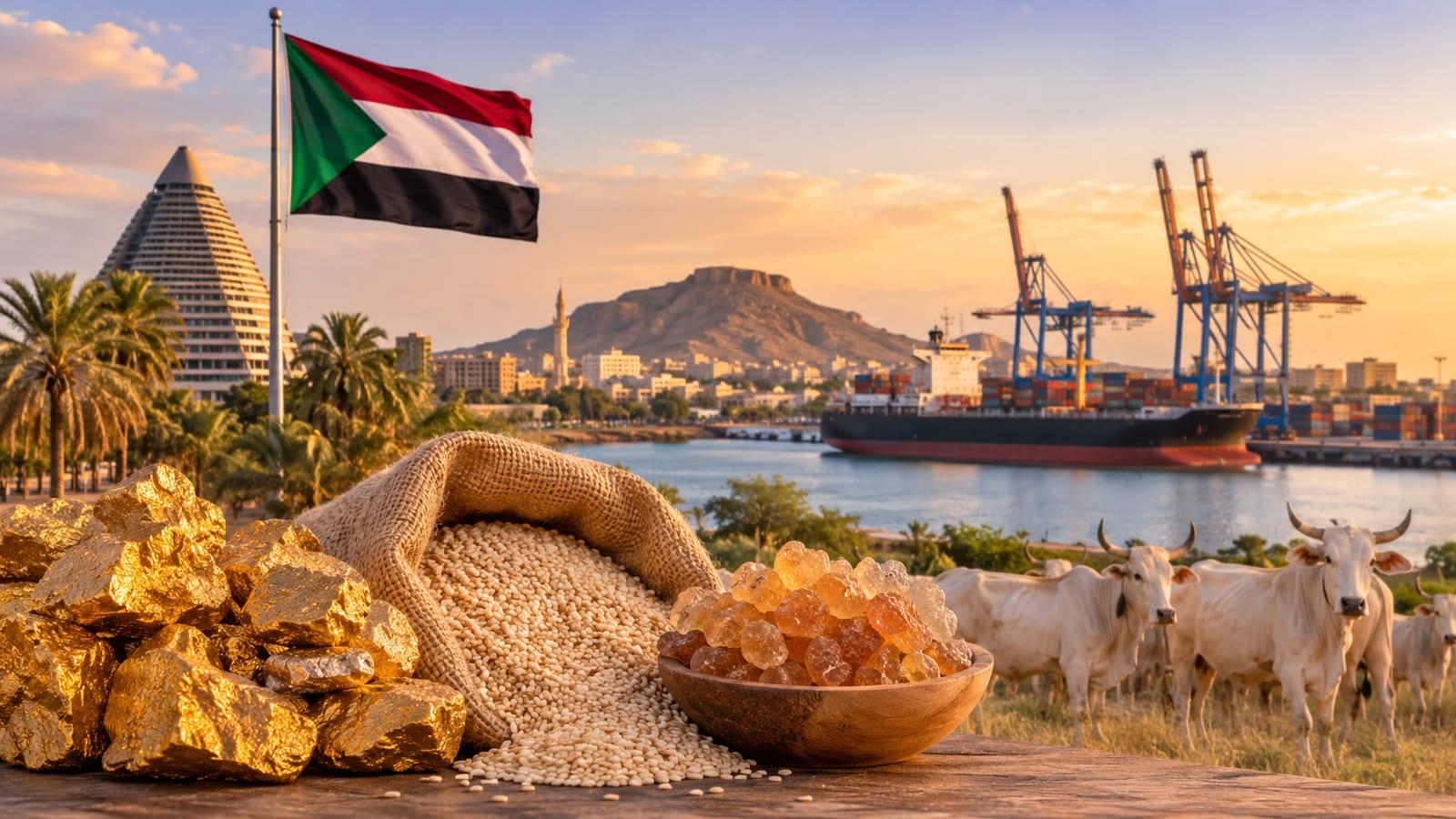
Sudan has long been an important supplier of gum arabic, livestock, sesame and gold. However, the war has disrupted production, transport, processing and international trade. Its export capacity cannot be judged without looking at the security and infrastructure conditions in each part of the country.
Somalia's livestock industry serves markets in the Gulf, with sheep, goats and camels among its main exports. Sesame and fisheries also contribute. Livestock trade is particularly important because it connects pastoral communities and businesses to international buyers.
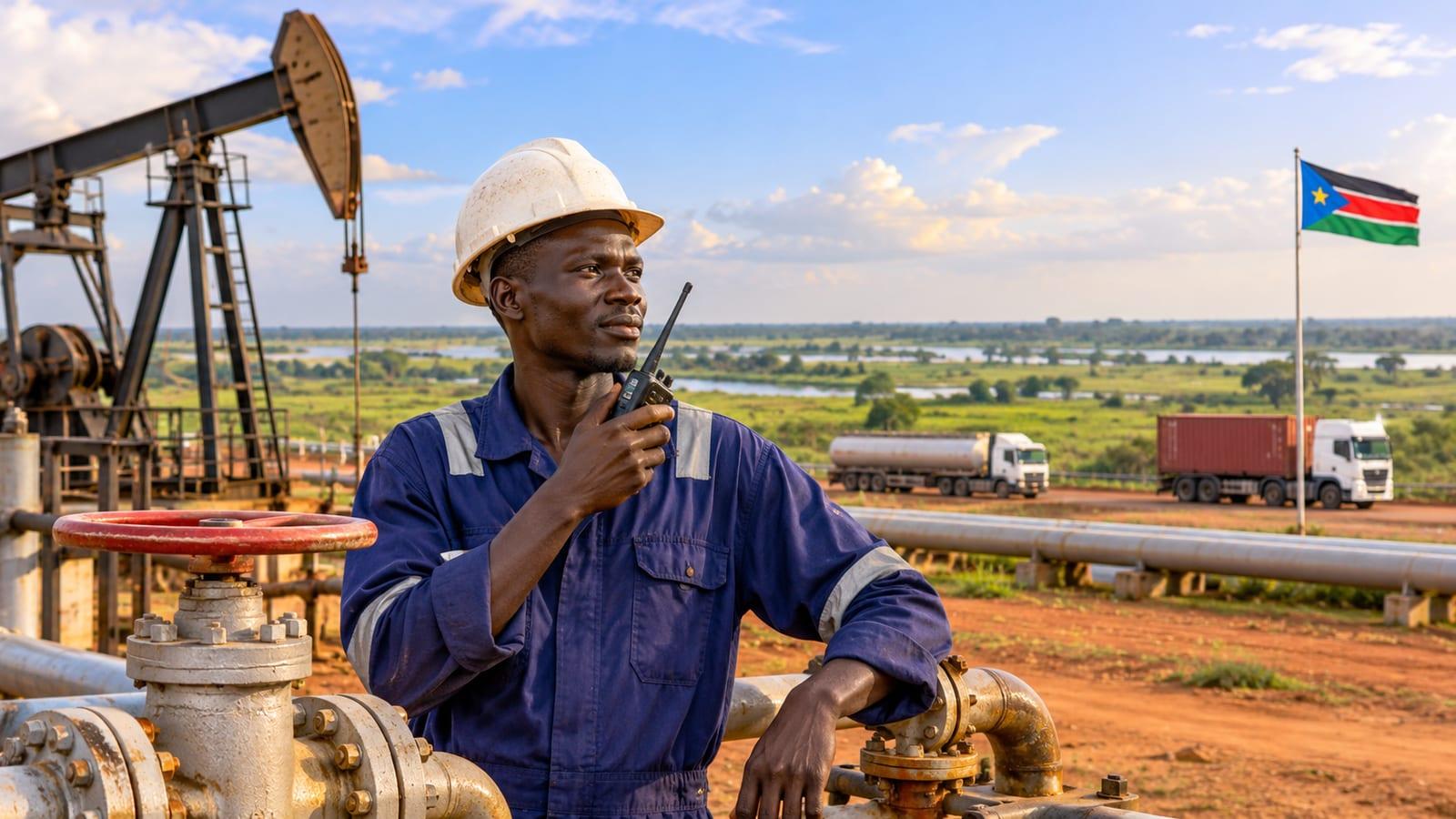
South Sudan's export economy is much more concentrated. Crude oil is its main export and the main source of government revenue. The country depends on infrastructure in neighbouring Sudan to move much of its oil to the international market.
Eritrea exports minerals including gold, copper and zinc. Mining is important to the country's export earnings, although limited economic information makes it difficult to compare its current production and export performance with the other countries in this group.
The importance of services
Goods are only part of East Africa's international trade. Services earn significant foreign exchange for several countries, particularly those with established tourism, transport and financial industries.
Mauritius has developed a diversified services economy that includes tourism, financial services, business services and international investment. Seychelles depends heavily on tourism, while fisheries and canned tuna are also important to its economy.
Kenya has a large services sector covering finance, telecommunications, transport, technology, education and tourism. Nairobi is an important business centre for companies operating across several African markets.
Ethiopia's aviation industry is another major part of the regional economy. Ethiopian Airlines has established itself as Africa's leading airline by several operational measures and connects the continent to destinations across Europe, Asia, the Middle East and the Americas.
Djibouti earns much of its foreign exchange from port operations, freight handling, transit, transport and logistics. Its economy is closely tied to the movement of goods into and out of Ethiopia.
Remittances are also important in parts of the region, particularly Somalia and Comoros. Money sent home by citizens living abroad supports household spending, housing, education, business activity and imports. In Comoros, the World Bank estimated that formal and informal remittances together came to approximately 24.9% of GDP in 2024.
These different sources of foreign exchange explain why countries with smaller GDP figures can still play important roles in international trade. A country's export earnings, service industries and remittance flows tell you things about its economy that nominal GDP alone cannot show.
Regional trade groups and economic connections
In this section
The common market is intended to support the movement of goods, services, people, labour and capital.
East African countries belong to several regional organisations, and their memberships overlap. These arrangements shape customs procedures, trade agreements, infrastructure planning and cooperation between governments.
The East African Community
The East African Community (EAC) has eight members: Burundi, the Democratic Republic of the Congo, Kenya, Rwanda, Somalia, South Sudan, Tanzania and Uganda. Somalia became a full member on 4 March 2024.
Six of those countries are included in this 14-country comparison: Kenya, Tanzania, Uganda, Rwanda, Somalia and South Sudan. Their combined nominal GDP is approximately US$361.0 billion using the October 2026 IMF figures.
The EAC runs a customs union and a common market. The customs union provides a framework for trade in goods between member states and applies a common external tariff to qualifying imports from outside the Community. The common market is intended to support the movement of goods, services, people, labour and capital.
These arrangements have made the EAC an important framework for regional business. However, membership does not mean that all barriers to trade have disappeared. Businesses still meet differences in regulations, product standards, taxes, licensing, border procedures and the way regional agreements are applied.
Kenya, Tanzania, Uganda and Rwanda form an important part of the EAC's commercial network. Kenya supplies manufactured products and services to neighbouring markets, while Uganda and Tanzania have significant agricultural trade with other members.
The EAC also includes Burundi and the Democratic Republic of the Congo, which are covered in the Central Africa section of this series.
COMESA
The Common Market for Eastern and Southern Africa, known as COMESA, has a wider geographical reach. It includes countries from eastern, central and southern parts of the continent and provides a framework for trade cooperation and market integration.
Twelve of the 14 countries in this comparison are COMESA members: Kenya, Ethiopia, Uganda, Sudan, Madagascar, Rwanda, Mauritius, Somalia, Djibouti, Eritrea, Seychelles and Comoros.
COMESA membership gives several countries in this group access to a wider regional trading arrangement beyond their immediate neighbours. It is particularly relevant to businesses looking at trade between East Africa, the Indian Ocean islands and other parts of the continent.
However, the practical benefits depend on the trade arrangements that apply, rules of origin, customs procedures and whether the countries involved have put the necessary agreements into effect.
IGAD
The Intergovernmental Authority on Development (IGAD) focuses on cooperation across the Horn of Africa and neighbouring countries. Its members are Djibouti, Ethiopia, Kenya, Somalia, South Sudan, Sudan and Uganda.
IGAD's work covers regional development, food security, climate, peace and security, migration and economic cooperation. These subjects matter because several countries in the region share borders, pastoral communities, transport routes and security concerns.
Eritrea withdrew from IGAD in December 2025, so it is no longer a member.
SADC and the Indian Ocean Commission
Tanzania, Madagascar, Mauritius, Seychelles and Comoros are members of the Southern African Development Community (SADC). This gives them another regional connection, particularly for trade and cooperation with countries in Southern Africa.
Madagascar, Mauritius, Seychelles and Comoros also belong to the Indian Ocean Commission, which promotes cooperation among island countries and neighbouring territories in the western Indian Ocean.
These memberships matter because the economies of the Indian Ocean islands are not connected only to mainland East Africa. They also have commercial, transport and diplomatic links with Southern Africa, Asia, the Middle East and Europe.
The African Continental Free Trade Area
All 14 countries in this comparison have signed the African Continental Free Trade Area (AfCFTA) agreement except Eritrea.
Signing and ratifying the agreement are different steps. As at September 2026, Sudan and South Sudan had not completed ratification, while the other 11 signatories in this group had deposited their instruments of ratification. Eritrea remained the only country in Africa that had not signed.
The AfCFTA is intended to create a wider African market through lower trade barriers, common rules and cooperation between participating countries. However, businesses should still check the state of implementation, product rules of origin, tariff schedules and customs procedures in the countries where they plan to trade.
Currencies, debt and economic risks
In this section
Most countries run their own monetary systems, although their approaches to managing exchange rates differ.
Unlike parts of West and Central Africa, East Africa does not have a shared regional currency. Each country has its own national currency, and the differences between their exchange rate arrangements can affect trade, investment and the cost of doing business.
Most countries run their own monetary systems, although their approaches to managing exchange rates differ. Djibouti keeps a fixed exchange rate between its franc and the US dollar, while Comoros pegs its franc to the euro.
The US dollar is widely used in Somalia's economy, alongside the Somali shilling. Eritrea uses the nakfa under a tightly controlled monetary system.
Ethiopia introduced major foreign exchange reforms in July 2024, allowing the birr to move under a more market-based system. The reforms were part of a broader economic programme intended to improve the supply of foreign currency and support investment. However, access to foreign currency and the conditions for international businesses remain important considerations.
Currency conditions in Sudan and South Sudan are particularly difficult because of conflict, economic disruption and pressure on public finances. Companies trading with either country need to check payment arrangements, exchange rate risks and the availability of foreign currency before signing commercial agreements.
Public debt is another concern across the region. Kenya has faced pressure from high government borrowing and debt servicing costs, while Ethiopia has been working through a debt restructuring after its December 2023 Eurobond default.
Djibouti has significant external debt, including obligations connected to major infrastructure projects. Its railway and port investments have expanded transport capacity, but their financing has also put pressure on public finances.
Somalia received substantial external debt relief in December 2023 under the Heavily Indebted Poor Countries initiative. This was an important step for the country's public finances, although it did not remove the need for careful borrowing and debt management.
Sudan and South Sudan face more immediate economic risks linked to conflict, disrupted production, public revenue and damaged infrastructure. Eritrea's limited public economic information makes its debt position difficult to compare with confidence.
Political and security conditions also vary across the region. Sudan's war continues to affect businesses and households, while Somalia faces ongoing security challenges from al-Shabaab. South Sudan's first national elections have been postponed repeatedly, with the National Elections Commission's revised timetable setting 11 February 2027 as the new polling date.
Ethiopia and Eritrea continue to face tensions over regional security and access to the sea. Madagascar has also gone through political upheaval and a transition following the events of October 2025.
Climate risks affect several countries as well. Droughts, floods, changing rainfall patterns and pressure on farming can affect food prices, transport, energy supplies and household incomes. These risks are especially important in economies where agriculture provides jobs and export earnings.
For businesses, political stability, access to foreign currency, public debt, security and climate exposure should all form part of a country assessment.
Ports and transport corridors
In this section
Goods arriving at Mombasa move through Nairobi and other transport centres before reaching their destinations.
Four countries in this comparison are landlocked: Ethiopia, Uganda, Rwanda and South Sudan. Their access to international markets depends on transport networks that connect them to seaports in neighbouring countries.
The main regional routes run through Kenya, Tanzania and Djibouti. These corridors connect inland markets to international shipping and bring in fuel, machinery, food, building materials and other goods.
The Northern Corridor
The Northern Corridor connects the Port of Mombasa in Kenya to inland markets in Uganda, Rwanda, Burundi, eastern Democratic Republic of the Congo and South Sudan.
Goods arriving at Mombasa move through Nairobi and other transport centres before reaching their destinations. Road transport remains important, while the railway provides an extra freight option along parts of the route.
Kenya's Standard Gauge Railway currently connects Mombasa, Nairobi and Naivasha. In July 2026, construction began on the Naivasha-Kisumu-Malaba extension, which is intended to bring the railway closer to the Ugandan border.
Uganda is also working towards connecting its railway network to Kenya's. However, its Malaba-Kampala railway project was still waiting for its financing to be completed and full construction to begin in November 2026. The connection should therefore be treated as a project in progress, not an operating railway route.
The Northern Corridor is important to businesses importing goods into Uganda, Rwanda, Burundi and parts of eastern DRC. It also supports farm exports and the movement of manufactured products between neighbouring countries.
The Central Corridor
The Central Corridor connects the Port of Dar es Salaam in Tanzania to inland markets in Rwanda, Burundi, Uganda and eastern Democratic Republic of the Congo.
The route uses roads, railways, inland transport facilities and lake connections to move goods between the coast and the interior. Dar es Salaam is particularly important for countries that prefer access through Tanzania over Mombasa.
Tanzania has been building its Standard Gauge Railway in sections, with the aim of improving freight and passenger links between Dar es Salaam and inland destinations. The railway is part of a wider transport programme that also includes port improvements, roads and other logistics infrastructure.
The Central Corridor gives landlocked countries another route to international shipping. Having more than one possible route is useful because transport costs, congestion, border delays and disruptions can all affect the final price of imported goods.
The Djibouti Corridor
The Djibouti Corridor is particularly important to Ethiopia, which depends heavily on access through its coastal neighbour.
Djibouti's ports handle a large share of Ethiopia's international trade. Goods move between the two countries by road and on the Addis Ababa-Djibouti railway, which began operating in 2018.
The railway provides an important link between Ethiopia's capital and the Port of Djibouti, although road transport remains essential to the wider trading system.
Ethiopia has also explored other sea routes through Berbera in Somaliland and possible connections involving Eritrea and Kenya. These options are part of broader discussions about trade access, regional security and the cost of moving goods.
For businesses operating in Ethiopia, the availability and cost of transport through Djibouti remain important factors when working out import costs, delivery times and export competitiveness.
Other ports and sea routes
The region has several other ports that serve national and international trade.
Port Sudan is Sudan's main sea gateway and also plays a role in moving South Sudanese oil through Sudanese infrastructure. Its operations have been affected by the conflict, so the condition of the port and its connecting transport networks are important considerations for traders.
Somalia's ports include Mogadishu and Bosaso, while Berbera in Somaliland has attracted investment and interest because of its position along important shipping routes.
Madagascar relies heavily on Toamasina, its main commercial port. Mauritius operates Port Louis, which handles international cargo and supports the island's trading and transshipment activities. Seychelles uses Port Victoria for imports, fisheries and maritime services.
Kenya's Port of Lamu is part of the wider LAPSSET development programme, which is intended to connect transport and infrastructure projects across Kenya and neighbouring countries. The port is operating, but the full LAPSSET corridor remains a longer-term programme.
Tanzania's Port of Tanga is an established port that is being developed further and is also linked to plans for the country's oil export infrastructure.
These ports serve different markets and industries, but they share an important role in connecting East African businesses to international shipping.
Border crossings and trade delays
Transport corridors do not end at the ports. Border crossings, customs procedures and inland logistics decide how quickly goods reach their final destinations.
The EAC has introduced one-stop border posts at several crossings, including Malaba and Busia between Kenya and Uganda, and Rusumo between Tanzania and Rwanda. These facilities bring border agencies together so that certain checks can be completed more quickly.
They have helped improve the movement of goods, but businesses still face delays linked to paperwork, inspections, road conditions, congestion and differences in national procedures.
A company importing products into the region should therefore look at the complete journey from the port to the final customer, not only the distance between the port and its destination.
What these economies mean for African businesses
In this section
Uganda has opportunities in agriculture, food processing, energy, construction, logistics and consumer markets.
East Africa offers several possible starting points for companies interested in entering the region, but the best choice depends on the product, the customers, operating costs and the route to market.
Kenya is a natural starting point for many businesses because of its relatively large economy, established financial sector, telecommunications industry, logistics network and regional business links. Nairobi hosts regional offices for international companies and has become an important centre for technology, finance and professional services.
However, setting up a business in Kenya does not automatically give access to every neighbouring market. Companies still need to understand the licensing, tax, customs and distribution rules of each country in which they plan to operate.
Ethiopia offers a large domestic market and strong projected growth. Its population makes it important for companies looking at consumer goods, agriculture, manufacturing, construction, energy and services. The market also brings challenges, including access to foreign currency, regulatory requirements and the rules on foreign investment.
Tanzania is another important market for businesses interested in agriculture, manufacturing, construction, mining, tourism and consumer products. Its access to the Indian Ocean and the Central Corridor also gives it a role in trade with neighbouring landlocked countries.
Uganda has opportunities in agriculture, food processing, energy, construction, logistics and consumer markets. The development of its oil industry may create more demand for engineering, transport, infrastructure and related services, although businesses should separate these future opportunities from industries already operating at scale.
Rwanda has a smaller domestic market, but its services sector, investment climate and regional links make it relevant to companies looking for opportunities in professional services, tourism, technology, construction and regional trade.
Mauritius is worth examining for businesses interested in financial services, international investment, tourism and professional services. Its developed financial system and international links give it a role far beyond its small population.
Seychelles also has a high-income economy, with opportunities in tourism, fisheries, maritime services and specialised consumer markets. Its small population, however, limits domestic demand for many products.
Djibouti is particularly relevant to businesses in shipping, freight, logistics, warehousing, customs services and the movement of goods into Ethiopia. Its market is small, but its location gives it importance in regional trade.
Madagascar offers opportunities in agriculture, food processing, mining-related services, textiles, tourism and manufacturing. Its natural resources and farm production make it relevant to companies looking for suppliers as well as buyers.
Somalia's commercial opportunities include livestock, fisheries, telecommunications, financial services, construction and consumer markets. However, security, infrastructure and regulatory conditions vary considerably across the country and need careful assessment.
South Sudan has opportunities connected to oil, agriculture, construction, logistics and basic services. However, political uncertainty, security conditions, currency risks and dependence on oil revenue make market entry more difficult.
Sudan has long had opportunities in agriculture, livestock, mining, food processing and manufacturing. The ongoing war has severely affected its operating environment, and any commercial assessment must begin with the security and accessibility of the intended location.
Comoros offers a smaller market with opportunities in tourism, fisheries, agriculture and the processing of products such as vanilla, cloves and ylang-ylang. Remittances also support domestic spending, although the country's narrow export base and transport constraints hold back business development.
Eritrea has mineral resources and possible opportunities in mining, agriculture, fisheries and maritime activity. However, its tightly controlled economy, limited public data and restrictions on private enterprise make it a difficult market to assess.
Questions to ask before choosing a market
A business should not choose a country based only on GDP or growth projections. Those figures show the size and direction of the economy, but they do not show whether a particular product or service has a viable market.
Before entering any of these countries, companies should look into:
Customers: Who is likely to buy the product, how many potential customers are there, and what can they afford?
Competition: Which local and international businesses already serve the market, and how do their prices compare?
Suppliers: Can the materials and services needed be sourced locally, or will they have to be imported?
Pricing: What will customs duties, taxes, transport, foreign exchange and distribution add to the final selling price?
Distribution: Which wholesalers, retailers, agents, logistics companies or online channels can reach customers?
Regulations: What licences, product standards, registrations and local approvals are required?
Payments: Can customers and suppliers pay reliably, and what restrictions apply to moving money across borders?
Regional access: Can the business use existing trade agreements to reach neighbouring markets, and what conditions must it meet to qualify?
These questions matter because regional trade arrangements do not remove every national requirement. A company may be able to export a product under a preferential trade agreement and still need to meet product registration, labelling, quality, tax and licensing rules in the destination country.
Looking at East Africa as a group of markets
In this section
The regional trade arrangements connect these countries, but their commercial value depends on implementation.
East Africa has large consumer markets, established farm exports, growing service industries, mineral resources and several important routes to international trade. Its countries also have different levels of income, infrastructure, political stability and access to finance.
Kenya, Ethiopia, Tanzania and Uganda account for most of the combined economic output in this comparison. Mauritius and Seychelles have smaller economies but higher GDP per person. Rwanda has a strong growth projection, while Djibouti plays an important role in international logistics despite its small domestic market.
The regional trade arrangements connect these countries, but their commercial value depends on implementation. The EAC, COMESA, IGAD, SADC and AfCFTA each cover different areas of cooperation, and businesses need to understand which agreements apply to their products and destinations.
Transport infrastructure is just as important. Mombasa, Dar es Salaam and Djibouti are major gateways for goods moving into the region, while the Northern, Central and Djibouti corridors connect these ports to inland markets. Better railways, roads, ports and border facilities can lower transport costs, but projects still under construction should not be treated as if they were already available to businesses.
There are also significant risks. Conflict continues to affect Sudan and parts of Somalia, South Sudan faces political and security challenges, and Ethiopia and Eritrea remain caught up in regional tensions. Debt, exchange rate pressures, climate shocks and differences in national regulations can also affect the cost of operating across the region.
For an African business, the choice of where to enter East Africa should depend on the customers it wants to reach, the products it plans to sell, the suppliers it needs and the routes it can use. Kenya may be a good starting point for one company, while Tanzania, Ethiopia, Uganda or Mauritius may suit another better.
The 14 country profiles in this series take a closer look at each economy, including its industries, trade partners, investment conditions and economic challenges. Together, they offer a starting point for understanding where opportunities exist and what businesses need to check before committing resources.
The next part of the series moves to Southern Africa, beginning with Angola. South Africa, the region's largest economy, already has its own profile.
Sources and further reading
Economic data and regional outlook
International Monetary Fund, World Economic Outlook, October 2026
IMF DataMapper, October 2026
African Development Bank, East Africa Economic Outlook 2026
OECD and African Union Commission, Africa's Development Dynamics
Regional trade organisations
East African Community, partner states, customs union and common market
COMESA, member states
IGAD, membership information
IGAD, statement on Eritrea's withdrawal, 12 December 2025
Southern African Development Community, member states
tralac, AfCFTA ratification status, September 2026
Exports and economic activity
Ethiopia Ministry of Trade and Ethiopian News Agency, export earnings in 2025/26
Reuters, Uganda's gold exports in 2025
World Bank, Comoros and Comoros Economic Update
Transport and infrastructure
East African Crude Oil Pipeline, project information
Kenya Railways and Kenya Government Advertising Agency, Naivasha-Kisumu-Malaba SGR extension, July 2026
Parliament of Uganda, Malaba-Kampala railway project update, November 2026
Northern Corridor Transit and Transport Coordination Authority
Central Corridor Transit Transport Facilitation Agency
Political and security developments
Associated Press, South Sudan postpones its first national elections to February 2027, November 2026
The country profiles linked in the table above provide more country-specific sources and information.