Discover how Comoros earns foreign exchange through cloves, ylang-ylang, vanilla and diaspora remittances, what the country imports, and where businesses can find opportunities.
The islands that supply the world's fragrance industry
In this section
Cloves earn far more, and vanilla is another important crop, although its export earnings have dropped sharply in recent years.
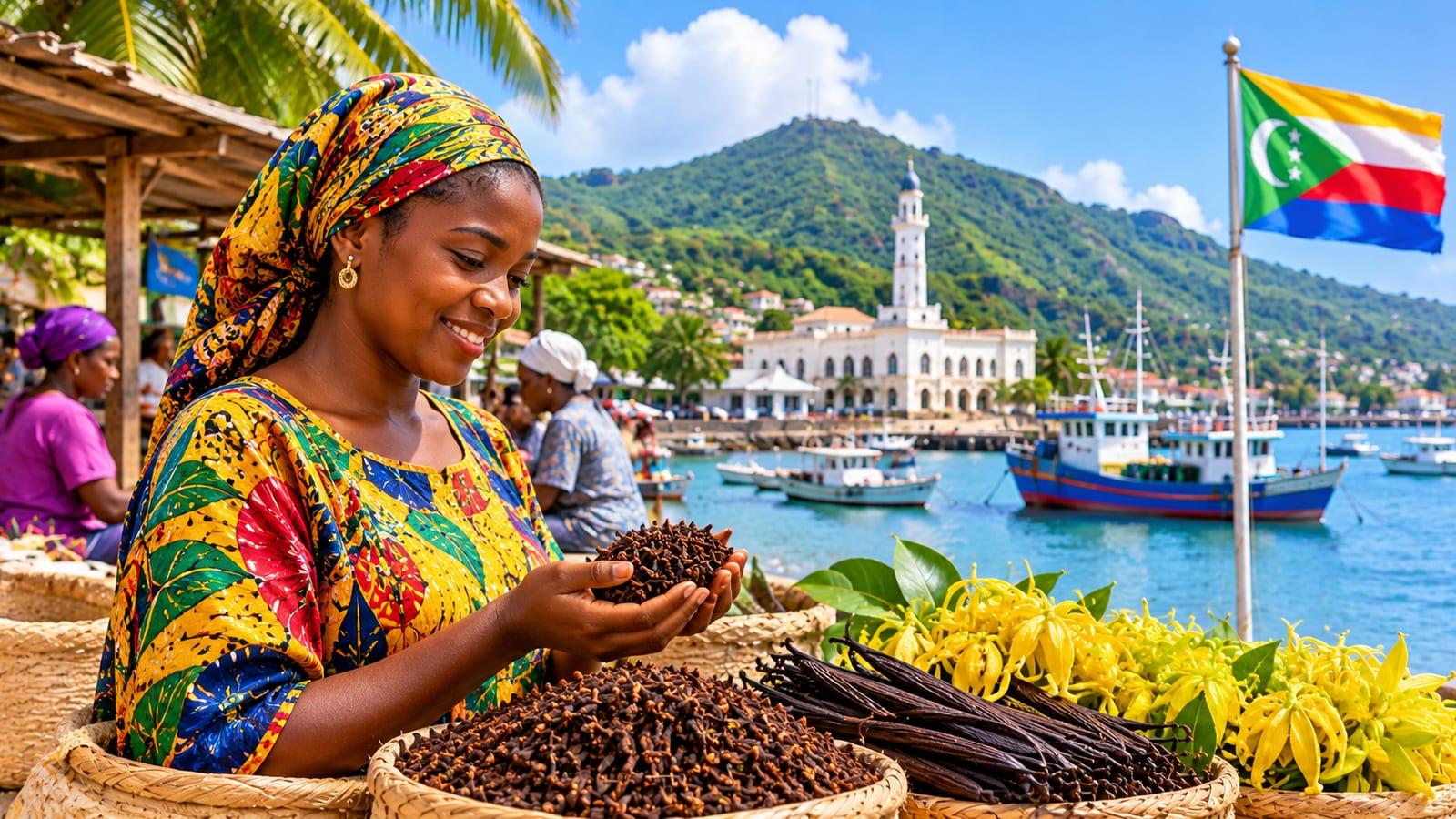
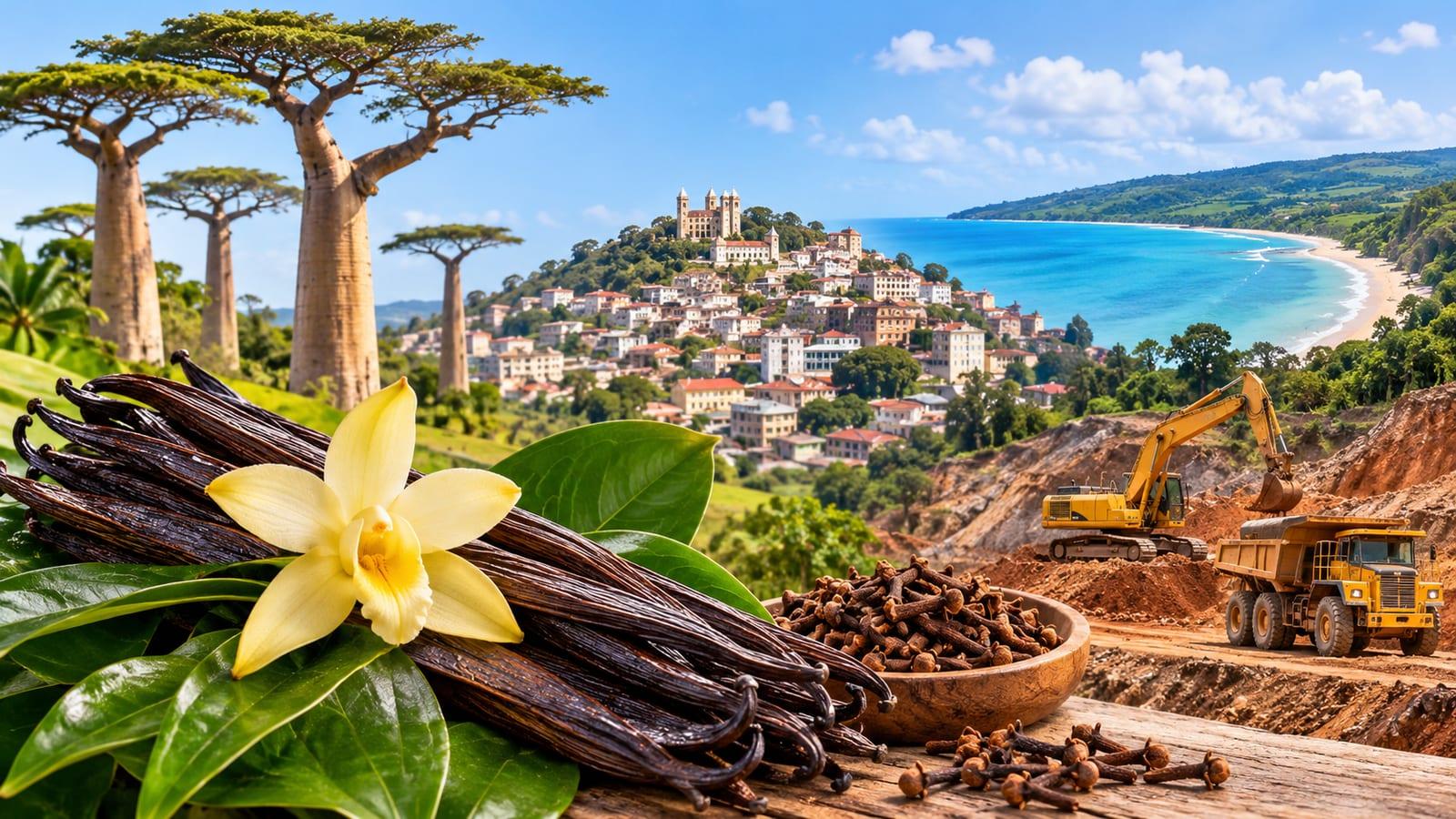
Comoros is known around the world for ylang-ylang essential oil, an ingredient used in perfumes and cosmetics. The country's volcanic islands suit the yellow flowers, which are picked and distilled into an oil sold to international buyers. France has long been the main buyer of Comorian ylang-ylang, reflecting the islands' old ties with the French fragrance industry.
But ylang-ylang is not the country's biggest export. Cloves earn far more, and vanilla is another important crop, although its export earnings have dropped sharply in recent years.
Together, cloves, ylang-ylang and vanilla made up about 74% of Comoros' goods exports in 2024, according to Central Bank of Comoros figures published by the French Treasury. Cloves alone were 61.4%. This makes farming central to the country's ability to earn foreign currency, but it also leaves export earnings exposed to poor harvests and swings in world prices.
There is another big source of money that does not come from selling goods abroad. Comorians living overseas, especially in France, send large sums to relatives at home. This money pays for household spending, school, housing and more. World Bank data puts personal remittances at about 20.8% of GDP in 2023.
This is the thirtieth country profile in our series, Africa's Markets, Country by Country, and the tenth in its East Africa stage, following Seychelles.
Comoros is an island country in the Indian Ocean, at the northern end of the Mozambique Channel between Madagascar and the East African mainland. Its population is estimated at about 930,000 in 2026. The Union of the Comoros is made up of Grande Comore, Anjouan and Mohéli, while the nearby island of Mayotte remains under French rule and is claimed by the Comorian government.
The economy is small. The International Monetary Fund (IMF) estimates nominal GDP at about US$1.73 billion in 2026. The economy keeps growing, but the country faces high import costs, little industry, weak infrastructure and a narrow range of exports.
Comoros at a glance
The figures below come from different periods, so the year next to each one matters. In October 2026, the IMF cut its 2026 growth forecast from 4.1% to 2.9%, and we use the newer figure here.
Measure
Figure
Period and source
Nominal GDP
US$1.81 billion
2025, World Bank
Nominal GDP
US$1.73 billion
2026 estimate, IMF October WEO
GDP per person
US$2,055.80
2025, World Bank
GDP per person
About US$1,860
2026 estimate, IMF October WEO
Real GDP growth
3.8%
2025, World Bank
Real GDP growth
2.9%
2026 estimate, IMF October WEO
Inflation
3.2%
2025, World Bank
Public debt
32.9% of GDP
2025, IMF February assessment
Fiscal deficit
2.3% of GDP
2025, IMF February assessment
Foreign reserves
9.3 months of imports
2025, IMF
Personal remittances
20.8% of GDP
2023, World Bank
Foreign direct investment
0.6% of GDP
2025, IMF
IMF programme
US$43 million
Four-year Extended Credit Facility approved June 2023
Solar power capacity
About 20 MW
Three plants opened September 2026
Currency
Comorian franc (KMF)
Fixed to the euro
Trade memberships
COMESA, SADC, IOC, Arab League, WTO and AfCFTA
Membership and ratification status
How the economy is built
In this section
In 1997, Anjouan and Mohéli declared independence from the Comorian government, setting off a serious crisis.
Farming is at the heart of the Comorian economy. It made up about 36.6% of GDP in 2024 and employed around 34% of workers in 2023, according to World Bank figures published in a French Treasury report.
Most farming happens on small plots, where families grow food such as cassava, bananas, maize, taro and coconuts alongside cash crops. Volcanic soil and a tropical climate suit cloves, vanilla and ylang-ylang, although output and export earnings change a lot from year to year.
Fishing also supports families across the islands, and services make up a large part of the economy. Retail, transport, telecommunications, government and other businesses are concentrated in Moroni, the capital, and Mutsamudu, a key trading town on Anjouan.
Manufacturing is limited. Crop processing, essential oil distilling, construction and food businesses provide some industry, but Comoros has no large factory base.
Money from the diaspora is another big part of the economy. France has a large Comorian community, and family ties between the islands and those abroad have shaped household finances and property building for years. Remittances help families pay for imported food, schooling, healthcare, housing and daily costs. They also drive demand for building materials, shops and other services.
The World Bank's standard measure recorded personal remittances worth 20.8% of GDP in 2023. A wider World Bank estimate that counts both formal and informal transfers put total remittances at about 24.9% of GDP in 2024. These use different methods, so the two figures should not be swapped for each other.
Foreign aid and development finance also pay for public investment. France, the European Union, international lenders and other partners support projects in infrastructure, farming, education and energy.
Political history and the economy
Comoros became independent from France in 1975, although the status of Mayotte was never settled. The years that followed were unstable, with successful coups and attempted takeovers.
In 1997, Anjouan and Mohéli declared independence from the Comorian government, setting off a serious crisis. The Fomboni Agreement of 2000 helped create a new constitutional set-up that gave the islands more self-rule and brought in a presidency that rotated between them to share power.
Azali Assoumani first took power in a military coup in 1999. He later returned through elections and has stayed at the centre of Comorian politics. He won another term in January 2024, although the opposition disputed the results.
The ruling party also won a majority in the parliamentary elections that began in January 2025. The main opposition party boycotted the vote, and disputes continued throughout.
Political disputes and the concentration of power remain worries for businesses, especially those that rely on predictable government decisions, public contracts and long-term investment deals.
Growth and public finances
Comoros has kept growing, but slowly for a country with its development needs. The World Bank recorded growth of 3.8% in 2025, while the IMF's October 2026 outlook expects 2.9% in 2026.
Growth is supported by household spending, services, farming and foreign-funded public investment. But a narrow export base and reliance on imported food, fuel and equipment leave the economy exposed to world prices and supply problems.
The government is also working under an IMF Extended Credit Facility approved in June 2023. The four-year programme provides about US$43 million and supports reforms to public finances, tax collection and the financial sector.
In February 2026, the IMF completed the programme's fifth review, which released another payment. The IMF also approved waivers for targets the government had missed.
The reforms asked for include better tax and customs collection, better management of public money, stronger bank supervision and a restructuring of the state-owned postal bank. These matter because government revenue is low while the country needs heavy investment in infrastructure and public services.
Although public debt was about 32.9% of GDP in 2025, the IMF and World Bank still rate Comoros at high risk of debt distress. The worry is not only the size of the debt. A small tax base, cash shortages and a history of falling behind on foreign payments make debts hard to manage when money gets tight.
What Comoros sells, buys and who it trades with
In this section
Comoros exported more than 5,300 tonnes of cloves in 2022, making it one of the world's notable clove exporters.
Comoros relies heavily on a small group of farm exports. Cloves, ylang-ylang and vanilla are the three main cash crops, but they earn very different amounts.
Cloves
Cloves are the biggest goods export. They made up 61.4% of goods exports in 2024, according to Central Bank figures published by the French Treasury.
They are grown mainly on Anjouan, though also elsewhere. The flower buds are dried and sold to international buyers, who use them in food, spice processing, essential oils and other products.
Comoros exported more than 5,300 tonnes of cloves in 2022, making it one of the world's notable clove exporters. But earnings depend on world prices and harvests. The value of clove exports fell by 25.6% in 2024.
For businesses, cloves offer openings in sourcing, storage, grading, packaging and processing. Better handling and quality control could help farmers meet buyers' standards and cut losses between harvest and export.
Ylang-ylang is one of Comoros' best-known exports. The flowers are picked and distilled into an essential oil used in perfumes, cosmetics and other fragrance products.
Comoros has long been seen as the world's leading producer of ylang-ylang oil. Production is concentrated on Anjouan, where small growers and commercial distillers both take part.
France has long been the main buyer. Between 2010 and 2021, it took 94% of the value of Comoros' ylang-ylang oil exports, according to the French Treasury.
The oil is sold in grades, and quality sets the price and which buyers it can reach. Producers and exporters must take care with picking, distilling, storage and quality, because fragrance buyers want a consistent product.
The sector has its own problems. Distilling uses a lot of energy, and better methods and reliable power could cut costs. There is room to invest in better equipment, quality certification, sustainable production and closer ties with international fragrance companies.
Vanilla
Vanilla is another traditional export, but it now earns far less than cloves.
Comoros has between 12,000 and 14,000 green vanilla growers, according to French Treasury figures for 2024. Production is spread across the islands and involves many small farmers.
The sector has struggled as world vanilla prices have fallen from their highs. The value of Comorian vanilla exports dropped by 63.1% between 2023 and 2024, to about €700,000, or 2.5% of goods exports.
This fall shows that a crop's old reputation is not enough. Growers need buyers, proper processing and storage, and reliable quality to earn better prices.
There may also be room to process vanilla locally into extracts and other products, though this would need steady supply and access to buyers.
Remittances and services
Remittances are among the most important sources of outside income for Comorian households. Money from relatives abroad pays for food, school, housing, building and other services.
This creates demand for businesses serving households and the diaspora, including money transfer firms, building suppliers, property services, shops and banks.
Services also support the economy through transport, telecommunications, trade and government. But tourism is still small compared with its potential, partly because of few transport links, limited accommodation and weak tourism infrastructure.
What Comoros buys
Comoros imports much of the food, energy and equipment it uses. Rice matters most, because it is a staple and local farms cannot grow enough.
Other big imports include petroleum products, meat, flour, sugar, cooking oil, cement, vehicles, machinery, medicines and consumer goods.
WTO data based on UN Comtrade records US$273.1 million of goods imports in 2023. The United Arab Emirates was the largest single supplier, with 27.6% of imports. The European Union supplied 17%, followed by India at 10.3%, China at 9.5% and Pakistan at 9.4%.
These figures show that Comoros buys from several markets rather than relying on one regional supplier. They also point to openings for exporters who can supply essential goods at good prices and handle the cost of shipping to the islands.
Trade agreements and how goods move
In this section
Mutsamudu on Anjouan is an important commercial port, while Moroni serves the capital and much of Grande Comore.
Comoros belongs to several regional and international groups that shape its market access and trade rules.
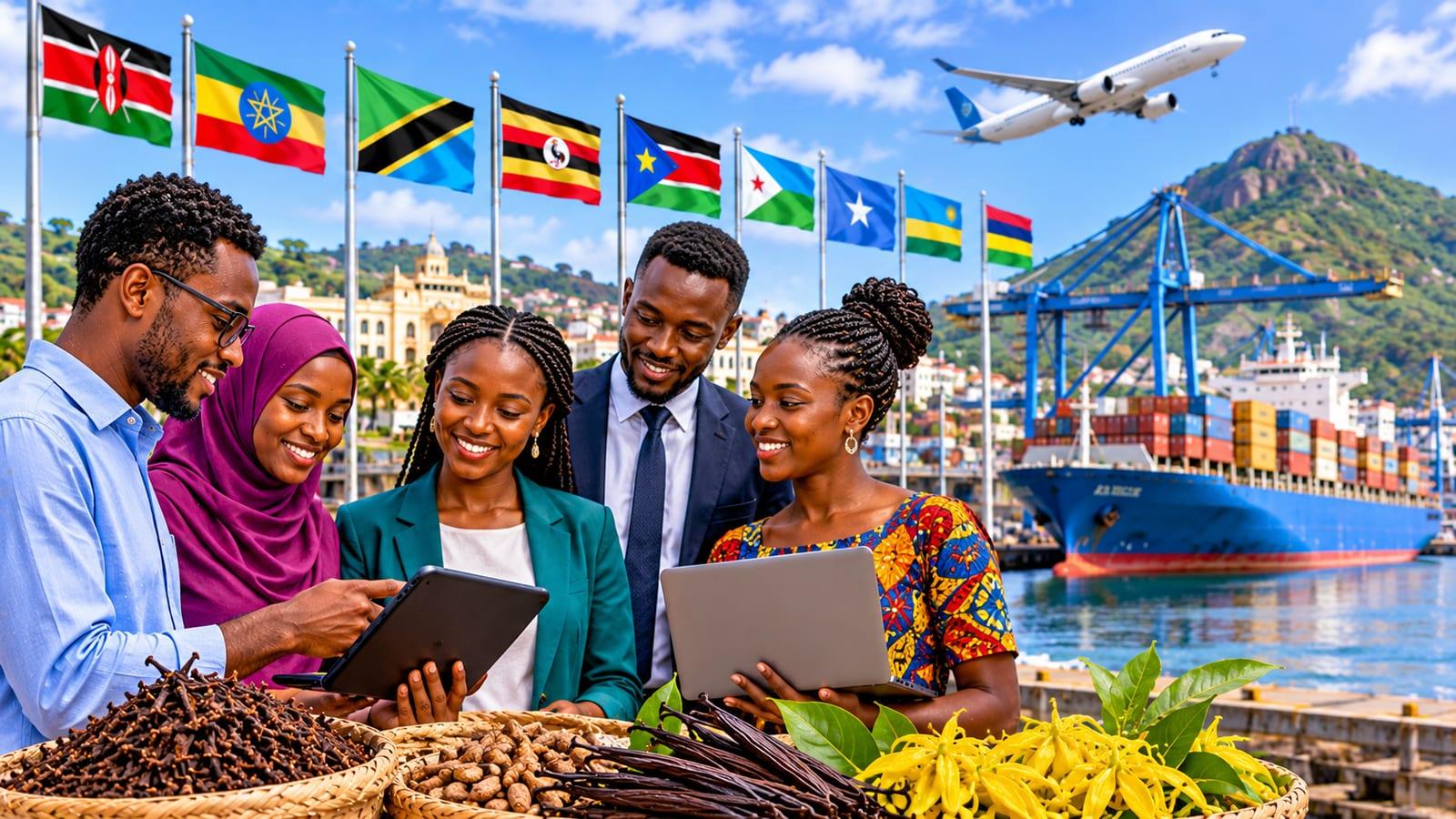
It is a member of the Common Market for Eastern and Southern Africa (COMESA), the Southern African Development Community (SADC), the Indian Ocean Commission and the Arab League. Our guide to Africa's trade blocs explains how these groups work. It also became the 165th member of the World Trade Organization on 21 August 2024.
Comoros has also ratified the African Continental Free Trade Area (AfCFTA) agreement. The agreement provides a framework for lowering trade barriers between African countries, although the real benefits depend on tariff schedules, customs procedures, transport links and how each country carries out its commitments.
For trade with Europe, Comoros has benefited from the interim Economic Partnership Agreement between the European Union and Eastern and Southern African countries. In June 2026, the EU and Comoros, along with Madagascar, Mauritius and Seychelles, concluded negotiations on an enhanced agreement to deepen their trade ties. Concluding talks is not the same as the agreement coming into force, which still needs the legal steps.
These arrangements give Comorian exporters access to important markets, but they do not remove the practical hurdles of meeting standards, clearing customs and moving goods abroad.
Ports and shipping
Shipping is essential to Comoros because the country is made up of three separate islands and relies heavily on imports.
Mutsamudu on Anjouan is an important commercial port, while Moroni serves the capital and much of Grande Comore. Port capacity, cargo handling and transport between the islands all affect the cost and reliability of moving goods.
Businesses must plan for the extra logistics of supplying several islands. A shipment that reaches Grande Comore may still need another leg to reach customers on Anjouan or Mohéli.
The availability of shipping services, cargo handling and reliable schedules can therefore push up the final price of imported goods.
Air links
Prince Said Ibrahim International Airport, near Moroni, is the main international airport. Flights link Comoros with some regional and international destinations, while other markets may need connections.
For businesses, air transport matters most for passengers, urgent shipments and high-value goods that cannot easily go by sea. But air freight is usually more expensive, and few connections make logistics harder for exporters and importers.
Mayotte and relations with France
Mayotte is geographically part of the Comoros archipelago, but it remains under French rule.
In the December 1974 independence referendum, the three islands that now form the Union of the Comoros voted for independence, while about 63.8% of voters in Mayotte voted against. France later held further referendums, and Mayotte became part of the French Republic.
The Comorian government still claims the island as its own, and the dispute remains a major issue between Comoros and France.
Mayotte also has much higher average incomes than the Union of the Comoros. The gap has driven migration across the sea, including dangerous journeys by people trying to reach the French island.
For businesses, Mayotte matters because it is close by, linked to France and part of the movement of people and goods across the wider archipelago. But the political dispute and immigration controls have to be weighed when looking at cross-border trade.
Sectors with room to grow and doing business
In this section
French is widely used in government, education and formal business, while Comorian is spoken in everyday life.
Comoros has a small home market, but several sectors offer room for investment, especially where businesses can raise output, cut reliance on imports or serve existing export markets.
Essential oils and crop processing
The essential oil industry already has an international market, especially for ylang-ylang. Better distilling equipment, higher standards, proper storage and reliable energy could help producers improve quality and consistency.
Cloves and vanilla also offer openings in grading, packaging, processing and export preparation. Businesses that can work with local growers and meet international buyers' standards may find a place in these supply chains.
The challenge is that farming is fragmented, and exporters have to cope with changing harvests and world prices. Investment needs to plan for this rather than assume demand alone guarantees a profit.
Fishing and the ocean economy
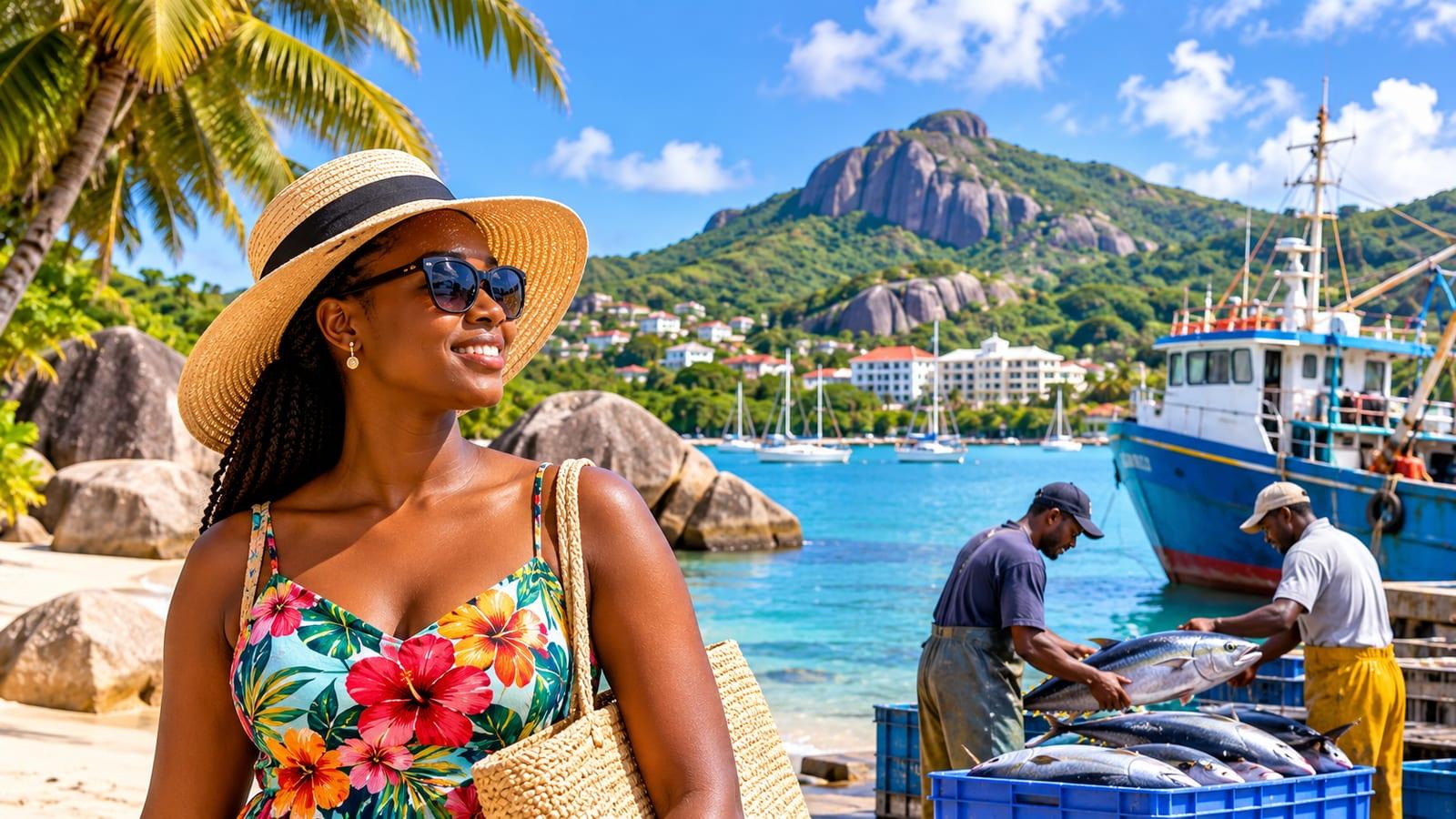
Comoros has rich marine resources, including tuna and other valuable fish. Fishing supports coastal communities, but the country needs better infrastructure to earn more from its seas.
Cold storage, ice making, fish handling, processing and better transport could all help. These would also need reliable electricity, suitable ports and sustainable management of fish stocks.
The World Bank has named the ocean economy as an important area for future growth, with openings in fishing, maritime services and related work. But these depend on investment in infrastructure and protecting marine resources.
Energy
Electricity has long been a problem for businesses in Comoros. Power cuts raise costs, disrupt production and make refrigeration and food processing harder.
A big step came in September 2026, when three solar plants with a combined capacity of about 20 MW opened across the islands.
They include 12.86 MW on Grande Comore, 4.05 MW on Anjouan and 3.1 MW on Mohéli. The project also includes battery storage with 8 MW of output and 16 MWh of capacity on Grande Comore and Anjouan, plus about 30 kilometres of power lines.
The plants are expected to produce about 33.75 GWh of electricity a year. That is an important addition, but it does not mean the power problems are solved.
More investment in solar, battery storage, distribution networks and energy services could create business openings. Companies in installation, maintenance, equipment supply and energy management may find demand as the country builds out its power system.
Tourism
Comoros has natural and cultural attractions that could support a bigger tourism industry. These include the volcanic landscape of Grande Comore, beaches, marine life, sea turtles on Mohéli and historic towns across the islands. Our piece on the Comorian grand marriage looks at one of the islands' best-known traditions.
In July 2026, the Medinas of the Historic Sultanates of the Comoros were added to the UNESCO World Heritage List, the country's first listing. The site covers six historic towns on Grande Comore and Anjouan, reflecting the islands' history, architecture and links with Indian Ocean trade.
The listing gives the country a new way to promote its heritage abroad. But drawing more visitors will need better transport links, accommodation, visitor services, conservation and tourism infrastructure.
Businesses could look at accommodation, food, local transport, cultural tours and other visitor services, but demand has to be weighed against the country's current tourism capacity.
Food and building supplies
Comoros imports large amounts of food, fuel and building materials. This creates openings for suppliers that can offer good prices and dependable delivery.
Rice, flour, sugar, cooking oil and other staples are important imports. Building materials also sell well because of home building, public works and diaspora-funded projects.
Businesses from Tanzania, Kenya, Madagascar, Mauritius, South Africa and other markets can look at supplying these goods, although buyers will choose on price, quality, shipping and import rules.
Understanding the business environment
French, Arabic and Comorian are the official languages. French is widely used in government, education and formal business, while Comorian is spoken in everyday life.
Comoros is part of OHADA, the shared business law system that sets common rules for company formation, commercial deals, accounting and business disputes across its member states.
The country uses the Comorian franc, fixed to the euro at €1 to KMF 491.96775. This reduces currency risk for businesses trading with euro-linked markets, though it does not remove other financial and commercial risks.
Businesses entering Comoros should also weigh the small population, the extra cost of distributing goods across three islands, limited access to credit, paperwork and infrastructure gaps.
A company planning to sell imported goods, for example, needs to understand not only demand but also the cost of shipping, customs, storage and final delivery. For farm exporters, the main questions are supply volumes, quality standards, processing capacity and access to reliable international buyers.
Risks and trade-offs
In this section
Comoros imports much of its food and energy, leaving households and businesses exposed to world prices and shipping costs.
Reliance on a few exports. Cloves, ylang-ylang and vanilla make up a large share of goods exports. This leaves the country exposed when harvests fail or world prices fall. The sharp drop in vanilla earnings between 2023 and 2024 shows how quickly one crop market can hit export income.
Reliance on imports. Comoros imports much of its food and energy, leaving households and businesses exposed to world prices and shipping costs. Supply disruptions can push up the cost of essentials and squeeze household budgets.
Reliance on remittances. Money from the diaspora supports household spending and helps pay for property and other projects. But a downturn in the main diaspora countries, tighter migration rules or fewer jobs abroad could cut the money sent home.
Political and financial risks. Comoros has gone through repeated political instability, and disputes over elections and the sharing of power remain concerns. The country also has low public revenue, tight financing and a high risk of debt distress. Businesses that depend on government contracts, public infrastructure spending or long-term regulatory stability should weigh these risks carefully.
Climate and natural hazards. The islands face tropical storms, coastal erosion, rising seas and other climate pressures. Grande Comore is also home to Mount Karthala, an active volcano. These risks can affect farming, coastal infrastructure, transport and the cost of maintaining buildings. Businesses in farming, fishing, tourism and construction need to plan for local conditions.
What this means for an African business
In this section
Businesses interested in these markets should understand how family ties abroad shape what households buy.
Comoros is a small market, but it has clear import needs and established export industries. The best way to see its business openings is to look at what it already buys, what it sells abroad and where its infrastructure holds business back.
For African exporters, food, building materials, machinery, energy equipment and consumer goods are worth a look because Comoros relies on imports in these areas. Suppliers in East and Southern Africa can judge whether they can compete with established suppliers from the UAE, Europe, India, China and Pakistan.
Crop processing is another area to explore. Cloves are already a big export, and ylang-ylang has an established world market. Businesses that can provide equipment, quality control, packaging, storage and links to international buyers may find openings working with local growers.
Energy is also important. The new solar plants add capacity, but Comoros still needs reliable power distribution, maintenance services and more investment in renewables and storage.
The diaspora drives demand in housing, building materials, financial services and retail. Businesses interested in these markets should understand how family ties abroad shape what households buy.
But the small population means businesses should not treat Comoros like a large national market. Distribution across the islands, shipping costs, access to finance and unreliable electricity all add to the cost of operating there.
For companies thinking of entering, it is worth finding a local distribution partner, learning the import rules and working out the full cost of getting products to customers before committing money.
Comoros earns much of its export income from a few crops, gets strong support from its people abroad and relies on imports for many everyday needs. Businesses that understand these conditions will be better placed to see where demand is and what it takes to serve the market.
Comoros completes our tour of East Africa's economies. The next article brings the East African country profiles together for a side-by-side look at their economies, exports, imports and business opportunities.