Discover how the Seychelles economy works, from luxury tourism and tuna exports to port services, international finance, the blue economy and opportunities for African businesses.
Three visitors for every resident
In this section
Seychelles has built a relatively wealthy economy since gaining independence from Britain on 29 June 1976.
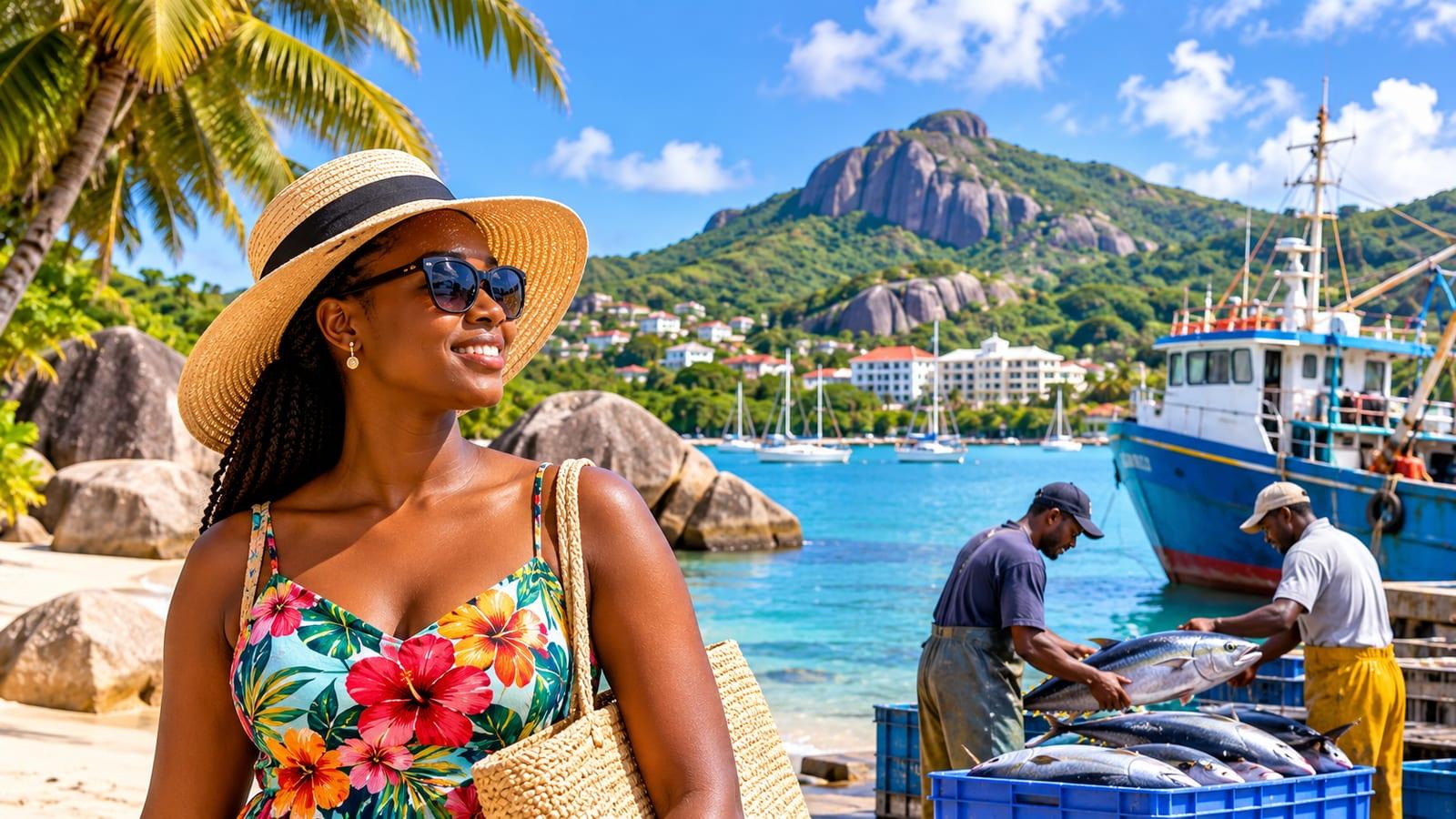
Seychelles is a small island country in the western Indian Ocean, but its economy reaches far beyond its population of about 123,000 people. Tourism brings visitors from Europe, the Middle East, Asia and other parts of the world, while its fishing industry supplies tuna to international markets. Its location also gives it an important role in the Indian Ocean fishing and shipping trade.
In 2025, Seychelles welcomed 398,841 visitors, according to national tourism statistics reported by the Central Bank of Seychelles. That was more than three times its resident population and 13% more than the year before. Tourism earnings reached approximately US$1.196 billion, a rise of 29%, according to the Central Bank. These earnings come from visitor spending on accommodation, restaurants, transport, excursions and other services.
The tourism industry also makes the country vulnerable to events beyond its borders. In 2026, conflict in the Middle East disrupted air travel through important Gulf hubs and affected visitor arrivals. The International Monetary Fund lowered its growth expectations for the year to about 1%, and the World Bank projects a similar 1.1%. Although visitor numbers began recovering, the disruption showed how quickly problems with international travel can affect businesses across the islands.
Seychelles has built a relatively wealthy economy since gaining independence from Britain on 29 June 1976. It has an established tourism industry, a large tuna-processing operation, an important fishing port and an international financial services sector. According to the World Bank, its nominal GDP was approximately US$2.39 billion in 2025, while GDP per person was about US$19,449, among the highest figures recorded for any African country.
However, these figures do not mean that most Seychellois households have that amount of income. GDP per person measures the value of economic production divided by the population. It does not show how income is shared out or how much money individual households have available to spend.
The country has 115 islands, approximately 455 square kilometres of land and an Exclusive Economic Zone covering about 1.374 million square kilometres. Its sea area gives it access to valuable fisheries and maritime activities, although managing such a large marine territory takes substantial resources.
This is the twenty-ninth country profile in Africa's Markets, Country by Country, and the ninth of its East Africa stage, following Eritrea. After Seychelles, the series moves to Comoros before bringing the East African country profiles together.
Seychelles at a glance
Measure
Figure
Period and source
Nominal GDP
US$2.39 billion
2025, World Bank
GDP per person
US$19,449
2025, World Bank
Real GDP growth
5.8% (World Bank); 5.1% (IMF)
2025
Real GDP growth forecast
About 1%
2026, IMF September assessment; World Bank 1.1%
Inflation
0.3% annual average
2025
Public debt
Roughly 52% to 54% of GDP
End-2025, IMF and Ministry of Finance estimates
Foreign exchange reserves
About four months of import cover
2026, IMF
Tourist arrivals
398,841
2025, Central Bank of Seychelles
Tourism earnings
US$1.196 billion
2025, Central Bank of Seychelles
Population
Approximately 122,730
2025
Land area
Approximately 455 km²
Number of islands
115
Exclusive Economic Zone
Approximately 1.374 million km²
Currency
Seychellois rupee (SCR)
Floating since November 2008
Credit rating
BB, stable outlook
Fitch, upgraded September 2025
The World Bank and IMF growth figures for 2025 differ because they come from separate estimates, so both are shown rather than combined into one number.
How the economy is built
In this section
For Seychelles, the agreement brings fishing access revenue and supports cooperation on fisheries management.
Seychelles depends mainly on tourism and fisheries, with financial services and other businesses providing extra sources of income. These industries also support a wider network of businesses, including hotels, restaurants, transport companies, shipping agents, food suppliers, construction firms and professional services.
Tourism is the largest source of foreign exchange from services. Fishing is important for merchandise exports and industry, particularly because Seychelles has built facilities for landing, processing and exporting tuna. The two industries serve different markets, but both depend on international customers and transport connections.
Tourism brings in most of the country's service export earnings
Tourism is central to the Seychelles economy. Its islands, beaches, marine life and relatively exclusive accommodation attract visitors who spend money on hotels, guesthouses, restaurants, transport, boat trips, diving and other activities.
The Central Bank of Seychelles estimated tourism earnings at US$1.196 billion in 2025, compared with about US$925 million in 2024. Visitor arrivals reached 398,841, an increase of 13% over the previous year. Europe supplied about 70% of all arrivals, and Asia about 18%. Average spending per visitor also rose.
Tourism also supports businesses that do not deal directly with visitors. Hotels buy food, beverages, furniture, cleaning products and equipment, while restaurants use local and imported ingredients. Transport operators, construction companies, maintenance contractors and retailers also get business from the industry.
Seychelles has accommodation ranging from large resorts and private-island properties to smaller hotels, guesthouses and self-catering places. This gives visitors different options, although the country remains strongly associated with higher-priced holidays.
The industry has a significant weakness, however. Seychelles depends heavily on international air connections, and a large share of its visitors travel through Gulf aviation hubs such as Doha, Dubai and Abu Dhabi. When conflict disrupted flights through these hubs in 2026, visitor numbers fell, affecting hotels and other tourism businesses.
The IMF's September 2026 assessment reported that the effects were most visible between March and June, although a gradual recovery had started in the following months. It projected real GDP growth of about 1% for the year, compared with 5.8% in 2025. The World Bank also pointed to delays in renewing the EU fisheries agreement as a drag on 2026 growth.
This experience shows why Seychelles needs access to several visitor markets and a wider range of international air connections. It also explains why tourism businesses pay close attention to airline schedules, travel costs and changes in demand in Europe and other major source markets.
Tuna gives Seychelles an important place in international fishing
Fishing is the other major pillar of the economy. Seychelles sits in the western Indian Ocean, an important area for tuna fishing, and has developed Port Victoria into a major regional centre for industrial fishing.
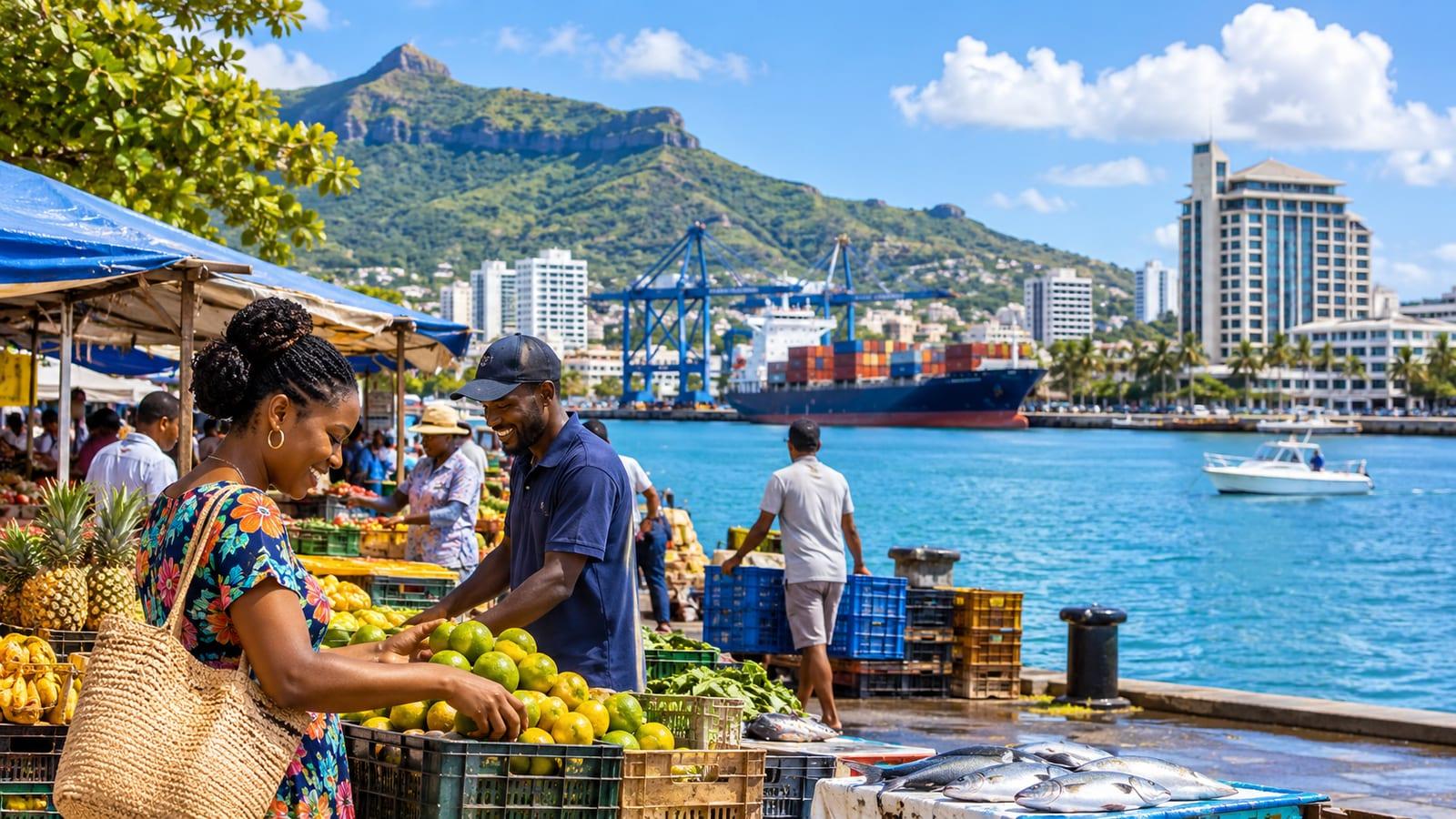
Foreign fishing vessels use Seychelles' waters under licensing arrangements and bring their catches to Port Victoria for landing and transshipment. Port Victoria is one of the busiest tuna ports in the Indian Ocean, and a large share of the region's purse-seine catch is landed or transshipped there. The port also provides services that fishing vessels need, including fuel, food supplies and maintenance.
Tuna processing adds another layer of economic activity. Indian Ocean Tuna Limited, a subsidiary of Thailand's Thai Union Group, runs the country's tuna cannery at the fishing port in Victoria. It processes tuna for export, particularly to European markets, and employs a large workforce.
The importance of the processing industry shows in the country's export figures. World Bank World Integrated Trade Solution data, based on UN Comtrade, recorded about US$273.9 million in Seychelles' 2024 exports of prepared or preserved tuna, skipjack and bonito. That was close to half of the country's total goods exports of about US$594.5 million that year, according to the WTO.
France is the largest buyer of Seychelles' canned tuna, with the United Kingdom, Italy, the Netherlands and Germany also important markets. These figures cover prepared and preserved tuna, rather than every type of fish export. They still show how important European consumers are to Seychelles' tuna-processing industry.
The fishing industry also generates income outside the cannery. Foreign vessels pay for access to fishing grounds, while local businesses supply services to vessels and to companies involved in processing, storage and shipping.
Seychelles and the European Union signed a new four-year fisheries protocol on 27 July 2026, running until July 2030. It allows up to 30 EU purse-seine vessels and eight surface longliners to fish in Seychelles' waters, with a reference catch of 55,000 tonnes of tuna and similar species a year. It is being applied provisionally while the remaining formal steps are completed.
For Seychelles, the agreement brings fishing access revenue and supports cooperation on fisheries management. It also gives European fleets continued access to an important tuna fishing area.
Financial and corporate services
Seychelles has also developed an international financial services industry. Companies use the country for international business company registration, corporate administration, trusts and other financial and professional services.
This industry brings work to lawyers, accountants, company administrators, compliance staff and other service providers. It is smaller than tourism and fisheries, but it gives Seychelles another source of service exports.
International financial services are subject to strict rules, particularly around beneficial ownership information, anti-money-laundering controls and identifying clients. Keeping access to international markets depends partly on the country's ability to meet these standards.
The number of companies registered in Seychelles should not be confused with the amount of money the country earns from financial services. Registration figures alone do not show the industry's contribution to jobs, government revenue or GDP.
How Seychelles recovered from its 2008 debt crisis
Seychelles went through a serious financial crisis in 2008. Years of economic imbalances, an overvalued exchange rate and falling foreign currency reserves left the country struggling to meet its external payments. The situation worsened during the global financial crisis, and the government missed payments on its foreign debt.
The IMF has reported that gross public debt exceeded 192% of GDP and that foreign exchange reserves fell to about two weeks of import cover.
The government responded with major economic reforms supported by the IMF. These included removing foreign exchange restrictions, letting the Seychellois rupee float, tightening public spending and restructuring government debt.
The reforms were difficult, but they helped rebuild foreign exchange reserves and put public finances on a more sustainable path. Seychelles kept working with the IMF in later years, including through programmes focused on fiscal management, financial stability and climate resilience.
By the end of 2025, public debt had fallen to roughly 52% to 54% of GDP, depending on the estimate, and reserves covered about four months of imports.
The recovery has not removed all the country's economic risks, but it has given Seychelles more room to handle outside shocks than it had in 2008.
What Seychelles sells, buys and who it trades with
In this section
European countries, particularly France and Spain, are also major suppliers, along with China, India and South Africa.
Seychelles exports goods and services, although the two play different roles in its economy. Tourism is its largest source of service export earnings, while canned tuna and other fish products are its main merchandise exports.
Tourism services: International visitors pay for accommodation, restaurants, transport, excursions, diving, boat trips and other activities. Tourism earnings count as service exports because visitors from abroad buy services in Seychelles.
Canned tuna and fish products: The tuna-processing industry supplies canned fish to international supermarkets, food distributors and other buyers. Frozen and fresh fish products also add to exports.
Fishing and port services: Seychelles earns money by granting foreign vessels access to its fishing grounds and by providing services to vessels using Port Victoria. These include landing, transshipment, refuelling, repairs and supplies.
Financial and professional services: International company administration, legal services, accounting and related work bring in income from clients outside the country.
What Seychelles buys
Seychelles imports a large share of the goods used by households and businesses. Its limited land, small farming sector and lack of domestic oil make international suppliers essential to daily life.
The country imports almost all of its energy, most of its food and most of its industrial inputs. Machinery and transport equipment, food, fuel and manufactured goods make up most of the import bill. The WTO records total imports of about US$1.5 billion in 2024.
The country imports vehicles, machinery, construction materials, medicines, household products, food, beverages, fuel and equipment used by hotels, factories and other businesses.
The United Arab Emirates is the largest source of Seychelles' imports, much of it fuel and goods shipped through Dubai. European countries, particularly France and Spain, are also major suppliers, along with China, India and South Africa. Neighbours such as Madagascar and Mauritius supply smaller amounts.
These figures refer to the recorded country from which imports come. They do not always show where every product was originally made.
Trade agreements and how goods move
In this section
Southern African Development Community (SADC): Seychelles is a member of SADC and takes part in its regional trade arrangements.
Seychelles' location in the Indian Ocean makes shipping and air transport essential to its economy. Almost all imported goods arrive by sea, while tourism depends heavily on international air connections.
Regional and international trade agreements
Seychelles takes part in several regional trade arrangements that give it access to larger markets.
Southern African Development Community (SADC): Seychelles is a member of SADC and takes part in its regional trade arrangements. This provides a framework for trade with countries including South Africa, Mauritius, Madagascar, Tanzania and other members.
Common Market for Eastern and Southern Africa (COMESA): Seychelles is also a member of COMESA, which works to improve trade and economic cooperation among its member countries.
Indian Ocean Commission: Seychelles belongs to the Indian Ocean Commission alongside Comoros, Madagascar, Mauritius and France, represented through Réunion. The organisation supports cooperation on regional development, maritime security, environmental protection and other shared priorities.
African Continental Free Trade Area (AfCFTA): Seychelles has ratified the AfCFTA, which aims to increase trade between African countries by reducing trade barriers and setting common rules for trade in goods and services. Its practical benefits depend on how the agreement is put in place and on whether businesses are ready to use it.
European Union Economic Partnership Agreement: Seychelles already trades with the EU under the interim Eastern and Southern Africa Economic Partnership Agreement, which entered into force in 2012. It gives qualifying exports duty-free and quota-free access to the European market.
On 10 June 2026, the EU and Seychelles, together with Comoros, Madagascar and Mauritius, concluded negotiations to expand and modernise the agreement into a broader free trade agreement. It covers trade in goods and services, investment, digital trade and other areas of cooperation. It still has to go through legal review, signature and approval before it can enter into force.
Port Victoria
Port Victoria, on the island of Mahé, is the country's main commercial port and an important centre for the fishing industry. It handles imported goods, fishing vessels, tuna landings and transshipment.
Its importance goes beyond cargo for local use. Fishing vessels working in the Indian Ocean use the port for services and supplies, creating business for shipping agents, fuel suppliers, maintenance companies, logistics operators and other service providers.
The port's role in the tuna industry also makes it important to the country's exports. Fish landed or processed in Seychelles must be stored, handled and transported in conditions that keep it fresh before it reaches overseas buyers.
Air connections
Seychelles International Airport is on Mahé, the country's largest and most populated island. It is the main entry point for international visitors and an important link for business travel and air cargo.
Air Seychelles runs domestic and regional services, while international airlines connect the islands with destinations in Europe, the Middle East, Africa and Asia.
The importance of these connections became clear during the 2026 disruption to Gulf air travel. Because many visitors use Doha, Dubai and Abu Dhabi as connecting points, problems along these routes can hit tourism demand even when Seychelles itself is not involved in the conflict.
The blue economy: making the ocean part of the development plan
In this section
Protecting those resources also helps the country attract investment in marine services and sustainable fisheries.
Seychelles has made marine conservation part of its economic planning because the ocean supports fishing, tourism and coastal livelihoods. Healthy reefs, fish populations and marine habitats matter to the country's long-term economic interests.
In 2012, the government announced its intention to protect 30% of its Exclusive Economic Zone. A debt-for-nature arrangement completed in 2015 and 2016 helped pay for this commitment.
Under the arrangement, about US$21.6 million of sovereign debt was bought back at a discount, with financing and grants from The Nature Conservancy and other partners. The deal also helped set up the Seychelles Conservation and Climate Adaptation Trust, which supports marine conservation and climate projects.
Seychelles also issued the world's first sovereign blue bond in 2018, raising US$15 million. The bond was designed to finance sustainable fisheries and marine conservation projects, with support from the World Bank and the Global Environment Facility.
The government later formalised its Marine Spatial Plan, which provides a framework for managing different activities across the country's marine territory. The plan sets out areas for conservation, fishing and other uses of the ocean.
These programmes matter to the economy because tourism and fishing depend on marine resources that can be damaged by pollution, overfishing and climate change. Protecting those resources also helps the country attract investment in marine services and sustainable fisheries.
Sectors with room to grow and doing business in Seychelles
In this section
The country's small population means businesses need to consider the size of the local market before investing.
Seychelles has established tourism and fishing industries, but there are opportunities for businesses that can supply these sectors, improve local production or provide services currently bought from abroad.
The country's small population means businesses need to consider the size of the local market before investing. Opportunities are more likely to come from supplying established industries, serving specialised customers or developing products that can also reach overseas markets.
Fish processing and marine services
Seychelles already has a large tuna-processing industry, but there is room to look at other parts of the fishing value chain.
Businesses could explore cold storage, seafood packaging, fish handling equipment, refrigeration, quality testing, vessel maintenance and marine logistics. There may also be opportunities in processing fish by-products, including fishmeal and fish oil, where demand and environmental rules support investment.
Any new processing investment would need to account for access to raw materials, electricity costs, export standards, available labour and competition from established operators.
Tourism and hospitality supplies
Hotels, guesthouses, restaurants and tourism operators need a steady supply of food, beverages, furniture, linen, cleaning products, toiletries, maintenance equipment and other goods.
Because Seychelles imports much of what its businesses use, suppliers from other African countries can look into opportunities in this market. However, they need to understand the existing distribution arrangements, shipping costs, product standards and the purchasing requirements of hotels and retailers.
There may also be opportunities in specialised tourism services, including diving equipment, marine excursions, wellness services, conference facilities and technology for hotel operations.
Renewable energy
Seychelles imports almost all of its energy, making energy security an important economic concern. Relying less on imported fossil fuels could reduce exposure to international oil prices and shipping costs.
Solar and wind power are among the technologies being developed to support this shift, and the government has made renewable energy a priority. A 5.8-megawatt floating solar plant being built by France's Qair in Providence Lagoon, near Victoria, is due to start operating at the end of 2026. Austria's Swimsol has also received grant funding to develop an offshore floating solar demonstration off Providence.
This creates areas worth looking into for energy developers, equipment suppliers, battery storage companies, engineering firms and businesses providing installation and maintenance services.
Food production and agriculture
Seychelles imports most of its food. Its limited farmland makes large-scale food production difficult, but there is room for selected local production that can supply households, hotels and restaurants.
Hydroponics, greenhouse farming, poultry, vegetable production and suitable aquaculture projects are possible areas for investment. Businesses would need to work out the cost of equipment, electricity, water, animal feed and labour before deciding which products can compete with imports.
Local production will not replace the country's need for imported food, but selected products could find buyers if they offer reliable supply, good quality and competitive prices.
Financial and digital services
Seychelles' existing financial services industry provides a base for specialised professional and digital businesses.
Opportunities may include financial technology, accounting software, payment services, compliance technology, cybersecurity, business administration and digital services for companies working across borders.
However, businesses entering regulated financial activities must understand the licensing and compliance requirements. Transparency and regulatory standards are central to keeping Seychelles' international financial services industry connected to world markets.
Doing business in Seychelles
In this section
Other sectors have their own requirements, so investors should check the relevant rules before committing money.
Seychelles is an English- and French-speaking country, with Seychellois Creole widely used in everyday life. Its legal system combines elements of civil law and common law, reflecting its French and British history.
The Seychelles Investment Board is the main government agency that helps investors with information about opportunities, procedures and requirements.
Foreign investors should not assume that every business activity is open to unrestricted foreign ownership. Some sectors have local ownership rules, and investment by non-Seychellois needs approval under the relevant regulations.
For example, the country's tourism accommodation policy sets different ownership rules according to the size of an accommodation business:
Establishments with 15 rooms or fewer are reserved for Seychellois ownership.
Foreign investors may own up to 80% of establishments with 16 to 24 rooms.
Foreign investors may own 100% of establishments with 25 rooms or more, subject to the usual approvals.
These rules apply to accommodation, not to every tourism business. Other sectors have their own requirements, so investors should check the relevant rules before committing money.
Operating costs also need careful thought. Seychelles imports most of its energy, much of its food and many of the materials businesses use. Shipping, storage, utilities and labour can therefore push up the cost of running a business.
The local workforce is relatively small, and some industries rely on foreign workers. Businesses recruiting from overseas must understand work permit requirements and the rules on foreign employment.
For companies exporting to Seychelles, the first step should be to find potential buyers, distributors and local partners. A product may have demand in the country, but its prospects will depend on the price after shipping, import duties, product requirements and the ability to supply consistently.
Risks and economic challenges
In this section
Seychelles needs a range of source markets and air connections so that it relies less on a few travel routes.
Seychelles has a relatively high income per person and an established international services industry, but its economy faces several challenges.
Dependence on tourism
Tourism provides a large share of the country's foreign exchange earnings. A fall in visitor numbers can affect hotels, restaurants, transport companies, retailers, construction businesses and government revenue.
The 2026 disruption to international air travel showed how exposed the country is to events affecting major aviation routes. Seychelles needs a range of source markets and air connections so that it relies less on a few travel routes.
Dependence on imported goods and energy
Seychelles imports most of its energy and much of its food, as well as machinery, vehicles, construction materials and other business inputs.
This makes the economy sensitive to rises in international fuel prices, freight charges and supply disruptions. When imported goods become more expensive, businesses may have to raise their prices, while households face higher living costs.
The IMF noted in 2026 that low inflation had partly been kept in place by state-owned enterprises absorbing some of the rise in international commodity prices. This has put pressure on those enterprises' finances and reduced the dividends they can pay to the government.
These changes have economic consequences because beaches, coral reefs and marine wildlife support tourism, while changes in ocean conditions can affect fisheries and coastal communities.
The country's marine conservation programmes are partly meant to protect the natural resources these industries depend on.
Pressure on tuna stocks
Tuna fishing is commercially important to Seychelles, but it must be managed carefully. Yellowfin tuna in the Indian Ocean has faced concerns about overfishing, leading to international management measures and catch limits.
For Seychelles, keeping access to healthy fish stocks is important to the future of the cannery, the fishing fleets and the businesses that serve the industry. Expanding processing without considering the availability and sustainability of fish supplies would create problems for the sector.
A small domestic market
Seychelles has a population of about 123,000 people. This limits the number of potential customers for businesses that depend entirely on local sales.
Companies entering the market need to consider whether their products can serve a specialised customer base, supply established industries or reach customers in other countries. Businesses that need high sales volumes to cover their costs may find the market hard to sustain.
What this means for an African business
In this section
Import costs, local ownership rules, labour availability and distance from major suppliers all affect the cost of doing business.
Seychelles is a small market by population, but its relatively high income per person, established tourism industry and dependence on imported goods make it worth examining for some African businesses.
For suppliers, the hospitality and food sectors offer areas to look into. Hotels, guesthouses, restaurants and other tourism businesses need regular supplies of food, beverages, furniture, linen, cleaning products, toiletries and maintenance equipment.
Businesses in South Africa, Mauritius, Kenya, Madagascar and other African markets could explore supplying these products, provided they can compete with established international suppliers on quality, price and delivery.
The UAE's position as Seychelles' largest source of imports also matters. It shows that African suppliers would be entering an existing international supply market, rather than selling into a country with no established import relationships.
There are opportunities beyond consumer goods. Companies involved in solar energy, refrigeration, cold storage, marine equipment, vessel repairs, logistics and seafood processing could look into partnerships with businesses already working in Seychelles.
Tourism also offers opportunities for African travel companies, airlines and destination management businesses interested in connecting Seychelles with more African markets. These would depend on workable air routes, visitor demand and cooperation with local tourism operators.
However, the country's small population means businesses should not approach it with a sales plan designed for a much larger African market. Import costs, local ownership rules, labour availability and distance from major suppliers all affect the cost of doing business.
A company considering entry should first identify the customers it wants to serve, find out how those customers currently buy their products, calculate the full cost of delivering goods to Seychelles and decide whether it needs a local distributor or partner.
For African businesses, Seychelles is worth considering where there is a clear customer base and a product or service that can compete in a small, import-dependent economy.
Conclusion
In this section
Entering Seychelles requires attention to operating costs, import arrangements, local rules and the size of the customer base.
Seychelles has built a relatively wealthy economy around tourism, fisheries and international services. Its tourism industry brings in large amounts of foreign exchange, while its tuna-processing operations and fishing port connect the country to international food and maritime markets.
The country has also made deliberate efforts to protect its marine resources and develop the blue economy, using tools such as its debt-for-nature swap and sovereign blue bond to support conservation and sustainable fisheries.
However, Seychelles depends heavily on imported food, energy and industrial inputs, and its tourism industry remains exposed to disruptions in international air travel. Its small population also limits the opportunities for businesses that depend on high volumes of local sales.
For African companies, the strongest opportunities are likely to be in supplying established industries, developing specialised services and working with local businesses that understand the market. Entering Seychelles requires attention to operating costs, import arrangements, local rules and the size of the customer base.
The country's economic position makes it an interesting market to study, particularly for businesses working in tourism, food supply, fisheries, marine services and renewable energy.
The next profile in Africa's Markets, Country by Country is Comoros, completing our coverage of the East African countries before we bring the regional economies together in a comparative review.
Sources
Central Bank of Seychelles, Annual Report 2025, and Monetary Policy Report, January 2026
World Bank, Seychelles country data and Macro Poverty Outlook, 2026
International Monetary Fund, 2026 Article IV Consultation and post-financing review mission, 2026
International Monetary Fund, Seychelles' Path to Macroeconomic Stability and Resilience, 2025
World Bank WITS and WTO, Seychelles trade data, 2024
European Commission, EU-Seychelles Sustainable Fisheries Partnership Agreement protocol, 2026
Seychelles Ministry of Foreign Affairs and European Commission, conclusion of EU-ESA EPA negotiations, June 2026
Seychelles Department of Tourism, Accommodation Policy
Fitch Ratings, Seychelles rating action, September 2025