Discover how Mauritius makes its money through tourism, banking, financial services, textiles and international trade, and what African businesses should know about its economy.
A bank with a growing business across Africa
In this section
Information technology, education, healthcare and other professional services have since added to the economy.
In September 2026, Mauritius's MCB Group announced a profit of Rs 20.1 billion for the financial year ending June 2026. Its operating income rose to Rs 47.1 billion, with its African Corporate and Institutional Banking and Private Banking activities bringing in Rs 24.9 billion, compared with Rs 22.1 billion from its home markets. The bank also reported that about 56% of MCB Ltd's income came from abroad. These figures show how much business Mauritius's largest banking group now does beyond its home market, especially across Africa.
For a country of roughly 1.3 million people, having banks that lend, arrange deals and support businesses across several African markets is a big deal. Mauritius has spent decades building the financial, legal and professional services that let international companies manage investments and run business from the island. Banking is one part of this, alongside insurance, investment funds, company administration and other financial services.
This is the twenty-fourth country profile in our series, Africa's Markets, Country by Country, following Madagascar.
When Mauritius became independent from Britain in 1968, sugar was at the centre of its economy. The country had a small home market, few natural resources and high unemployment. Economists, including Nobel Prize winner James Meade, doubted whether an island like this could keep growing over the long run.
The country slowly widened its sources of income. Clothing factories built an export manufacturing industry, tourism brought in international visitors, and financial services drew companies looking for a base to invest in other markets. Information technology, education, healthcare and other professional services have since added to the economy.
Mauritius is now one of Africa's higher-income economies. The International Monetary Fund (IMF) estimates its nominal GDP at about US$17 billion in 2026, with GDP per person at around US$14,700. Statistics Mauritius expects the economy to grow by 3% in 2026, after revised growth of 3.5% in 2025.
However, the country has money pressures to manage. Public debt remains high, inflation has picked up, and the government faces hard choices about spending, pensions and revenue. Mauritius has also had to respond to changes in international tax rules that affect how its financial services industry works.
Mauritius at a glance
The Mauritian government's financial year runs from July to June. The figures below separate completed reporting periods from forecasts. GDP and debt figures are estimates, while trade figures are full-year forecasts. The IMF's public sector debt measure covers a wider range of public bodies than central government debt.
Measure
Figure
Period and source
Nominal GDP
About US$17.0 billion
2026, IMF estimate
GDP per person
About US$14,700
2026, IMF estimate
Real GDP growth
3.5%
2025, revised Statistics Mauritius series
GDP growth forecast
3.0%
2026
Inflation
4.1%
Twelve months to September 2026
Policy rate
5.00%
November 2026
Unemployment
5.5%
Second quarter 2026
Tourist arrivals
668,471
January to June 2026
Tourism earnings
Rs 39.5 billion
January to April 2026
Goods exports
About Rs 110 billion (forecast)
2026
Goods imports
About Rs 325 billion (forecast)
2026
Goods trade deficit
About Rs 215 billion (forecast)
2026
Public sector debt
About 88.4% of GDP
2026, IMF estimate
Credit rating
Baa3, negative outlook
Moody's, January 2025 decision
Currency
Mauritian rupee
Current
How the economy is built
In this section
Moody's kept Mauritius's Baa3 sovereign rating in January 2025 but changed its outlook from stable to negative.
Mauritius is mainly a services economy. Finance and insurance, tourism, wholesale and retail trade, transport, information technology, education, healthcare and public administration all make large contributions. Manufacturing still matters, especially clothing, textiles, food processing and seafood, while farming is now a smaller part of the economy than it was at independence.
The economy grew in stages, although the industries did not grow apart from one another.
In the 1970s, the government set up an Export Processing Zone to encourage manufacturing for international markets. Clothing and textile companies built factories, bringing jobs and export earnings to an island that had leaned heavily on sugar. Preferential access to European markets helped these businesses compete, while workers and capital from the established sugar industry helped them expand.
Sugar also helped pay for the country's early development. European trade arrangements gave Mauritius good prices and market access for its sugar. These arrangements changed over time, especially as European sugar prices were cut and trade preferences were revised. The country had to find other sources of export income.
Tourism grew during this period, bringing in foreign currency through hotels, restaurants, transport, leisure and other visitor services. Mauritius became known for beach resorts and high-end holidays, drawing visitors from Europe, South Africa and elsewhere.
Financial services became another major source of income from the 1990s. Mauritius built an international financial centre through its banks, investment services, company administration and network of investment agreements. Companies and investors began using the country to route investments into Africa and Asia, especially India.
The government keeps encouraging investment in information and communication technology, healthcare, education, life sciences and the ocean economy. These sectors are meant to widen the range of services and products Mauritius can sell abroad.
Statistics Mauritius revised its national accounts using 2023 as the new benchmark year. Under the revised series, growth was 3.5% in 2025, and the forecast for 2026 is 3%. The revision also changed the measured size of the economy, so older GDP figures should not be compared directly with the new series without checking how they were calculated.
Inflation remains a worry for households and businesses. Statistics Mauritius reported headline inflation of 4.1% for the twelve months to September 2026, and forecast calendar-year inflation of around 5%. The Bank of Mauritius then raised its Key Rate from 4.75% to 5% on 11 November 2026, because of growing price pressure, including higher food and energy costs.
The job market has done better than in many economies, with unemployment at 5.5% in the second quarter of 2026. However, the country still faces skills shortages, an ageing population and some skilled workers moving abroad.
Public finances are under more pressure. The IMF estimated public sector debt at 87.8% of GDP in 2025 and projected about 88.4% in 2026. It points to pension spending, transfers to public bodies, infrastructure needs and climate adaptation as ongoing demands on government money.
The government elected in November 2024 is led by Prime Minister Navin Ramgoolam. Its budget plans include efforts to control spending and repair the public finances. Pension changes have been part of the debate, especially proposals to raise the qualifying age for the universal basic retirement pension. How these changes are carried out, and how they affect different age groups, matters when judging the country's fiscal reforms.
Moody's kept Mauritius's Baa3 sovereign rating in January 2025 but changed its outlook from stable to negative. Baa3 is the lowest investment-grade rating on Moody's scale. The negative outlook reflected concerns about the public finances and how hard it is to cut debt while meeting social spending promises.
Another issue for public finances and foreign relations is the Chagos Archipelago. Mauritius and the United Kingdom signed an agreement in May 2025 under which Mauritius would have sovereignty over the archipelago, while the United Kingdom kept rights over the military base on Diego Garcia through a long-term lease. However, the treaty has not come into force. As of October 2026, ratification was still unresolved, with the United States no longer backing the agreement in its current form. The payments linked to the treaty should therefore not be counted as current government revenue.
Mauritius has built a global business sector that lets resident companies do business mainly outside the country.
Mauritius imports far more goods than it exports. This is partly because the country has a small manufacturing base and relies on foreign suppliers for fuel, food, machinery, vehicles and many consumer products.
Statistics Mauritius forecasts goods exports of about Rs 110 billion in 2026, against imports of around Rs 325 billion. That would leave a goods trade deficit of about Rs 215 billion.
Earnings from services cover part of the gap. Tourism, financial services, business support, transport and information technology bring foreign currency into the country, helping to pay for imports and other international payments.
Tourism
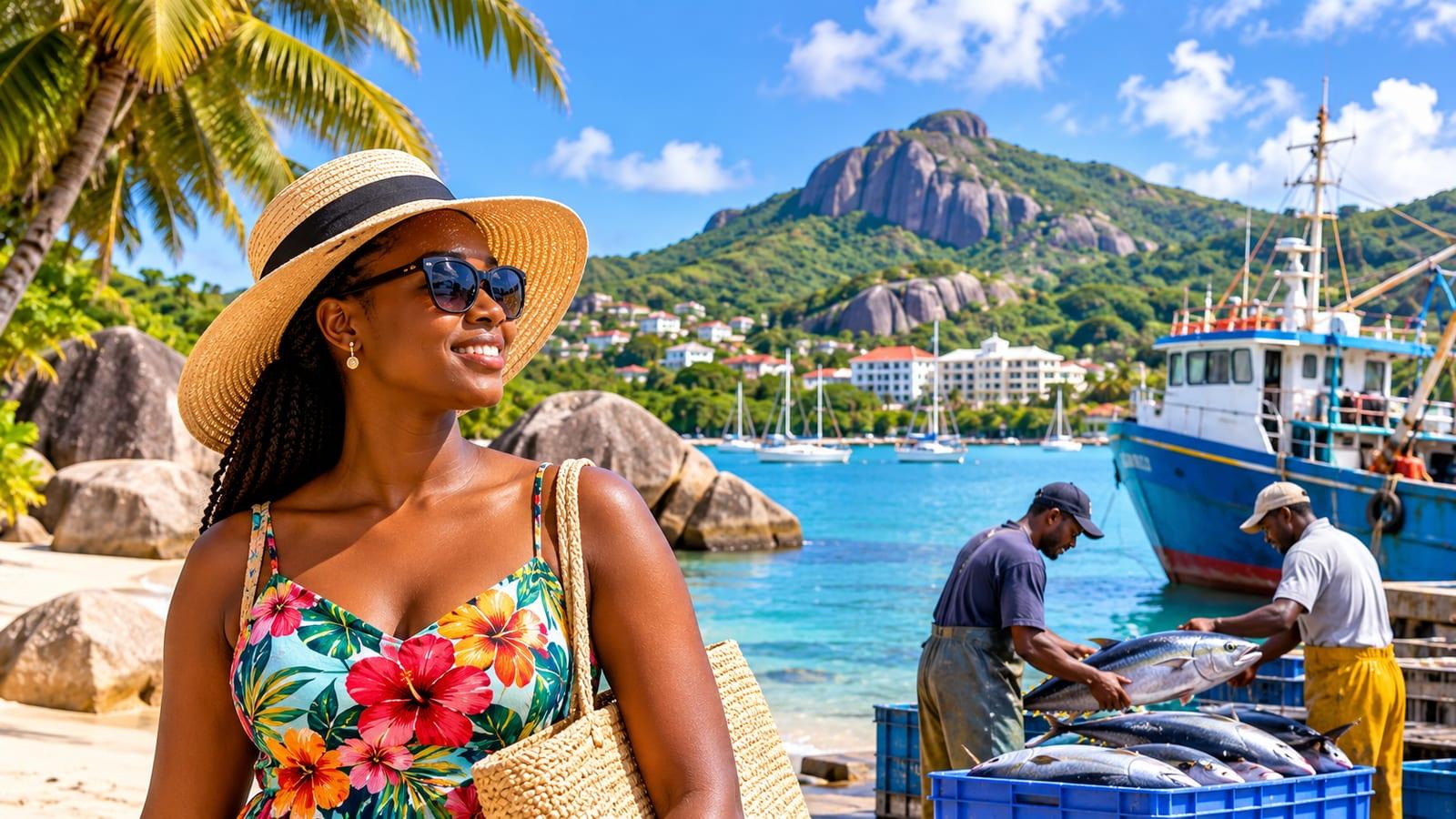
Tourism is one of Mauritius's most important sources of foreign currency and jobs. Visitors spend money on hotels, restaurants, local transport, excursions, shopping, entertainment and other services, supporting businesses across the island.
Statistics Mauritius recorded 668,471 tourist arrivals in the first half of 2026, up 1.5% on the same period in 2025. France remained the largest source market, with 153,048 arrivals. Réunion sent 66,459 visitors, Germany 60,227, the United Kingdom 59,954 and South Africa 51,858. India sent 41,966 visitors, more than in the first half of 2025.
Tourism earnings reached about Rs 39.5 billion between January and April 2026, according to Bank of Mauritius data. This money supports hotels, resorts, restaurants, tour operators, transport companies, food suppliers and other businesses that serve visitors.
Mauritian groups such as CIEL, Rogers and IBL have interests in the tourism and hotel industries. Their businesses also reach into property, retail, healthcare and financial services.
The sector depends heavily on international travel demand. France, Germany and the United Kingdom are important source markets, so economic trouble in these countries can cut visitor numbers and spending in Mauritius. The island also competes with other Indian Ocean destinations. Our look at Mauritius's 2026 tourism strategy covers how the country is courting new visitor markets.
Financial and global business services
Financial services are among Mauritius's most important exports, even though many of the deals take place between companies and investors based outside the country.
The sector includes commercial banking, insurance, investment funds, wealth management, company administration, accounting, legal services and international investment structures.
Mauritius has built a global business sector that lets resident companies do business mainly outside the country. These companies may be used to hold investments, manage funds, finance projects and carry out cross-border deals.
The Financial Services Commission regulates non-bank financial services and the global business sector, including insurance, securities and investment work. The Bank of Mauritius regulates and supervises banks.
The country appeals to international investors for several reasons, including its legal system, financial institutions, professional services, investment agreements and long links with both African and Asian markets. English and French are widely used in professional and business settings, while Mauritian Creole is the most widely spoken everyday language.
India has long been an important market for Mauritius's international financial services industry. The two countries have a tax treaty and a wider economic partnership agreement, although investors must meet the relevant tax, substance and reporting rules. International tax reforms have also changed how multinational companies structure their investments.
Mauritian banks have built operations beyond the island. MCB Group's African Corporate and Institutional Banking business serves companies, financial institutions and other organisations across African markets. SBM is another major Mauritian banking group with regional and international operations.
Goods exports
Mauritius still exports clothing and textiles, although the industry no longer holds the place it did during the country's early industrial growth.
Other important exports include processed fish and seafood, sugar, special sugars, jewellery, medical devices and other manufactured goods. Textile companies make garments for international buyers, while seafood processors prepare fish products for overseas markets.
Mauritius sells to several regions. According to Statistics Mauritius, the leading destinations for Mauritian goods in August 2026 were:
Export destination
Share of exports
United States
14.9%
South Africa
14.5%
United Kingdom
11.5%
Madagascar
8.7%
France
8.1%
These figures cover one month's trade, not the spread of exports over the whole year. Even so, they show how much the United States, African markets and Europe matter to Mauritian manufacturers and exporters.
What Mauritius buys
Mauritius imports most of the fuel it uses, which makes mineral fuels one of its largest import categories. Food, machinery, vehicles, chemicals, building materials, textiles and consumer products also make up a large share of its import bill.
China is a major supplier of manufactured products, machinery and consumer goods. Oman is another major supplier, especially of fuel. Other large suppliers include South Africa, the United Arab Emirates, Singapore and India.
In August 2026, China supplied 16.9% of Mauritius's imports, and Oman 14.5%.
This reliance on imported goods leaves the country exposed to changes in world commodity prices, shipping costs and exchange rates. A rise in the cost of imported fuel, for example, can affect electricity generation, transport, manufacturing and household budgets.
Trade agreements and how goods move
In this section
For Mauritian businesses, these arrangements matter most for trade with Southern and Eastern African countries.
Mauritius has built trade ties with African, Asian, European and American markets. Its regional agreements give businesses access to preferential trading terms, although the benefits depend on the product, rules of origin and the conditions of each agreement.
Trade within Africa
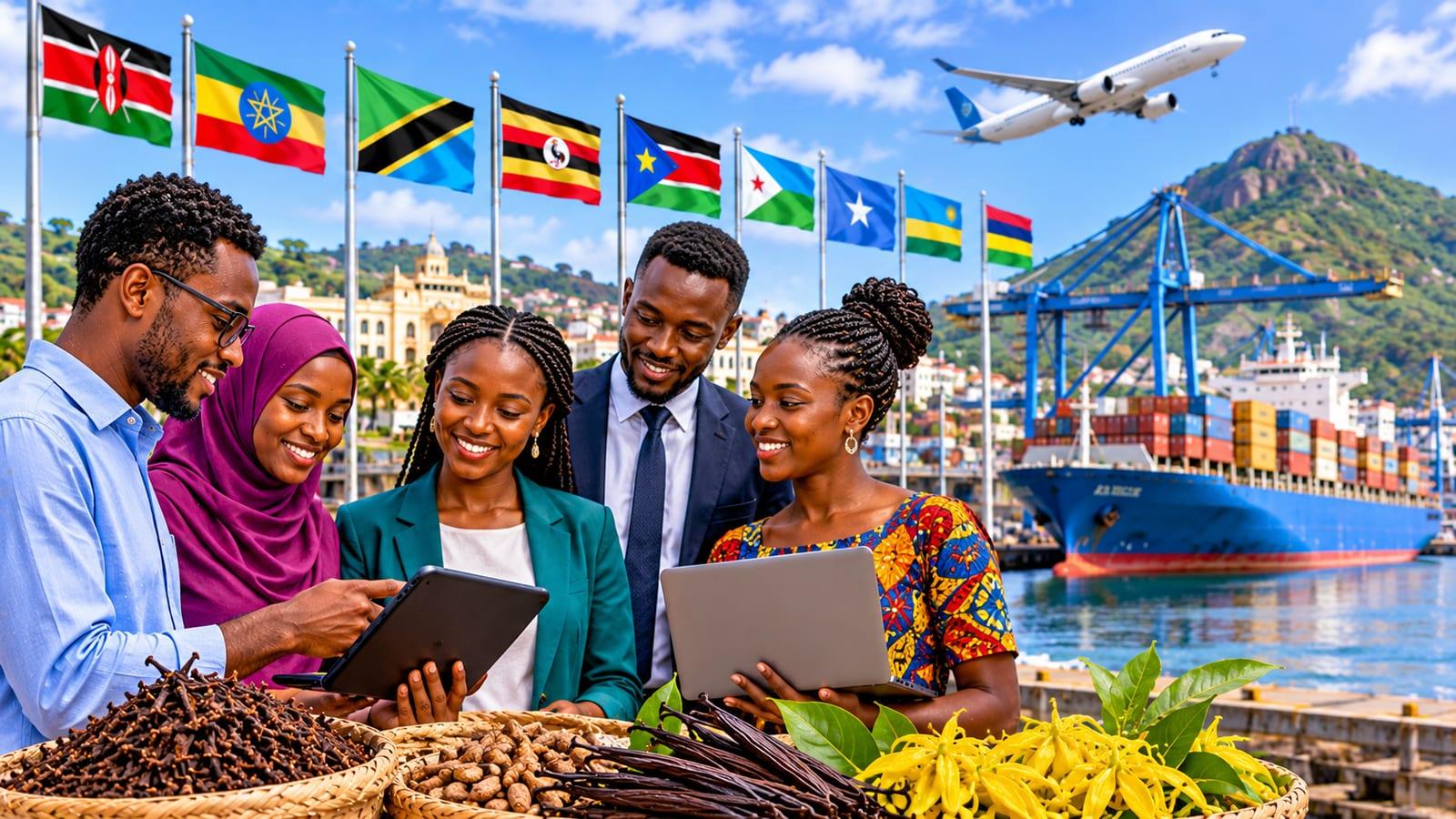
Mauritius is a member of the Southern African Development Community (SADC) and the Common Market for Eastern and Southern Africa (COMESA). Both provide frameworks for regional trade and economic cooperation. Our guide to Africa's trade blocs explains how they work.
It is also a member of the Indian Ocean Commission, alongside Madagascar, Seychelles and Comoros, with France taking part through Réunion.
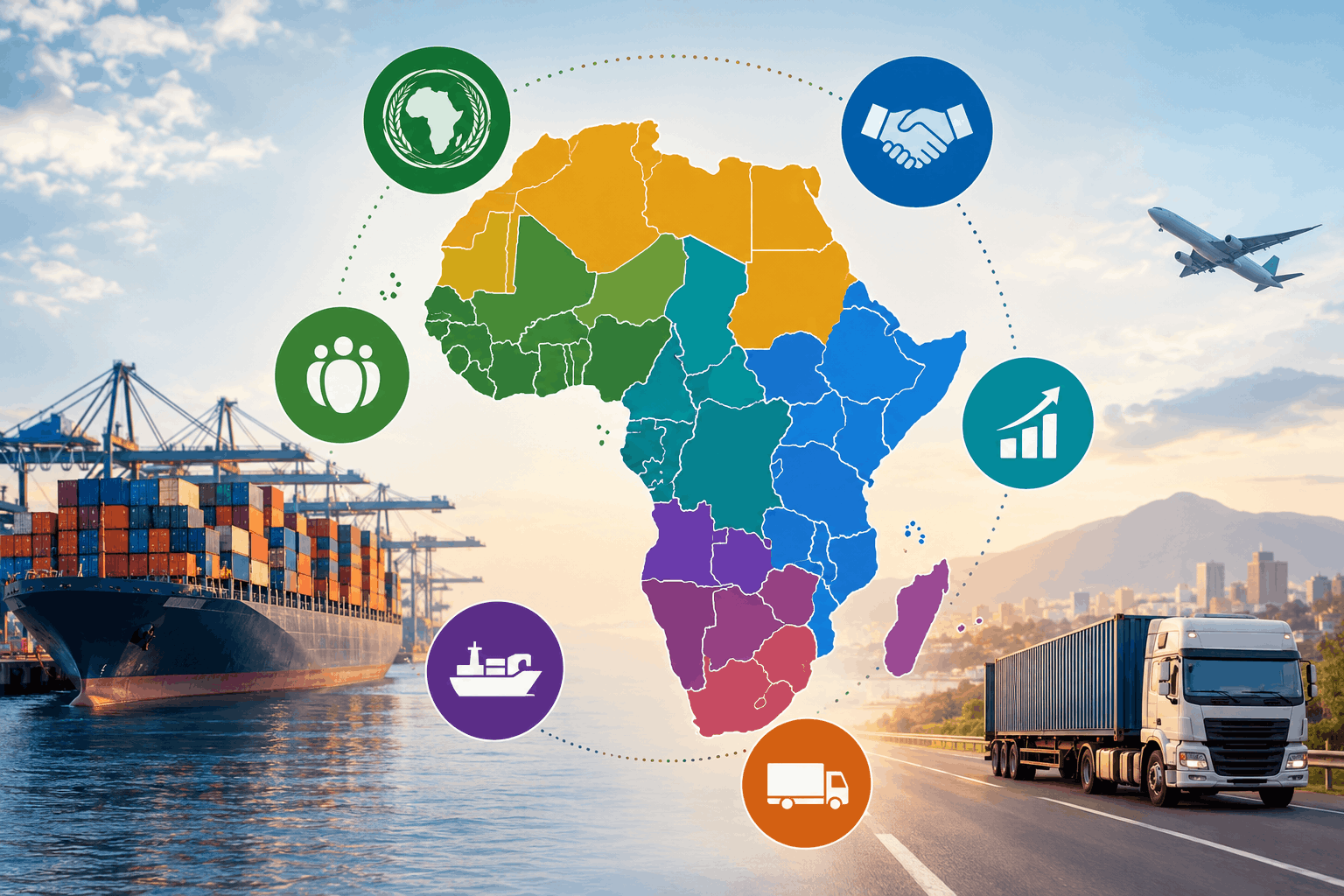
Mauritius has ratified the African Continental Free Trade Area (AfCFTA) agreement and takes part in the wider effort to lower trade barriers across African markets. The agreement provides a framework for growing trade in goods and services, although how it is carried out, and whether preferential treatment is available, depends on the relevant protocols, tariff schedules and rules of origin.
For Mauritian businesses, these arrangements matter most for trade with Southern and Eastern African countries. They also open doors for companies that want to distribute goods, form partnerships or invest in other regional markets.
Trade beyond Africa
Mauritius has several important trade agreements with countries outside the continent.
The China-Mauritius Free Trade Agreement was signed on 17 October 2019 and came into force on 1 January 2021. It was China's first free trade agreement with an African country. It covers goods, services, investment and economic cooperation.
Mauritius also has the Comprehensive Economic Cooperation and Partnership Agreement with India, which came into force on 1 April 2021. It covers trade in goods and services, investment and other areas of economic cooperation.
The country trades with the European Union under the Eastern and Southern Africa Economic Partnership Agreement. In June 2026, the EU and Mauritius, together with Comoros, Madagascar and Seychelles, concluded negotiations to deepen the existing agreement. The enhanced agreement is meant to cover more areas of trade and economic cooperation.
Mauritius also has a separate trade agreement with the United Kingdom through the UK-Eastern and Southern Africa Economic Partnership Agreement.
The African Growth and Opportunity Act (AGOA) gives eligible Mauritian products preferential access to the United States. The programme matters most to clothing and textile makers. Its extension to December 2028 gives eligible exporters more time to use it, subject to its rules.
These agreements can help businesses cut tariffs and reach new customers, but they do not remove every cost or rule that comes with exporting. Companies still need to understand product standards, customs procedures, certification and rules of origin before entering a market.
Port Louis and the airport
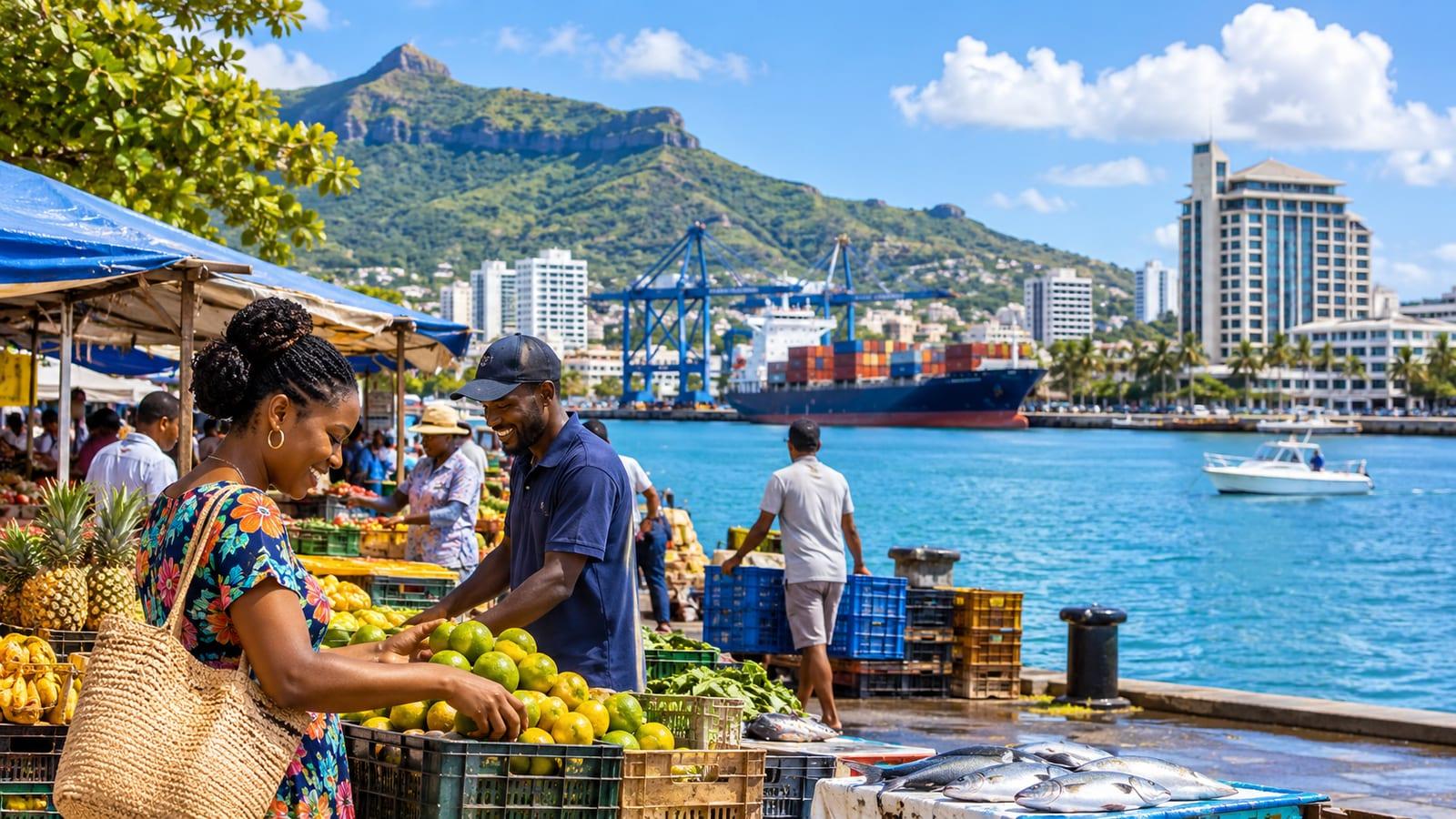
Port Louis is the country's main commercial port and an important stop for international shipping. It handles imported fuel, food, machinery, consumer goods and industrial inputs, as well as exports of sugar, seafood, textiles and manufactured products.
The port also serves ships operating in the south-west Indian Ocean. Its work includes container handling, cargo operations, bunkering and other maritime services.
The harbour matters to Mauritius because the island depends on shipping for much of its trade. Delays, higher freight charges or trouble along major shipping routes can affect businesses and shoppers across the country.
Sir Seewoosagur Ramgoolam International Airport connects Mauritius to Europe, Africa, Asia and the Gulf. It supports the tourism industry and carries time-sensitive exports, including fresh seafood and other high-value products.
Sectors with room to grow and doing business
In this section
Mauritius offers access to international trade agreements and a well-developed professional services industry.
Mauritius has several established industries, but the government keeps looking for areas where investment can create more jobs, export earnings and business openings.
Investment and financial services
Mauritius remains an important base for companies managing investments into Africa and other international markets. Holding companies, investment funds, treasury operations and regional headquarters are among the activities linked to the country's global business sector.
The government has put more weight on making sure international companies run actual operations in Mauritius. Where required, this means having proper management, qualified professionals, business administration and core income-earning work in the country.
This creates openings for lawyers, accountants, fund administrators, compliance specialists, financial advisers and other professional service providers.
However, companies should not assume that registering in Mauritius automatically gives them tax treaty benefits. They must meet the relevant laws, licensing rules, tax rules and substance requirements.
Information technology and business services
Information and communication technology has become an important part of Mauritius's services economy. The sector includes software development, telecommunications, business process outsourcing, customer support, fintech and other digital services.
The use of English and French helps companies serving customers in different markets. Good connectivity and an established financial sector also support businesses that provide technology services to banks, insurers and international companies.
There are openings in software, financial technology, cybersecurity, digital payments, data management and outsourced professional services. However, Mauritius competes with larger countries that have bigger workforces and lower running costs.
Healthcare, education and life sciences
Healthcare and education are among the areas getting attention as Mauritius tries to sell more services abroad.
Private healthcare providers, medical facilities, universities and training institutions serve local residents as well as some international patients and students. The government has also named life sciences and medical technology as areas to develop.
The openings include specialist healthcare, medical training, pharmaceuticals, medical devices and research partnerships. Businesses entering these sectors need to understand licensing, professional accreditation and other regulations.
Ocean economy
Mauritius's position in the Indian Ocean gives it an interest in shipping, fisheries, seafood processing, marine research and other ocean-related work.
The government has named the ocean economy as an area for investment, especially fisheries, aquaculture, port services and marine resources. How these industries grow will depend on sustainable management, infrastructure, technology and protecting the marine environment.
The Chagos agreement could affect Mauritius's maritime territory if it eventually comes into force. However, because the treaty was still unratified as of November 2026, the country should not be described as having already gained control of the archipelago under that agreement.
Renewable energy
Mauritius imports much of the fuel it uses for electricity and transport. This leaves the economy exposed to world energy prices and makes other energy sources an important policy goal.
The country has pursued renewable energy projects in solar power, wind, biomass and energy storage. These projects can create openings for energy developers, equipment suppliers, engineering firms and companies providing maintenance and technical services.
For investors, the key questions include land availability, grid capacity, project financing, procurement rules and the terms for selling electricity to the national grid.
Doing business in Mauritius
Foreign investors considering Mauritius usually work with the Economic Development Board, which provides information about investment opportunities, permits and the business environment.
Companies are registered through the Corporate and Business Registration Department, while businesses in regulated industries must get the right licences and approvals. Foreign investors may also need occupation permits, depending on their role and what they do.
Mauritius has a legal system shaped by both French civil law and English common law. English and French are used in business and legal settings, and the country has established institutions for company registration, banking, tax and business regulation.
The corporate income tax rate is generally 15%, although special regimes, exemptions and extra requirements can apply. Companies in financial services, insurance, telecommunications and other regulated activities should check the rules for their own sector before investing.
Foreign ownership is allowed in many business activities, but restrictions and approval requirements apply in some sectors and to some types of property deals. Foreign investors should not assume they can own every type of business or asset without extra conditions.
Mauritius offers access to international trade agreements and a well-developed professional services industry. However, its home market is small, and running costs can be higher than in several mainland African countries. Businesses also need to think about the supply of skilled workers, wage costs, transport costs and the effect of international tax rules.