Mauritius started 2026 with more visitors landing on its shores than the year before, and the island's tourism authority is trying to make sure that growth adds up to something bigger than just a good quarter. The question worth asking is what Mauritius is actually doing with this momentum, and who it's trying to bring in next.
The Mauritius Tourism Promotion Authority, known as MTPA, is putting real effort into markets that can bring not just more tourists, but different kinds of tourists. India is getting a lot of attention right now. Russia is picking back up. And the United Kingdom, long one of Mauritius's steadiest markets, is being courted again even though its numbers slipped a bit at the start of the year.
The Numbers Behind the Push
In this section
The growth wasn't spread evenly across Mauritius's source markets.
Let's start with what actually happened. According to Statistics Mauritius, the government body that tracks this stuff, tourist arrivals hit 348,445 in the first quarter of 2026. That's up 6.8 percent from 326,389 in the same period of 2025, an increase of about 22,000 visitors.
Break that down by how people arrived, and air travel made up most of it: 332,632 tourists came by plane, up 5.1 percent from 316,604 a year earlier. Arrivals by sea, mostly cruise passengers, jumped by 61.6 percent, from 9,785 to 15,813. That's a big percentage jump, but sea arrivals are still a small slice of the total pie compared to air travel.
Here's the more interesting part. The growth wasn't spread evenly across Mauritius's source markets. Germany had the biggest jump among the island's main markets, up 50.3 percent in the first quarter, adding almost 11,720 more German visitors than the year before. India grew by 21.1 percent. Russia was up 15.9 percent. Meanwhile the UK, which has usually been one of Mauritius's top three or four source markets, actually dropped 4.5 percent, falling from 30,527 visitors to 29,162.
So this isn't really a story about Mauritius having a tourism boom across the board. It's more about the island deliberately trying to shift where its visitors are coming from, and rethinking what those visitors are coming to do once they get there.
India: The Market Mauritius Wants to Move Up
In this section
For years, Mauritius has leaned hard on its reputation with Indian travelers as a honeymoon and beach destination.
India is easily one of the most important growth stories for Mauritius right now, and the numbers back that up.
Between January and mid-May 2026, Mauritius welcomed 25,930 visitors from India, according to MTPA figures reported by multiple travel trade outlets. That's a 19.1 percent jump over the same stretch in 2025. Based on that pace, MTPA has said it's aiming for somewhere between 80,000 and 90,000 Indian arrivals by the end of the year, with some officials even talking about pushing past the 100,000 mark.
That target builds on an already strong 2025. Mauritius recorded 75,808 Indian visitors last year, up from 56,788 in 2024. Do the math and that's a 33.5 percent increase, which lines up with what Statistics Mauritius has published, even though MTPA's own public statements have rounded that up to "35 percent growth" in a few press releases. Either way, it was a standout year for the Indian market.
MTPA has clearly decided that India deserves more than the occasional ad campaign. In June 2026, the authority sent a 26-person delegation on a roadshow through three Indian cities: Bengaluru on June 2, Mumbai on June 3, and Indore on June 5. The group included hotels, destination management companies, tour operators, and airline representatives, and across the three stops it drew more than 300 travel agents, tour operators, and travel trade media. Sunil Mathapati, MTPA's Country Manager for India, said the interest from Indian trade partners has been building steadily and that events like this let MTPA turn that interest into real business relationships.
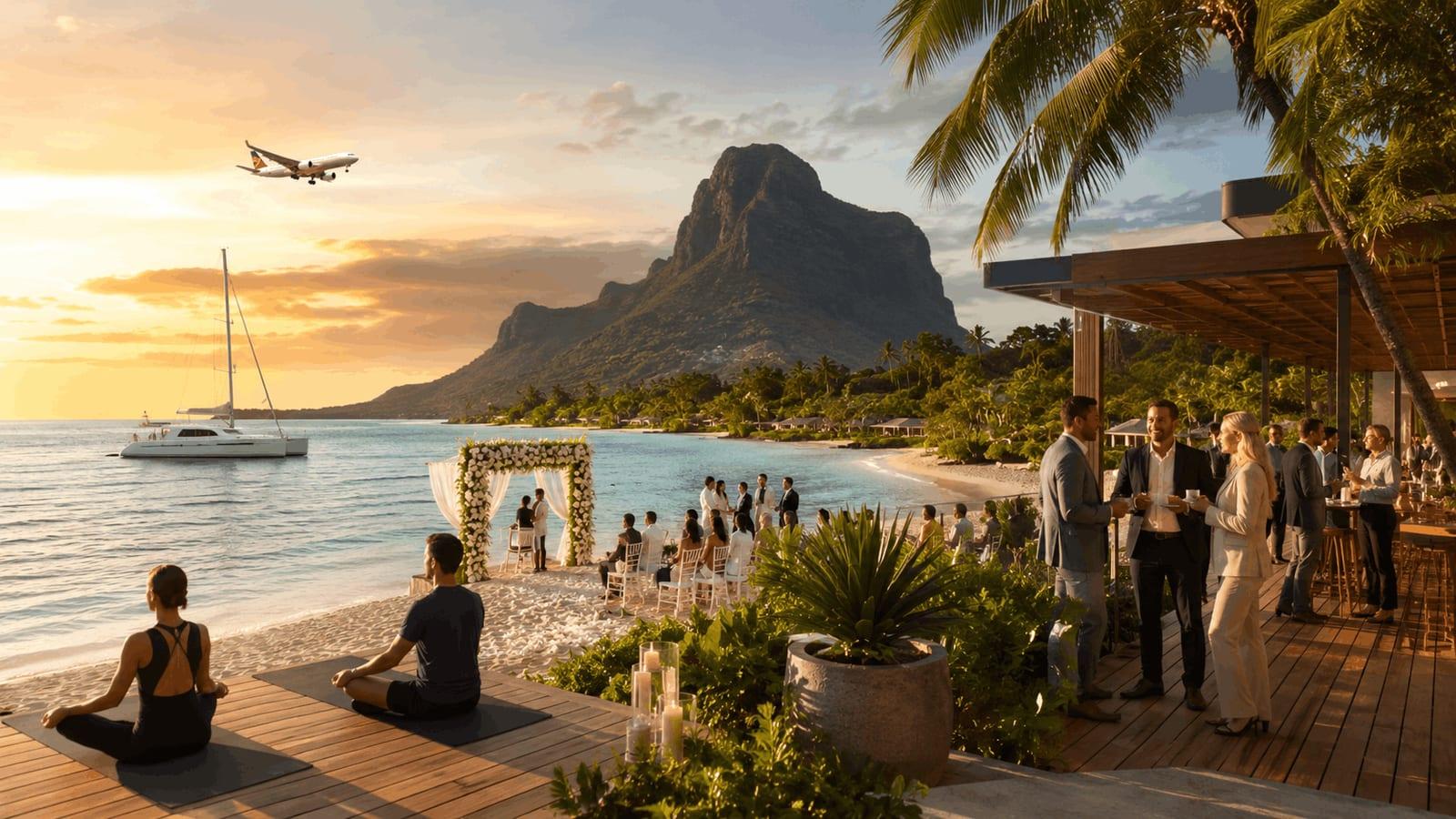
The pitch itself is also changing. For years, Mauritius has leaned hard on its reputation with Indian travelers as a honeymoon and beach destination. That's still part of the appeal, but MTPA is now trying to sell a wider range of experiences: destination weddings, corporate events and conferences (often grouped under the acronym MICE, for meetings, incentives, conferences and exhibitions), wellness retreats, and cultural tourism. The idea is to stop relying so heavily on honeymooners and instead pull in couples planning big weddings, companies organizing offsites, and younger travelers who want something other than a beach chair.
That shift makes commercial sense. A single destination wedding can bring dozens of travelers at once. A corporate conference can fill hotel rooms in the off season. Wellness tourism, done right, brings in people who spend more per visit and stay longer.
There's also a cultural thread running through all of this that gives Mauritius a real edge with Indian travelers. A large share of the Mauritian population has Indian heritage, and the connection between the two countries goes well beyond airline routes and hotel deals. The Indian High Commission in Mauritius has pointed out that Mauritius introduced visa-free travel for Indian tourists back in 2004, a policy that's helped drive numbers up for two decades now.
One detail worth being precise about: Indian citizens don't need to apply for a visa before flying to Mauritius, but what they get on arrival is technically a visa on arrival rather than a blanket visa-free entry. Depending on the source you check, that visa on arrival allows a stay of somewhere between 60 and 90 days, and it's still subject to standard immigration checks, so travelers do need a return ticket, proof of accommodation, and evidence they can support themselves financially during the trip. It's a minor distinction, but "visa-free" and "visa on arrival" aren't quite the same thing, even if the traveler experience feels almost identical.
Flight connections matter just as much as visa rules here. Indian travelers can currently fly direct to Mauritius from several major cities, including Mumbai, Delhi, Chennai, and Bengaluru, with Bengaluru offering the shortest flight time at around six hours and Mumbai often the cheapest fares. MTPA has also struck partnerships with IndiGo, MakeMyTrip, and Thomas Cook India to make it easier for Indian travelers to find and book trips to the island.
The scale of the ambition here is worth noting too. At the start of 2026, MTPA Chairman Dinesh Burrenchobay said publicly that the authority wants India to climb from Mauritius's fifth-largest source market up to fourth place. Given how much longer some of the markets ahead of India, like France, Reunion Island, and South Africa, have been sending tourists to Mauritius, that's an ambitious goal. But with Indian arrivals growing at double-digit rates for two years running, it's not a wild one either.
MTPA has been backing this push with more than trade shows. In May 2026, it ran a week-long "Mega FAM Trip," flying 20 Indian travel trade professionals to Mauritius from May 23 to 29 so they could experience the hotels, food, and activities firsthand before selling them to clients back home. That kind of investment matters because a lot of bookings, especially for weddings and group trips, still go through travel agents who trust their own experience over a glossy brochure.
Burrenchobay has also talked about how Indian visitors are behaving differently on the island these days. He's noted that Indian travelers are increasingly leaving their hotel grounds to try catamaran cruises, water sports, and other excursions rather than staying poolside the whole trip, which he sees as a sign the market is maturing beyond simple beach holidays.
Russia: Building Another Route Into the Island
In this section
Addis Ababa is Ethiopian Airlines' main hub, feeding more than 140 destinations across five continents.
Russia is another market on the way back up, though the story here is a little different from India's.
Between January and April 2026, Mauritius welcomed 13,544 visitors from Russia, up 7.9 percent from the same period the year before. Looking just at the first quarter, Russian arrivals rose from 9,970 to 11,551, a 15.9 percent increase.
MTPA responded with a roadshow across two Russian cities, Moscow and Saint Petersburg, in June 2026, bringing hotel and tourism partners directly to Russian travel agents and tour operators. The goal was fairly simple: stay visible in a market that already knows Mauritius reasonably well, and keep the recovery going.
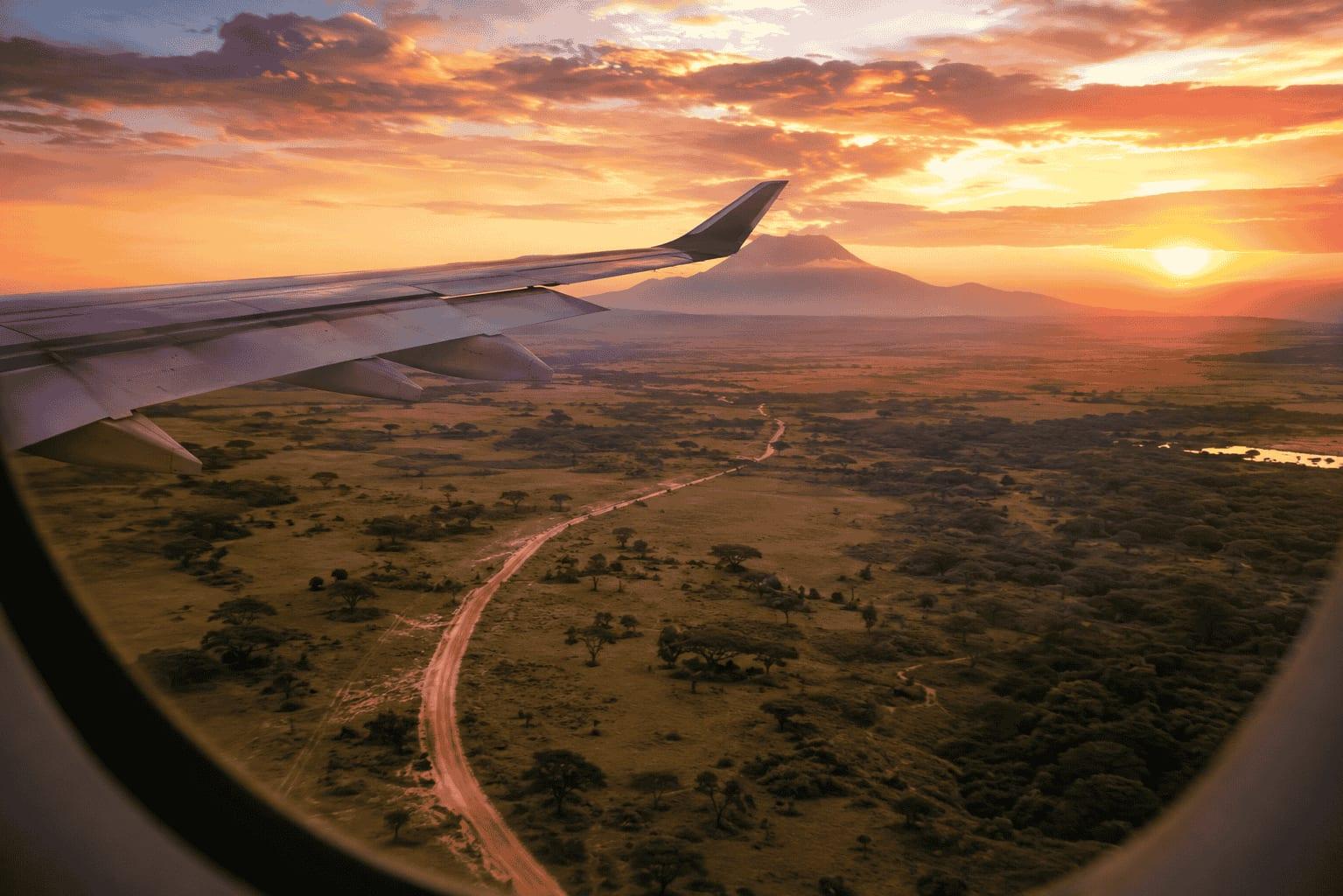
The more interesting development is actually happening in the skies rather than at trade fairs. On July 12, 2026, Ethiopian Airlines launched a new direct route between Addis Ababa and Mauritius, operating three times a week on Wednesdays, Fridays, and Sundays using a Boeing 737 MAX 8. The outbound flight, ET 887, leaves Addis Ababa at 8:50am and lands in Port Louis at 3:20pm, with the return flight departing Mauritius in the late afternoon.
This route matters for reasons that go beyond just adding one more destination to a map. Addis Ababa is Ethiopian Airlines' main hub, feeding more than 140 destinations across five continents. Before this route existed, travelers connecting through Ethiopian's network had to reach Mauritius via other regional hubs like Johannesburg, Nairobi, or Antananarivo. Now there's a direct link, which folds Mauritius more tightly into one of Africa's biggest aviation networks and gives it another way to reach travelers from the Middle East, Europe, and Asia who pass through Addis Ababa.
For a destination as remote as Mauritius, roughly 9,600 kilometers from Western Europe and a fair distance from most of its major source markets, every reliable new connection helps. It also fits a broader pattern of Mauritius trying to lean on African aviation hubs rather than depending entirely on European or Gulf gateways to bring travelers in.
So the Russia story isn't just about convincing people to book a trip. It's also about making the actual journey less of a hassle, since a lot of Russian travelers currently connect through the United Arab Emirates to reach Mauritius, and more direct options can only help.
The UK: A Mature Market Mauritius Doesn't Want to Lose
In this section
Beyond the marketing, the underlying strategy is about widening what Mauritius offers British travelers.
The UK is a different kind of story, because this isn't a market that's currently growing.
In the first quarter of 2026, Mauritius recorded 29,162 visitors from the UK, down 4.5 percent from 30,527 in the same period of 2025. That's a real decline, not just a rounding blip, and it comes at a time when other markets are surging.
Even so, the UK remains one of Mauritius's largest and longest-standing source markets, and neither MTPA nor Air Mauritius seem willing to treat a soft quarter as a reason to pull back. Instead, they're refreshing how the island is being pitched to British travelers.
In June 2026, Air Mauritius and MTPA held a joint press event at London's Royal Automobile Club as part of a new campaign called "From the Golden Eye to the Golden Hour," which plays on the London Eye and the sunsets Mauritius is known for. The campaign, which uses a dodo mascot in its social media rollout as a nod to the island's most famous extinct resident, follows the idea of a British traveller moving from London's skyline to Mauritius's coastline. It falls under the airline and tourism authority's broader "We Are Mauritius" branding.
Beyond the marketing, the underlying strategy is about widening what Mauritius offers British travelers. The island is still selling beaches and luxury resorts, of course, but it's putting more weight behind wellness travel, golf, sports tourism, and MICE events. Air Mauritius currently runs up to five non-stop flights a week between London Gatwick and Mauritius, and the airline has said publicly that it wants to work toward a daily service eventually.
This is where the phrase "slow luxury" comes into the conversation. It's become something of a buzzword across the travel industry generally, but in Mauritius's case it points to an actual shift in the product rather than just clever marketing copy. The idea is to get travelers to spend more time actually experiencing the island, through hiking, diving, golf, food, and cultural activities, instead of treating it purely as a resort-and-beach stopover.
Sustainability is tied into this too. MTPA Chairman Dinesh Burrenchobay has talked about regenerative tourism and made the case that an island with limited natural resources can't treat environmental protection as optional. As he put it in one interview, sustainability for Mauritius isn't a nice extra, it's essential. That framing links directly to the UK strategy, since British travelers have shown growing interest in destinations that can demonstrate some environmental responsibility rather than just good beaches.
This matters more for Mauritius than it might for a newer destination, because the island is already a mature tourism market. It can't simply keep adding visitors year after year without thinking hard about what that growth does to its coastline, its infrastructure, and the communities that make it an attractive place to visit in the first place.
The Bigger Picture
In this section
The Czech Republic, Austria, Reunion Island, South Africa, Switzerland, and Russia all posted smaller gains.
Zoom out to the full year of 2025, and you can see why Mauritius has reason to feel ambitious. The island recorded 1,436,250 tourist arrivals for the year, up 3.9 percent from 1,382,177 in 2024, according to figures announced by Tourism Minister Christian Harold Richard Duval in January 2026. Air arrivals rose 4.7 percent, though cruise and sea arrivals actually fell sharply that year, down 27.6 percent.
Looking at which markets drove that 2025 growth is where things get a bit more nuanced than a simple "everything is up" story. India led the pack with that 33.5 percent surge. Italy grew 18.2 percent and Spain climbed 19 percent. The Czech Republic, Austria, Reunion Island, South Africa, Switzerland, and Russia all posted smaller gains. But three of Mauritius's traditional heavyweight markets actually shrank in 2025: France was down 0.6 percent, the UK fell 2 percent, and Germany dipped 1.3 percent. That's worth flagging clearly, because it means Germany's huge 50.3 percent jump in the first quarter of 2026 is a sign of a market bouncing back strongly this year, not a market that was already growing steadily through 2025.
The early months of 2026 have followed a similarly uneven pattern. The first quarter delivered that overall 6.8 percent growth, but the market-by-market breakdown, Germany up 50.3 percent, India up 21.1 percent, Russia up 15.9 percent, UK down 4.5 percent, shows this isn't one smooth wave lifting every market equally.
The momentum hasn't held steady through the year either. Stopover arrivals came in 3.7 percent lower in April 2026 than in April 2025. June 2026 saw a bigger drop, with arrivals falling roughly 8.4 percent year on year to 89,098, down from 97,273 the previous June. Some of that volatility is normal seasonal noise, but it's a reminder that a strong first quarter doesn't guarantee a strong year.
Put all of this together and the more interesting story isn't "Mauritius is booming." It's that Mauritius is trying to build a tourism model that's more resilient and less dependent on any single market. India offers rapid growth, deep cultural ties, and direct flight connections. Russia offers a market that's recovering and now has a fresh aviation link through Addis Ababa. The UK is a mature, occasionally sluggish market that Mauritius is trying to reinvigorate by selling more than just honeymoons and beach chairs.
There's a common thread across all three efforts. MTPA isn't just running ad campaigns and hoping for the best. It's putting tourism officials, hotel operators, airlines, and travel agents in the same room, whether that's in Bengaluru, Moscow, or London. It's working to strengthen flight connections wherever it can. It's building relationships with the actual people who sell holidays to consumers, since a lot of big-ticket trips like weddings and group tours still get booked through agents rather than apps. And it's trying to develop MICE, wellness, weddings, and sports tourism as real segments alongside the traditional leisure market, not just as marketing buzzwords.
That's probably the real story hiding behind all these percentage changes. Mauritius already has the beaches, the resorts, and the reputation. What it's trying to figure out now is whether it can turn that reputation into something more durable: a tourism model that brings the right visitors, from a wider mix of countries, for a wider mix of reasons, without wearing out the island that people are coming to see in the first place.
India looks like the clearest example of that strategy paying off right now. Russia is worth watching as the recovery continues and the new flight route beds in. And the UK's softer numbers are a useful reminder that even a decades-old tourism relationship can't just be taken for granted, no matter how many people have honeymooned there over the years.
For Mauritius, 2026 isn't really about discovering tourism. The island figured that out a long time ago. It's about deciding what the next version of that tourism model should actually look like, and who it's for.
Sources
- Statistics Mauritius, Economic and Social Indicators: International Travel and Tourism, 1st Quarter 2026, released May 29, 2026
- Statistics Mauritius, Tourist Arrivals summary page, statsmauritius.govmu.org
- ATTA, "Mauritius records 3.9% rise in 2025 tourist arrivals," citing Minister of Tourism Christian Harold Richard Duval, January 12, 2026 briefing
- Travel Trends Today / Mauritius Now / Travel Trade Journal / BW Travel, coverage of the MTPA Bengaluru-Mumbai-Indore roadshow, June 2026
- Travel and Tour World / All Africa, coverage of MTPA's OTM 2026 India strategy and comments from Dinesh Burrenchobay and Benoît Harter, February 2026
- TravelBiz Monitor, interview with Dinesh Burrenchobay on Indian traveler behaviour and the 100,000-arrival target, 2026
- ATQ News, coverage of the MTPA Mega FAM Trip, May 2026
- Ethiopian Airlines corporate press releases and Travel and Tour World coverage of the Addis Ababa-Mauritius route launch, June-July 2026
- Mauritius Now / All Africa, coverage of the "From the Golden Eye to the Golden Hour" campaign launch in London, June 2026
- Breaking Travel News / Inflight, coverage of the Air Mauritius and MTPA UK strategy event, June 2026
- Indian High Commission in Mauritius, visa and bilateral relations information
- Godigit, TATA AIG, IndiGo, Akbar Travels, and BankBazaar visa guides for Indian travelers to Mauritius
- Gulf News, background reporting on prior years' Mauritius tourism trends
Note
this article uses figures reported as provisional by Statistics Mauritius for 2026 periods, which may be revised in later official releases.