How does Sudan make money during war? Explore its gold, livestock, gum arabic, agriculture, trade routes, economic challenges and business risks.
Sudan's gold trade continues, even as war disrupts the economy
In this section
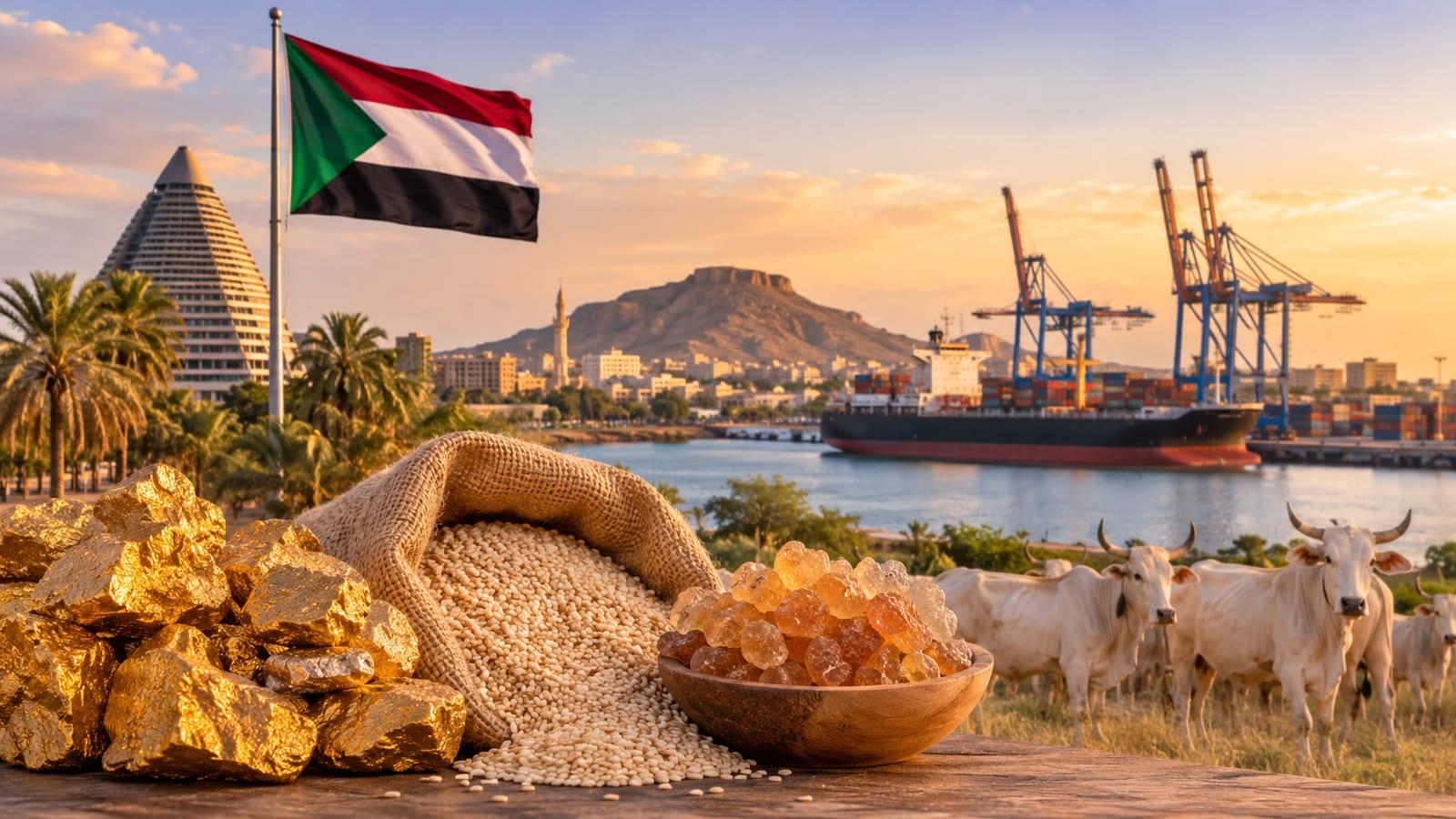
Gold has become particularly important to Sudan because the war has damaged many of the country's other sources of income.
Sudan produced approximately 70 tonnes of gold in 2025, according to the Ministry of Minerals. However, Central Bank of Sudan data shows that only about 14.7 tonnes were exported through official channels during the year, earning about US$1.54 billion. The difference points to a serious problem in the country's gold industry, where a large share of production moves outside formal export channels. Smuggling has deprived the government of foreign currency and tax revenue, while also creating opportunities for armed groups and traders operating across Sudan's borders.
Gold has become particularly important to Sudan because the war has damaged many of the country's other sources of income. The Sudanese Armed Forces (SAF) and the paramilitary Rapid Support Forces (RSF) have been fighting since 15 April 2023, when clashes broke out in Khartoum. The conflict has disrupted farming, manufacturing, banking, transport and government operations. It has also divided the country between competing military authorities, making it harder for businesses to move goods and receive payments.
The gold trade has continued despite these difficulties. In October 2026, the state-owned Sudanese Mineral Resources Company reported that official gold exports had earned approximately US$2.29 billion between January and September. A later government report put earnings for the first ten months of the year at about US$3.5 billion. These are government-reported figures, and they should be understood alongside the continuing problems of smuggling and limited independent access to mining areas.
Before the war, Sudan was an important agricultural and livestock producer, exported gold and sesame, supplied international markets with gum arabic and provided a route for South Sudan's oil exports. Much of that productive capacity remains, but insecurity, displacement, damaged infrastructure and limited access to finance have made it difficult to operate.
This is the twenty-second country profile in our series, Africa's Markets, Country by Country, following Ethiopia. It looks at how Sudan earns foreign currency, what it imports, which trade routes remain important and what businesses need to understand before considering commercial activity in the country.
Sudan at a glance
In this section
Even at 7% growth, some economists estimate that output would still be about a third below its 2022 level.
Sudan's economic data is difficult to compare because the war has disrupted government reporting, production records and financial institutions. International organisations also revise their estimates as new information becomes available. The table below uses the IMF's October 2026 World Economic Outlook where applicable, alongside dated figures from other institutions.
Measure
Latest available figure
Period and source
Nominal GDP
US$30.86 billion
2026 estimate, IMF October 2026
GDP per person
About US$597
2026 estimate, IMF October 2026
Real GDP growth
7%
2026 projection, IMF October 2026
Average inflation
41.3%
2026 projection, IMF October 2026
Population
Approximately 51.7 million
2026 estimate, IMF
Gold production
Approximately 70 tonnes
2025, Ministry of Minerals
Official gold exports
About 14.7 tonnes, worth about US$1.54 billion
2025, Central Bank of Sudan
Official gold export earnings
Approximately US$2.29 billion
January to September 2026, Sudanese Mineral Resources Company
Recorded exports and imports
US$2.64 billion exports, US$6.49 billion imports
2025, Central Bank of Sudan
People facing acute food insecurity
Approximately 19.5 million
February to May 2026, IPC
Internally displaced people
Approximately 8.9 million
March 2026, IOM
Humanitarian funding requirement
Approximately US$2.87 billion
2026, UN humanitarian response plan
Currency
Sudanese pound (SDG)
The IMF's projected 7% economic growth needs some explanation. Sudan experienced a severe contraction after the war began, so a higher growth rate can reflect activity recovering from a very low starting point. The IMF forecast also assumes the conflict ends by the close of 2026. Even at 7% growth, some economists estimate that output would still be about a third below its 2022 level. It does not mean that household incomes, employment, public services or business conditions have returned to their pre-war levels.
How Sudan's economy developed
In this section
A civilian-led transitional government followed, raising expectations of political reform and economic recovery.
Before South Sudan became independent in July 2011, oil was central to Sudan's economy. The separation changed the country's financial position because South Sudan inherited approximately 75% of the former country's oil reserves. Sudan retained important pipelines and export infrastructure, but it lost much of the oil production that had supported its government revenue and foreign currency earnings.
The loss of oil income exposed the country's dependence on other sectors. Agriculture, livestock, gold, trade and services became increasingly important to its remaining economy. However, Sudan struggled with inflation, currency depreciation, debt and limited access to foreign investment.
Omar al-Bashir's government fell in April 2019 after months of protests. A civilian-led transitional government followed, raising expectations of political reform and economic recovery. Sudan also reached the decision point under the Heavily Indebted Poor Countries debt relief initiative in June 2021. The military takeover in October 2021 disrupted the transition and affected international support for the country.
The war that began in April 2023 created a much deeper economic crisis. Khartoum, which housed government ministries, banks, factories and major commercial institutions, became a battlefield. Businesses closed, workers fled and important infrastructure was damaged. The conflict also disrupted agricultural production in several states and made it difficult to transport goods between regions.
The economy that existed before April 2023 has therefore been severely weakened. Gold continues to generate export earnings, and some agricultural and livestock trade remains active, but the country has lost much of the infrastructure and commercial activity needed to support a broad recovery.
What Sudan sells to other countries
In this section
The product is a natural gum collected from certain acacia trees, particularly Acacia senegal and Acacia seyal.
Sudan's export economy includes minerals, agricultural products, livestock and oil-related trade. The relative importance of each sector has changed during the war, and official export statistics do not always capture goods moving through informal routes.
Gold
Gold is Sudan's most important mineral export and one of its main sources of foreign currency.
Mining takes place across several parts of the country, with artisanal and small-scale miners accounting for an important share of production. These operations range from individuals working with basic equipment to more organised mining businesses. The sector also includes larger industrial mining operations.
The figures from 2025 show how hard the trade is to track. The Ministry of Minerals reported production of approximately 70 tonnes, while Central Bank figures recorded only about 14.7 tonnes in official exports. Technical estimates suggest that roughly half or more of Sudan's gold leaves the country through informal channels. The authorities have attributed much of the gap to smuggling and have introduced measures to bring more gold into formal markets.
In August 2026, Sudan's minerals minister said official gold exports during the first six months of the year had already matched the volume officially exported during the whole of 2025. The government attributed the improvement to tighter controls, changes to export procedures and efforts to bring more transactions through formal banking channels.
By October, the Sudanese Mineral Resources Company reported export earnings of approximately US$2.29 billion for the first nine months of 2026. These figures show how important gold has become to Sudan's wartime economy, although they do not resolve questions about the amount of gold leaving the country through informal channels.
Gold also creates serious commercial and legal risks. The conflict has made it difficult to establish the origin of some shipments, identify beneficial owners and determine whether payments benefit sanctioned individuals or armed groups. Buyers and investors need to examine supply chains, export licences, ownership records and applicable sanctions before entering the sector.
Livestock
Sudan has a long history of livestock production and exports. Sheep, goats, cattle and camels are raised across different parts of the country, providing income for pastoral communities, traders and businesses involved in animal transport and processing.
Live sheep are among Sudan's established export products. World Bank trade data identifies them as one of the country's leading recorded exports, alongside gold, sesame and petroleum products.
Saudi Arabia has historically been an important market for Sudanese livestock, particularly for animals purchased around Hajj and Eid al-Adha. Other Gulf markets also buy Sudanese animals.
The war has disrupted this trade through insecurity, transport difficulties, reduced production in affected areas and interruptions to export operations. Much of the livestock sector is based in Darfur. In January 2026, Finance Minister Gibril Ibrahim told AFP that livestock exports had fallen by 55%. This is a government estimate rather than independently checked trade data.
Port Sudan remains important for shipments that can move through the Red Sea, although exporters also face animal health requirements, inspection procedures, transport costs and changing market access.
Gum arabic
Sudan has historically been one of the world's most important producers and exporters of gum arabic. The product is a natural gum collected from certain acacia trees, particularly Acacia senegal and Acacia seyal.
Food and beverage manufacturers use gum arabic as a stabiliser and emulsifier. It is also used in confectionery, pharmaceuticals, cosmetics and other manufactured products.
Sudan's gum-producing areas are concentrated within the country's traditional gum belt, including parts of Kordofan and Darfur. The sector supports farmers, collectors, traders and exporters, many of whom depend on rural collection networks.
Before the war, Sudan supplied an estimated 70% to 80% of the world's raw gum arabic exports, although exact figures have always been hard to pin down. France and India, which process much of the raw gum, import most of the world's crude gum arabic.
Conflict has affected collection, transport and trading activity in several producing areas. The disruption is particularly serious in parts of Darfur and Kordofan, where insecurity has made it difficult for farmers and traders to reach markets. Some gum is also smuggled out through neighbouring countries, and in July 2026 the UN warned that looted gold and gum arabic were helping to pay for the war.
There is also an opportunity for greater processing within Sudan. Much of the value in the international gum arabic industry comes from processing and refining the raw material. Sudan's ability to capture more of that value will depend on reliable production, quality control, investment and access to international buyers.
Sesame and other agricultural products
Agriculture remains an important part of Sudan's economy. Sesame is one of its major agricultural exports, alongside groundnuts, cotton, sorghum, hibiscus and other crops.
The country's sesame production comes from several agricultural regions, including Gedaref in eastern Sudan. Sudan is one of the world's largest sesame exporters, and its sesame is sold to international food manufacturers, processors and commodity traders.
China is the largest buyer of Sudanese sesame by a wide margin. Egypt, Turkey and Gulf countries are also important markets. These are recorded trade patterns and should not be treated as a complete picture of current trade during the war.
The agricultural sector has suffered from displacement, insecurity, shortages of inputs and disruptions to transport. The Food and Agriculture Organization reported below-average cereal production in 2025, partly because of shortages of agricultural inputs and insecurity. It also warned that dry weather and continued conflict could affect the 2026 harvest.
Oil and transit services
Sudan still has an oil industry, although its production is much smaller than it was before South Sudan's independence.
Its continued importance to the region also comes from the infrastructure used to transport South Sudanese crude oil. South Sudan is landlocked, so its oil exports depend heavily on pipelines running through Sudan to the Red Sea.
The Bashayer export terminal near Port Sudan is an important part of this arrangement. Sudan earns transit and related fees from the movement of South Sudanese crude through its territory.
However, the arrangement has faced repeated disruptions. Pipeline damage and interruptions to operations have affected oil production and exports in South Sudan, showing how closely the two countries remain connected through the oil industry.
For Sudan, maintaining this infrastructure is important because transit fees provide an additional source of income. For South Sudan, reliable access to the pipelines and export terminal is essential to its government revenue.
What Sudan buys from other countries
In this section
The country also needs imported fuel to support transport, electricity generation and industrial activity.
Sudan imports many of the goods it needs for households, businesses, farming and public services. These include wheat, flour, fuel, sugar, cooking oil, medicines, machinery, vehicles, fertiliser and industrial equipment.
The gap between what Sudan sells and what it buys is wide. The Central Bank's 2025 trade summary recorded exports of about US$2.64 billion against imports of about US$6.49 billion.
Food imports are particularly important because the conflict has affected domestic agricultural production and disrupted supply chains. The country also needs imported fuel to support transport, electricity generation and industrial activity.
World Bank trade data identifies durum wheat, refined petroleum products, sugar, tractors and passenger vehicles among Sudan's major recorded imports. China, Russia, Saudi Arabia, India and the UAE appear among its important import partners in the available trade records. These figures reflect recorded trade and do not necessarily capture all the informal movements of goods across Sudan's borders.
Egypt is also an important commercial neighbour because of its geographical proximity and established trading links with Sudan. Goods can move between the two countries by road and through maritime connections, although insecurity and border restrictions can affect transport.
Medicines, medical equipment, food and agricultural inputs are particularly important during the conflict. Humanitarian organisations also purchase and transport large quantities of essential supplies for displaced communities and people living in areas affected by fighting.
Trade agreements and how goods move
In this section
Sudan shares borders with Egypt, Libya, Chad, the Central African Republic, South Sudan, Ethiopia and Eritrea.
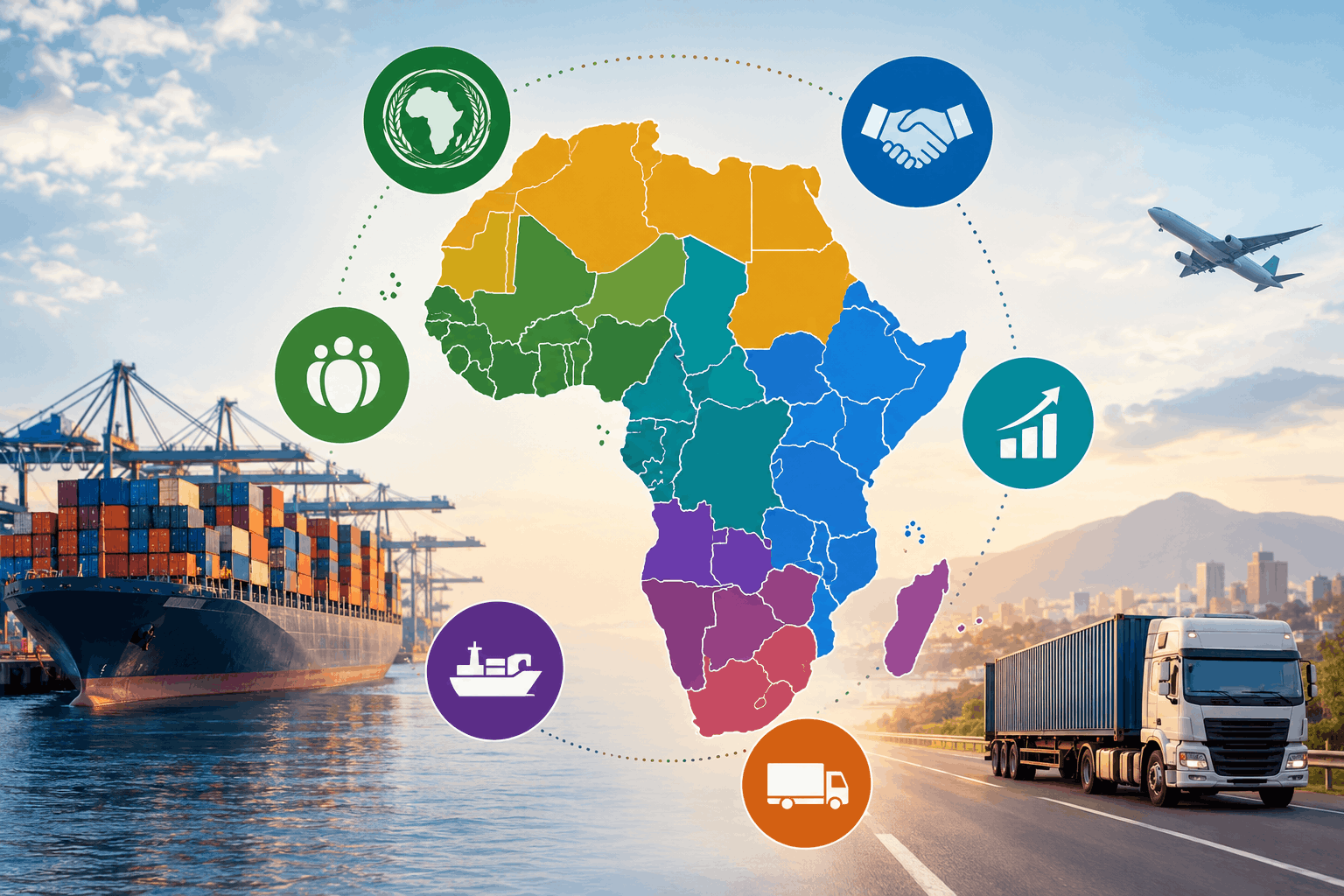
Sudan belongs to several regional and international trade arrangements, although membership does not automatically mean that businesses can access every trade benefit.
COMESA
Sudan is a member of the Common Market for Eastern and Southern Africa (COMESA), which brings together countries working towards greater regional trade and economic integration.
The agreement provides a framework for reducing trade barriers and improving access to participating markets. Its practical value depends on the applicable rules, customs procedures, product requirements and implementation by individual member countries.
IGAD
Sudan resumed full membership of the Intergovernmental Authority on Development (IGAD) on 9 February 2026. It had frozen its membership in January 2024 after IGAD invited the RSF commander to a summit.
IGAD brings together countries in the Horn of Africa and neighbouring regions. Its work includes regional cooperation, food security, economic development, infrastructure and peace and security.
African Continental Free Trade Area
Sudan has signed the African Continental Free Trade Area (AfCFTA) Agreement but had not ratified it according to the latest published lists in 2026. This means it should not be described as a country already applying AfCFTA preferences as a ratifying state party.
AfCFTA aims to create a single continental market for goods and services, supported by common rules covering areas such as customs, tariffs and trade facilitation. Sudan's participation could become more commercially useful once it completes ratification and puts the relevant requirements in place.
African Union
Sudan's participation in the African Union was suspended following the military takeover of October 2021. The suspension was part of the AU's response to the interruption of the country's political transition.
Trade with the European Union
Sudan is classified as a least developed country and is eligible for the European Union's Everything But Arms arrangement. The scheme gives eligible countries duty-free and quota-free access to the EU market for almost all products, except arms and ammunition, subject to the applicable rules.
For Sudanese exporters, however, eligibility does not remove the practical problems created by the war. Businesses still need to meet product standards, rules of origin, documentation and customs requirements, while also arranging reliable transport and payment.
Port Sudan
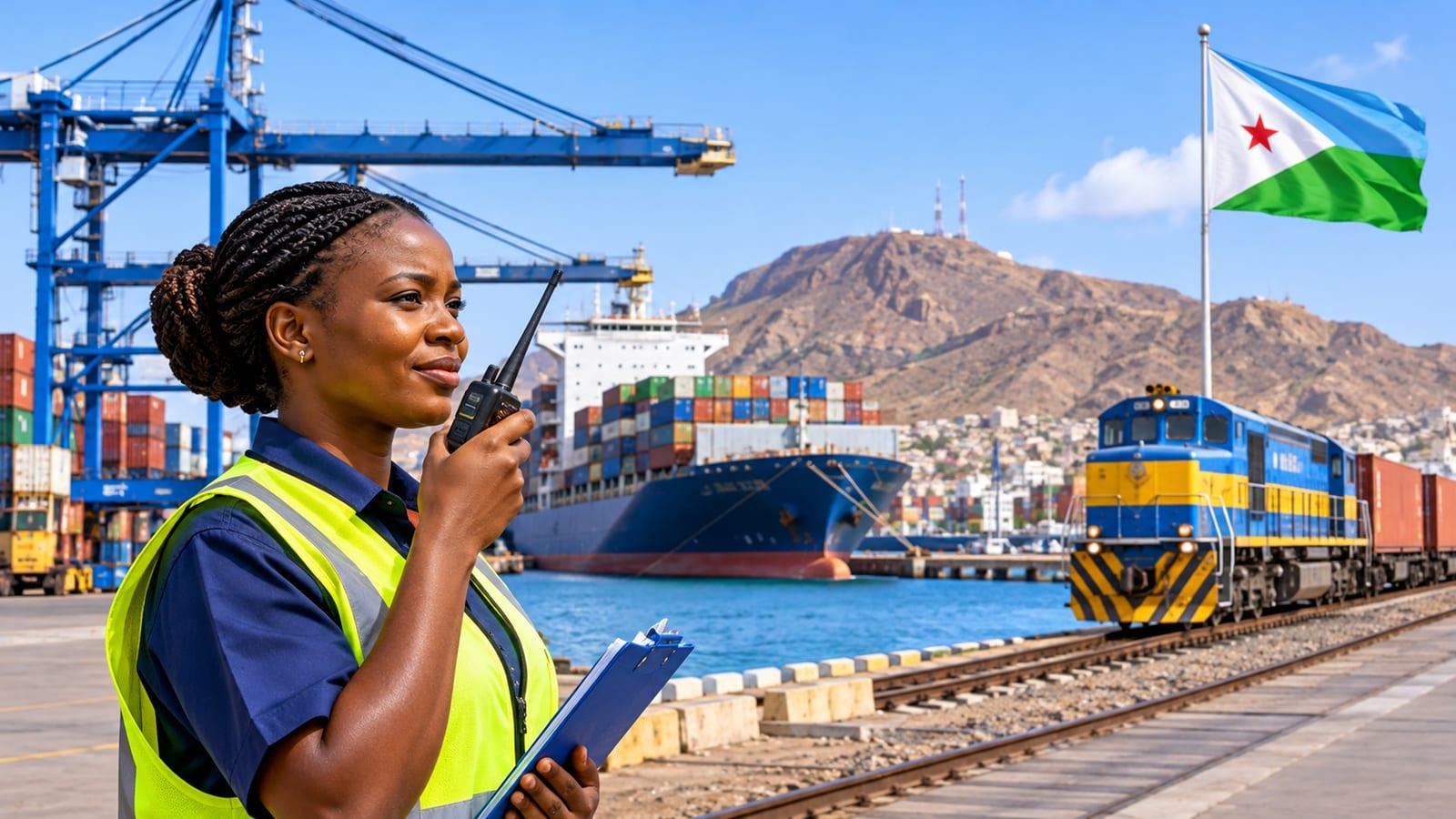
Port Sudan is the country's principal maritime gateway. Located on the Red Sea, it handles a large share of Sudan's international imports and exports and has become especially important since the fighting began in Khartoum.
The port is used for commercial shipments, fuel imports, food supplies and humanitarian cargo. Its position also makes it important to the movement of South Sudanese oil through Sudan's export infrastructure.
The city was not beyond the reach of the conflict. In May 2025, drone attacks targeted Port Sudan's airport, fuel storage facilities and electricity infrastructure, disrupting services and highlighting the risks facing the country's main maritime gateway.
The government operated from Port Sudan for much of the war. In January 2026, Prime Minister Kamil Idris announced that the government was returning to Khartoum, months after the army retook the capital. The move did not mean that the capital's damaged infrastructure and public services had been fully restored.
Land routes
Sudan shares borders with Egypt, Libya, Chad, the Central African Republic, South Sudan, Ethiopia and Eritrea. These borders provide access to neighbouring markets and form part of the country's regional trading network.
Road transport is important for moving agricultural products, livestock, fuel, food and manufactured goods. However, the security situation has made some routes difficult or unsafe to use.
Trade across the borders with Chad, Libya and South Sudan also takes place through informal channels. This is particularly important in areas where government control is limited or where established commercial routes have been disrupted.
Informal trade can help communities obtain essential goods, but it creates problems for customs collection, product tracking, taxation and the enforcement of trade regulations.
Sectors, business activity and commercial risks
In this section
Agricultural inputs, storage, processing, equipment and transport are important parts of the sector's recovery.
Sudan still has productive sectors and unmet demand for essential goods, but the current operating environment makes it hard to tell a workable business opportunity from a market where the risks are too high.
Businesses considering Sudan need to examine the security situation in the specific area where they intend to operate, rather than treating the country as one accessible market.
Food, medicines and essential supplies
Food, medicines, medical equipment and other essential products remain important imports. Domestic production and distribution have been disrupted, while displacement has increased the number of people who depend on humanitarian assistance.
Suppliers may find demand through established importers, humanitarian organisations and local distribution networks. However, demand does not automatically turn into a viable commercial opportunity. Purchasing power, access to foreign currency, transport costs and payment arrangements all affect whether a transaction can be completed.
Agriculture and food production
Agriculture remains important to Sudan's economy, particularly in states where farming can continue.
Gedaref, Kassala, Sennar and parts of Blue Nile have established agricultural production, including sesame, sorghum and other crops. These areas also have a role in Sudan's food supply.
In April 2026, the African Development Fund, part of the African Development Bank Group, approved a US$87 million grant for the Boosting Agrifood Systems Resilience Project. The programme is designed to improve food production and rural livelihoods in Blue Nile, Sennar and Kassala, and is being delivered with UN partners including the World Food Programme.
Agricultural inputs, storage, processing, equipment and transport are important parts of the sector's recovery. However, any business assessing these areas needs current information about local production, security, access to finance and the ability of farmers or buyers to pay.
Mining and mineral processing
Gold remains an important source of export earnings, and the government has introduced measures to improve oversight of the sector.
Mining activity also carries significant risks. Some mining areas are affected by conflict, while the movement of gold through informal networks makes it difficult to establish its origin and ownership.
A business entering this sector needs to understand the licensing system, ownership structure, export procedures, environmental requirements and applicable sanctions. It should also establish whether the people and companies involved in the supply chain have connections to armed groups or sanctioned entities.
Sudan has other mineral resources, but the existence of a resource does not establish that a project is commercially viable or ready for investment. Each project needs its own assessment of reserves, infrastructure, ownership, financing and security.
Electricity, water and infrastructure
Sudan needs extensive repairs to infrastructure damaged during the conflict. Electricity, water, roads, hospitals, housing, telecommunications and transport services have all been affected. The UN has put the cost of rehabilitating essential infrastructure in Khartoum alone at about US$350 million.
These needs could create future opportunities for construction companies, engineering firms, equipment suppliers, energy developers and financial institutions.
However, large reconstruction projects require more than available demand. They depend on security, functioning public institutions, reliable contracts, financing and the ability to move equipment and personnel.
The African Development Bank's agricultural resilience grant is one example of development financing that has continued despite the conflict. It should not be confused with a general reconstruction programme for the whole country.
Doing business in Sudan
Foreign businesses face several difficulties when operating in Sudan.
The currency has lost significant value, and the difference between official and parallel exchange rates has made pricing and financial planning difficult. Banking services have also been disrupted, while international transfers may be affected by correspondent banking restrictions and sanctions compliance requirements.
Companies need to establish how payments will be made, which banks can process them and whether their transactions comply with the relevant national and international regulations.
They should also carry out due diligence on local partners, including company ownership, beneficial owners, directors, politically exposed persons and any links to sanctioned individuals or entities.
Arabic is the main language of government administration and everyday business. English is also used in some professional and international commercial settings, but businesses should not assume that every supplier, customer or public institution operates in English.
A company considering Sudan should obtain current legal, financial and security advice before committing money or sending employees into the country.
Risks businesses need to understand
In this section
Displacement has affected labour and consumer markets.
The conflict remains the largest risk.
The war continues to affect Darfur, Kordofan and other parts of the country. The Sudanese Armed Forces and the RSF control different territories, while other armed groups also operate in some areas. Territorial control can change, and a location that appears accessible on a map may still have serious security problems.
Food insecurity is severe.
The IPC estimated that approximately 19.5 million people, about 41% of the population, faced acute food insecurity between February and May 2026. This included approximately 135,000 people in IPC Phase 5 Catastrophe conditions. The assessment identified 14 areas in North Darfur, South Darfur and South Kordofan at risk of famine if conditions worsened, although it did not classify any area as experiencing famine at that time.
In October 2026, the IPC issued another alert about a growing risk of famine in parts of Greater Darfur and Greater Kordofan. Conflict, displacement, drought linked to El Niño and inadequate humanitarian funding were among the factors worsening conditions.
Displacement has affected labour and consumer markets.
Millions of people have left their homes, while many others have crossed into neighbouring countries. This has affected access to workers, customers, suppliers and functioning markets. The International Organization for Migration reported approximately 8.9 million internally displaced people in March 2026, falling to about 8.6 million by August as some people returned home. Displacement figures change as people move and return.
Currency and banking conditions remain difficult.
Businesses face foreign exchange shortages, inflation, payment delays and limited access to reliable banking services. Exchange rate differences can also make it difficult to calculate the cost of imported goods and the value of local revenue.
Informal trade creates legal and reputational risks.
Gold, livestock and agricultural products can move through informal channels, particularly in areas where government oversight is weak. Buyers need to establish where goods originate, who owns them and whether the transaction complies with applicable laws.
Humanitarian assistance is underfunded.
The 2026 UN humanitarian response plan sought approximately US$2.87 billion to support people affected by the crisis. By September 2026, it was only about 41% funded. By mid-November, the UN's tracking service showed about US$1.45 billion received, or roughly half the requirement. The funding position changes as new contributions are recorded.
What this means for African businesses
In this section
Agricultural trade in the east, essential imports and humanitarian procurement are areas worth monitoring.
For African businesses, Sudan is currently a difficult market to enter, but its commercial importance should not be overlooked.
The country's demand for food, medicines, agricultural inputs, fuel, equipment and other essential goods has not disappeared. Businesses in neighbouring countries may be able to serve some of these needs through established importers, humanitarian procurement arrangements and trade routes that remain operational.
Egypt has geographical advantages because of its shared border and established commercial connections. Ethiopia and Eritrea are also relevant to regional trade, while businesses in other African markets may have opportunities to supply agricultural products, machinery and essential goods where transport and payment arrangements are workable.
However, companies should not approach Sudan as though demand alone makes a market attractive. They need to understand who controls the area where they intend to operate, how goods will reach their customers, which banks can process payments and whether the people involved in a transaction can be properly verified.
Agricultural trade in the east, essential imports and humanitarian procurement are areas worth monitoring. Mining and reconstruction also have long-term economic importance, but they carry considerable legal, financial and security risks at present.
The country's recovery will depend heavily on the restoration of infrastructure, functioning financial institutions, agricultural production and reliable trade routes. A lasting improvement in security and political stability will also be necessary before large-scale private investment can become more attractive.
Sudan has substantial agricultural land, mineral resources, livestock, a long Red Sea coastline and an established position in regional trade. Its ability to turn these resources into broader economic growth will depend on how successfully it restores the institutions and infrastructure needed to support commercial activity.
For now, businesses interested in Sudan should follow developments closely, establish reliable local contacts and assess individual transactions carefully. The country's commercial potential is worth understanding, but the conditions for operating there remain difficult.
The next profile in Africa's Markets, Country by Country is Madagascar, a major producer and exporter of natural vanilla.
Sources
International Monetary Fund, World Economic Outlook, October 2026
Central Bank of Sudan, 2025 trade summary and gold export data
Ministry of Minerals and Sudanese Mineral Resources Company, gold production and export statements, 2025 and 2026
World Bank WITS, Sudan Trade Summary
US Energy Information Administration, Sudan country analysis
UNCTAD, Commodities at a Glance: Special Issue on Gum Arabic
FAO, Sudan Country Brief, September 2026
African Development Bank Group, Boosting Agrifood Systems Resilience Project, April 2026
IPC, Sudan Acute Food Insecurity Analysis, February to May 2026, and IPC Alert, October 2026
IOM Displacement Tracking Matrix, Sudan, 2026
UN OCHA Financial Tracking Service, Sudan Humanitarian Needs and Response Plan 2026
IGAD and Government of Sudan statements on Sudan's return to IGAD, February 2026