Explore South Sudan's economy and trade, from oil exports and pipelines through Sudan to imports from Uganda and Kenya, currency instability and business opportunities in Juba.
An economy heavily dependent on oil
In this section
South Sudan therefore had to negotiate arrangements with Sudan to transport its oil to the Red Sea.
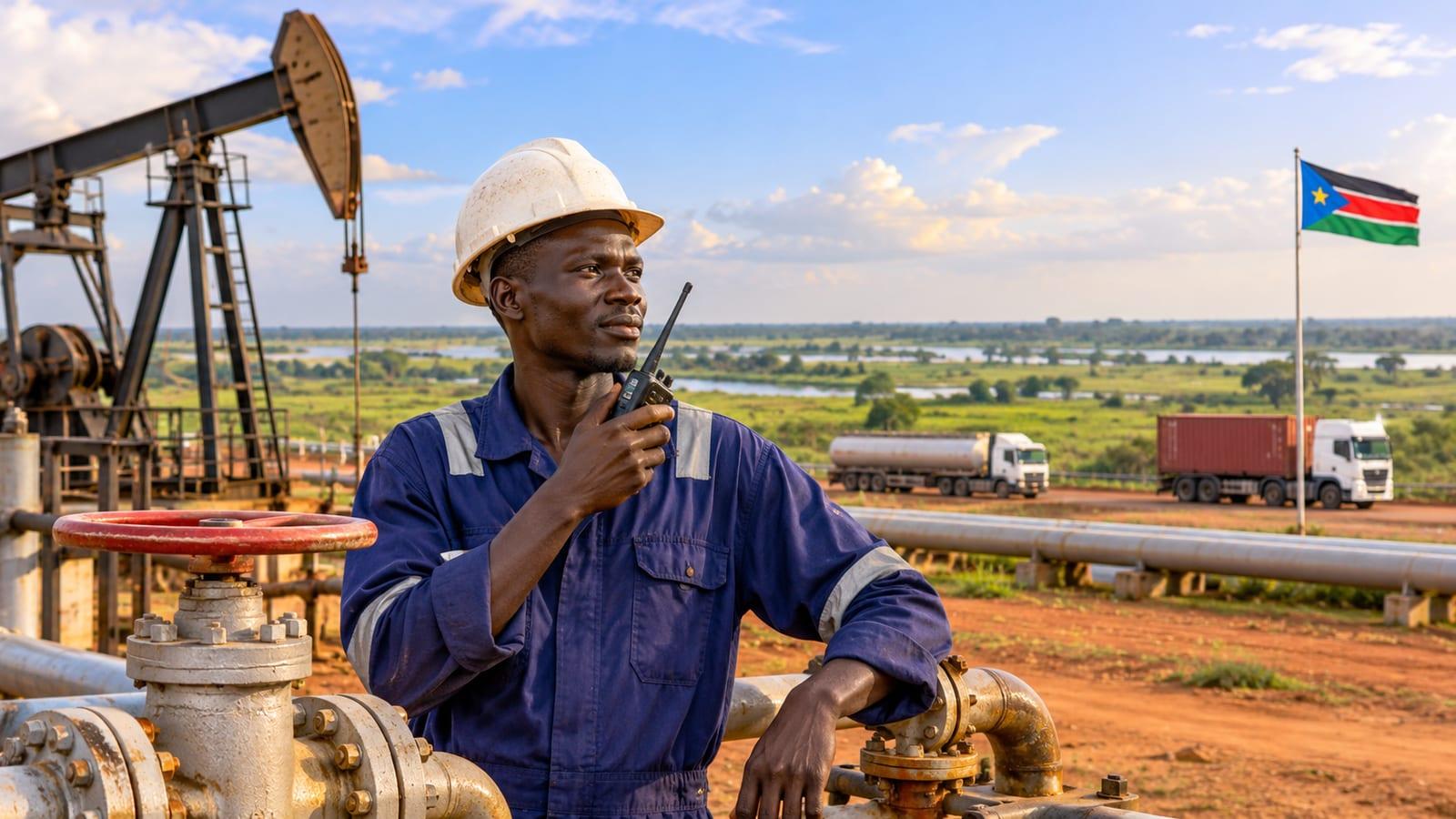
South Sudan has some of the most important oil resources in East Africa, but having oil has not made it a financially stable country. Its economy depends heavily on crude exports, and almost all of those exports have to pass through neighbouring Sudan before reaching international buyers. This arrangement has left the government exposed to disruptions in a country that has been going through its own devastating conflict.
The consequences became particularly severe in 2024, when damage to an oil export pipeline in Sudan interrupted production and shipments from South Sudan. Government revenue fell, the local currency lost value, prices rose sharply and public employees went months without receiving their salaries. Although oil production and exports recovered in 2025, the country continues to face serious financial and political difficulties.
South Sudan became independent from Sudan on 9 July 2011, making it the world's youngest internationally recognised country. Its independence came with an important economic disadvantage: although it inherited most of the former Sudan's oil-producing areas, the pipelines and export facilities remained across the new international border. South Sudan therefore had to negotiate arrangements with Sudan to transport its oil to the Red Sea.
The country's economy is also shaped by agriculture, livestock, fishing, public spending and trade with neighbouring countries. Most people do not work in the oil industry, and many households depend on farming, livestock and informal trade for their livelihoods. However, the oil sector remains the main source of foreign exchange and government revenue.
This is the twenty-sixth country profile in Africa's Markets, Country by Country, following Somalia, and the next stage of our East African series. It looks at how South Sudan earns its money, what it buys from other countries, how goods reach its markets and what businesses should understand before considering the country.
South Sudan at a glance
In this section
The IMF growth figure also follows a jump of more than 40% in 2025, when oil exports restarted after the pipeline shutdown.
Economic figures for South Sudan need careful reading because oil disruptions, currency depreciation and differences between reporting periods can produce large changes in the published statistics. The table below uses the latest IMF projections and identified World Bank and government figures, rather than treating forecasts as completed results.
Measure
Figure
Period and source
Nominal GDP
About US$7.98 billion
2026 projection, IMF October 2026 WEO
GDP per person
About US$642
2026 projection, IMF October 2026 WEO
Real GDP growth
10.5%
2026 projection, IMF October 2026 WEO
Average consumer-price inflation
27.6%
2026 projection, IMF October 2026 WEO
Oil production
About 157,000 barrels per day; about 174,000 by June 2026
Early FY2026, World Bank; June 2026, Ministry of Petroleum
Oil share of government revenue
Nearly 90%
IMF estimate
Oil share of exports
About 95%
IMF estimate
Food-price inflation
234%
FY2025 annual average, World Bank
Civil-service salary arrears
8 to 13 months (January 2026); 13 to 14 months (July 2026)
World Bank
Currency
South Sudanese pound (SSP)
Main trading partners
Uganda, Kenya, UAE, India and China
2024 National Bureau of Statistics data
Regional organisations
EAC and IGAD
Membership
AfCFTA
Signed, not yet ratified
Latest published lists, 2026
Next scheduled national election
11 February 2027
National Elections Commission timetable, November 2026
The IMF's GDP and inflation figures are projections for 2026, not final results. The IMF growth figure also follows a jump of more than 40% in 2025, when oil exports restarted after the pipeline shutdown. The World Bank's inflation figure is an annual average measured through food prices, because the statistics bureau stopped publishing official inflation data after May 2025. These figures describe different periods and should not be compared as though they were collected at the same time.
South Sudan's financial year runs from July to June. Its oil production figures also vary by reporting date. The World Bank reported production of approximately 157,000 barrels per day in early FY2026, while the Ministry of Petroleum announced about 174,000 barrels per day in June 2026. These are different measurements at different times, not necessarily contradictory estimates of the same period.
How the economy is built
In this section
The Sudd is one of Africa's largest wetland systems and provides important natural resources and livelihoods.
South Sudan's formal economy is heavily dependent on petroleum. The country has three main producing oil consortia, operating in areas that include Upper Nile, Unity and Ruweng. The state-owned Nile Petroleum Corporation, commonly known as Nilepet, takes part in these arrangements alongside international companies.
The main operating companies are Dar Petroleum Operating Company, Greater Pioneer Operating Company and Sudd Petroleum Operating Company. Their international partners have included companies from China, Malaysia and India. The Ministry of Petroleum identifies China National Petroleum Corporation, Petronas and Nilepet among the participants in the producing consortia. Ownership has also been affected by disputes and by Petronas's announced intention to leave South Sudan, so the companies' current interests should be checked against the latest official disclosures.
Oil provides nearly 90% of government revenue and approximately 95% of exports, according to the IMF. This dependence means that changes in production, international oil prices, transport costs and relations with Sudan can directly affect the government's ability to pay for public services.
South Sudan's oil history has also been affected by conflict. In January 2012, the government shut down oil production during a dispute with Sudan over transit fees and accusations concerning the removal of oil. The shutdown lasted until 2013 and caused considerable economic damage.
In December 2013, a civil war broke out between forces loyal to President Salva Kiir and those supporting his former deputy, Riek Machar. The conflict caused widespread deaths and displacement and affected oil-producing areas. A revitalised peace agreement was signed in September 2018, and a transitional unity government was formed in February 2020. However, the agreement has never been fully carried out, and political disagreements continue to affect the country's stability.
Outside the petroleum industry, much of South Sudan's economic activity takes place in agriculture, livestock, fishing, trade and small businesses. Farming is an important source of food and income, particularly in rural communities. Maize, sorghum, cassava, groundnuts and other crops are grown in different parts of the country.
Livestock is also central to many communities. Cattle provide food and income and play important roles in social and cultural life, including marriage arrangements and the transfer of wealth. Cattle ownership can represent substantial household wealth, although disputes over livestock and competition for grazing land have contributed to local conflicts.
Fishing supports communities living along the Nile and around the Sudd wetlands. The Sudd is one of Africa's largest wetland systems and provides important natural resources and livelihoods. However, access to markets, storage, transport and suitable equipment remains limited in many areas.
Despite its agricultural potential, South Sudan imports large quantities of food. Conflict, displacement, insecurity, high transport costs and poor infrastructure restrict production and distribution. Flooding has also damaged farmland and disrupted livelihoods in several parts of the country. In 2026, the FAO reported serious food insecurity and concerns about cereal production following periods of below-average rainfall and continuing insecurity.
What happened when the oil pipeline stopped working?
In this section
The World Bank reported that annual average inflation, measured through food prices, reached 234% in FY2025.
South Sudan's dependence on oil becomes easier to understand when you follow the route from the oil fields to international markets.
The country is landlocked, so it cannot load crude oil directly onto tankers. Its main export route runs north through Sudan to the Bashayer export terminal on the Red Sea, near Port Sudan. The arrangement requires South Sudan to pay transport and processing fees to Sudan.
In February 2024, a rupture in the export pipeline carrying Dar Blend crude in Sudan disrupted the movement of South Sudanese oil. The situation became more difficult as the conflict in Sudan affected infrastructure, workers and the authorities responsible for the export route. Sudan declared force majeure, and South Sudan's oil operations were also affected.
The disruption was serious because the country had few other ways to export its crude. Oil production declined, government revenue fell and the supply of foreign currency became more restricted.
The effects spread through the wider economy. The government struggled to pay salaries, businesses had difficulty obtaining foreign currency and the South Sudanese pound depreciated sharply. Importers who needed dollars to buy food, fuel, machinery and other goods faced higher costs, which pushed up prices in local markets.
The World Bank reported that annual average inflation, measured through food prices, reached 234% in FY2025. Civil servants were owed between eight and thirteen months of salary by January 2026, and the World Bank's later estimate put arrears at 13 to 14 months by July 2026. The loss of purchasing power hit households that relied on government salaries and businesses that depended on public spending.
The pipeline situation began improving in January 2025, when Sudan announced that force majeure had been lifted and South Sudan instructed its oil operators to resume production. The restart took place in stages, with wells and production facilities returning to operation over the following weeks.
Production later recovered, reaching approximately 157,000 barrels per day in early FY2026, according to the World Bank, and about 174,000 barrels per day by June 2026, according to the Ministry of Petroleum. In November 2026, the government said it was seeking investment to lift output to 230,000 barrels per day.
The recovery has not removed the underlying risk. South Sudan still depends on infrastructure crossing Sudan, where the war has created security and operational problems. Any further disruption could reduce the country's export earnings and put more pressure on public finances.
The government has discussed alternative export routes, including a proposed pipeline through Kenya to the port of Lamu. The proposal is linked to the wider Lamu Port-South Sudan-Ethiopia Transport Corridor, commonly known as LAPSSET. However, this pipeline does not exist yet and is not a working replacement for the existing route through Sudan.
What South Sudan sells, buys and who it trades with
In this section
Sesame, gum arabic and other agricultural products are among the commodities linked to its farming potential.
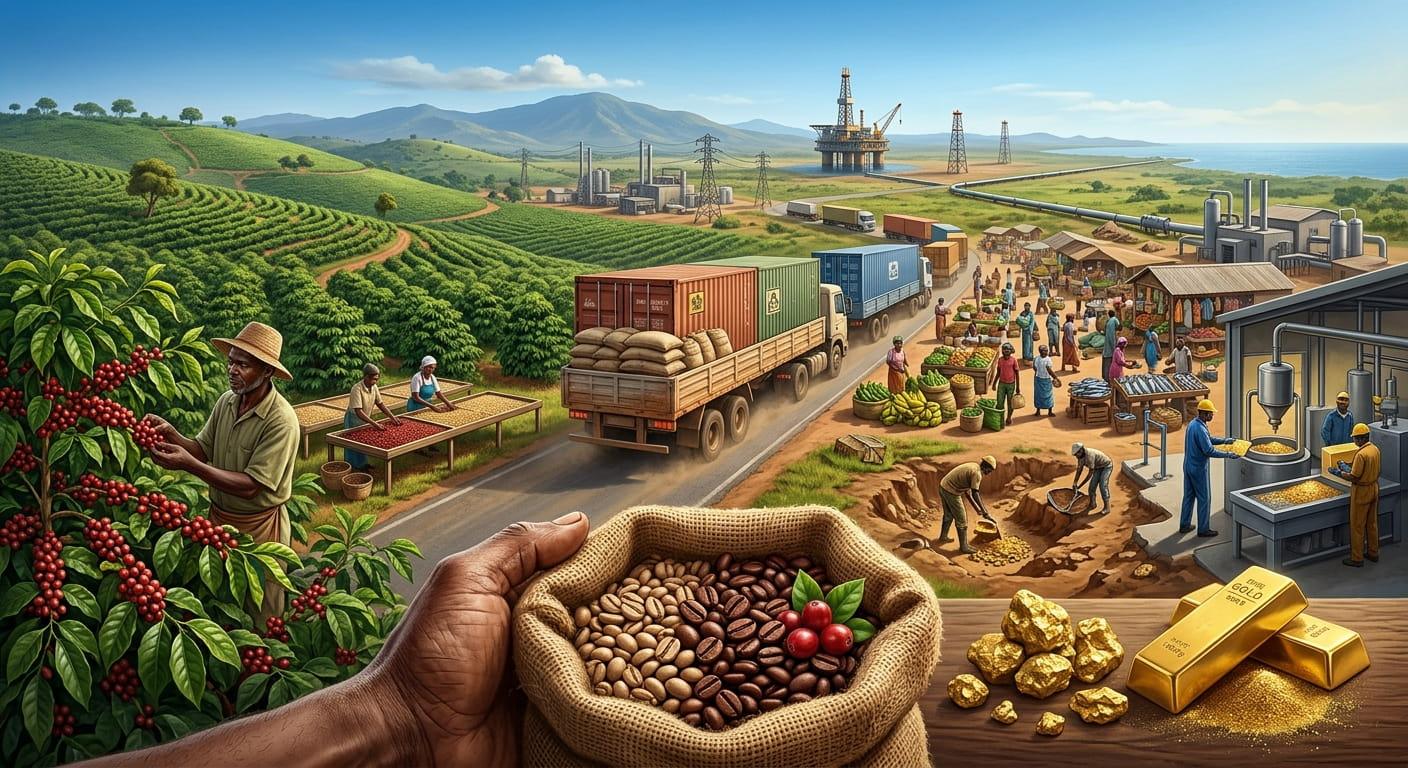
South Sudan's trade is concentrated in a small number of products. Crude petroleum dominates exports, while food, fuel, vehicles, machinery and other manufactured goods make up much of its imports.
What South Sudan sells
Crude oil
Petroleum is by far the country's most important export. The National Bureau of Statistics' 2024 detailed export data records crude petroleum at approximately US$1.69 billion, almost all of the country's recorded exports.
South Sudanese crude reaches international markets through traders and buyers operating across several countries. The United Arab Emirates, Malaysia, Singapore, India, Italy and China have featured among destinations in reported trade data, and the UAE is a major destination. The final destination of crude can be difficult to establish because trading companies and intermediaries may buy cargoes before selling them on to refiners in other countries.
Oil exports provide the foreign exchange needed to pay for imports and support government spending. However, the value of the crude sold should not be confused with the money available for public services. Production costs, transport and processing charges, contracts, debt obligations and other oil-related payments reduce the amount the government can actually use.
Gold and other minerals
South Sudan also has mineral resources, including gold. Artisanal and small-scale mining takes place in parts of the country, and gold is an important source of income for some mining communities and traders.
However, the sector remains small compared with petroleum, and much artisanal gold activity takes place outside formal reporting systems. The United States Geological Survey lists artisanal gold among the country's mineral products but does not treat South Sudan as a globally significant mineral producer.
Agricultural and other products
South Sudan produces agricultural goods, timber and animal products. Sesame, gum arabic and other agricultural products are among the commodities linked to its farming potential. Wood and wood products also appear in recorded export statistics.
However, these products account for a very small share of formal exports compared with crude oil. Limited processing, transport difficulties and inconsistent access to international markets make it hard for local producers to compete at a larger scale.
Expanding agricultural production and processing could create more export opportunities, but South Sudan has not yet built a diversified export base.
What South Sudan buys
South Sudan imports a large share of the goods consumed by households, businesses and public institutions.
Food is particularly important. Imports include maize flour, sorghum, rice, beans, sugar, cooking oil and other food products. The country also imports petroleum products, despite producing crude oil, because its domestic refining capacity is limited.
Other important imports include:
Vehicles, spare parts and transport equipment.
Machinery and equipment for construction and industry.
Medicines and medical supplies.
Building materials, including cement and steel products.
Household appliances and consumer goods.
Chemicals, plastics and other manufactured materials.
The National Bureau of Statistics' 2024 detailed import categories put food products as the largest category, followed by vehicles and transport equipment, machinery and mechanical appliances, chemicals, plastics and rubber.
South Sudan's main trading partners
Uganda and Kenya are important suppliers of goods entering South Sudan, particularly by road.
The National Bureau of Statistics' 2024 trading-partner data records approximately US$298 million in imports from Uganda and about US$134 million from Kenya. Uganda was therefore the largest import supplier among the countries listed in that dataset.
Kenya also plays an important role through transport, financial services, insurance, wholesale trade and other commercial activities. Many goods imported from international markets reach South Sudan through the Port of Mombasa before travelling overland.
The United Arab Emirates has a different position in South Sudan's trade. It is a major destination for South Sudanese exports, mainly crude oil, rather than the largest source of imports.
India and China are also important trading partners. Their commercial links include petroleum, machinery, manufactured goods and other products.
The 2024 trade figures should be read with some caution because the detailed commodity tables and headline totals published by the National Bureau of Statistics do not fully match. Other datasets, including the East African Community's trade report and international trade databases, also publish different totals for South Sudan's 2024 trade. The figures are useful for identifying major partners and the shape of trade, but they are not a perfectly reconciled national trade account.
Trade agreements and how goods move
In this section
The EAC brings together countries that cooperate on trade, customs, infrastructure and regional integration.
South Sudan's location gives it access to several important regional trade routes, although being landlocked makes transport costs a major concern.
Regional trade membership
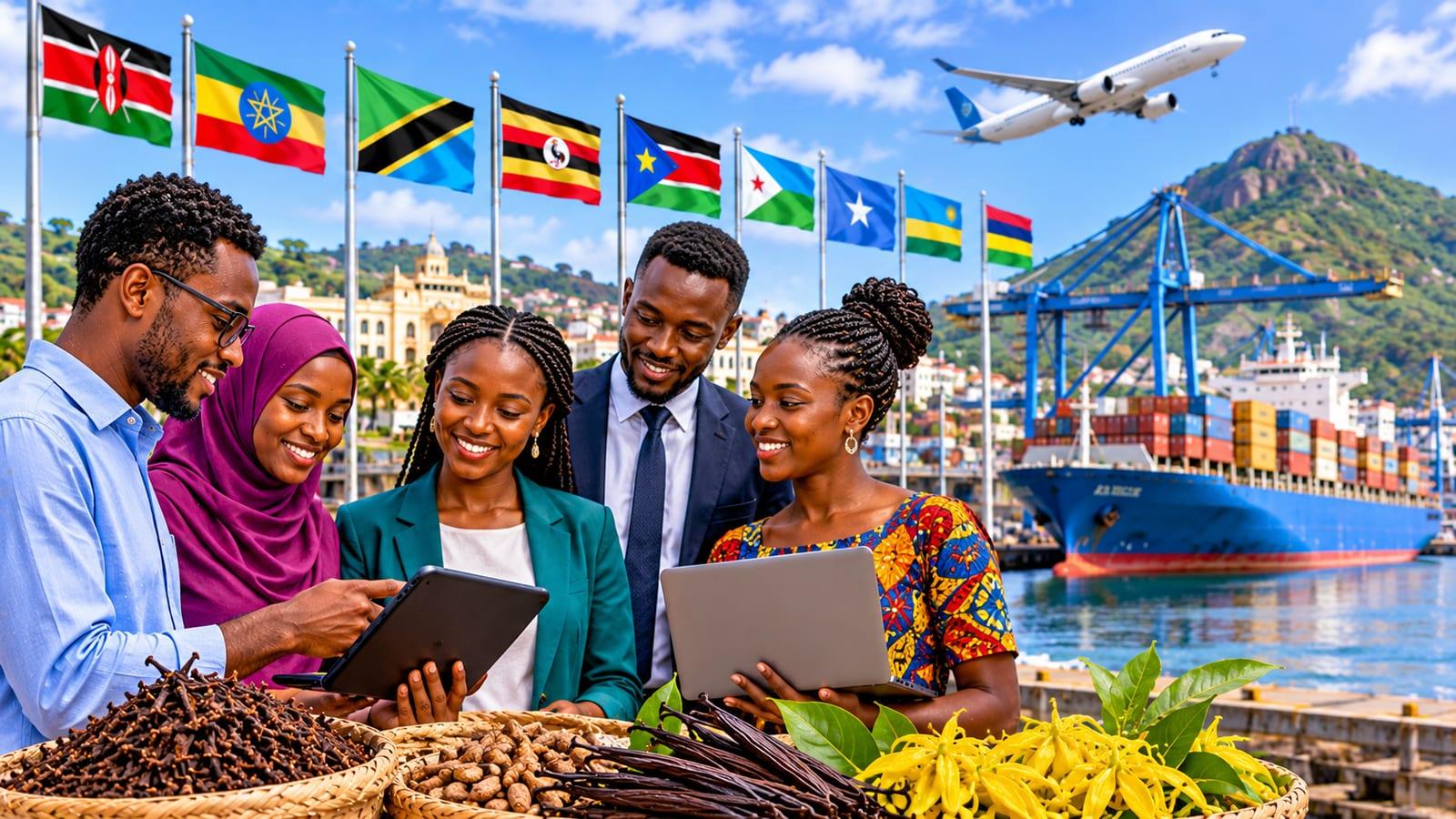
South Sudan became a full member of the East African Community on 5 September 2016. The EAC brings together countries that cooperate on trade, customs, infrastructure and regional integration.
Its membership matters because Uganda and Kenya are among South Sudan's major trading partners. The country also belongs to the Intergovernmental Authority on Development, known as IGAD, which promotes regional cooperation in the Horn of Africa and parts of East Africa.
South Sudan has signed the African Continental Free Trade Area agreement but, according to the latest published lists in 2026, has not yet ratified it. It should therefore not be described as already applying AfCFTA preferences.
For businesses, EAC membership provides a regional framework for trade, but it does not remove every border, customs or infrastructure problem. How regional rules are applied and the condition of transport networks remain important considerations.
The pipeline through Sudan
The existing oil export route runs through Sudan to the Red Sea. It is the most important transport infrastructure in South Sudan's economy because the country depends on it to sell most of its crude oil abroad.
Sudan receives payments for the use of its infrastructure, including transport and processing fees. The cost of moving oil therefore affects how much revenue South Sudan keeps from its exports.
The conflict in Sudan has made this arrangement more uncertain. The proposed pipeline through Kenya is meant to give South Sudan another route to international markets, but it needs substantial investment, construction and agreements between the countries involved.
The Northern Corridor
For ordinary imports, the Northern Corridor is particularly important.
Goods arriving at the Port of Mombasa in Kenya can travel by road through Kenya and Uganda before entering South Sudan at the Nimule border crossing. From Nimule, a paved highway connects to Juba, the country's capital and main commercial centre.
This route carries food, fuel, construction materials, vehicles and other imported goods. It also connects South Sudanese traders with suppliers, logistics companies and financial institutions operating in Kenya and Uganda.
The Juba-Nimule highway is approximately 192 kilometres long and is an important part of the country's connection to regional markets. However, transport costs can rise because of border procedures, security concerns, delays, fuel prices and informal payments along the route.
Some goods may also reach South Sudan through other regional ports and transport networks, including routes connected to Tanzania. The route chosen depends on the supplier, cargo type, freight cost and available logistics.
The Nile and domestic transport
The Nile provides another way of moving goods within South Sudan. River transport can connect Juba with settlements further north, including Bor, Malakal and Renk, although water levels, security and available vessels affect how regularly goods can move.
Road transport remains difficult outside the main paved routes. Many roads are unpaved, and seasonal rains can make some journeys difficult or impossible. This raises the cost of distributing food, construction materials, medicines and other goods to communities outside the major towns.
For businesses, the location of customers and suppliers is therefore an important part of planning. A product that can be delivered to Juba at a reasonable cost may be much more expensive to distribute to a remote state.
Sectors with room to grow and doing business
In this section
Foreign-exchange shortages, currency depreciation and banking limitations can affect payments and operations.
South Sudan has commercial needs across several sectors. However, demand alone does not make a market attractive. Businesses must consider infrastructure, payment arrangements, security, regulations and the availability of reliable local partners.
Food production and processing
South Sudan imports large quantities of food despite having land suitable for farming. This creates opportunities for businesses involved in crop production, food processing, storage, packaging and distribution.
Maize, sorghum, cassava, groundnuts and vegetables are among the crops that can support local food supply. Investment in seeds, irrigation, farming equipment, storage and processing could help producers increase output and reduce post-harvest losses.
Food processing is particularly relevant because local production does not always meet the quality, quantity or consistency required by large buyers. Businesses that can organise reliable supply chains between farmers, processors, wholesalers and retailers may find opportunities in the market.
The risks include poor roads, seasonal production, limited storage, high fuel costs and insecurity in some farming areas. Companies considering this sector need to understand where production takes place and how goods can be transported to customers.
Petroleum products and refining
South Sudan produces crude oil but still imports petroleum products because domestic refining capacity is limited.
The Bentiu refinery in Unity State provides some local processing capacity, but it does not remove the country's need for imported fuel. Storage, distribution and refining infrastructure remain important areas for investment.
Businesses involved in fuel storage, transport, equipment maintenance and distribution may find opportunities, although the sector requires careful attention to licensing, contracts, payment security and government regulation.
Electricity and renewable energy
Electricity access remains limited in South Sudan, and many businesses depend on diesel generators.
This creates demand for solar systems, batteries, mini-grids, backup power equipment and energy services for homes, commercial buildings, hospitals and other institutions.
Businesses supplying solar equipment may also find opportunities in installation, maintenance and financing. However, affordability, spare parts, technical skills and customers' ability to pay must be considered.
Roads and construction
Transport infrastructure is a major constraint on business. Companies involved in road construction, building materials, equipment supply, engineering and maintenance may find opportunities as infrastructure projects develop.
Juba is the country's main commercial centre, but demand also exists in other towns and regional markets. The cost of reaching these locations, the availability of materials and the reliability of project funding can decide whether a contract is worth taking.
Construction companies should check the source of project financing and the payment terms before committing significant resources.
Banking, telecommunications and business services
Financial services and telecommunications are important to South Sudan's commercial activity.
Kenyan financial institutions, including KCB and Equity Bank, have operations in the market, while telecommunications companies such as MTN provide mobile services.
Businesses also need accounting, insurance, logistics, accommodation, transport, equipment maintenance and professional services. Suppliers that understand the requirements of oil companies, international organisations, government institutions and local businesses may find opportunities in these areas.
However, the availability of financial services does not mean that every business can access credit or move money easily. Foreign-exchange shortages, currency depreciation and banking limitations can affect payments and operations.
What foreign investors need to know
The Ministry of Investment is South Sudan's central institution for investment promotion and facilitation. Setting up a business involves several government institutions.
The East African Community's published investment procedures name the Ministry of Justice as responsible for company registration, the Ministry of Investment for investment certificates and the National Revenue Authority for tax registration. Depending on the business, investors may also need environmental approvals, sector-specific licences, social security registration and work permits.
English is the official language of government and business, while Arabic and many local languages are also widely used.
Foreign businesses should pay particular attention to currency arrangements. The South Sudanese pound has lost a great deal of value, and official exchange rates have not always reflected the rates available in the parallel market. This creates uncertainty around pricing, imports, operating costs and converting revenue.
Contracts should clearly state the currency of payment, payment deadlines, responsibility for taxes and duties, and what happens if a transaction is delayed. Businesses should also check the reliability of their customers and partners before extending credit.
Working with experienced local advisers, lawyers, accountants and logistics companies can help foreign investors understand the rules and the commercial environment. Due diligence is particularly important where contracts depend on government payments or projects financed through oil revenue.
Risks and trade-offs
In this section
Government salary arrears also reduce household purchasing power and can weaken demand for goods and services.
South Sudan has commercial opportunities, but businesses entering the market face several risks that need careful assessment.
Dependence on the Sudan oil route
The country remains heavily dependent on pipelines crossing Sudan. Further damage or interruption could reduce oil exports, restrict foreign-currency inflows and put pressure on government spending. This risk affects businesses beyond the petroleum sector because oil revenue supports a large part of the wider economy.
Political uncertainty
The transitional political arrangement remains fragile. The long-running trial of opposition leader Riek Machar, who was suspended as first vice president, and disagreements over implementation of the 2018 peace agreement have added to the uncertainty.
The National Elections Commission announced on 14 November 2026 that the next national elections would take place on 11 February 2027, replacing the previous date of 22 December 2026. It is the latest of several delays since independence, and concerns remain about security, funding, voter registration and the readiness of the institutions running the election.
Businesses should monitor political developments because changes in security and government arrangements can affect travel, contracts, public spending and commercial confidence.
Currency instability and payment delays
The depreciation of the South Sudanese pound and the shortage of foreign currency make it difficult for businesses to plan costs and manage cash flow. Government salary arrears also reduce household purchasing power and can weaken demand for goods and services.
Companies that depend on public-sector contracts should assess payment risks carefully rather than assuming that a signed agreement guarantees timely payment.
Conflict and insecurity
South Sudan continues to experience localised violence and political tensions. Security conditions vary across states and can affect road transport, farming, staff movement and access to customers.
Businesses should assess the security situation in the specific areas where they intend to operate, rather than treating Juba and the rest of the country as one uniform market.
Flooding, food insecurity and climate pressures
Flooding has repeatedly affected livelihoods, agriculture and infrastructure. In 2026, the FAO also reported concerns about dry weather, cereal production and severe food insecurity in several parts of the country.
These conditions affect agricultural supply, household income and the cost of transporting goods. They also create extra demand for food supply, storage, water infrastructure and essential services.
What this means for an African business
In this section
Ugandan food producers, wholesalers and distributors can supply a market that imports significant quantities of food.
South Sudan is a relatively small economy with large commercial needs, but its dependence on oil, limited infrastructure and political uncertainty make it a market that needs preparation.
Its position next to Uganda and Kenya creates opportunities for businesses already operating in those countries. Ugandan food producers, wholesalers and distributors can supply a market that imports significant quantities of food. Kenyan logistics companies, banks, insurers, construction firms and professional service providers can also take part in commercial activity connected to Juba and other towns.
For companies elsewhere in Africa, opportunities may exist in food production and processing, fuel distribution, solar energy, construction materials, transport, telecommunications and services for international organisations and petroleum operators.
However, businesses should identify the customer before committing resources. A company supplying food to wholesalers will face different requirements from one providing equipment to an oil operator or transport services to an international organisation. Pricing, payment arrangements, delivery routes and regulatory approvals will also differ.
A business considering South Sudan should establish who will buy its product, how that customer will pay, where the goods will be sourced, how they will reach the market and what happens if the normal supply route is interrupted. It should also calculate costs using realistic transport, currency and security assumptions.
South Sudan's oil wealth creates a market that needs goods, services and investment, but the country's economic conditions mean that opportunities must be judged customer by customer, contract by contract and place by place.
The next profile in our East African series is Djibouti, a country whose ports play an important role in connecting the Horn of Africa to international trade.
Sources
International Monetary Fund, World Economic Outlook, October 2026
World Bank, South Sudan Economic Monitor and Macro Poverty Outlook, 2026
South Sudan National Bureau of Statistics, Trade Statistics, 2024
South Sudan Ministry of Petroleum, production statements, 2026
Food and Agriculture Organization, GIEWS Country Brief on South Sudan, September 2026
U.S. Geological Survey, Minerals Yearbook, South Sudan
East African Community, South Sudan Investment Procedures
National Elections Commission of South Sudan, election timetable, November 2026