Discover the history of Mauritian sega, from its roots in slavery to its role in Mauritius today, including music, dance, food, religion and culture.
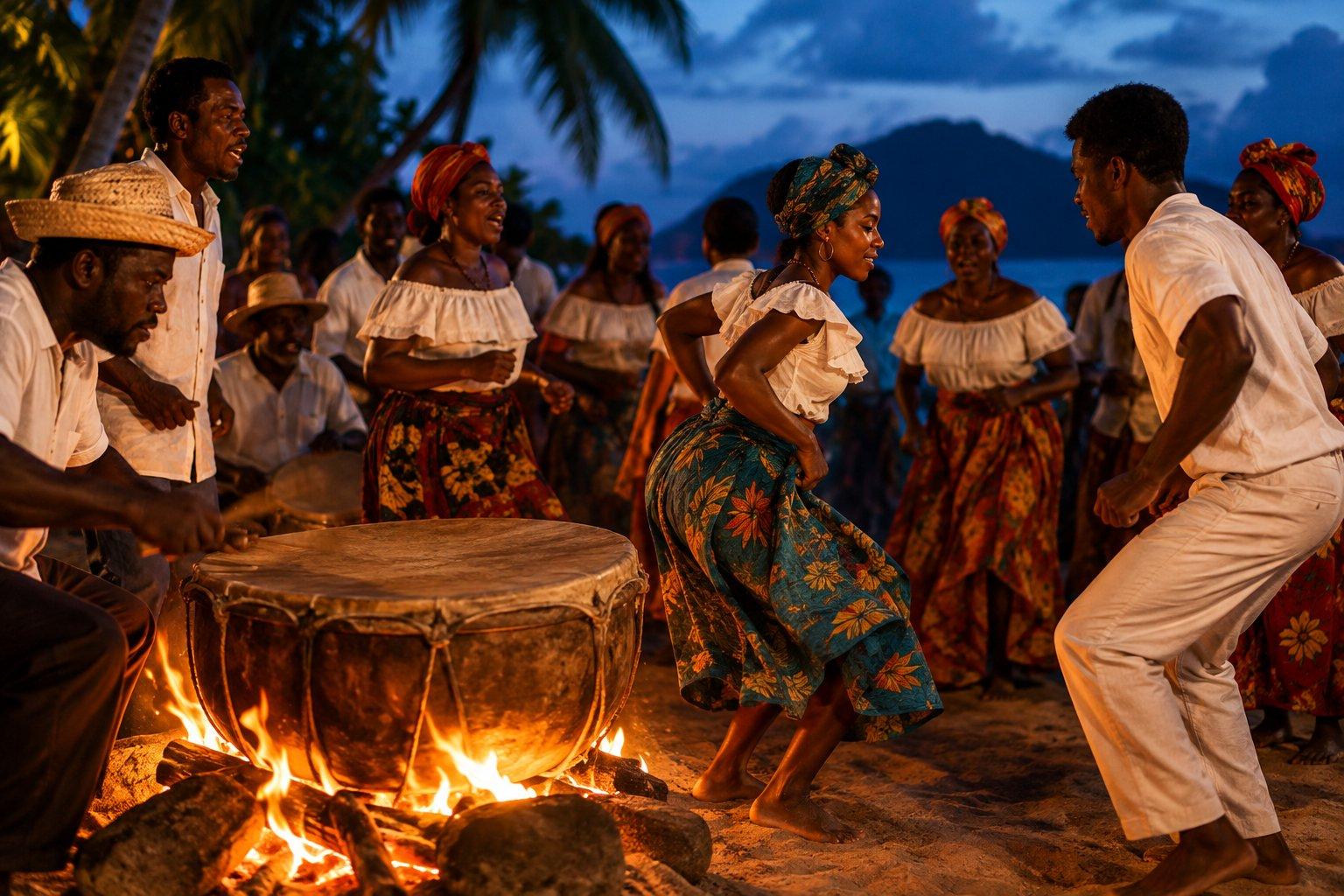
On a Mauritian evening, a sega performance can begin with the sound of a drum.
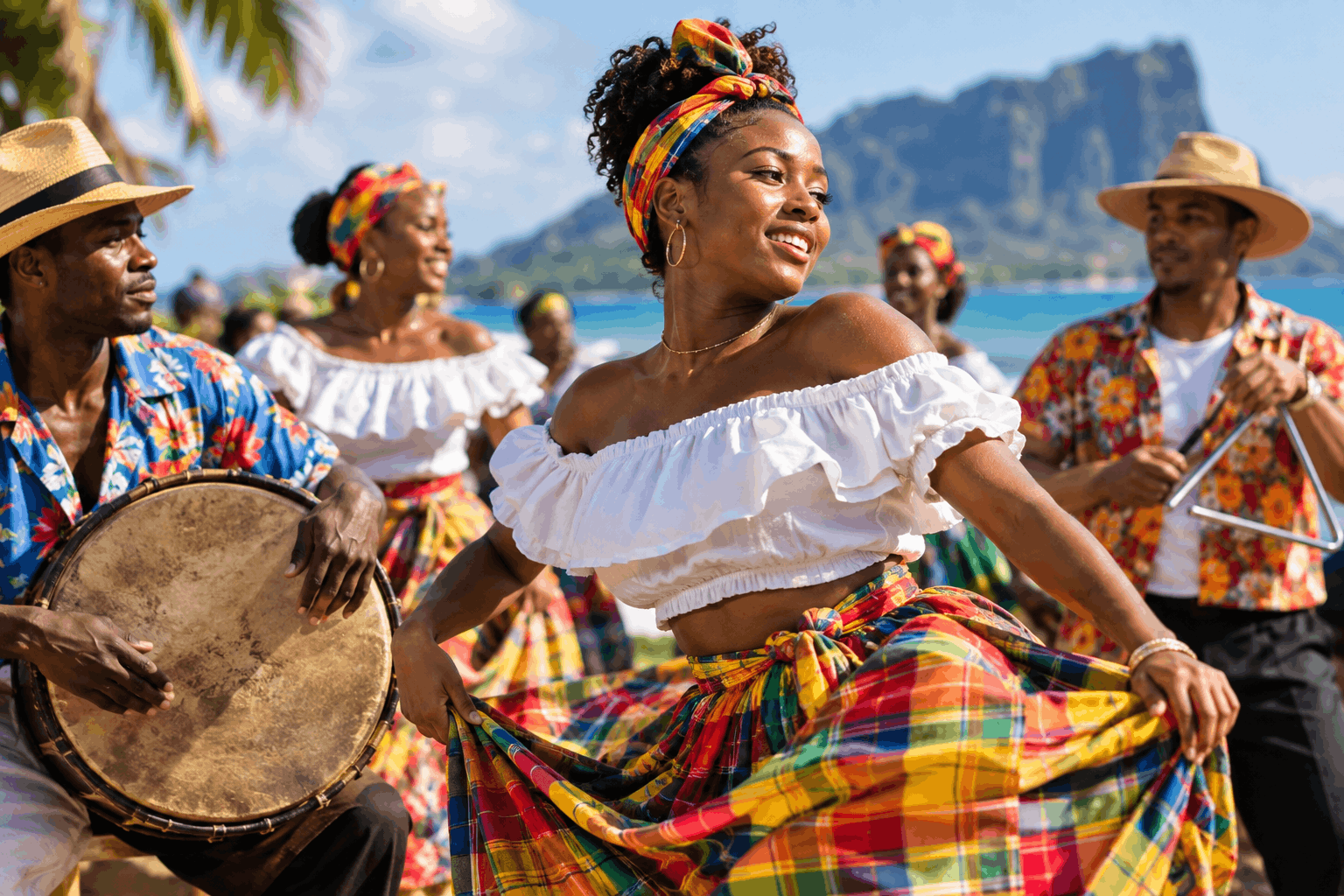
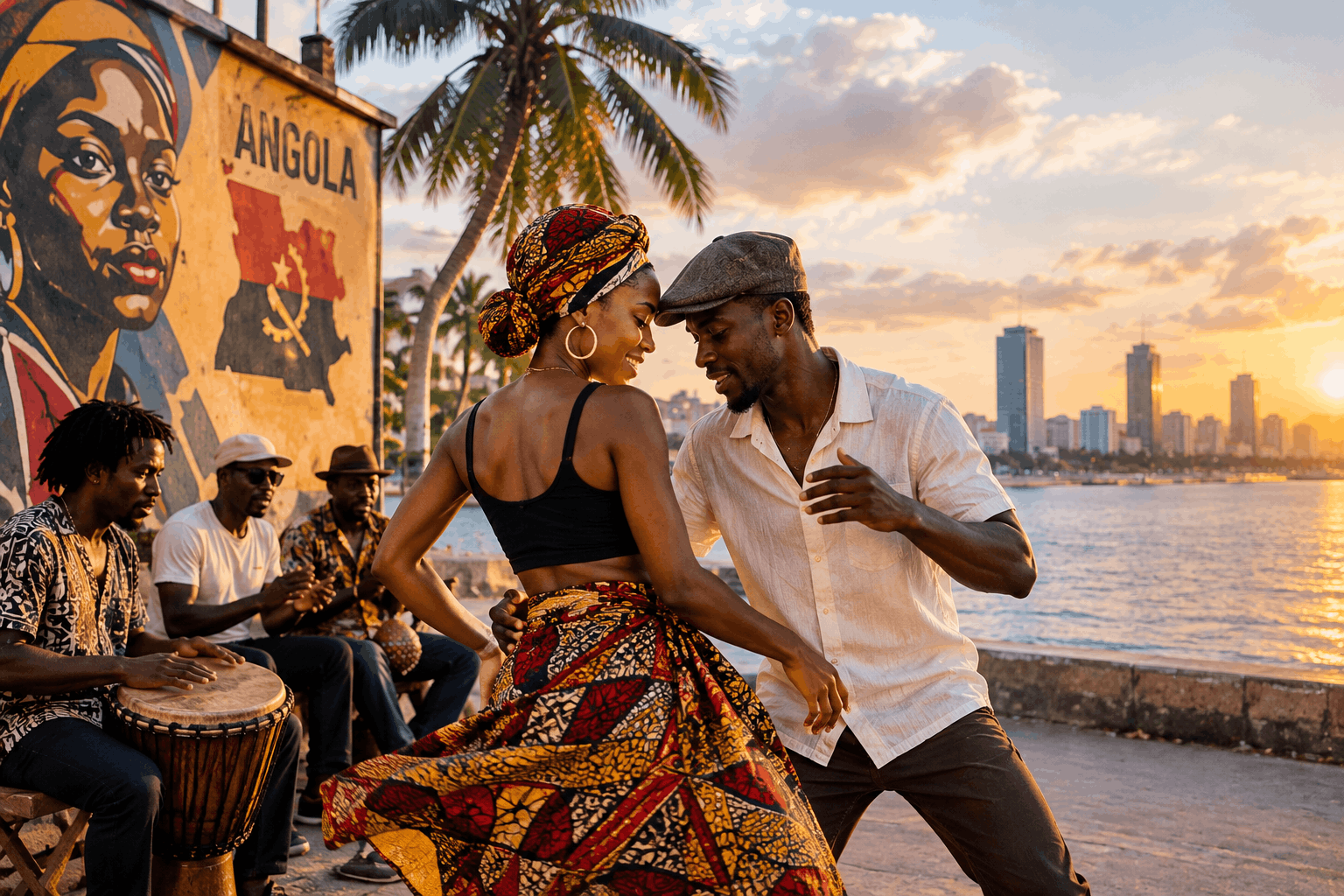
The instrument is called a ravanne, a round frame drum traditionally covered with animal skin. A musician holds it against the body and strikes different parts of the surface with the hands, producing sounds that can be deep, sharp or almost like a slap. A second instrument, the maravanne, is a rectangular rattle made from a hollow frame containing small pieces of material that shake when the instrument is moved. A metal triangle, known locally as the triyang, completes the basic traditional ensemble.
Then the singing begins.
The dancers take small steps, moving their hips and hands while they turn around one another. The music starts relatively slowly and gathers speed. The singer may improvise words in Mauritian Creole, sometimes mixing in other languages, and the lyrics can speak about love, everyday difficulties and ordinary life. UNESCO describes these elements as central features of Traditional Mauritian Sega Tipik, which was inscribed on the Representative List of the Intangible Cultural Heritage of Humanity in 2014.
To someone encountering it for the first time, sega might look like a celebration that has always belonged to Mauritius.
Its history is more complicated.
The music developed in a society shaped by colonialism and slavery, particularly among the descendants of Africans and Malagasy people who had been brought to Mauritius under the French plantation system. It gave people a way to sing, dance, gather and express feelings about their lives. Over generations, the music survived the end of slavery, British colonial rule and the arrival of hundreds of thousands of indentured workers from India. It eventually became part of the cultural identity of Mauritius as a whole.
Understanding how a dance associated with an enslaved population became one of the country's best-known cultural traditions means going back much further than the music itself.
Before Mauritius Became a Country
In this section
Living together under the plantation system, they created new ways of communicating and expressing themselves.
Mauritius is an island in the southwestern Indian Ocean, east of Madagascar. It is part of the Mascarene Islands, a group that also includes Rodrigues and Réunion. The island is volcanic in origin and covers about 2,040 square kilometres.
For a long time, there was no permanent indigenous population on Mauritius. Arab sailors probably knew of the island during the medieval period, and Portuguese sailors visited it during the sixteenth century. The Portuguese did not establish a lasting colony there.
The first Europeans to establish a lasting settlement were the Dutch.
Dutch sailors reached the island in 1598 and named it Mauritius in honour of Prince Maurice of Nassau, a Dutch political and military leader. Their first permanent settlement was established in 1638. The Dutch introduced sugar cane, domestic animals and deer, and used the island as part of their wider network across the Indian Ocean. Several attempts were made to maintain the settlement, but the colony never became economically successful enough to keep the Dutch there. They finally abandoned Mauritius in 1710.
The French arrived five years later.
In 1715, France took possession of the island and renamed it Île de France, meaning "Island of France." Permanent French settlement followed in 1721. Under Governor Mahé de Labourdonnais, Port Louis developed into a naval base and shipbuilding centre, and the colony became increasingly connected to French trade and military activity in the Indian Ocean.
The development of the colony also meant the development of a plantation economy.
Sugar cane became increasingly important, and plantations required a large supply of labour. Enslaved people were brought to Mauritius from Madagascar and parts of mainland Africa. They were forced to work on plantations and perform other forms of labour that supported the colonial economy.
This is the society in which the earliest forms of sega developed.
The people who were enslaved in Mauritius came from different places and did not arrive with one shared African culture. They brought different languages, memories, beliefs and musical practices with them. Living together under the plantation system, they created new ways of communicating and expressing themselves. Sega emerged within that world.
The island changed hands again in 1810.
During the Napoleonic Wars, Mauritius was an important French base in the Indian Ocean. French privateers operating from the island attacked British merchant ships, and Britain eventually sent a military expedition to capture the colony. British forces took control of Mauritius in December 1810. The Treaty of Paris in 1814 formally transferred the island to Britain. The British agreed to preserve the existing laws, customs, language and religion of the inhabitants, which helps explain why French remained so deeply established even after British rule began.
But the next transformation of Mauritian society would be even more significant.
When Slavery Ended, the Sugar Plantations Still Needed Workers
In this section
Most came from India, although workers also arrived from Eastern Africa, Madagascar, China and Southeast Asia.
Britain abolished slavery in Mauritius in 1835.
For the people who had been enslaved, emancipation meant that they were no longer legally owned. For the plantation economy, however, it created a serious labour problem. Sugar estates still needed large numbers of workers, and many formerly enslaved people left plantation work or sought other ways of making a living.
The colonial authorities and plantation owners therefore turned to India.
Workers were recruited under a system known as indentured labour. An indentured labourer was a person who signed a contract agreeing to work for an employer for a specified period, usually for wages and under stated contractual conditions. Unlike an enslaved person, the worker was not legally owned by the employer. In practice, however, the system operated within colonial plantation economies and could involve harsh working conditions, restrictions and exploitation. Mauritius itself became an early testing ground for this new system after the abolition of slavery.
The British called this the "Great Experiment."
The idea was to demonstrate that plantation agriculture could continue using contracted labour after slavery had been abolished. Mauritius was chosen as the first major test case. The first indentured workers from India arrived in 1834, and recruitment expanded rapidly as sugar estates demanded labour.
The scale of this migration changed Mauritius permanently.
Almost half a million indentured labourers eventually arrived in Mauritius. Most came from India, although workers also arrived from Eastern Africa, Madagascar, China and Southeast Asia. Many were sent to sugar estates after arriving in Port Louis. The wider system spread across the colonial world and eventually involved more than two million indentured workers.
There is a place in Port Louis where this history can still be seen.
It is called Aapravasi Ghat, a name that can be translated roughly as "immigrant depot." The site was chosen in 1834 for the reception of indentured workers, although the surviving immigration depot buildings were constructed in 1849. Newly arrived workers were registered there before being sent to sugar estates. The surviving complex includes parts of accommodation sheds, kitchens, a hospital block and a flight of fourteen steps that immigrants had to climb when entering the depot. UNESCO inscribed Aapravasi Ghat as a World Heritage Site in 2006 because of its importance to the history of global indentured migration.
The people who came through that depot brought much more than labour.
They brought languages from different parts of India, Hindu and Muslim religious traditions, food practices, family customs and memories of places they had left behind. Their descendants would eventually become a large part of the population of Mauritius.
That is why modern Mauritian culture cannot be traced to one migration.
The island was shaped first by European colonisation and slavery, then by the movement of indentured workers from India, alongside Chinese migration and other movements through the Indian Ocean. Each period added people and traditions to an already changing society.
You can hear the results in the languages spoken across the island.
Why Mauritius Can Sound Different From One Conversation to the Next
In this section
The 2022 Mauritius Population Census found that 90 percent of residents reported speaking only Creole at home.
If you spend time in Mauritius, you may hear several languages during a single day.
English has a formal role in government and administration. French is widely used in education, media and public communication. But the language most commonly spoken at home is Mauritian Creole.
The 2022 Mauritius Population Census found that 90 percent of residents reported speaking only Creole at home. Another 5.1 percent reported speaking only Bhojpuri, while 4.4 percent reported speaking only French and 0.6 percent only English. Many Mauritians also use more than one language depending on the situation.
Mauritian Creole is not merely French spoken with a Mauritian accent.
It developed as a distinct language within the multilingual society created during the colonial period. Its vocabulary has a strong French foundation, while its development was influenced by the many African, Malagasy, European and Asian languages spoken by people living on the island. People from different linguistic backgrounds needed a common means of communication, particularly in a society where they did not all share the same first language.
French remained influential because the British preserved many of the institutions and customs that had developed under French rule. The Treaty of Paris specifically guaranteed the population's language, religion, laws and customs after the British takeover. English then became the language of British administration, creating the unusual situation in which the colonial administrative language and the language most commonly spoken in daily life were different.
That history helps explain why language in Mauritius is so closely tied to identity.
It also helps explain why religion on the island reflects several different migration histories.
The Religions That Arrived With the People
In this section
Chinese migrants brought their own religious traditions, including Buddhist and Chinese religious practices.
Mauritius does not have one religious tradition that explains the whole country.
Christianity became established during European colonisation, particularly under French rule. Islam has roots in the wider Indian Ocean world and later South Asian migration. Hindu traditions expanded dramatically with the arrival of Indian indentured workers, many of whom came from regions where Hinduism was widely practised. Chinese migrants brought their own religious traditions, including Buddhist and Chinese religious practices.
Today, Hinduism forms the largest broad religious grouping, alongside substantial Christian and Muslim communities and smaller Buddhist and other religious groups.
You do not have to look far to see this religious diversity.
During Maha Shivaratree, one of the most important Hindu festivals in Mauritius, pilgrims travel to Grand Bassin, a crater lake in the interior of the island that is regarded as a sacred place by many Mauritian Hindus. Some pilgrims carry decorated structures or offerings as they make their way to the lake.
Cavadee is another major Hindu observance, particularly among Tamil Hindus. Devotees may carry elaborately decorated kavadis during processions to temples, accompanied by prayer and music. Some participants undertake acts of bodily devotion, including ritual piercing.
Divali, the Hindu festival commonly associated with lamps and the triumph of light over darkness, is marked by homes being illuminated and families preparing food and sweets.
Muslim Mauritians celebrate Eid-ul-Fitr, which marks the end of Ramadan. Christians observe Christmas and Easter. The Chinese Spring Festival brings another set of family, food and cultural traditions into public life.
These are not minor private observances. Several religious festivals are officially recognised as public holidays in Mauritius, meaning the national calendar itself reflects the country's plural religious history.
Religion therefore became another place where the different histories of migration met.
Food became another.
A Country's History You Can Eat
In this section
Mauritius is surrounded by the Indian Ocean, so fish and other seafood have long been important in local cooking.
Mauritian food makes the island's migration history particularly easy to taste.
Take dholl puri, one of the country's best-known foods. It is a thin flatbread made using ground split peas and is commonly served with bean curry, vegetables, pickles and chutneys. Its history is connected to the Indian community that grew substantially during the period of indentured migration.
Then there are gato pima, small split-pea fritters usually seasoned with chilli and herbs, and samosas, which became part of everyday Mauritian food culture through South Asian influence.
Chinese migration added another group of foods. Noodles, dumplings and other Chinese-influenced dishes became established in Mauritian cooking and remain especially visible in markets, restaurants and street-food stalls.
French influence can be seen in breads, pastries and cooking techniques, while Creole cooking developed around ingredients and methods that came from several parts of the Indian Ocean.
Rougaille is a good example. It is a tomato-based preparation that can be cooked with fish, meat, sausages or other ingredients. Different households prepare it differently, but tomatoes, garlic, onions, herbs and spices are common components.
The island's geography adds another layer. Mauritius is surrounded by the Indian Ocean, so fish and other seafood have long been important in local cooking. Coconut, chilli, ginger, garlic and fresh herbs appear across different dishes, sometimes in combinations that would be difficult to assign to one cultural tradition.
There is also alouda, a sweet milk-based drink commonly flavoured with vanilla and containing basil seeds. It is particularly associated with markets and street-food culture.
The important thing about Mauritian food is not that every dish can be assigned neatly to one community. Over generations, ingredients and techniques moved between households, markets and neighbourhoods. Food that may have entered the island through one community could become familiar to people from another.
Music followed a similar path.
How Sega Became the Sound of Mauritius
In this section
The music has a structure that makes it easy to build from a quiet beginning into a more energetic performance.
Sega is closely connected to the descendants of enslaved Africans and Malagasy people in Mauritius.
Its early history is difficult to reconstruct in complete detail because enslaved people left far fewer written records than colonial administrators, plantation owners and European travellers. Much of what we know comes from later documentation, oral transmission and the continuing practice itself.
What is clear is that sega developed within the plantation society created under French colonial rule.
The people who performed it were living under slavery and forced labour. Music and dance provided opportunities to gather, communicate, socialise and express emotions. Songs could speak about love, hardship and everyday experiences, while the dancing provided a physical form of expression.
The traditional instruments were accessible and distinctive. The ravanne is the main frame drum. The maravanne is a rattle whose seeds or other small pieces move inside a hollow frame. The triyang is a metal triangle. Together, these instruments create the basic percussion of traditional sega.
The music has a structure that makes it easy to build from a quiet beginning into a more energetic performance. UNESCO notes that the songs traditionally begin in a minor key and gradually increase in tempo. Dancers use short steps and move their hips and hands, changing positions around one another. Singers can improvise lyrics, usually in Mauritian Creole, and the words may be connected directly to the movements of the dancers.
The clothing has its own history too.
Women traditionally wear long skirts and petticoats for Sega Tipik performances, while men may wear rolled-up trousers, colourful shirts and straw hats. UNESCO describes these clothes as recalling the dress of ancestors.
For generations, sega remained strongly associated with Creole communities and working-class life. Its social setting also meant that some religious authorities and sections of colonial society viewed it negatively.
Yet the tradition survived.
In villages such as Le Morne, people gathered for regular Sega Nights, where they sang, danced and told stories late into the night. At Le Morne, one particularly significant event took place on 24 October 1964. Performers from across Mauritius were invited to a public sega competition known as La Nuit du Séga.
A 64-year-old singer named Ti-Frère won the competition. The event helped bring traditional sega into much wider public recognition, and Ti-Frère became one of the most important names in the history of Mauritian Sega Tipik.
This happened only four years before Mauritius became independent.
Independence arrived on 12 March 1968. The country was no longer a British colony, and cultural traditions that had previously been associated strongly with particular communities could increasingly be presented as part of a shared Mauritian heritage.
Sega continued changing with the society around it.
When Sega Met Reggae
In this section
One of the most important figures in this movement was Joseph Réginald Topize, better known as Kaya.
By the 1980s, Mauritian musicians were combining sega with another music that had travelled across the Indian Ocean: reggae.
The result was known as seggae, a combination of the words "sega" and "reggae."
One of the most important figures in this movement was Joseph Réginald Topize, better known as Kaya. His music combined sega with reggae and Rastafarian influences and became particularly popular among young Mauritians.
Kaya's music was not merely a continuation of traditional sega. It belonged to a different generation and addressed a different Mauritius, one that had gained independence and was dealing with questions of class, identity and social inequality.
His story became part of the country's history in 1999.
Kaya died while in police custody in February that year. His death was followed by riots and disturbances in several parts of Mauritius. The government subsequently requested a Commission of Inquiry into the disturbances and asked for a judicial inquiry into the cause and circumstances of his death.
The events surrounding Kaya's death remain an important part of the history of Mauritian popular music because they demonstrated how closely music, identity and social tensions had become connected.
Traditional sega had emerged from an earlier generation's experience of slavery.
Seggae gave another generation a way to speak about the Mauritius it was living in.
And while the music changed, other cultural traditions were changing alongside it.
What People Wore, Made and Passed Down
The clothing associated with traditional sega is one of the clearest examples of how cultural memory can survive through performance.
The long skirts and petticoats worn by women, and the colourful shirts, rolled-up trousers and straw hats worn by men, form part of the visual language of Sega Tipik. These are not simply costumes chosen because they look traditional. UNESCO specifically records them as recalling the clothing of ancestors associated with the tradition.
Mauritius also developed craft traditions connected to the materials available on an island and to its maritime history. Basketry and weaving used plant materials, while miniature shipbuilding became a recognisable Mauritian craft.
Some crafts developed as household practices and others became commercial activities. As Mauritius developed a major tourism industry, crafts were also increasingly produced for visitors, creating a new market for skills that had older roots.
The same movement between private practice and public culture can be seen in the country's festivals.
The Festivals That Fill the Calendar
Mauritius's religious diversity becomes particularly visible during festival seasons.
During Divali, homes are decorated with lamps and families prepare sweets and other foods. During Maha Shivaratree, Hindu pilgrims travel towards Grand Bassin for prayer and worship. During Cavadee, devotees take part in temple processions carrying decorated kavadis and observing different forms of religious devotion.
For Muslims, Eid-ul-Fitr marks the end of Ramadan. For Christians, Christmas and Easter remain important celebrations. The Chinese Spring Festival brings family gatherings and Chinese cultural traditions into public life.
The government recognises a number of these religious festivals as public holidays, alongside national holidays and commemorations connected to Mauritian history.
The calendar therefore tells part of the country's story. People arrived under different circumstances, established communities and brought their religious traditions with them. Over time, those traditions became visible parts of life on the same island.
There is, however, another part of Mauritius's history that predates all of these communities.
It concerns a bird.
The Bird That Disappeared From Mauritius
In this section
What is clear is that the dodo disappeared within a relatively short period after permanent human settlement.
If you have heard the word dodo, you may know it as a symbol of something that has disappeared completely. What you may not know is that the dodo was a real bird that lived only on Mauritius.
The dodo was a large, flightless bird related to pigeons. It evolved on Mauritius after the island became isolated from larger landmasses. Because there were no native land mammals hunting it, the bird evolved without the need to fly away from predators. It lived and nested on the ground and fed on fallen fruit and other available food.
That changed when humans arrived.
Dutch sailors began settling Mauritius in the seventeenth century, and the island's new human population brought animals with them. Rats escaped from ships, while pigs, dogs and cats were also introduced. These animals could reach the dodo's ground nests and eat its eggs. Humans also hunted the birds.
The dodo population declined rapidly.
The last generally accepted sighting was in 1662, although some researchers allow for the possibility that the bird survived into the later seventeenth century. What is clear is that the dodo disappeared within a relatively short period after permanent human settlement.
The dodo became famous long after it was gone.
Because the bird disappeared before modern zoological science had properly developed, surprisingly little was recorded about it while it was alive. Some early drawings and descriptions were inaccurate, and for centuries people imagined the dodo as a slow, clumsy, oversized bird. Modern research based on bones and other evidence suggests that the living animal was more active and athletic than those old images suggest.
The dodo is now one of the symbols of Mauritius itself.
It appears on the country's coat of arms, standing alongside a sambar deer. Both animals support sugar cane, another plant closely connected to the island's economic history.
There is an additional reason the dodo matters today.
The consequences of the species' extinction did not end when the bird disappeared. Research into Mauritius's native ecosystems shows that the island is still dealing with the ecological effects of centuries of species loss. Some native plants depend on animals to spread their seeds, and the disappearance of large animals has affected that process.
So the dodo is not just an old story about an extinct bird.
It is part of the story of Mauritius itself: an isolated island whose environment changed dramatically once humans, animals, plantations and new economic systems arrived.
And that brings us back to the people who live there now.
When the Ravanne Starts
In this section
Aapravasi Ghat remembers the hundreds of thousands of indentured workers who arrived after the abolition of slavery.
Mauritius today is far removed from the plantation colony in which sega first developed.
The country became independent from Britain on 12 March 1968 and became a republic in 1992. Its economy has expanded beyond the sugar industry into manufacturing, tourism, financial services and other sectors. The population that lives there today is descended from several waves of migration and settlement that took place over hundreds of years.
Yet the older history is still present in ordinary life.
It is there when Mauritian Creole is spoken at home. It is there in the dholl puri sold at a roadside stall, in the Chinese-Mauritian foods served in Port Louis, in the tomato-based rougaille cooked in homes, and in the religious festivals that bring different communities into public view throughout the year.
It is there in the places themselves.
Aapravasi Ghat remembers the hundreds of thousands of indentured workers who arrived after the abolition of slavery. Le Morne remembers a landscape deeply connected to the history of slavery and the people who escaped it. Grand Bassin remains an important Hindu pilgrimage site. And the dodo still stands on the country's coat of arms, even though the bird itself disappeared centuries ago.
Then there is the music.
Traditional Mauritian Sega Tipik is still performed with the ravanne, maravanne and triyang. Its songs are still sung in Creole. Its dancers still use the short steps, hip movements and hand movements that UNESCO documented when the tradition was inscribed in 2014.
Sega has also continued to change.
There are contemporary musicians who work beyond the traditional form, just as earlier generations created seggae by bringing sega and reggae together. The tradition has therefore survived without remaining exactly the same.
That may be the most interesting thing about sega.
Its history begins with people who lived under a system that gave them very little control over their circumstances. They created music within that world, passed it to their children and grandchildren, and watched it change as the society around them changed.
Slavery ended.
Indentured workers arrived.
The British replaced the French as colonial rulers.
Mauritius became independent.
New generations found new sounds.
Through all of those changes, the ravanne remained.
And somewhere in Mauritius today, a musician can still strike that first beat, a singer can begin a song in Creole, and people can start dancing.