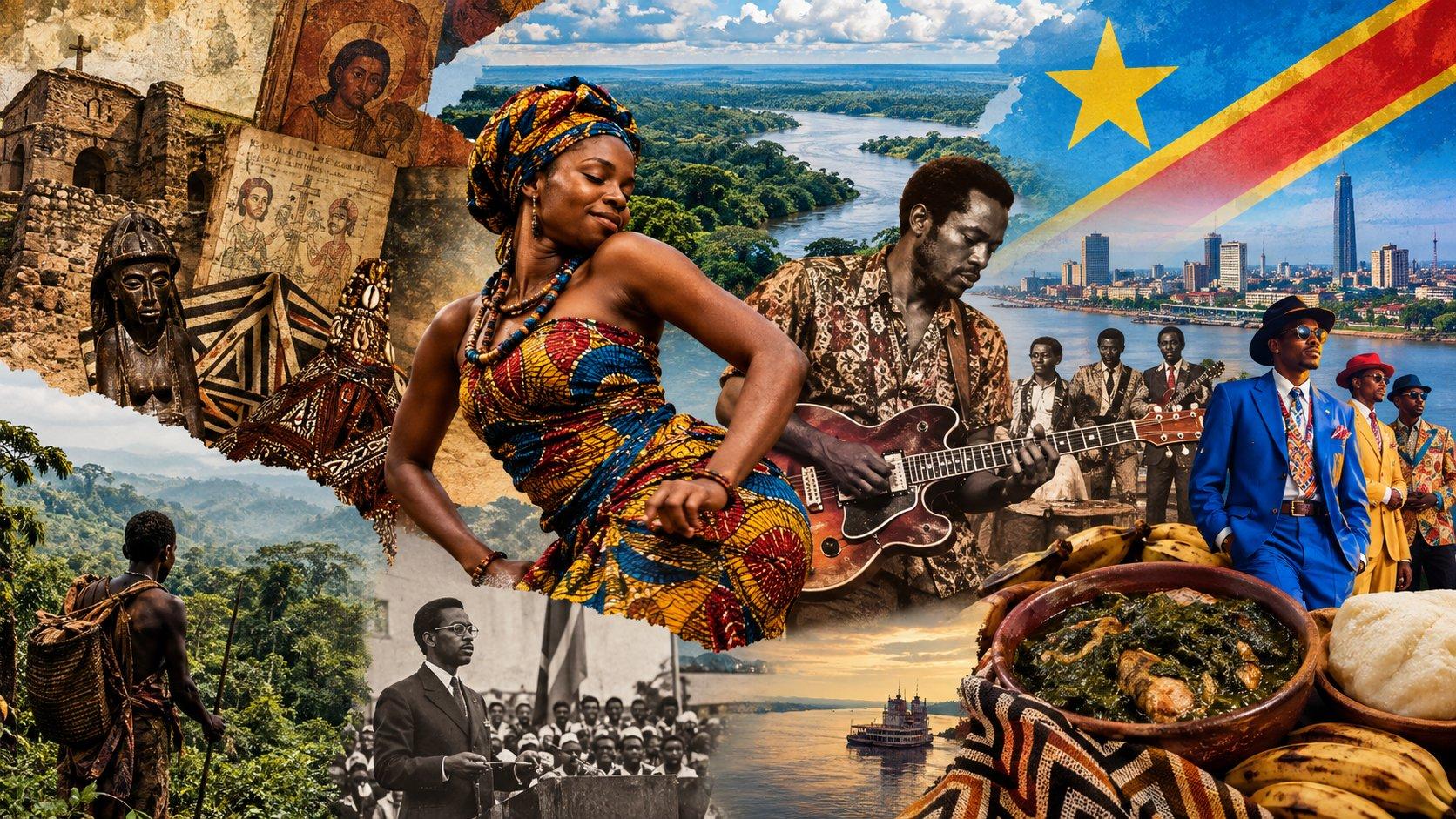
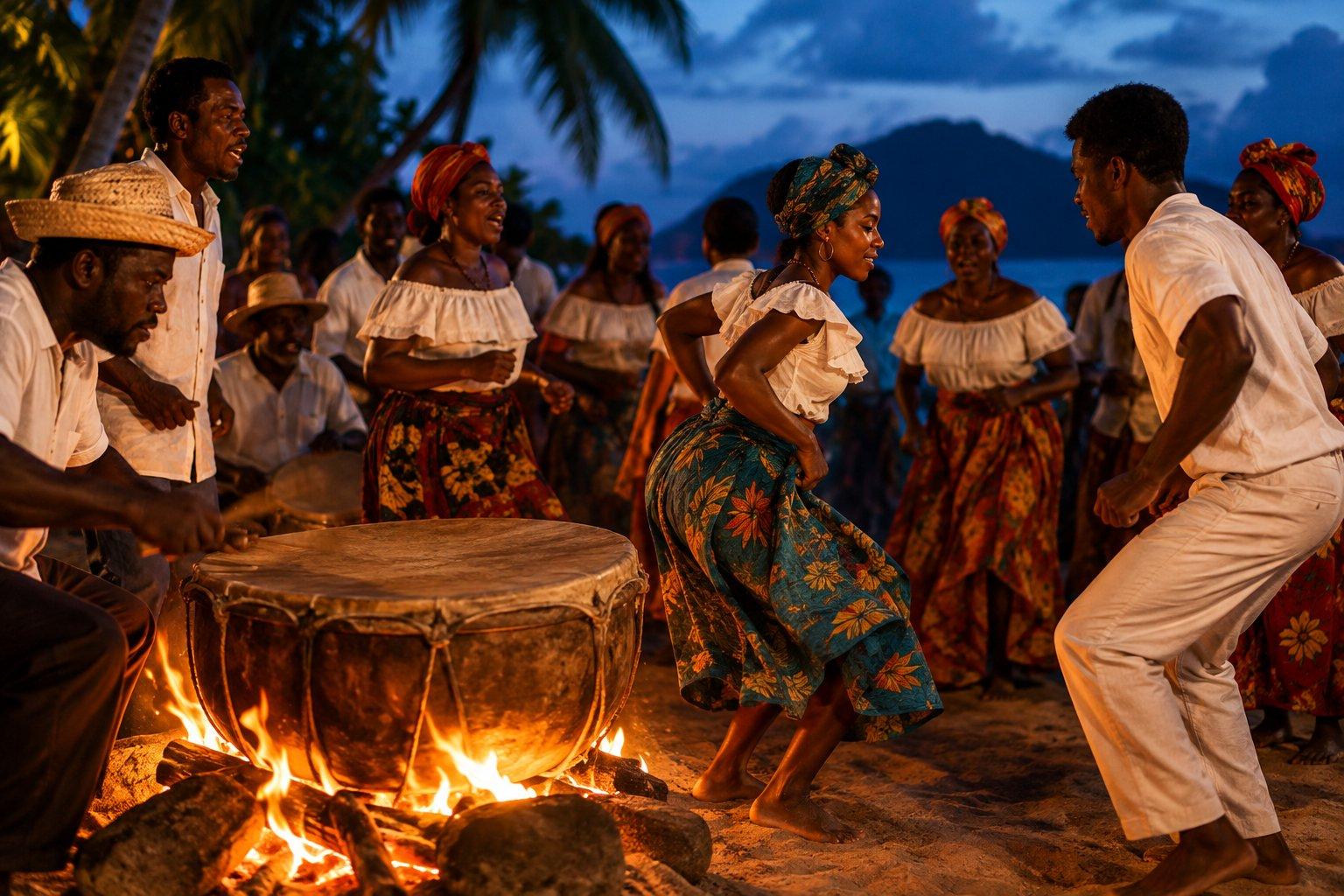
Explore the history of Congolese rumba, from Central African traditions and Cuba to Kinshasa, and discover how music connects to the DRC’s wider history and culture.
If you have ever heard Congolese rumba, you may have noticed how difficult it is to separate the music from movement.
Congolese rumba is a style of music and dance that developed in the two Congos, especially in the cities of Kinshasa and Brazzaville. It is usually built around singing, guitars, percussion and dance. The songs can be romantic, political, humorous or about everyday life, and some can run for quite a while. The guitar is particularly important. In many songs, the vocals eventually give way to a longer guitar section called the sebene, where several guitar parts can work together while people dance.
But Congolese rumba did not start in a recording studio in Kinshasa. Its history goes much further back. UNESCO traces it to nkumba, an older Central African dance whose name means “waist” in Kikongo. The story then crosses the Atlantic through the history of forced migration, reaches Cuba, and eventually comes back into Central African cities through recorded music. Congolese musicians took what they heard and developed it into their own style.
UNESCO traces Congolese rumba to an older Central African dance called nkumba, a Kikongo word meaning "waist." The dance involved the movement of the waist and hips, and it was part of the cultural traditions of the peoples of the former Kingdom of Kongo. Over time, the music and dance developed into the form now known as Congolese rumba. UNESCO added Congolese rumba to its Representative List of the Intangible Cultural Heritage of Humanity in 2021.
But there is another part of the story.
The Atlantic slave trade forcibly took millions of Central Africans to the Caribbean, including Cuba. They carried their music, dances, languages and religious traditions with them. In Cuba, these traditions developed alongside Spanish and other Caribbean influences, producing different musical forms, including son.
By the 20th century, Cuban music was being recorded and those records began reaching Central Africa. Musicians in the Congo listened to the recordings and started experimenting with what they heard. They used the guitars and musical structures they liked, but they also brought in their own languages, instruments, rhythms and dance traditions.
That is part of how the music that became Congolese rumba developed in the cities of the Congo. To understand why the music sounds the way it does, though, you have to look beyond the music itself, because the story takes you into the history of the people and places that shaped it.
A Huge Country With Many Histories
In this section
Four languages have national-language status: Lingala, Swahili, Tshiluba and Kikongo-Kituba, also known as Kituba.
The Democratic Republic of Congo is enormous.
At more than 2.3 million square kilometres, it is the second-largest country in Africa by land area, after Algeria. The equator crosses the country, the Congo River runs through its centre, and the landscape changes dramatically from one region to another.
There are dense tropical forests, broad savannas, mountains, rivers and large lakes.
More than 100 million people live across this territory, and more than 200 ethnic groups are represented in the country.
So when someone says "Congolese culture," there is a lot packed into those two words.
A person from Kinshasa does not necessarily have the same cultural background as someone from Goma, Kananga, Lubumbashi or Kisangani. Different communities have their own histories, languages, food, artistic traditions and social practices.
The country also has hundreds of languages.
French is the official language and is widely used in government, education and formal settings. Four languages have national-language status: Lingala, Swahili, Tshiluba and Kikongo-Kituba, also known as Kituba.
Lingala is especially prominent in Kinshasa and has a strong connection with Congolese popular music. Swahili is widely spoken in eastern Congo. Tshiluba is particularly important in the Kasai region, while Kikongo and Kikongo-Kituba are important in western and southwestern parts of the country.
Someone's language can tell you a lot about where they grew up and the communities around them.
The country's size also meant that different societies developed their own political systems long before there was a country called the Democratic Republic of Congo.
Before Belgium
In this section
King Afonso I, who ruled in the early 16th century, was a Christian and corresponded with the Portuguese king.
There was no single state covering the territory of today's DRC before European colonial rule. There were kingdoms, chiefdoms and other political communities, each with their own systems of authority.
The Kingdom of Kongo was one of the most prominent. At its height, it covered parts of what are now Angola, the Republic of Congo, the DRC and Gabon.
Portuguese sailors reached the Kongo kingdom at the end of the 15th century, beginning a relationship that lasted for centuries.
The Portuguese brought Christianity and developed diplomatic and commercial relationships with Kongo rulers. Some members of the Kongo royal family converted to Christianity, and Christianity became part of the kingdom's political and religious life.
King Afonso I, who ruled in the early 16th century, was a Christian and corresponded with the Portuguese king.
Trade was another major part of the relationship.
At first, Kongo and Portugal had diplomatic and commercial interests that could benefit both sides. Over time, however, the Atlantic slave trade became increasingly important. People were captured and sold, political relationships became more unequal, and Portuguese influence in the region grew.
So Christianity was already present in parts of Central Africa centuries before Belgium established colonial rule over the Congo.
The Kingdom of Kongo was not the only major political society in the region. The Luba developed powerful states in central Congo, while the Kuba built a highly organised kingdom further west.
Both left behind artistic traditions that are still studied today.
When History Is Kept in Objects
In this section
Songs could carry those stories too, allowing people to remember and pass them on from one generation to the next.
The Luba have a particularly interesting way of preserving historical knowledge. It involves a small carved wooden object called a lukasa. At first glance, a lukasa can look like a decorated board covered with beads and markings. It is much more than that.
The markings can represent places, people, political relationships and events. Members of the Mbudye association were trained to interpret the boards and use them when recounting Luba history and political knowledge.
The Metropolitan Museum of Art describes the lukasa as a kind of conceptual map of Luba political organisation, historical chronicles and territory.
The Kuba developed a different artistic tradition using raffia.
Kuba textiles are made from raffia palm fibre and can involve weaving, embroidery and appliqué. Some are relatively simple. Others have elaborate geometric patterns and designs.
The cloth has been used for clothing, ceremonial purposes, prestige objects, marriage-related exchanges and funerary practices. Textile production could also be collaborative, with men weaving the basic cloth and women adding decorative elements.
These objects give us another way to understand societies whose histories were not recorded mainly through European-style written documents.
A piece of cloth could show a person’s status or mark an important occasion. A memory board could help preserve knowledge about political history. People also passed knowledge down by telling stories, teaching younger people about their families, important events, customs, and the history of their communities. Songs could carry those stories too, allowing people to remember and pass them on from one generation to the next.
Christianity Was Already Here
In this section
Among Kongo peoples, for example, minkisi are objects that are understood to contain or channel spiritual power.
Christianity has a long history in the Congo that goes back centuries before Belgian colonial rule. In the Kingdom of Kongo, Christianity was adopted by the royal court in the late 15th century, during the reign of King Nzinga a Nkuwu, who was baptized in 1491. Christian communities and institutions developed in the kingdom over the following centuries.
Christianity later spread in different forms across Central Africa. European missionaries established churches and schools, while African Christians shaped the religion within their own communities and created their own movements.
One of the best-known examples in the Congo was Simon Kimbangu. In 1921, he began preaching in the Lower Congo and attracted a growing number of followers. He became known for preaching and for healing people through prayer. Belgian colonial authorities viewed the movement as a threat and arrested him. He was sentenced to life imprisonment and spent the rest of his life in prison, where he died in 1951.
His followers continued the movement after his arrest and death. It eventually became the Kimbanguist Church, one of the major African-initiated Christian churches in the Democratic Republic of the Congo.
Christianity is now a major part of religious life across the country. The Catholic Church has a large presence, alongside Protestant, Anglican, Pentecostal and other independent African churches.
There are also older religious traditions with their own histories. Among Kongo peoples, for example, minkisi are objects that are understood to contain or channel spiritual power. They have been used in different contexts, including healing, protection and oath-taking, with their meaning depending on the particular object and tradition.
Religious life in the Congo has therefore developed through many centuries of change. Christian churches, African-initiated movements and older religious traditions have all formed part of that history, with different communities practising and understanding them in different ways.
Leopold II's Congo
In this section
Leopold's administration focused heavily on extracting the territory's resources, particularly ivory and rubber.
European control of the Congo took a harsher form in the late 19th century, when King Leopold II of Belgium established the Congo Free State in the 1880s as his personal possession. It was not initially a Belgian colony, even though Leopold was the king of Belgium.
Leopold's administration focused heavily on extracting the territory's resources, particularly ivory and rubber. As international demand for rubber grew, Congolese communities were subjected to increasing pressure to collect it. Forced labour became part of the system, and people who failed to meet production demands could face punishment, including violence.
Missionaries, travellers and other observers began reporting the abuses taking place in the territory. Their accounts, along with photographs and other evidence, contributed to growing international criticism of Leopold's administration. The Congo eventually became the subject of a major international campaign calling attention to the treatment of its population.
In 1908, after years of criticism and growing international pressure, Belgium took control of the territory from Leopold and established the Belgian Congo. The U.S. Department of State records that the annexation followed widespread reports of mistreatment and international outrage.
Millions of people died during the Congo Free State period, although historians cannot establish one precise death toll. There was no reliable population census before the period of mass exploitation, and deaths resulted from several causes, including violence, forced labour, disease, hunger and the disruption of communities.
The transfer from the Congo Free State to the Belgian Congo ended Leopold's personal rule, but it did not give Congolese people political control over their own country. Belgium continued to govern the territory as a colony until the Congo became independent in 1960.
Life Under Belgian Rule
Belgian colonial rule lasted until 1960. During that period, the administration built roads and other infrastructure and established schools, hospitals and other institutions, but these developments took place within a colonial system in which Europeans held most of the political and administrative power.
Education was also tightly controlled, especially at higher levels. By the time the Congo became independent, very few Congolese people had received university education or had been given the opportunity to prepare for senior positions in government.
At the same time, Congolese cities were growing and changing. Léopoldville, which later became Kinshasa, developed into a major urban centre where workers, traders, religious groups, political organisers and musicians came into contact with one another and built new social networks.
Music became part of everyday city life. Records from abroad circulated through Léopoldville, local musicians formed bands, and dance halls became places where people gathered to listen to music, dance and socialise. It was in this growing urban environment that modern Congolese rumba began to take shape.
From Central Africa to Cuba and Back
In this section
The growing cities of Kinshasa and Brazzaville gave this music a large audience and a place to develop.
The history of Congolese rumba reaches back to Central African musical traditions and to the movement of people and music across the Atlantic. During the Atlantic slave trade, millions of Central Africans were forcibly taken to the Americas, including Cuba. They carried their languages, religious practices, music and dance traditions with them.
In Cuba, these African traditions developed alongside Spanish and other Caribbean influences. Several musical forms emerged from this environment, including son, which later became widely influential in Cuba and beyond.
By the 20th century, recordings of Cuban music were reaching Central Africa. Musicians in the Congo listened to these records and began working with some of the sounds and musical structures they heard. They played them with their own instruments, sang in Lingala and other local languages, and connected them with Central African rhythms and dance traditions. As musicians experimented with these different influences, the music developed into a style that suited the growing urban audiences of Kinshasa and Brazzaville.
There was also an older Central African tradition behind this history. UNESCO traces Congolese rumba to nkumba, an older dance tradition whose name means “waist” in Kikongo. Over time, the music developed into the form now known as Congolese rumba, a genre and dance tradition shared by the Democratic Republic of the Congo and the Republic of the Congo.
By the middle of the 20th century, Congolese musicians had developed a sound of their own. Some songs were slow and romantic, while others were built for dancing. The guitar became especially important, with songs often moving from sung sections into longer instrumental passages in which the musicians could build the rhythm and give dancers more room to move.
The growing cities of Kinshasa and Brazzaville gave this music a large audience and a place to develop.
The Sound of a New Congo
In this section
In 2021, UNESCO formally recognised Congolese rumba as part of the world's intangible cultural heritage.
One of the most important bands of the independence era was African Jazz, led by Joseph Kabasele. Kabasele recorded "Indépendance Cha Cha" in 1960, around the time the Congo became independent from Belgium.
The song became associated with the independence period and circulated widely across Africa. It was not the only important band.
OK Jazz, led by Franco Luambo, became another major force in Congolese music. Franco's career stretched across several decades, and his band helped establish guitar-driven Congolese music as a major sound across Africa.
Another feature of Congolese music became known as sebene.
This is the part of a song where the guitars become more prominent and the instrumental playing gives dancers more room. Several guitarists can interlock their parts, creating the long, repeating patterns that became a familiar feature of Congolese popular music.
Congolese bands became influential outside the country too. Musicians travelled. Records circulated. Other African musicians listened and borrowed from Congolese guitar styles. The music spread across the continent.
In 2021, UNESCO formally recognised Congolese rumba as part of the world's intangible cultural heritage. The organisation describes it as music used for celebrations, mourning and other social occasions, and notes that it is passed from one generation to another through families, neighbourhoods, clubs, training schools and community organisations.
Independence and Lumumba
In this section
Belgian government authorities and Belgian advisers in Léopoldville supported the transfer of Lumumba to Katanga.
The Congo became independent on 30 June 1960, but independence came with serious political and institutional problems. The Belgian colonial government had left very few Congolese people with experience in senior administrative or military positions, and the army mutinied shortly after independence. Katanga then declared its independence, while political tensions spread across the country.
Patrice Lumumba, the Congo's first prime minister, became one of the central figures in the crisis. His government was removed from power, and Lumumba was eventually captured and transferred to Katanga. He was killed there on 17 January 1961, along with two of his associates, Maurice Mpolo and Joseph Okito. A United Nations investigation later concluded that the three men had been killed shortly after arriving in Elisabethville, in the presence or probable presence of senior Katangan officials.
The circumstances surrounding Lumumba's removal and death also involved foreign actors. Belgian government authorities and Belgian advisers in Léopoldville supported the transfer of Lumumba to Katanga. A Belgian parliamentary inquiry published in 2001 concluded that certain Belgian officials and other Belgian participants were morally responsible for the circumstances that led to his death, while also finding no evidence that the Belgian government had directly ordered his physical elimination.
The United States was also involved in efforts to remove Lumumba from power. CIA officials developed an assassination plan in 1960, but the historical record does not establish that the CIA carried out or directly participated in his killing. A U.S. Senate investigation and later reviews by the Office of the Historian concluded that CIA representatives in the Congo were not involved in Lumumba's death.
Lumumba's death became one of the defining events of the Congo's early independence period. It took place during a wider crisis involving Congolese political divisions, the breakaway of Katanga, foreign intervention and the struggle over who would control the new country.
Mobutu's Zaire
In this section
In 1971, he changed the country's name to Zaire and introduced a political and cultural programme known as authenticité.
In 1965, Mobutu Sese Seko took power and went on to rule the country for more than three decades. In 1971, he changed the country's name to Zaire and introduced a political and cultural programme known as authenticité. The programme encouraged people to embrace African names, clothing and cultural practices and to move away from some symbols associated with European colonial rule.
At the same time, Mobutu built a highly centralised political system in which opposition was restricted and political loyalty played an important role in access to government positions and state resources. Corruption became deeply established within the state, while much of the country's political and economic power remained concentrated around Mobutu and those close to him.
Mobutu's government also became an important Cold War ally of the United States and other Western countries because of its opposition to communist movements in Central Africa. That support continued for much of the Cold War, even as Mobutu's domestic rule became increasingly authoritarian.
The situation began to change in the early 1990s. The Cold War was ending, which reduced the strategic importance that Zaire had held for its Western allies, while the country's economic problems and domestic political opposition were growing. Mobutu faced increasing pressure to introduce political reforms, and his government became less able to maintain the system that had kept him in power for so long.
Then, in 1994, the genocide against the Tutsi in neighbouring Rwanda changed the regional situation. The aftermath of the genocide brought large numbers of refugees and armed groups into eastern Zaire, creating new security and political tensions along the country's border with Rwanda. Those tensions would soon become part of a much larger conflict.
The Wars in Congo
In this section
Kabila became president and restored the country's name from Zaire to the Democratic Republic of the Congo.
In 1994, the genocide against the Tutsi in Rwanda killed more than 800,000 people, most of them Tutsi and moderate Hutu, according to the United Nations. After the genocide, large numbers of people fled into what was then Zaire. Among them were members of the former Rwandan government and armed forces, as well as people who had participated in the genocide.
Some of the former Rwandan soldiers and armed groups regrouped in eastern Zaire and launched attacks against the new Rwandan government from across the border. Rwanda became increasingly concerned about the armed groups operating so close to its territory, while the presence of refugees and armed forces in eastern Zaire added to tensions that had already existed in the region.
In 1996, Rwanda and Uganda supported a coalition of Congolese rebels led by Laurent-Désiré Kabila. The coalition launched an offensive against Mobutu's government, and the First Congo War ended in 1997 when Mobutu was forced from power. Kabila became president and restored the country's name from Zaire to the Democratic Republic of the Congo.
The change of government did not bring an end to the fighting. In 1998, Kabila fell out with Rwanda and Uganda, and another rebellion began in the east. This time, the conflict drew in several countries. Angola, Zimbabwe and Namibia supported Kabila's government, while Rwanda and Uganda supported rebel groups operating against it. The fighting spread across large parts of the country and became known as the Second Congo War.
A formal peace agreement brought the Second Congo War to an end in 2003, although armed conflict continued in parts of eastern Congo. The human cost was enormous. A major International Rescue Committee study estimated that about 5.4 million excess deaths occurred between August 1998 and April 2007. Most of these deaths were not caused by people being killed directly in combat. Disease, hunger, displacement and the collapse of basic healthcare accounted for much of the additional mortality.
The wars also left behind armed groups, displaced communities and unresolved political and territorial disputes, particularly in eastern Congo. Those problems would continue to shape the country's history long after the formal end of the Second Congo War.
Why Fighting Has Continued in the East
Eastern Congo has remained unstable because several conflicts and interests overlap there. Communities have disputes over land and political authority, while armed groups have different aims and sources of support. Some conflicts begin locally but become connected to national politics or to the interests of neighbouring countries. Rwanda, Uganda and other countries in the region have also been involved in Congo's conflicts at different points.
Natural resources are another part of the picture. Eastern Congo has deposits of gold, tin, tantalum and other valuable minerals, and armed groups have made money from mining, taxation and trafficking. Mineral trading has provided income that has helped some armed groups maintain their operations.
The causes of the conflict, however, extend beyond the mineral trade. Questions about who can own or use land, who has political authority, who is recognised as a citizen, and how communities protect themselves have all contributed to tensions in the region. These issues have also been shaped by decades of war, displacement and cross-border conflict.
The fighting has continued into 2026, alongside diplomatic efforts to reach agreements and improve humanitarian access.
One of the armed groups that has received significant international attention in recent years is M23, short for the March 23 Movement. The group first became prominent in 2012, when it captured territory in eastern Congo before being defeated by Congolese and United Nations forces later that year. M23 re-emerged in 2021 and has since captured territory in North Kivu, fighting the Congolese army and other armed groups.
Rwanda's involvement has become one of the central international issues surrounding the conflict. The United Nations has documented military support from Rwanda for M23, and in February 2025 the UN Security Council called on Rwanda to stop supporting the group and withdraw its forces from Congolese territory. Rwanda has disputed aspects of these accusations and has repeatedly pointed to the threat posed by the FDLR, an armed group operating in eastern Congo that includes members and descendants of forces associated with the 1994 genocide in Rwanda.
The fighting has continued into 2026, alongside diplomatic efforts to reach agreements and improve humanitarian access. United Nations reporting has described continued confrontations between armed groups and Congolese forces, while negotiations have taken place alongside efforts to establish ceasefires and humanitarian arrangements. The AFC, a political-military alliance associated with M23, has also established parallel administrative structures in areas under its control. UN sanctions information describes the AFC as allied with M23 and providing political, logistical and operational support.
The effects of the fighting are felt most directly by civilians. United Nations reporting recorded high levels of grave violations against children in 2025 and identified AFC/M23 forces and Rwandan forces among the actors contributing to those violations. Continued fighting and displacement have also disrupted access to homes, farms, schools, healthcare and other basic services across affected communities in eastern Congo.
The Forest Communities of Congo
In this section
Hunting, fishing and gathering forest plants have been part of life for some communities, alongside farming and other activities.
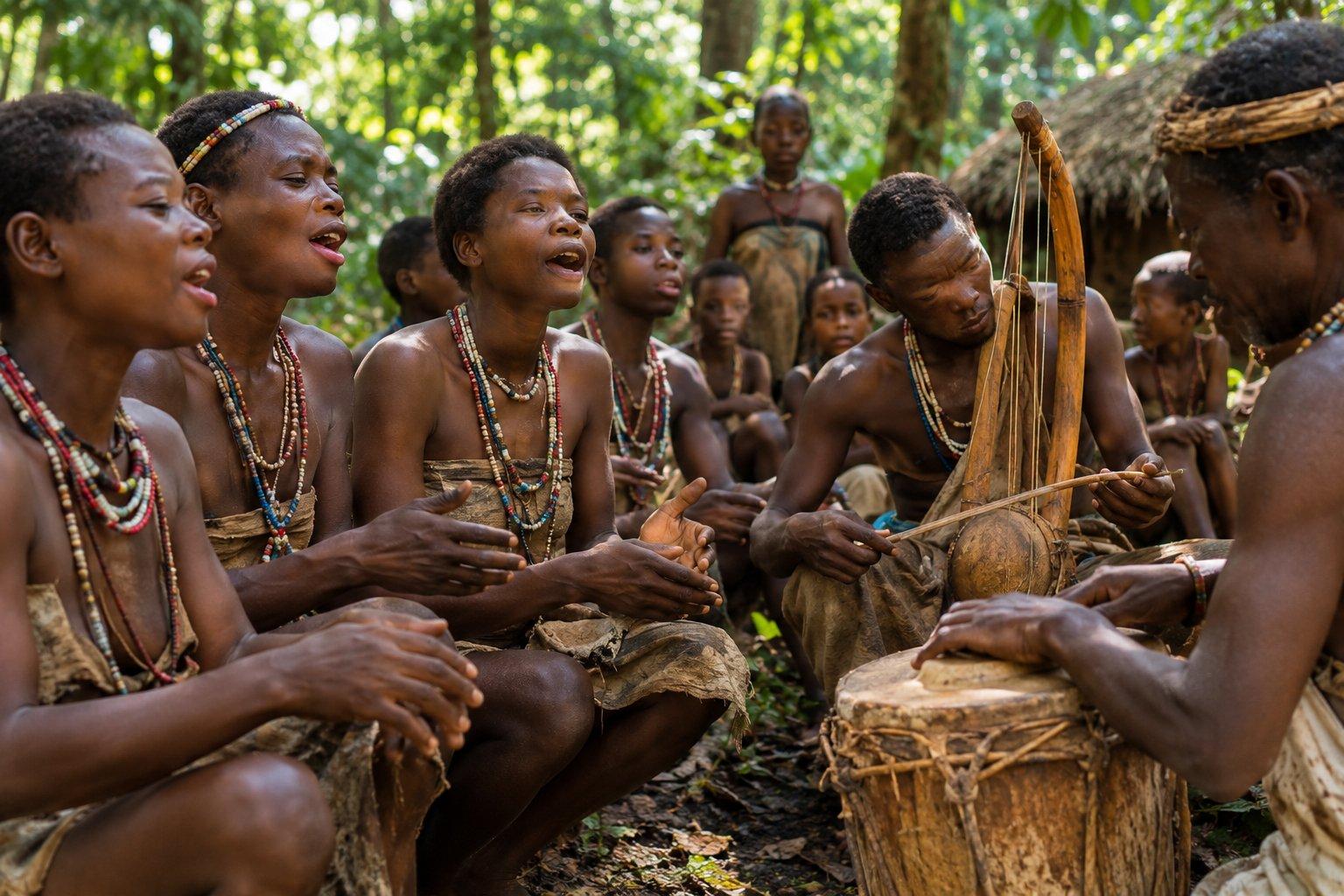
The DRC is also home to several forest-dwelling communities that are often grouped under the name Mbuti. The term refers to several different communities rather than one single ethnic group, and their languages, histories and ways of life are not all the same.
For many of these communities, the forests of the Congo Basin have long been an important source of food, knowledge and livelihoods. Hunting, fishing and gathering forest plants have been part of life for some communities, alongside farming and other activities. People have also developed detailed knowledge of the plants, animals and places around them and passed that knowledge down through generations.
Life in the forest has become more difficult in some areas. Armed conflict has displaced communities from their homes and disrupted access to forest resources, while conservation projects have sometimes restricted where local people can live, hunt, gather or farm. The effects vary between communities and locations, but these changes have raised ongoing questions about how forest conservation can be carried out while also recognising the rights and livelihoods of people who have long depended on the forest.
Those questions matter beyond the DRC because the country contains a large part of the Congo Basin rainforest, one of the world's major tropical forest regions. The forest supports millions of people across Central Africa and plays an important role in regional ecosystems and the global climate.
What People Eat
In this section
Palm oil, onions and spices are common additions, while fish, meat or other ingredients may also be included.
Food in the DRC varies across the country, but cassava is one of the most important staples. It can be prepared in several ways, including as fufu, a soft, dense food that is commonly eaten with soup or stew. Plantain, maize, rice and beans are also widely eaten, while fish is especially important in communities along the Congo River and around the country's lakes.
Cassava leaves are used in another familiar dish, pondu, also known as saka-saka. The leaves are prepared and cooked into a thick stew, with recipes varying from one household and region to another. Palm oil, onions and spices are common additions, while fish, meat or other ingredients may also be included.
Palm nuts are used in moambe, another well-known dish in the region. The nuts are processed into a rich sauce that is often cooked with chicken and served with rice, fufu or other staples. Groundnuts also appear in many Congolese dishes, adding another flavour and source of protein to meals.
Because the DRC is so large, there is no single way of describing Congolese food. What people eat depends partly on what grows locally, what can be caught or farmed, and what is available in markets. A community near a river may have easier access to fish, while farming communities further inland may rely more heavily on crops such as cassava, maize and plantain. In Kinshasa, people from different parts of the country have brought their food traditions together, so the city's markets and restaurants reflect many of these regional influences.
Dressing Up in La Sape
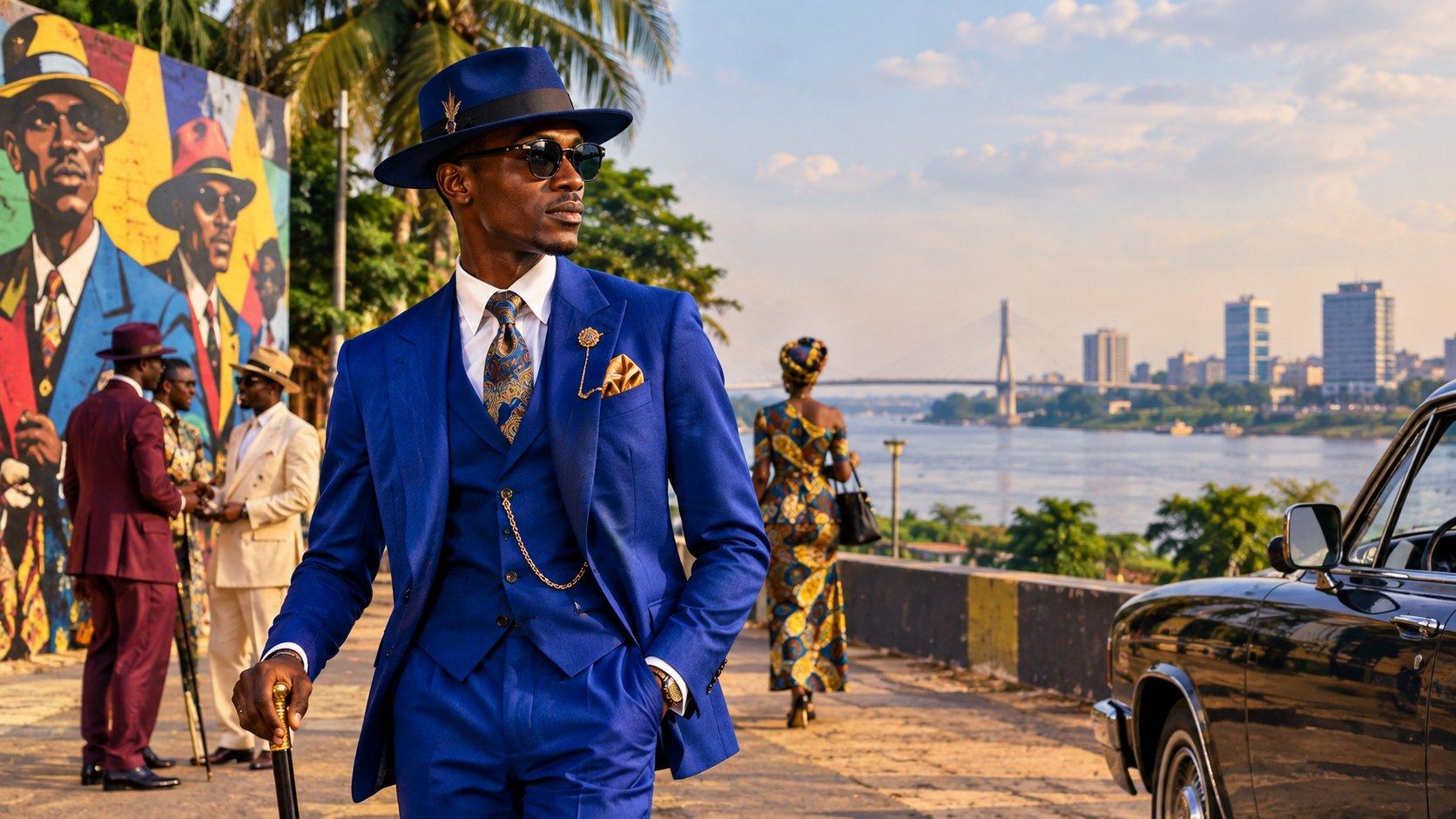
Walk through parts of Kinshasa or Brazzaville and you may come across people dressed in suits that are impossible to miss. Bright colours. Carefully chosen shoes. Hats. Pocket squares. Sunglasses. Tailoring that is meant to be noticed.
This is La Sape.
The name comes from Société des Ambianceurs et des Personnes Élégantes, and people involved in the movement are known as sapeurs.
La Sape developed in both Kinshasa and Brazzaville and later became closely connected with Congolese communities in France.
For a sapeur, clothing is not just something to put on before leaving the house. The combination of colours, brands, tailoring and accessories is part of the performance.
The movement has been associated with elegance, creativity, identity and social status. For some sapeurs, dressing well is also connected to dignity and the desire to present oneself differently from the circumstances around them.
For some sapeurs, the clothing itself is the focus. Carefully chosen suits, shoes, hats and accessories are used to express personal taste, creativity and attention to appearance. For others, dressing well can also carry ideas about dignity, identity, status or how they want to be seen in society.
Why Congolese Music Travels So Far
In this section
The bass could keep the underlying rhythm while rhythm and lead guitars played different patterns over it.
Congolese musicians have influenced popular music across Africa for decades, and a lot of that influence came through the music industry that developed in Kinshasa and Brazzaville. By the middle of the 20th century, these cities had become important centres for recording, live performance and dance music. Musicians travelled to perform in other African countries, and their records circulated well beyond the two Congos.
The sound itself also made Congolese music easy to recognise. Guitars became one of its defining features, with musicians using several guitars at the same time rather than relying on one guitar to do everything. The bass could keep the underlying rhythm while rhythm and lead guitars played different patterns over it. During the sebene, the instrumental section that often comes after the sung part of a rumba song, the guitars could become more prominent and give dancers a longer section to move to.
Language helped the music travel as well. Lingala became one of the main languages of Congolese popular music, particularly in Kinshasa, and songs in Lingala reached listeners in other parts of Africa who did not necessarily speak French. The music could therefore cross linguistic and national borders through records, radio, concerts and later other forms of media.
The sound also kept changing. Congolese musicians developed new styles from rumba, including soukous, and later generations brought in electric instruments, new recording techniques and influences from other parts of Africa, Europe, the Caribbean and the United States. Some musicians stayed close to older rumba traditions, while others pushed the music in new directions.
That is why Congolese popular music cannot be tied to one particular period. The music that filled dance halls in the middle of the 20th century was already different from the music that came before it, and musicians continued changing the sound as new audiences, technologies and musical influences appeared.
A Country Whose History Is Still Being Made
In this section
UNESCO added Congolese rumba to its Representative List of the Intangible Cultural Heritage of Humanity in 2021.
It is easy to encounter the DRC through one part of its history at a time: the Congo Free State, Lumumba, Mobutu, the Congo wars, M23, its mineral resources or its forests. Those histories are part of the country, but they are not the whole of everyday life.
Someone living in Kinshasa today might go to church on Sunday, speak Lingala with friends, eat pondu at home, listen to rumba, follow music from other parts of the world online, work in an office and have family connections to another part of the country. Someone living in eastern Congo may have a very different daily experience, shaped by the history and conflicts of the region. In Kasai, Tshiluba is widely spoken, while communities in the west have their own connections to Kongo history and traditions. Forest communities have developed their own relationships with the forests and the resources around them.
These experiences sit alongside one another within the same country, and culture is one of the places where different parts of that history can be seen.
Congolese rumba is a good example. Its history reaches back to Central African traditions associated with nkumba, a dance whose name means “waist” in Kikongo. Central Africans were then forcibly taken across the Atlantic during the slave trade, carrying their music and other cultural traditions with them. In Cuba, those traditions developed alongside European and Caribbean influences, contributing to musical forms such as son. Cuban recordings later reached Central African cities, where Congolese musicians adapted what they heard to their own languages, instruments, rhythms and audiences.
The result was the music now known as Congolese rumba, which developed in the two Congos and became one of the most influential forms of popular music in Africa. It is still performed at weddings, parties, concerts and other gatherings, while new musicians continue to record and reinterpret it. UNESCO added Congolese rumba to its Representative List of the Intangible Cultural Heritage of Humanity in 2021.
The same process can be seen in other parts of Congolese culture. Older languages are still spoken, religious traditions have continued to develop, food traditions have moved between regions, and artistic practices have been passed between generations. People have inherited these things, adapted them to their own lives and created new forms from them.
That is what makes the history of the DRC so broad. The country carries the marks of many different periods, communities and places, and those histories continue to appear in the way people speak, eat, worship, dress, make music and live today.