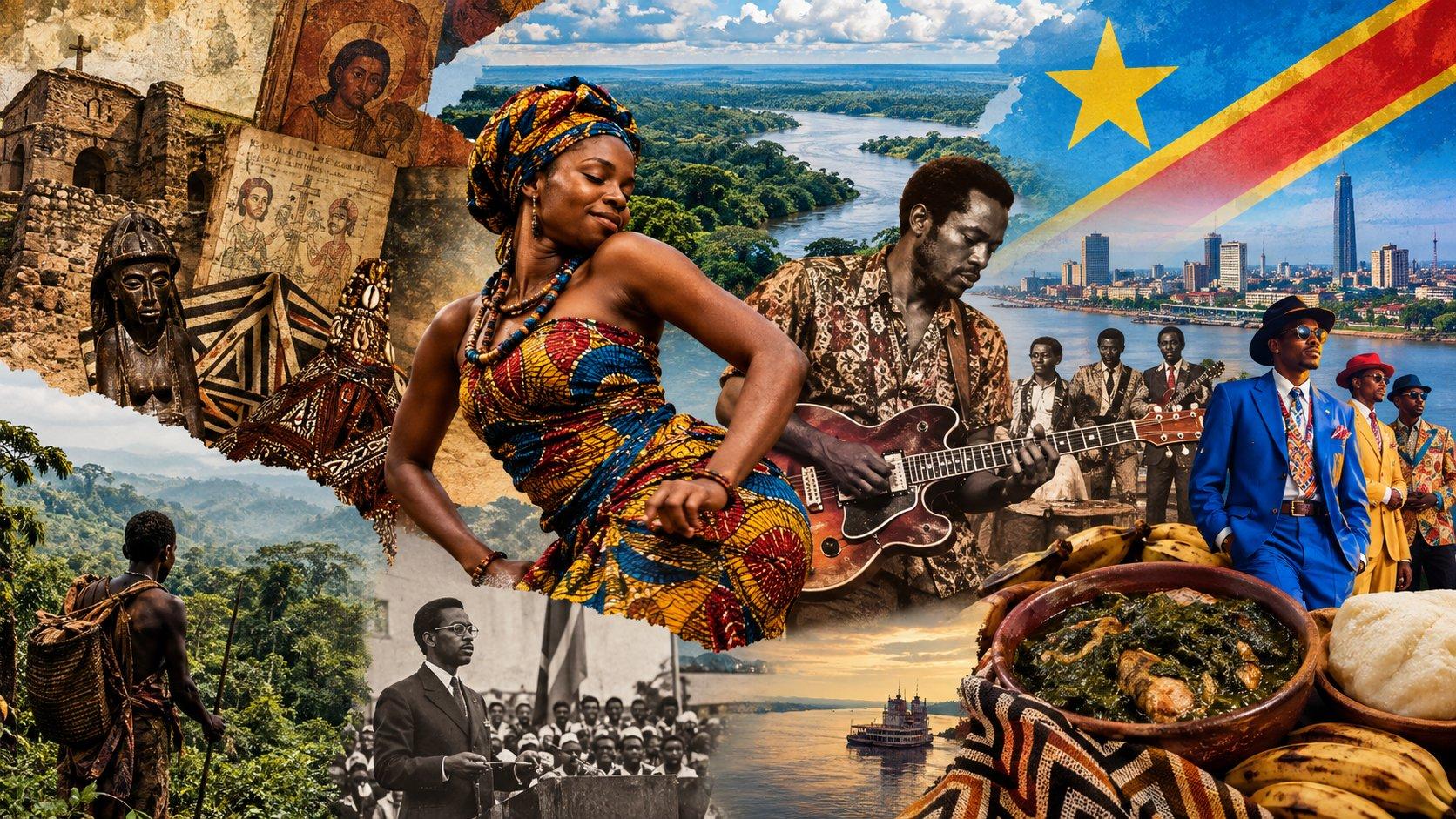
Discover the history of La Sape in Congo, from colonial-era clothing and migration to Congolese rumba, fashion, identity and modern Brazzaville.
In Brazzaville, clothing can be more than clothing.
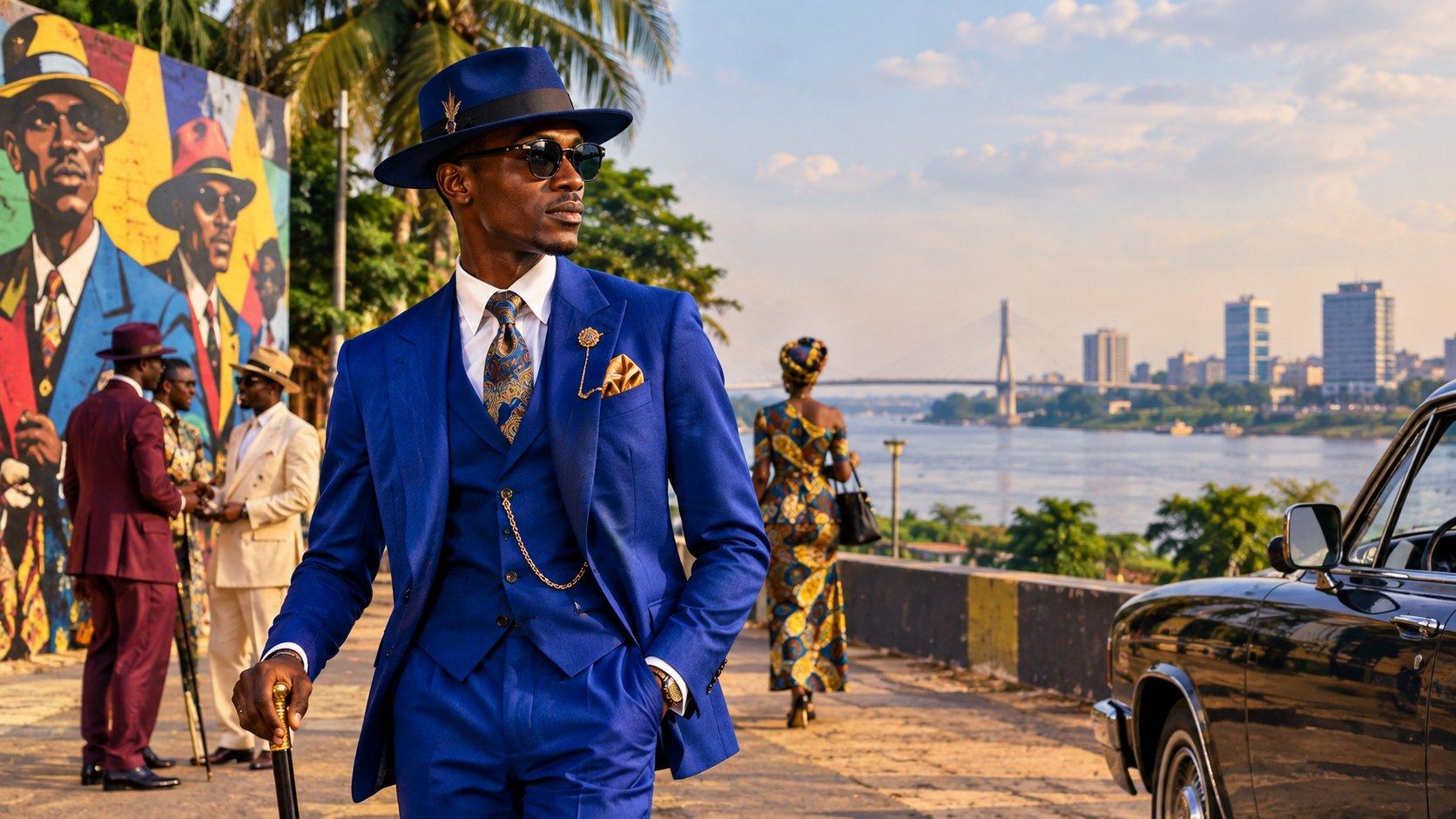
For generations, Congolese men have made a public performance out of dressing carefully: a well-cut suit, polished shoes, a hat, a particular colour combination, the way a jacket is worn, even the way someone walks through the street. This culture is known as La Sape, from the French phrase Société des Ambianceurs et des Personnes Élégantes, usually translated as the Society of Ambiance-Makers and Elegant People. Its followers are called sapeurs, or sapeuses for women.
La Sape is often described as a fashion movement, but that does not quite explain why it has lasted. Clothing has long carried social meaning in Central Africa. European colonial rule introduced new clothing, new ideas about social status and new ways for Africans to be judged according to how closely they appeared to European standards. Congolese people did not merely copy those standards. Over time, they adapted European clothing into their own urban culture, attaching ideas about dignity, status, pleasure, competition and self-expression to the way they dressed. Historians have therefore treated La Sape as something more complicated than a taste for expensive clothes.
La Sape did not appear all at once, and there is no single year that marks its beginning. Its story goes back to the colonial period, when Congolese men in Brazzaville and Kinshasa began using European-style clothing to present themselves in new ways. Over time, these forms of urban dandyism developed on both sides of the Congo River.
The two cities took the culture in their own directions. In Brazzaville, young men were already known for their elegant dress by the 1930s, and La Sape became especially visible again in the 1970s. Across the river in Kinshasa, the culture grew alongside the city's music scene and became closely associated with musicians such as Papa Wemba from the 1970s onward. Clothing became part of a much larger world of music, nightlife, travel, status and personal style.
To understand La Sape, you also have to understand that there are two Congos. The Republic of Congo, whose capital is Brazzaville, sits directly across the Congo River from the Democratic Republic of Congo, whose capital is Kinshasa. The two countries share languages, families, music and centuries of history, but they were shaped by different colonial administrations and later developed different political and cultural histories.
That shared history is one reason La Sape cannot be placed neatly inside one country. Its story crosses the river, moves between cities and changes with the people who carry it. In the Republic of Congo, it became part of the way people dressed, socialised and expressed themselves, giving clothing a place in the country's modern cultural history.
To understand how the country took shape, we need to go back to the kingdoms and communities that existed here long before the Republic of Congo.
The kingdoms that existed before the Republic of Congo
In this section
The Teke had their own rulers and systems of authority, and they were involved in trade across the interior.
Before the Republic of Congo became a country, different kingdoms and communities already occupied the land. They had their own rulers, trading routes, languages and political systems. The borders that separate the Republic of Congo from Angola, the Democratic Republic of Congo and Gabon today did not exist yet.
Three of these older political worlds are particularly important to the history of the area: the Kongo Kingdom, the Kingdom of Loango and the Teke kingdom.
The Kongo Kingdom was one of the major powers of the region. It grew around the lower Congo River and, at its height, covered parts of what are now Angola, the Democratic Republic of Congo and the Republic of Congo. Its capital, Mbanza Kongo, was south of the present-day Republic of Congo, but the kingdom's territory and influence extended across the Congo River.
Along the Atlantic coast to the north was the Kingdom of Loango. Its position on the coast connected it to trade by sea, while its links with communities further inland brought goods and people between the coast and the interior.
Further inland were the Teke, whose political centre was around the Pool region and the interior plateau. The Teke had their own rulers and systems of authority, and they were involved in trade across the interior. Their territory would later become particularly important when European explorers and colonial powers began pushing into the region.
Trade was already connecting these different areas long before European countries took control of Central Africa. People exchanged goods such as cloth, copper and ivory, and coastal trading centres were connected to communities further inland. When Portuguese traders reached the Kongo coast in the late 15th century, they entered a region that already had its own political and commercial networks.
The arrival of the Portuguese also connected Central Africa to the expanding Atlantic slave trade. Enslaved people became part of this trade, and the demand for captives changed political relationships and caused severe disruption across many communities in the region.
Over the centuries that followed, European powers became increasingly involved in Central Africa. France eventually claimed the territory that would become the Republic of Congo, while neighbouring areas came under Belgian and Portuguese control. The borders between these territories were drawn by European governments and did not follow the older kingdoms and communities.
That is why the history of the Republic of Congo reaches beyond the country's present borders. The Kongo, Loango and Teke worlds existed before the Republic of Congo, and their histories continued across the territories that later became several different countries.
So when we look at Congo today, we are looking at a country whose present borders are relatively recent. The people, political traditions and connections that shaped the region existed long before those borders were drawn.
How French colonial rule created modern Congo
In this section
Over time, the two cities developed closely connected urban cultures even though their colonial histories were different.
French expansion into the region gathered pace in the late 19th century. In 1880, the French explorer Pierre Savorgnan de Brazza signed an agreement with the Teke ruler known as Makoko. France later used agreements with rulers in the region to support its territorial claims and extend its control. A separate agreement was made with the Kingdom of Loango in 1883.
De Brazza established a French base on the northern bank of the Congo River. The town that grew around it was later named Brazzaville in his honour. Its location gave the French access to the river and a route into the interior, and Brazzaville gradually became an important centre of French administration.
That importance increased in 1910, when France created French Equatorial Africa. The new federation brought together several French-controlled territories in Central Africa, with Brazzaville as its capital. From there, French officials administered a much larger colonial territory.
There was another capital on the opposite bank of the river. Kinshasa, then known as Léopoldville, was under Belgian rule. The two cities were therefore only a short distance apart, but they belonged to different colonial territories and were governed by different European powers.
The river did not keep the two cities apart, however. People crossed it for work, trade and family connections, and ideas travelled with them. Music, clothing and other aspects of city life moved between Brazzaville and Kinshasa. Over time, the two cities developed closely connected urban cultures even though their colonial histories were different.
Those different colonial systems also shaped how people were treated within the cities. Under French rule, education and employment could affect a person's social position. The colonial administration used the term évolué for certain Africans whom it considered to have received a European-style education or adopted European forms of behaviour and culture.
For someone living in colonial Brazzaville, clothing could therefore say something about who they were and where they stood in society. A suit, polished shoes or other European-style clothing could be associated with education, employment or social advancement.
But Congolese people did not wear these clothes only because colonial authorities expected them to. They chose particular clothes, paid attention to how they were worn and gave them meanings of their own. Looking well dressed could communicate pride, confidence, ambition and social status. What began as part of a colonial social system gradually became part of urban Congolese culture.
This history helps explain how the culture that would later become known as La Sape could develop. The clothes were European, but the way Congolese people used them, competed through them and gave them meaning became their own.
Independence brought a different political experiment
In this section
Music, nightlife, travel and fashion gave young people other ways to express themselves and build their identities.
The Republic of Congo became independent from France on 15 August 1960. Independence brought political change, but it did not immediately bring political stability. In the years that followed, the country went through a series of political changes, and in 1969 it formally adopted Marxism-Leninism and became the People's Republic of the Congo.
The country remained a one-party state for more than two decades. During the 1970s and 1980s, therefore, young people in Brazzaville were growing up in a country where the government promoted a socialist political system and placed limits on political life.
At the same time, the city was changing. Music, nightlife, travel and fashion gave young people other ways to express themselves and build their identities. Clothing became particularly visible. Expensive suits, carefully chosen shoes and attention to personal appearance could set someone apart in a society where ideas about equality and collective life were part of the official political language.
By the 1970s and 1980s, dressing this way could mean several things. Some researchers have linked La Sape in Brazzaville to young people's rejection of certain social and political expectations of the time. But not every sapeur was trying to make a political statement. For many, the clothes were also about looking good, enjoying fashion, competing with friends, building a community and taking pride in personal style.
People also dressed this way because they enjoyed fashion, wanted to look elegant, competed with one another, built friendships and took pride in how they presented themselves.
The same suit could mean different things to different people. One person might wear it because they loved the clothes. Another might see it as a way to gain respect. Someone else might use the same style to challenge the expectations around them.
La Sape grew in that space between personal style and public life. It was about clothes, but it was also about how people wanted to be seen, how they built social connections and how they expressed themselves in a changing Congo.
Civil war changed Brazzaville
In this section
The years that followed were marked by further political tensions and efforts to rebuild after the conflict.
The move to multiparty politics did not bring a peaceful transition.
Pascal Lissouba won the 1992 presidential election, ending more than two decades of one-party rule. His presidency brought him into increasing conflict with Denis Sassou-Nguesso, who had previously served as president. By 1997, their political rivalry had become a military confrontation.
Fighting broke out in Brazzaville in June 1997 between forces supporting Lissouba and forces supporting Sassou-Nguesso. Sassou-Nguesso's forces eventually captured the capital in October, with military support from Angola.
The fighting then spread beyond Brazzaville. Several parts of the country, particularly in the south, were affected, and large numbers of people were forced to leave their homes. A U.S. State Department human-rights report later estimated that about 800,000 people, roughly one-third of the population at the time, had been displaced during the violence. That figure describes displacement during the conflict and does not mean that one-third of the country's population permanently left the country.
Brazzaville also suffered extensive damage during the fighting. Homes, businesses and public buildings were destroyed, and many people returned to a city that had been badly affected by the war.
Sassou-Nguesso returned to the presidency in 1997 and has remained in power since then. The years that followed were marked by further political tensions and efforts to rebuild after the conflict.
Yet life in Congo did not stop while the country was going through these changes. People continued to make music, raise families, trade, worship, dress, celebrate and build communities. The country's cultural life developed alongside its political history, carrying older traditions forward while also creating new forms of expression.
La Sape was one of those forms. Its story did not end when the country entered periods of political instability. If anything, its history shows how much cultural life can continue even when the political world around it is changing.
Who lives in the Republic of Congo?
In this section
Kongo communities, for example, live in the Republic of Congo, the Democratic Republic of Congo and Angola.
The Republic of Congo is home to many different ethnic communities. The largest broad grouping in commonly used demographic classifications is the Kongo, followed by groups such as the Teke and Mbochi, as well as Punu, Mbere, Mbeti, Kele and many others. The exact numbers vary between sources because ethnic categories are not always defined in the same way.
One widely cited CIA demographic estimate places the Kongo at 40.5 percent of the population, the Teke at 16.9 percent and the Mbochi at 13.1 percent. These figures are useful for showing the country's broad demographic makeup, but they should not be treated as exact measurements of identity. People can belong to several cultural, linguistic or family communities, and the boundaries between these groups do not always match neatly.
The history of these communities also reaches beyond the country's borders. Kongo communities, for example, live in the Republic of Congo, the Democratic Republic of Congo and Angola. Their history existed long before those countries were created, so language, family connections and cultural practices can cross today's national boundaries.
That is why the word “Congolese” needs some context. In one situation, it can mean someone from the Republic of Congo. In another, it can describe a culture or community shared across the two Congos. A tradition may therefore be strongly associated with Congo-Brazzaville without belonging only to people inside the country's present borders.
There is another part of modern Congo that helps explain how these different communities interact: most people live in cities.
The 2023 census recorded 6,142,180 people in the Republic of Congo. Brazzaville had 2,145,783 residents, while Pointe-Noire had 1,420,612. Together, the two cities accounted for 58.1 percent of the country's population.
That means a large share of Congolese life takes place in two cities. Brazzaville and Pointe-Noire bring together people from different parts of the country, along with their languages, foods, music and customs. As people move into cities, older traditions can take on new forms, while music, fashion and language can spread quickly from one community to another.
Brazzaville is especially important to the story of La Sape. It was here that different histories came together: the older traditions of the region, French colonial influence, movement across the Congo River, new forms of urban life and, later, the political and social changes of independent Congo. La Sape grew within that changing city.
Behind these widely used languages are many local languages spoken by different communities across the country.
French is the official language of the Republic of Congo, but it is not the language people use for every part of daily life. In homes, markets, neighbourhoods and conversations between people from different communities, several other languages are widely used.
In the south, Kituba, also known as Monokutuba, is an important language for communication between people who may have different first languages. This kind of shared language is called a lingua franca. In the north, Lingala plays a similar role and is also widely spoken in Brazzaville.
Behind these widely used languages are many local languages spoken by different communities across the country. The result is a multilingual society in which people may use one language at home, another when speaking with people from other communities and French in formal settings such as government, education or official documents.
The languages spoken in Congo also reflect the country's history. The Republic of Congo and the Democratic Republic of Congo share several important languages, including Lingala and Kikongo-related varieties. That is not surprising because the communities that speak these languages lived across the Congo River long before the river became an international border.
Kituba is a good example of why these languages need to be described carefully. It is not simply another name for Kikongo. Kituba developed from Kikongo varieties and became a widely used language between people who did not necessarily share the same first language.
So language in the Republic of Congo tells part of the country's history. French reflects the colonial period and the state that emerged from it, while Lingala, Kituba and the country's many local languages connect people to their communities and to a much older Central African world that existed before today's borders.
Religion and traditional belief
In this section
Islam is practised by a smaller part of the population, and other religious communities are also present.
Christianity is the main religious tradition in the Republic of Congo, and churches are a visible part of life across the country. Catholic and Protestant churches both have large followings, alongside evangelical churches and other Christian movements.
The exact religious breakdown is difficult to pin down. Estimates vary depending on the source and the year in which the information was collected. A U.S. government report using 2012 data estimated that 55 percent of the population was Catholic and 32 percent Protestant. A Congolese government survey from around the same period gave the opposite figures, estimating 55 percent Protestant and 32 percent Catholic. The difference does not necessarily mean that one group suddenly became larger than the other. It shows how much religious statistics can depend on how a survey defines and measures religious affiliation.
Islam is practised by a smaller part of the population, and other religious communities are also present.
At the same time, Christianity did not erase the older religious traditions of the region. Ideas about ancestors, spiritual forces, ritual protection and the significance of particular places have continued to influence cultural practices in different communities. People who identify as Christian may also take part in cultural practices that have roots much older than the churches themselves.
Religious life in the Republic of Congo therefore cannot always be divided neatly into separate boxes. For many people, Christian faith exists alongside family traditions, cultural practices and ideas that have been passed down through generations. The result is a religious landscape shaped both by Christianity and by the older traditions that were already part of life in Central Africa.
What people eat
In this section
Palm-nut preparations are also found in Congolese cooking, although they are not unique to the Republic of Congo.
Cassava is one of the most important staples in the Republic of Congo, and it appears on the table in several forms. One of the best known is fufu, a firm cassava-based accompaniment that is eaten with sauces, soups and stews. The leaves are used too. Cooked cassava leaves, commonly known as saka-saka, are prepared as a thick vegetable dish and often served alongside cassava or another starch.
Fish is another important part of the diet. The Republic of Congo has an Atlantic coastline as well as major rivers, so fish has long been available in both coastal and inland communities. Meat is also eaten, although what people eat depends on where they live, what is available locally and what a household can afford.
These staples are cooked with ingredients such as plantain, peanuts and palm products. Peanuts can be ground into a paste and added to sauces for flavour and thickness. Palm-nut preparations are also found in Congolese cooking, although they are not unique to the Republic of Congo. Similar dishes and ingredients are part of the food traditions of several Central African countries.
That shared food culture reflects the region's older history. People were moving between communities and exchanging goods long before today's national borders existed, so ingredients and cooking methods did not stop at the boundaries later drawn by colonial governments. Some dishes that are now described as Congolese are therefore part of a much wider Central African food tradition.
The food people eat in Congo's cities reflects that history while also showing how the country has changed. In Brazzaville and Pointe-Noire, markets and restaurants bring together traditional staples with imported ingredients and foods shaped by French influence. Bread, pastries and café culture sit alongside dishes built around cassava, fish, plantain, peanuts and palm products.
The result is a food culture where older Central African traditions remain part of everyday life while newer influences have become part of the same table.
Rumba belongs to both Congos
In this section
In 2021, UNESCO added Congolese rumba to its Representative List of the Intangible Cultural Heritage of Humanity.
Fashion is not the only part of Congolese culture that developed on both sides of the Congo River. Music followed a similar path, and Congolese rumba became one of the region's most influential musical traditions.
The name can be confusing because “Congolese” in this context refers to a culture shared by the Republic of Congo and the Democratic Republic of Congo. Rumba developed in the cities of both countries, particularly Brazzaville and Kinshasa, where musicians and audiences were connected by the river, family ties and regular movement between the two cities.
UNESCO describes Congolese rumba as both a musical genre and a dance practised in urban areas of the two countries. Its history reaches back to nkumba, an older dance associated with the waist in Kikongo. Over time, African musical traditions met musical influences that travelled across the Atlantic, including those from Cuba, and these influences helped shape the form of music that became known as Congolese rumba.
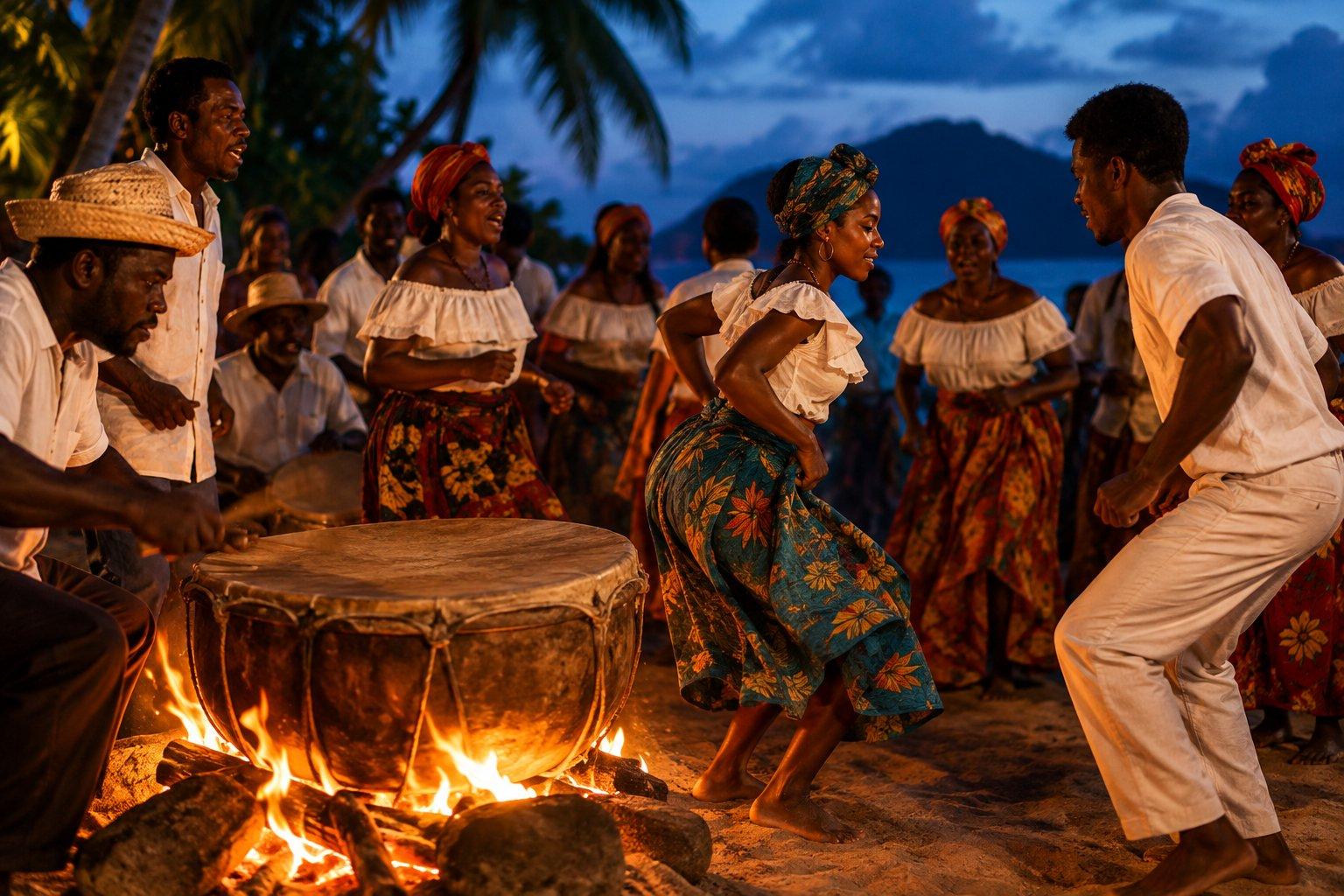
As Brazzaville and Kinshasa grew, so did their musical scenes. Musicians performed in clubs and at celebrations, new songs travelled between the cities, and audiences developed their own ways of dancing to the music. Rumba became part of weddings, parties, nightlife and other social occasions, while musicians also used their songs to talk about love, relationships, everyday life and wider social issues.
The music continued to develop through the 20th century, carried by musicians whose work reached audiences far beyond the two cities. Its popularity helped create a shared musical culture that could be recognised on both sides of the river even as the two countries followed different political paths.
In 2021, UNESCO added Congolese rumba to its Representative List of the Intangible Cultural Heritage of Humanity. The Republic of Congo and the Democratic Republic of Congo submitted the nomination together, reflecting the shared history of the music and the communities that continue to practise it.
Rumba therefore tells a story similar to La Sape. The Republic of Congo and the Democratic Republic of Congo are two separate countries, but the people who live there have inherited cultural connections that are much older than the border between them. The Congo River marks a political boundary today, but music has never stopped people on either side from influencing one another.
Painting gave Brazzaville another artistic identity
In this section
Some paintings featured human figures with long, simplified bodies, a style often associated with the term miké.
Brazzaville was becoming a centre for more than music and fashion. It also became an important place for modern painting in Central Africa, and one of the institutions that shaped that history was the Poto-Poto Painting School.
The school was founded in 1951 by the French painter Pierre Lods, nine years before the Republic of Congo became independent. Lods established a workshop in the Poto-Poto neighbourhood of Brazzaville where local artists could learn, experiment and develop their own ways of making art.
The artists who worked there did not all paint in the same way, but the school became known for a distinctive style. Some paintings featured human figures with long, simplified bodies, a style often associated with the term miké. Artists connected with Poto-Poto eventually exhibited their work beyond Congo, bringing attention to the city's growing art scene.
The timing of the school is important. It began while Congo was still under French colonial rule, at a time when European ideas about art and education had considerable influence. Yet the artists working in Poto-Poto were developing paintings that reflected their own surroundings and experiences rather than merely reproducing European academic styles.
After independence in 1960, the school continued to play a role in Brazzaville's artistic life. Its history therefore stretches across two periods of Congolese history: it began during colonial rule and continued after the country became independent.
Today, Poto-Poto remains part of Brazzaville's artistic history. Its story shows that the city's cultural life was already developing in many directions before independence, with artists creating new forms alongside the music, fashion and other forms of expression that were taking shape around them.
Traditional performance across the country
In this section
Mvet Oyeng is a musical art and body of practices associated with the Ekang communities of Central Africa.
Music and painting are only part of the Republic of Congo's cultural life. Across the country, different communities have their own dances, ceremonies and forms of performance, many of which existed long before the modern state was created. Three traditions help show the range of this cultural life: Kiebe-Kiebe, Mvet Oyeng and the Punu masquerade tradition.
Kiebe-Kiebe is an initiatory dance from Congo-Brazzaville. It is connected to initiation, meaning ceremonies through which members of a community pass through an important stage of life and learn practices associated with their community. The dance is therefore more than a performance for an audience. It forms part of a wider cultural and ceremonial tradition. UNESCO is currently considering Kiebe-Kiebe for inscription on the Representative List of the Intangible Cultural Heritage of Humanity as a 2026 nomination.
Another tradition brings together music, storytelling and cultural knowledge. Mvet Oyeng is a musical art and body of practices associated with the Ekang communities of Central Africa. The tradition is not confined to one country. In 2025, UNESCO inscribed Mvet Oyeng on its Representative List as a multinational tradition shared by communities in Gabon, Cameroon and the Republic of Congo.
The same pattern can be seen further south with Punu communities. Punu masquerade traditions include distinctive white-faced masks known as mukudj, with related regional names including okuyi. The Smithsonian documents these masks in southwestern Republic of Congo as well as southern and south-central Gabon. During masquerades, male performers wear the masks and dance on stilts, creating performances that are both visually striking and culturally significant.
Looking at these traditions together makes one thing clear: the cultural map of Central Africa is older than the political map. Kiebe-Kiebe is associated with communities within Congo-Brazzaville, while Mvet Oyeng and Punu masquerade traditions are shared across present-day national borders. The Republic of Congo therefore has its own cultural traditions, but many of those traditions also belong to wider communities whose histories extend beyond the country itself.
Clothing, textiles and La Sape
In this section
People travelled between these places, brought back clothes and ideas, and changed the style as they went.
La Sape is one of the Republic of Congo's most internationally recognisable modern fashion cultures. Men in carefully chosen suits, polished shoes and striking accessories have made the style visible far beyond Congo, but the clothes are only the most obvious part of the story. To understand why La Sape became so important, it helps to look at how Congolese people began using European clothing and gradually gave it meanings of their own.
European-style clothing became increasingly common in Congolese cities during the colonial period. For some African men, dressing in a suit could signal education, employment or social advancement, particularly in a society where colonial authorities used European ideas of appearance and behaviour to judge people's status.
Congolese men did not all dress in the same way, however. Some became known for paying particular attention to their clothes, combining suits, shoes, hats and accessories with great care. Over time, this urban dandy culture became more visible in Brazzaville and Kinshasa.
There is no single date that marks the beginning of La Sape. Researchers trace its development through several generations of Congolese dandies, and the evidence points to different stages rather than one founding moment. In Brazzaville, figures such as Camille Diata are associated with the city's dandy culture in the 1930s. Other research points to earlier influences from Congolese migrants and soldiers who encountered European clothing and urban life abroad.
By the 1970s and 1980s, this culture had become much more visible. In Brazzaville, young men who travelled to Europe sometimes returned with expensive clothing and displayed their new purchases in the city. Dressing well became a public activity. People paid attention to the cut of a suit, the colour of a shirt, the shoes on someone's feet and the way the whole outfit worked together.
The clothes were not only being worn. They were being discussed, compared and displayed. Someone could gain recognition for knowing how to put an outfit together, finding a particular designer or appearing in clothes that others could not easily afford. Fashion became a way of creating a public identity.
Across the river in Kinshasa, the same culture was developing within a much larger music scene. Musicians made fashion part of their public image, and Papa Wemba became one of the most famous figures associated with La Sape. Through his music, performances and appearances in Europe, he helped bring the culture to audiences far beyond the two Congolese capitals.
The movement therefore grew through several connected places rather than beginning in one city and spreading neatly to the other. Brazzaville, Kinshasa and Congolese communities in Europe all became part of its history. People travelled between these places, brought back clothes and ideas, and changed the style as they went.
The reasons people joined the culture were just as varied. For some, dressing well was about elegance and personal pride. For others, expensive clothing offered a way to gain recognition and social status. Researchers have also connected La Sape with resistance to some of the social and political expectations of the time. In 1970s Brazzaville, for example, public displays of European luxury could stand in contrast to the dress and behaviour promoted by the country's military government.
These different meanings could exist at the same time. A man could care deeply about looking elegant, enjoy competing with other sapeurs, take pride in his clothes and still use his appearance to push against expectations around him.
That is what makes La Sape more than a story about designer clothing. The suits, shoes and accessories are what people see first, but the culture grew around what those clothes allowed people to communicate about themselves: their taste, their status, their confidence, their ambitions and the way they wanted to be seen.
Why European luxury clothes became so important
In this section
La Sape grew out of all of these connections, turning clothing into a shared language of style, status and identity.
There is a natural question to ask at this point. Why did expensive European clothing become so important in a country where many people could not easily afford everyday necessities?
Part of the answer lies in how rare those clothes were. When a particular suit, pair of shoes or designer label is difficult to obtain, owning it can make someone stand out. The clothing can signal that the wearer has money, connections, access to Europe or simply the ability to find something that most people cannot.
But owning expensive clothes was never the whole point of La Sape. A sapeur was also expected to know how to wear them. The way the clothes were combined mattered. So did the shoes, accessories, posture and manner of presentation. Two people could own expensive suits, but the person who knew how to put an entire outfit together could attract more attention.
This is what people mean when they describe La Sape as a performance. The outfit was meant to be seen, and the way someone entered a room, walked through the street or appeared at a social gathering was part of the presentation. The clothes created the impression, but the person wearing them had to bring the impression to life.
That also explains why La Sape became a social culture rather than just a way of buying designer clothes. People learned which brands mattered, how different pieces worked together and what counted as elegant. They watched other sapeurs, discussed clothing and competed over their appearance. The knowledge of fashion became part of the culture itself.
Over time, Congolese participants also gave European clothes meanings that went beyond the reasons those clothes were originally made. A suit that might have represented professional status in Europe could mean elegance, confidence or social recognition in Brazzaville. A designer shoe could become part of a much larger statement about how someone wanted to be seen.
This is why scholars have often treated La Sape as more than straightforward imitation of European fashion. Congolese people took clothing that had entered their world through colonialism, trade and migration and incorporated it into their own social and cultural practices.
The culture also depended on movement. During the 20th century, Congolese people travelled between Brazzaville, Kinshasa, European cities and other parts of the world. Some migrants bought clothes abroad and took them home. Musicians carried fashion into their performances, while people who had never travelled could see new styles through music, photographs and other people in their cities.
A suit bought in Paris could therefore end up being worn through the streets of Brazzaville. A musician could turn a particular style of clothing into part of his public identity. Someone who had never left Congo could see that style, learn from it and create his own version.
Fashion travelled because people travelled. It also travelled through music, family connections, photographs, trade and the growing links between Congolese cities and the wider world. La Sape grew out of all of these connections, turning clothing into a shared language of style, status and identity.
A country where the old and the modern keep meeting
In this section
Kiebe-Kiebe, an initiatory dance tradition of Congo-Brazzaville, is currently on UNESCO's nomination list.
The Republic of Congo is a relatively small country by population compared with its much larger neighbour, the Democratic Republic of Congo, across the Congo River. Its 2023 census recorded 6,142,180 people. More than half of the population lived in just two cities: Brazzaville, the capital, and Pointe-Noire, the country's main port city. Together, they accounted for 58.1 percent of the population.
This helps explain why so much of the country's modern cultural life is visible in its cities. Brazzaville brings together people from different parts of the country, along with migrants from neighbouring countries. It is a centre of government, music, fashion, religious activity, markets and the arts. Pointe-Noire has a different character, shaped partly by its location on the Atlantic coast and its role as the country's main commercial port.
But the culture of the Republic of Congo does not stop at these two cities. Outside Brazzaville and Pointe-Noire are communities with their own languages, food traditions, ceremonies, histories and forms of artistic expression. Some traditions are closely associated with particular communities or regions, while others have spread through migration, trade, marriage, religious networks and movement between cities and villages.
That movement has also meant that cultural traditions do not always fit neatly inside the country's present-day borders. The same language can be spoken on both sides of a border. A musical tradition can develop in more than one country. People can belong to communities whose history predates the borders that separate the Republic of Congo from the Democratic Republic of Congo, Gabon or Cameroon today.
UNESCO's recognition of several Congolese cultural traditions shows this clearly. Congolese rumba, for example, is shared by the Republic of Congo and the Democratic Republic of Congo and was added to UNESCO's Representative List of the Intangible Cultural Heritage of Humanity in 2021. Mvet Oyeng, a body of musical and cultural practices associated with the Ekang people, is shared by communities in the Republic of Congo, Gabon and Cameroon and was inscribed in 2025. Kiebe-Kiebe, an initiatory dance tradition of Congo-Brazzaville, is currently on UNESCO's nomination list.
These examples are not separate traditions that happen to sit next to one another on a map. They reflect the way people, languages, music and cultural practices have moved between communities for generations. Political borders may determine which country someone belongs to today, but they do not always correspond to the older cultural networks through which these traditions developed and spread.
What La Sape tells us about Congo
In this section
Expensive clothing could also signal access to money, travel or connections that other people did not have.
La Sape is easy to notice today because of the way its followers dress. A sapeur might wear a sharply tailored suit, brightly coloured trousers, polished shoes, a hat or carefully chosen accessories. The clothes are often photographed because the style is deliberately visible.
But La Sape did not begin with designer labels.
Long before the movement became known for luxury European clothing, clothes already carried social meaning in Congolese cities. Under French colonial rule, European-style clothing became associated with education, paid employment and access to colonial institutions. For some Congolese men, dressing in this way could therefore signal that they had acquired a particular kind of education, job or social position.
Congolese people did not just copy these European styles and leave them unchanged. They combined European clothing with their own ideas about appearance, respectability, confidence and social status. Over time, dressing well became something that could be discussed, admired and competed over within urban communities.
The meaning of this clothing continued to change after the Republic of Congo became independent in 1960. During the 1970s and 1980s, when the country was governed under a socialist political system, some young men in Brazzaville used expensive and carefully chosen clothing as a visible way of presenting themselves. Researchers have connected La Sape during this period with resistance to social and political expectations, although that was not the only reason people dressed this way.
There was also a much more ordinary reason: they liked fashion.
Some sapeurs cared about elegance and knowing how to put an outfit together. Some enjoyed the attention that distinctive clothing brought them. Others valued the friendships and social world built around fashion. Expensive clothing could also signal access to money, travel or connections that other people did not have.
Migration then expanded the culture further. Congolese people travelled between Brazzaville, Kinshasa, Europe and other parts of the world, carrying clothes and fashion ideas with them. Someone could buy a suit in Paris and take it back to Brazzaville. Someone else could see that style on a musician or another sapeur and create a different version with clothes available locally.
Music helped make the style even more visible. Congolese rumba musicians incorporated fashion into their public appearances, performances and images, giving audiences another way to see and imitate new styles. Musicians such as Papa Wemba became closely associated with La Sape and helped bring the culture to a much wider audience.
By this point, La Sape had become more than a preference for European clothes. It was a way of dressing, but also a social world built around knowing fashion, putting outfits together, being seen and deciding how you wanted other people to see you.
That is why there is no single meaning that explains every sapeur. One person may care most about elegance. Another may enjoy the competition of putting together an impressive outfit. Another may value the friendships and community around the culture. At particular moments in Congolese history, dressing this way could also challenge expectations about how people were supposed to look or behave.
The clothes are therefore the most visible part of La Sape, but they are not the whole story. The history is also about how Congolese people took a form of clothing introduced during colonial rule and gradually turned it into a culture with its own rules, values, social relationships and meanings.
The Republic of Congo today
In this section
A particular suit may show that someone has travelled or has access to clothing that is difficult to find locally.
The cultural life of the Republic of Congo today is not limited to the traditions that are most familiar outside the country. In Brazzaville, the Poto-Poto Painting School has been shaping modern Congolese art since it was founded in 1951. Congolese rumba continues to be performed and enjoyed in both the Republic of Congo and the Democratic Republic of Congo. Kiebe-Kiebe and Mvet Oyeng show that older forms of dance, music and cultural knowledge are also still being practised and passed on.
These traditions have something else in common. None of them has remained frozen in the form it had in the past. People have continued to perform them, teach them, adapt them and give them new meanings as their lives and communities have changed.
La Sape belongs to this same living cultural world.
The clothes are what people notice first, but understanding La Sape requires looking at what the clothes mean to the people wearing them. A particular suit may show that someone has travelled or has access to clothing that is difficult to find locally. The way an outfit is put together can show how much the wearer knows about fashion. Dressing in a particular style can also connect someone to a community of people who share an interest in La Sape.
For some people, the appeal is the pleasure of looking elegant. For others, clothing can be connected to social status, confidence, masculinity or the way they want to be treated by others. At certain points in Congolese history, dressing this way has also been used to push back against expectations about how people should present themselves.
That is why the history of La Sape leads far beyond clothing. To understand why this culture developed, you have to look at the colonial period, when European clothing acquired new social meanings in Congolese cities. You have to look at independence and the political changes that followed. You have to look at migration between the two Congos, Europe and other parts of the world. You also have to look at music, because musicians helped carry the style to much larger audiences.
What began with clothes therefore became part of a much wider urban culture. People took materials and styles that had entered Congo through colonialism, trade and migration and gave them meanings of their own.
That process is still visible in Brazzaville today. The city has not kept these cultural forms unchanged. People continue to use them, adapt them and combine them with new influences. La Sape is one example of that process, which is why a story about a beautifully dressed man on a Brazzaville street can lead into a much longer history of how Congolese people have shaped their own cultural lives.