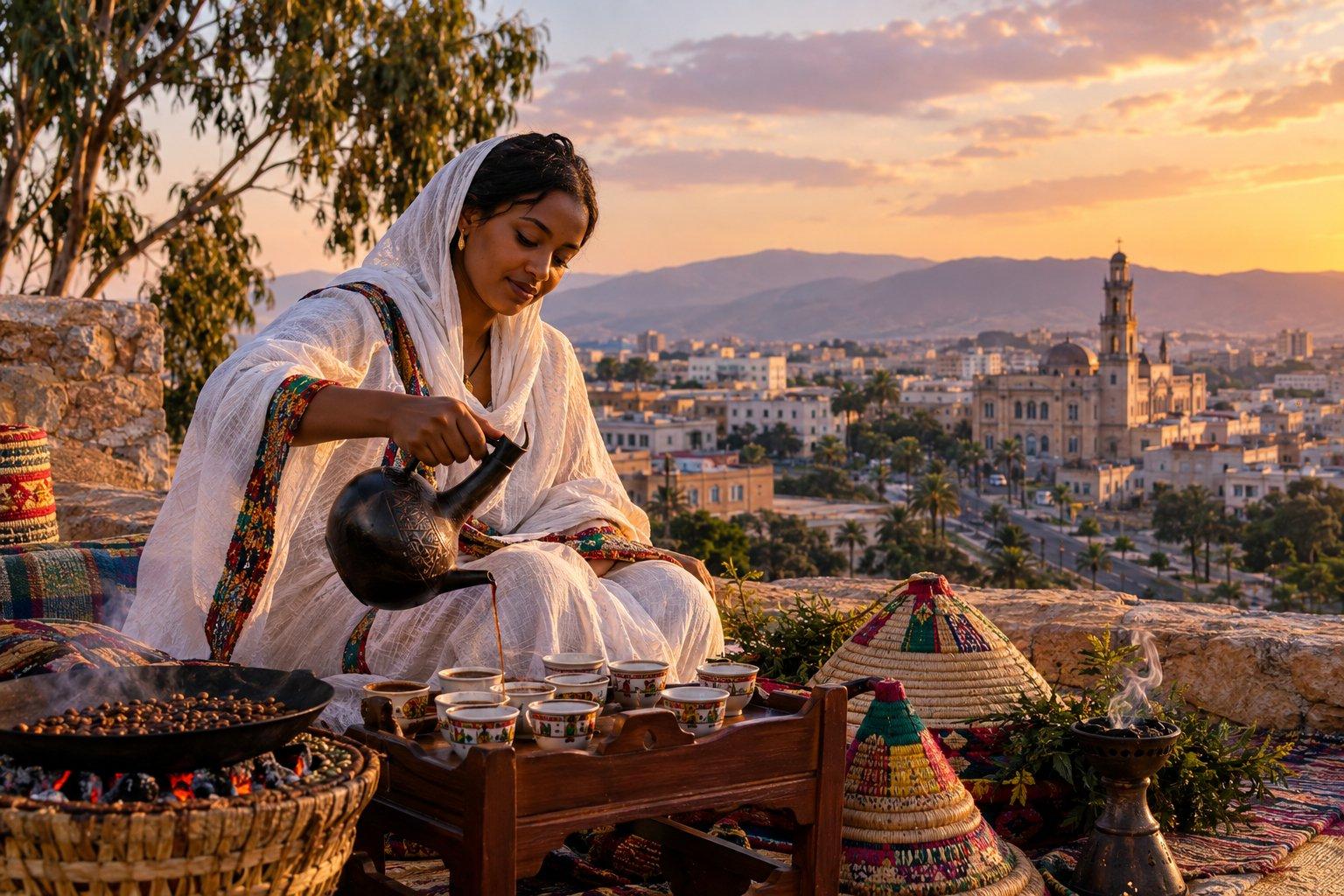
In an Eritrean household, a coffee ceremony can begin long before the first cup is poured. Green coffee beans are roasted over charcoal in a long-handled pan, and the pan may be carried around the room so guests can take in the smell of the freshly roasted beans. The beans are then ground by hand, brewed in a clay pot called a jebena and served in three rounds: awel, kale'i and baraka, the final round associated with blessing. Incense may burn during the ceremony, and the whole process can take an hour or more when performed in its full traditional form.
Coffee is shared across the Horn of Africa, but the Eritrean version has its own vocabulary and practices. The names of the three rounds are Tigrinya rather than Amharic, and Eritrean descriptions of the jebena commonly refer to a pot with a single opening used for both filling and pouring. The ceremony is also a social occasion: guests sit together, drink slowly and talk while the coffee is prepared and served.
It is a useful place to begin with Eritrea because the country contains several histories at once. Its highlands were part of the ancient Aksumite world. Its Red Sea coast belonged to trading networks that connected northeast Africa with Arabia and the wider Indian Ocean. Its cities were later shaped by Ottoman, Egyptian, Ethiopian and Italian rule. And in the twentieth century, Eritreans fought for three decades to end their incorporation into Ethiopia and establish an independent state.
The war ended militarily in 1991. Eritreans voted on independence two years later.
The result was 99.805 percent in favour.
Where the culture came from
The territory that is now Eritrea was closely connected to the ancient Kingdom of Aksum, whose political and commercial influence extended across parts of present-day Eritrea and northern Ethiopia. On the Red Sea coast, the port of Adulis served as an important gateway for Aksumite trade. The port connected the highland kingdom to maritime routes reaching across the Red Sea and into the wider trading world.
Christianity became established in the Aksumite kingdom during the fourth century, long before modern Eritrea and Ethiopia existed as separate states. Islam later became deeply rooted along the Red Sea coast and lowlands through centuries of trade, migration and contact across the region.
The modern country's religious geography still reflects some of those older patterns. Eritrea has substantial Christian and Muslim populations, with older demographic estimates placing them at roughly comparable levels, although there has been no recent national census that provides a reliable current religious breakdown.
The territory did not pass neatly from one empire to another. Different parts of present-day Eritrea experienced varying degrees of control or influence from Ethiopian polities, Ottoman authorities and Egypt before Italy established a formal colony.
Italy declared Eritrea a colony in 1890. Asmara, situated on a highland plateau more than 2,000 metres above sea level, became the colonial capital and was transformed through Italian planning and construction. Beginning in the 1890s and accelerating during the 1930s, Italian authorities built government offices, banks, shops, cinemas, hotels, churches, mosques, synagogues, industrial buildings and private residences in styles influenced by Italian modernism and Rationalism.
The result remains visible across the city.
Asmara's streets contain buildings that look as though they were designed for a European modernist city, yet they stand within an African highland capital whose urban life developed through several different communities and historical periods. UNESCO describes the city as an exceptionally well-preserved example of a colonial planned city and one of the world's most complete collections of modernist and Rationalist architecture. UNESCO added Asmara to the World Heritage List in 2017.
The colonial architecture is also more complicated than a collection of attractive buildings. UNESCO's documentation records that Italian planning used racial segregation and functional zoning as part of the organization of the colonial city. Eritreans and Europeans did not experience colonial Asmara in the same way, and the city's surviving architecture carries evidence of that unequal system alongside its aesthetic and technical qualities.
After Italy's defeat in the Second World War, Britain administered Eritrea. Its political future was then placed before the United Nations.
In 1952, the UN established a federation between Eritrea and Ethiopia under the Ethiopian Crown. Eritrea was supposed to retain substantial internal autonomy under its own constitution and elected institutions. The arrangement did not last.
Ethiopian authorities began dismantling Eritrean autonomy almost immediately. In November 1952, the federal arrangement was effectively abolished, while Eritrea was formally incorporated into Ethiopia as a province in 1962. The end of the federation helped turn a dispute over political status into a much longer struggle over independence.
The armed struggle began in 1961.
Several Eritrean movements were involved during the early years, but the Eritrean People's Liberation Front eventually became the dominant liberation organization. Its forces fought Ethiopian governments across mountainous highlands, lowlands and desert terrain. After the Ethiopian revolution of 1974, the conflict continued under the Marxist Derg government, which received military support from the Soviet Union and its allies.
The war lasted until 1991.
The Eritrean People's Liberation Front captured Asmara in May that year, while Ethiopian leader Mengistu Haile Mariam fled the country. Eritrea was effectively independent, although the legal process still had to be completed.
That happened through a referendum in April 1993. More than 1.15 million people participated, representing a reported turnout of 98.24 percent among registered voters. Of those who voted, 1,098,015 chose independence and 1,825 voted against it. The official result was 99.805 percent in favour.
Eritrea became an independent state in May 1993.
The war left tens of thousands of people dead and shaped the country's political culture for decades. Eritreans from different religious and ethnic communities had participated in the independence struggle, while the experience of military organization and wartime sacrifice became central to the new state's understanding of national unity.
That history did not end the country's wars with Ethiopia.
Between 1998 and 2000, Eritrea and Ethiopia fought another major war, this time over a territorial dispute centred on areas including Badme. Casualty estimates vary, but tens of thousands of people died, with some estimates putting the combined toll above 100,000.
The conflict also helped produce the system of indefinite national service that remains one of the defining features of life in Eritrea. Under Eritrean law, national service was supposed to last 18 months. In practice, the government has kept large numbers of people in military or national service for years and, in some cases, decades. Human Rights Watch reported in its 2026 country report that much of Eritrea's adult population remained subject to indefinite military or national service, with forced labour and arbitrary punishment among the documented concerns.
For young Eritreans, this can affect when they leave school, where they work, whether they can travel and whether they can build an independent household. The system is also one of the reasons large numbers of Eritreans have left the country.
Eritrea and Ethiopia formally ended their state of war in 2018, after Ethiopian Prime Minister Abiy Ahmed and Eritrean President Isaias Afwerki signed a Joint Declaration of Peace and Friendship. Diplomatic relations were restored and the border reopened in several places.
The rapprochement did not last in its original form. Eritrean forces later became involved in Ethiopia's Tigray war, which began in November 2020. International investigations and human-rights organizations have documented serious abuses involving Eritrean forces, while Eritrean authorities have rejected or disputed various allegations.
The border between the two countries remains tied to questions of security, territory and access to the Red Sea.
Ethnic groups and languages
Eritrea officially recognizes nine ethnic groups: Tigrinya, Tigre, Saho, Afar, Bilen, Kunama, Nara, Hedareb and Rashaida. UNESCO's education profile describes nine ethnic groups speaking nine local languages and notes that Eritrea's constitution guarantees equality among the country's languages.
The largest group is the Tigrinya-speaking population, concentrated mainly in the central and southern highlands. Tigrinya is closely related to the language spoken across the border in Ethiopia's Tigray region. Most Tigrinya-speaking Eritreans are Christian, especially followers of the Eritrean Orthodox Tewahedo Church.
Tigre-speaking communities are concentrated largely in the northern and western lowlands, where Islam is predominant. The Saho, Afar, Bilen, Kunama, Nara, Hedareb and Rashaida communities have their own histories, languages and patterns of settlement.
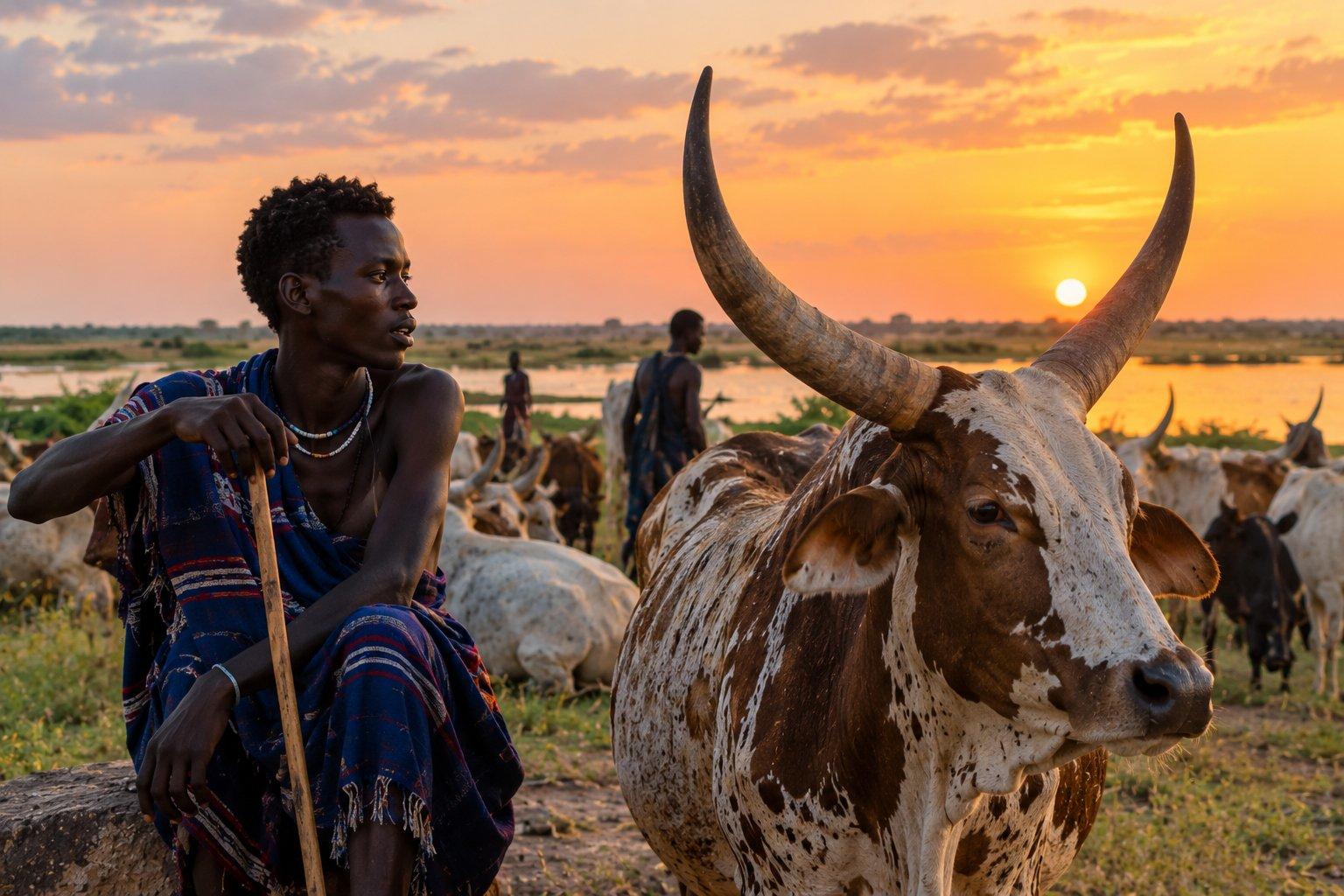
Some are closely associated with pastoralism. Others have long histories of farming, trade or mixed livelihoods.
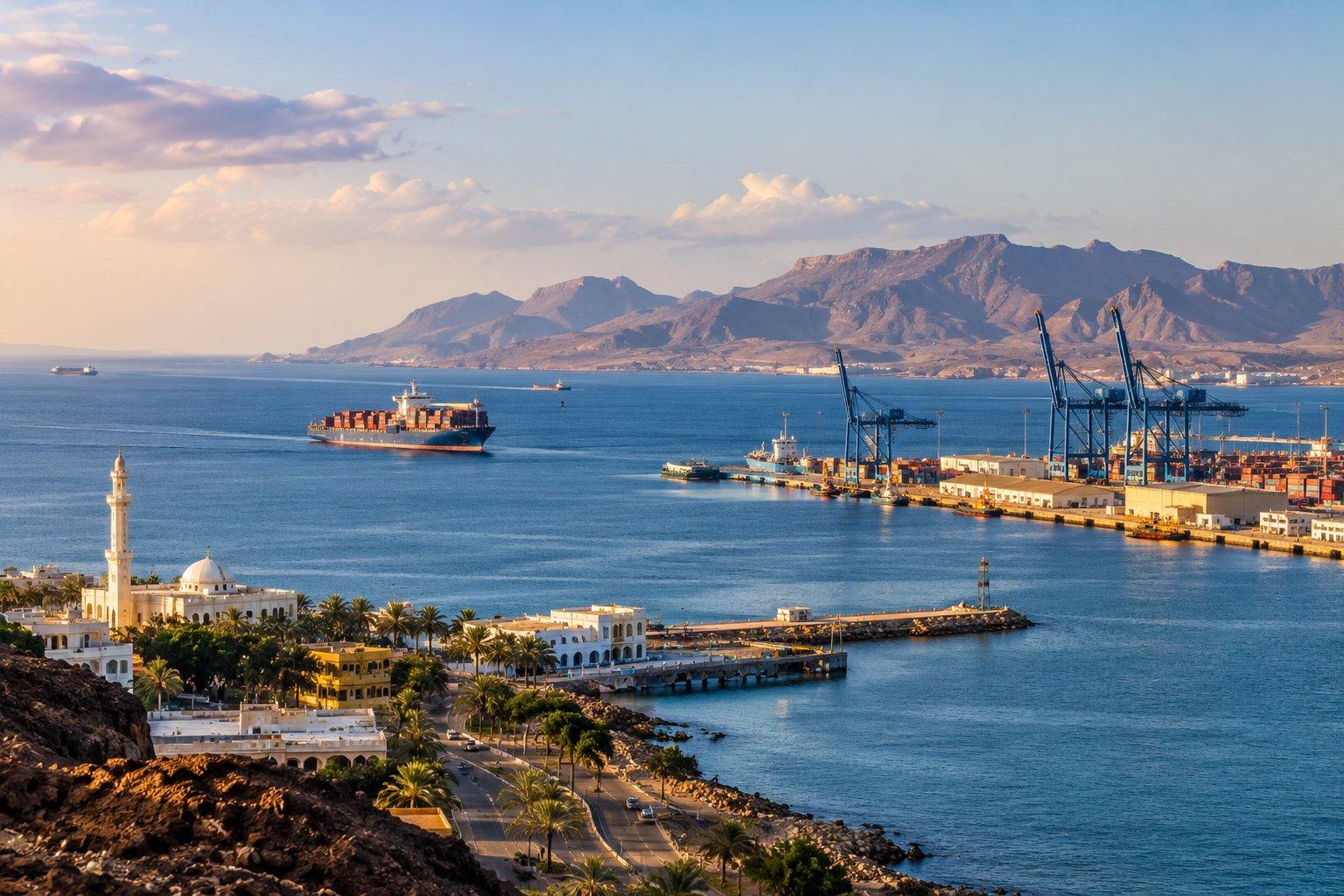
The geography makes the differences easy to understand. Eritrea contains cool highland plateaus, dry western lowlands and a long Red Sea coastline. A community living around the highland city of Asmara has faced different environmental pressures from a pastoral community moving livestock through the eastern lowlands or the coastal areas around Massawa.
Tigrinya, Arabic and English are the country's principal working languages. At the same time, the government has maintained a policy of using local languages in education and literacy programmes. UNESCO reports that literacy programmes have been conducted in all nine Eritrean languages, while education policy has provided for mother-tongue instruction at elementary level.
The language policy was partly designed to prevent the country's smaller linguistic communities from disappearing into a single national language.
In 1997, Eritrea reorganized its internal administration, replacing the older awraja system with zoba regions. The reform was presented within the government's wider emphasis on national unity rather than ethnic political organization.
For Eritrea's lowland communities, however, questions about representation, access to services and political influence have remained part of the country's post-independence debates.
Religion and belief
Christianity and Islam have both been present in the territory for centuries.
The Christian population is predominantly Eritrean Orthodox, while Catholics and Protestants make up smaller Christian communities. Sunni Islam is the country's main Muslim tradition. Older demographic estimates have generally placed Christians and Muslims at roughly comparable levels, although the absence of a recent national census means current percentages should not be treated as precise.
Religion also follows some of the country's geography. Christian communities are concentrated heavily in the central and southern highlands, while Muslim communities are more numerous in many northern, western and coastal areas. The pattern is not absolute. The Kunama, for example, include Christians, Muslims and people who maintain traditional religious practices.
The state officially recognizes four religious groups: the Eritrean Orthodox Tewahedo Church, Sunni Islam, the Roman Catholic Church and the Evangelical Lutheran Church of Eritrea. Other religious groups have faced restrictions on registration and worship. The U.S. State Department has documented arrests of members of unregistered Christian groups, restrictions on religious institutions and government control over the activities of registered religious bodies.
The country's religious history is therefore broader than its four officially registered institutions.
Asmara still has a historic synagogue, although the Jewish community that once lived in the city has almost disappeared. The government has allowed the synagogue to remain as a historic site. The Baha'i community also has a centre in Asmara and has received what U.S. government reports describe as de facto recognition, despite not being one of the four officially registered religions.
For many Eritreans, Christianity and Islam are also woven into family life, food, holidays and marriage customs. The country's long history of Christian-Muslim coexistence is part of ordinary social life, even as the government exercises tight control over religious institutions.
Food
Injera sits at the centre of much Eritrean cooking.
The fermented flatbread is used as both food and utensil, laid across a serving dish and topped with stews before diners tear off pieces and use them to scoop up the food. Teff is common in injera production, although other grains such as sorghum and wheat may also be used depending on the area and household.
The stews are commonly known as tsebhi. They can contain meat, chicken, lentils or vegetables and are often seasoned with berbere, the deep red spice mixture associated with Eritrean and Ethiopian cooking.
Zigni, a hot meat stew heavily seasoned with berbere, is closely associated with Eritrean cuisine. Shiro, made from seasoned chickpea flour, is another familiar dish, especially useful during Orthodox fasting periods when meat and animal products are avoided.
The cooking reflects the country's geography as much as its history.
In the highlands, injera, tsebhi and legume-based dishes form a familiar combination. Along the Red Sea coast, seafood has a larger place, while Massawa's centuries of contact with Arab, Ottoman and Egyptian traders brought additional culinary influences.
Then there is pasta.
Italian colonial rule introduced ingredients, recipes and eating habits that became part of urban Eritrean life. Pasta did not replace local food. It became another thing Eritreans cooked, seasoned and ate in their own way.
In Asmara, Italian-style cafés sit comfortably alongside places serving traditional coffee. A plate of pasta and a jebena of coffee can belong to the same afternoon.
Music, dance and art
Eritrean music varies sharply between communities, with different languages, instruments, rhythms and dance traditions.
Among Tigrinya-speaking highland communities, Guayla is one of the best-known musical and dance forms. It is associated with celebrations, weddings and public gatherings and is recognizable for its rhythmic shoulder movements, singing and percussion.
Other communities have their own musical traditions. Eritrea's nine ethnic groups cannot be reduced to a single national style, just as the country's languages cannot be reduced to Tigrinya.
The same variety appears in performance and visual art.
Eritrean filmmakers and theatre practitioners have produced work in Tigrinya and other local languages, including films dealing with family life, social questions and the independence struggle. During the more active period of the Eritrean film industry in the 2000s, reports described production of around 60 low-budget films a year. That figure should not be treated as a current annual production rate.
Eritrean artists also work outside the country. The diaspora has become an important part of contemporary Eritrean music, literature and visual culture, particularly because large numbers of Eritreans now live outside the country.
The cultural map of Eritrea therefore extends well beyond Eritrea's physical borders.
Clothing, textiles and craft
Traditional clothing varies by community, climate and occasion.
Among Tigrinya-speaking highland communities, women may wear the zurria, a white cotton dress used especially for formal or ceremonial occasions and often finished with coloured or embroidered borders. Other communities have their own clothing traditions, many shaped by the heat, wind and mobility of the lowlands and coastal regions.
Pottery has also remained part of everyday and ceremonial life. Coffee pots, cooking vessels, water containers and incense-related objects are among the traditional forms associated with Eritrean pottery. The jebena used for coffee belongs to this wider world of clay vessels.
The coffee ceremony itself brings several crafts together in one room: the roasting pan, mortar and pestle, jebena, small cups and incense burner all have practical roles in the ritual.
Then there is Asmara.
The city's buildings have become one of the most recognizable forms of Eritrean visual heritage. Fiat Tagliero, completed in 1938, is perhaps the most famous example. Designed by Italian architect Giuseppe Pettazzi as a service station, the building has two large cantilevered wings that extend dramatically over the street.
UNESCO lists the building within Asmara's protected World Heritage area. The city as a whole retains much of its original urban layout and a large number of its historic buildings. UNESCO notes that climatic, cultural, economic and political conditions helped preserve the city's architectural fabric, while also warning that some buildings suffer from inadequate maintenance.
The preservation story is therefore more complicated than an abandoned colonial city left untouched.
Asmara's historic centre has been subject to planning controls. A Historic Perimeter was established in 2001, and a moratorium on new construction within that area has helped protect the city's historic character. UNESCO has also supported conservation planning and management work.
The city survived with much of its architecture intact, but its continued survival now depends on active conservation.
Festivals, ceremonies and rites of passage
Eritrea's national calendar carries the memory of the independence struggle.
May 24, Independence Day, commemorates the 1991 military victory that brought the liberation war to an end.
June 20, Martyrs' Day, honours Eritreans who died during the independence struggle.
September 1, Revolution Day, marks the beginning of the armed independence struggle in 1961.
These dates remain central to Eritrean public life more than three decades after independence.
Religious festivals sit alongside them.
Eritrean Orthodox Christians celebrate Ganna, Christmas, on January 7, and Timkat, Epiphany, on January 19. Muslim Eritreans observe Eid al-Fitr and Eid al-Adha according to the Islamic calendar.
In Keren, the annual Mariam Dearit pilgrimage brings Eritrean Christians to a shrine dedicated to the Virgin Mary. The celebration takes place in May and is associated with one of the country's best-known Marian pilgrimage traditions.
Weddings can last for several days and differ between communities, but food, music, traditional clothing and hospitality are recurring elements. In communities where the coffee ceremony is customary, guests may spend a considerable part of the celebration drinking coffee, eating and talking together.
A city that kept its past
Walk through central Asmara and the past does not sit behind glass.
It appears in the geometry of the streets, the cinemas, cafés, banks, churches, mosques, shops and houses that remain part of the city's everyday fabric. The Italian colonial period is physically present, but so are the African communities that lived in and around the city and later incorporated its buildings into an independent Eritrean capital.
UNESCO's description is unusually precise. Asmara is an exceptionally well-preserved colonial planned city, and its architecture represents one of the world's most complete collections of modernist and Rationalist architecture. The city was inscribed on the World Heritage List in 2017.
The irony is hard to miss.
Buildings constructed to serve Italian colonial rule now stand inside the capital of a country whose modern national identity was forged through a war against incorporation into Ethiopia and whose independence movement drew heavily on the idea of self-determination.
Asmara kept the buildings.
Eritreans gave them another history.
Coffee, memory and Eritrea today
The coffee ceremony remains one of the clearest ways to see how older traditions continue to travel through Eritrean life. The same three rounds, awel, kale'i and baraka, can be prepared in homes far outside Eritrea, carried by a diaspora spread across Europe, North America, the Middle East and elsewhere.
The country itself has changed much less politically.
Eritrea has held no national elections since independence in 1993. Its government continues to exercise extensive control over political organization, independent media, religious institutions and public life. Human Rights Watch's 2026 report describes indefinite national service, arbitrary detention, restrictions on freedom of expression and continuing Eritrean military involvement in Ethiopia among the country's major human-rights concerns.
Yet the daily culture is not reducible to government policy or the history of war.
A cup of coffee is still poured three times.
A jebena still sits over charcoal.
Injera still arrives covered with stew.
Guayla still brings people onto the dance floor.
And in Asmara, the buildings of the Italian period continue to frame ordinary life, more than eighty years after many of them were constructed.
Eritrea's modern history began with a struggle over political status, sovereignty and self-determination. The memory of that struggle remains visible in its national holidays, its public culture and the lives of the people who left and carried pieces of Eritrean life with them.
The border exists on the map now.
The history of how Eritreans came to draw it there is still being lived.