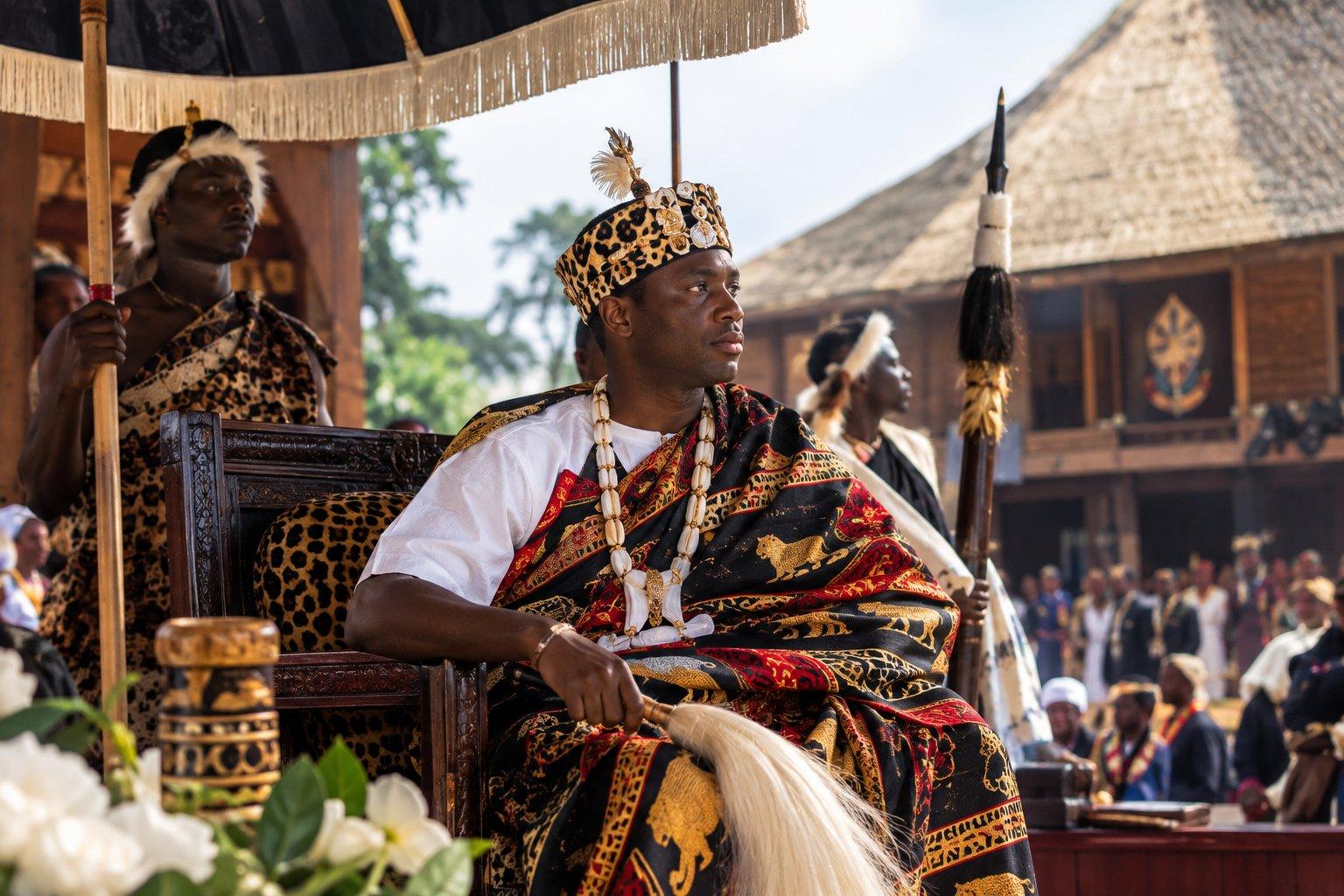
On 31 July 1993, Ronald Muwenda Mutebi II was enthroned as the 36th Kabaka, or king, of Buganda. His coronation marked the restoration of a kingdom that Uganda's post-independence government had abolished decades earlier. The restoration did not recreate the old Buganda state. The Kabaka was not returning as a political ruler with the powers of a government. Instead, Buganda returned as a cultural institution, with a royal household, clan structures, ceremonies, administrative institutions and a parliament known as the Lukiiko. Under Uganda's Constitution, traditional leaders cannot exercise the administrative, legislative or executive powers of government.
That distinction is important because the story of Buganda is not simply a story about a king surviving the collapse of a monarchy. It is about what happens when an institution that once exercised political power is abolished, while the social identities, customs and historical loyalties connected to it remain.
Buganda was one of several powerful kingdoms that existed in the territory that later became Uganda. It became particularly important during the colonial period because Britain built much of its administration in the Uganda Protectorate around the existing political structures of Buganda. That arrangement gave Baganda chiefs and administrators influence far beyond the kingdom's traditional borders, while also contributing to tensions with other communities.
After independence in 1962, those unresolved questions about how much authority Buganda and the other kingdoms should retain became part of a larger struggle over what Uganda itself should be: a centralized republic, or a state that preserved substantial political authority for its traditional kingdoms.
The conflict reached a crisis in 1966. Prime Minister Milton Obote suspended the constitution, took direct control of government, and the army attacked the Kabaka's palace at Mengo. Edward Mutesa II, who was simultaneously Uganda's president and Buganda's Kabaka, went into exile in Britain. The following year, Uganda adopted a new constitution that declared the country a republic and formally abolished its traditional kingdoms.
More than two decades later, the monarchy returned.
But it returned to a different country, under a different constitutional order, and with a fundamentally different role.
That history helps explain why Buganda remains so important to understanding Uganda today.
Before Uganda was a country
The modern Republic of Uganda was created from territories and political communities that already had their own histories, rulers, languages and institutions. The borders of the present-day country therefore do not describe an ancient political unit. They brought together several societies that had developed independently and sometimes competed with one another.
Buganda was one of the most powerful of these precolonial states. To its west was Bunyoro, another major kingdom whose rulers competed with Buganda for influence. Further southwest were Ankole and Toro, each with its own political traditions and royal institutions. In other parts of the territory were societies organized through different forms of clan leadership, chiefdoms and local political structures.
Buganda's own history combines written records with oral traditions. According to Buganda tradition, Kintu was the founding Kabaka, but the kingdom's historical accounts also preserve alternative traditions about its early formation. These stories should therefore be understood as traditions about Buganda's origins rather than treated as precisely documented biographies of a historical individual.
What is much clearer is the institutional structure that developed over time.
The Kabaka stood at the centre of the kingdom, but Buganda was not simply a territory in which one king personally made every decision. Authority operated through a network of chiefs, clan leaders and administrative institutions. Clans remained fundamental to social organization, and Buganda today describes itself as having more than 50 clans.
The Lukiiko, often translated as the parliament of Buganda, is one of the kingdom's important institutions. It should not be confused with Bulange, the building in Mengo where the kingdom's central administrative institutions are based. The distinction matters: Bulange is the institutional complex; the Lukiiko is the parliament.
This institutional history also helps explain why the abolition of the monarchy did not necessarily erase Buganda as a social system. A government can abolish a constitutional office. It is much harder to eliminate the family networks, clan identities, language, religious practices, memories and customs that exist around it.
How Britain turned Buganda into a political intermediary
European involvement in the region intensified during the nineteenth century. British explorers reached Buganda during the 1860s, and British influence subsequently expanded through a mixture of missionary activity, diplomacy, military force and colonial administration.
In 1894, Britain formally established the Uganda Protectorate. Buganda became central to the new colonial arrangement because it already had a centralized political structure that British officials could work with.
This produced one of the most consequential features of colonial Uganda.
Britain did not have to build every local administrative structure from scratch. Instead, it could use existing Buganda institutions and Baganda chiefs as intermediaries in parts of the wider protectorate. This expanded the reach of Baganda administrators beyond the kingdom's traditional territory.
The arrangement was useful to the colonial government, but it had consequences after independence.
For communities outside Buganda, the presence of Baganda chiefs acting within a British colonial system could be experienced as an extension of colonial authority rather than as a neutral form of local administration. At the same time, some Baganda leaders had their own reasons for wanting to preserve the kingdom's autonomy.
That produced a difficult political question that did not disappear when Britain left:
How could Uganda become one independent country while accommodating political communities that had their own longstanding institutions and ideas about authority?
Uganda would spend much of the first years of independence struggling with that question.
Independence created an unusual political arrangement
Uganda became independent on 9 October 1962.
Milton Obote became prime minister, while Edward Mutesa II became Uganda's first president. Mutesa was not only the country's president. He was also the Kabaka of Buganda.
That arrangement reflected the constitutional compromise of the period. Uganda was independent, but the new state still contained kingdoms whose rulers retained important constitutional and cultural positions.
The arrangement was unstable because the major political forces disagreed over how much power should belong to the central government and how much authority should remain with the kingdoms.
The disagreement became a crisis in 1966.
Obote suspended the constitution and assumed direct control of the government. The army, commanded by Idi Amin at the time, attacked the Kabaka's palace at Mengo. Mutesa fled Uganda and eventually settled in London, where he died in 1969.
The following year brought the more decisive institutional break.
In September 1967, Uganda adopted a new constitution that transformed the country into a republic and abolished the traditional kingdoms. The old constitutional role of the Kabaka disappeared, along with the formal political status of Buganda and the other kingdoms.
So the dates matter.
1966 was the year of the constitutional crisis and attack on the Kabaka's palace.
1967 was the year the traditional kingdoms were formally abolished.
The distinction is easy to lose in popular retellings, but it explains how the political destruction of the old system actually occurred.
The years when the kingdoms disappeared from government
For the next several decades, Buganda had no recognized royal government.
The monarchy's political institutions had been dismantled. Its formal constitutional authority was gone. Uganda's subsequent political history became even more turbulent.
Obote was overthrown in 1971 by Idi Amin.
Amin's eight-year rule was marked by severe human-rights abuses, political persecution, disappearances and killings. The Acholi and Langi were particularly targeted because of their association with Obote and their significant representation in the armed forces. A 1978 estimate by the International Commission of Jurists put the number of people murdered during Amin's rule at more than 100,000, while other estimates have been substantially higher. There is no single universally accepted death toll.
Amin also ordered the expulsion of Asians from Uganda in 1972. The population affected was largely South Asian, including both Ugandan citizens and non-citizens, and the exact number expelled varies among contemporary estimates. U.S. diplomatic records from the period show that thousands of Asians were exempted from the expulsion, including Ugandan citizens, while tens of thousands were forced to leave.
The economic consequences were severe. Many members of Uganda's Asian community were deeply involved in trade, distribution, manufacturing and professional occupations. Their removal disrupted businesses and contributed to the deterioration of Uganda's modern economy under Amin. Contemporary U.S. diplomatic assessments explicitly linked the economic damage to the expulsion and subsequent nationalization policies.
Amin was overthrown in 1979.
Obote returned to power, but his second government faced another period of armed conflict and serious human-rights abuses. In 1986, Yoweri Museveni's National Resistance Movement took power after a prolonged guerrilla war.
The political order changed again.
But the question of the kingdoms had not disappeared.
The return of Buganda
In 1993, the Ugandan government restored the traditional kingdoms as cultural institutions.
Ronald Muwenda Mutebi II was enthroned as Kabaka of Buganda on 31 July 1993. Buganda's own institutional history describes his enthronement as the restoration of the kingdom after its abolition.
The 1995 Constitution then provided a legal framework for traditional and cultural leaders.
Article 246 allows traditional or cultural leaders to exist according to the customs and wishes of the communities they represent. But the Constitution also places a clear limit on what they can do: a traditional or cultural leader cannot exercise the administrative, legislative or executive powers of Uganda's government or local governments. Traditional leaders are also prohibited from participating in partisan politics while holding their traditional office.
This is why describing Buganda as a "restored kingdom" can be misleading if readers interpret the word kingdom in its old political sense.
Buganda is a kingdom culturally and institutionally, but it is not a sovereign state inside Uganda.
The Kabaka does not run Uganda.
He does not make national laws.
The Buganda government does not replace Uganda's elected government.
Instead, the institution operates in the cultural sphere, maintaining royal traditions, clan relationships, historical sites, ceremonies and internal administrative structures.
The Lukiiko remains the parliament of Buganda's cultural institution, while the Katikkiro, or executive prime minister, oversees much of the kingdom's administration.
The result is an unusual coexistence: a modern republic contains constitutionally recognized traditional institutions that have no sovereign governmental authority but continue to matter socially and culturally.
Uganda is much larger than Buganda
Buganda's importance should not obscure Uganda's wider diversity.
The 2024 national census counted more than 45.9 million people. The Baganda were the country's largest single ethnic group, numbering about 7.04 million people. They were followed by communities including the Banyankore, Basoga, Iteso, Bakiga and Langi.
That diversity is visible in Uganda's languages, music, ceremonies, food and political history.
The Acholi and Lango of northern Uganda have histories that were profoundly affected by the violence of the Amin period and, later, by the Lord's Resistance Army insurgency.
At the height of that conflict, about 1.84 million people were internally displaced in northern Uganda, according to UNHCR. The Lord's Resistance Army became notorious for attacking civilians and abducting children, many of whom were forced into military or other roles.
The consequences were not limited to the years when the fighting was most intense. Displacement disrupted farming, education, family life and local economies, and many communities had to rebuild after people returned to villages they had been unable to live in safely for years.
Elsewhere, the Karamojong have maintained distinctive pastoral traditions in northeastern Uganda, while communities in western Uganda developed their own royal and clan institutions.
Uganda's cultural heritage listings illustrate how wide this diversity is. UNESCO recognizes or has listed traditions including Bigwala gourd-trumpet music and dance from the Busoga Kingdom, Empaako naming traditions among several western Ugandan communities, the Koogere oral tradition of Basongora, Banyabindi and Batooro communities, Lango cleansing traditions and Ma'di bowl-lyre music and dance.
The result is a country in which Buganda is enormously important, but is still only one part of a much larger cultural landscape.
Language: why Luganda travels beyond Buganda
Uganda has no single indigenous language spoken by everyone.
The Constitution establishes English as the official language and Swahili as the second official language, with Parliament determining the circumstances in which Swahili is used. Other Ugandan languages can also be used in education and for legislative, administrative or judicial purposes under the law.
Luganda is particularly influential in central Uganda and Kampala and is widely understood beyond Buganda itself.
Its reach is partly connected to Buganda's historical political and economic influence. During colonial rule, Baganda chiefs and administrators worked in different parts of the protectorate, while Luganda became useful in trade, administration and missionary education.
That does not make Luganda Uganda's universal lingua franca. The country remains strongly multilingual, and language use varies considerably by region.
Religion changed Uganda, but did not erase older traditions
Christianity is now the dominant religious tradition in Uganda.
The 2024 census recorded Roman Catholics as the largest single religious affiliation at 36.2% of the population, followed by Anglicans associated with the Church of Uganda at 29.0% and Pentecostal or Evangelical Christians at 14.3%. Muslims accounted for 13.2%.
This means Uganda is overwhelmingly Christian when the major Christian denominations are considered together, but it would be inaccurate to describe Roman Catholics alone as a majority.
Islam has a much longer history in the region than the colonial period. Muslim traders and networks reached the Great Lakes before British colonial rule, and Islam became established in Buganda and elsewhere during the nineteenth century.
Christianity expanded rapidly from the late nineteenth century through Catholic and Protestant missionary activity.
One of the most consequential episodes occurred during the reign of Kabaka Mwanga II, when Christian converts attached to both Catholic and Anglican missions were executed in the 1880s.
The group now remembered as the Uganda Martyrs is therefore larger than the group formally canonized by the Catholic Church.
In 1964, Pope Paul VI canonized 22 Catholic Ugandan martyrs: Charles Lwanga, Matthias Mulumba Kalemba and their 20 companions.
The Anglican Church also commemorates Ugandan Christians who were killed during the same period.
Every year on 3 June, Uganda observes Uganda Martyrs' Day, and Namugongo becomes the centre of large religious pilgrimages.
The story also shows why formal religious affiliation does not tell the entire story of belief.
Buganda historically had its own religious traditions involving the balubaale, spiritual beings associated with particular places, powers and domains. Formal identification with traditional religion is now very small: the 2024 census recorded only 0.1% of the population under traditional religion. But census categories measure declared religious affiliation, not every customary practice a person may observe alongside Christianity or Islam.
That distinction matters when discussing African religious life. A person can formally identify as Christian while also participating in family, clan or cultural practices that have much older origins.
Food tells another part of the story
Ugandan food varies by region because the country itself varies by ecology, agriculture and cultural history.
Matoke, the cooking banana commonly prepared by steaming and mashing, is particularly associated with central and western Uganda and is one of the country's best-known staple foods. It is often served with sauces made from groundnuts, meat, beans or vegetables.
Maize meal, commonly called posho, is also widely eaten, alongside cassava, sweet potatoes, millet and other locally important crops.
In Buganda, oluwombo, commonly called luwombo, is a notable traditional dish. Meat, chicken, fish or groundnut-based preparations can be cooked in banana leaves, allowing the food to steam inside the parcel.
Then there is the Rolex, one of Uganda's best-known modern street foods.
A Rolex is made by placing an omelette, often with vegetables, inside a chapati and rolling the two together. The name is generally understood as a playful contraction of "rolled eggs", not a reference to the watch company. The exact origin story is less certain than the dish's popularity, with different accounts associating its early development with different parts of Uganda.
Its importance is less about a single inventor than about what happened afterwards. The combination was cheap, filling and easy to prepare, making it particularly successful as an urban street food.
Uganda's coffee story is older and economically much larger.
Coffee was introduced into cultivation in Uganda during the colonial period, with Arabica introduced around 1900, while Robusta is indigenous to Uganda. Coffee subsequently became one of the country's major export crops.
Coffee remains central to Uganda's agricultural economy. The country has also developed a growing urban coffee culture, particularly in Kampala, where locally grown coffee is increasingly consumed domestically rather than being treated solely as an export commodity.
Makerere and the making of modern Uganda
One of the institutions that helped connect Uganda to the wider intellectual life of East Africa is Makerere.
Makerere began in 1922 as a technical school with just 14 day students studying subjects including carpentry, building and mechanics. It expanded into a broader institution and by 1935 had become a centre for higher education in East Africa. In 1949, it became a University College affiliated with the University of London.
Its significance extended far beyond Uganda.
As higher education expanded, Makerere became an important training ground for professionals and political leaders from across East Africa. It helped create an educated African professional class at a time when colonial governments were gradually expanding access to higher education.
That made Makerere part of a much larger transformation.
Uganda was not entering independence with only traditional institutions on one side and a modern government on the other. It had kingdoms, clans, churches, schools, universities, commercial networks, colonial administrative structures and emerging nationalist movements all operating at the same time.
The tension between those institutions would shape the country's politics for decades.
Clothing and craft
Some of Uganda's best-known garments also show how cultural forms can travel beyond their original communities.
The gomesi, a long women's dress with a distinctive square neckline, puffed shoulders and sash, is strongly associated with Buganda and is now worn in many parts of Uganda, particularly for formal occasions.
The kanzu, a long formal robe worn by men, is another important Ugandan garment. Its history is connected to the wider Islamic and Swahili cultural networks of East Africa as well as its adoption within Ugandan communities.
Then there is barkcloth.
In Buganda, barkcloth is made from the inner bark of the Mutuba tree, Ficus natalensis. Craftspeople harvest the bark and repeatedly beat it with wooden mallets until it becomes a broad, soft sheet that can be worn or used for other purposes.
UNESCO describes the technique as prehistoric and notes that it predates the invention of weaving. The craft was traditionally carried out by members of the Ngonge clan for the royal family and for the wider Baganda community.
Barkcloth also carried social distinctions. Ordinary barkcloth was traditionally terracotta-coloured, while barkcloth associated with kings and chiefs could be dyed black or white and worn differently to indicate status.
In 2008, UNESCO placed barkcloth making on the Representative List of the Intangible Cultural Heritage of Humanity.
The designation does not mean the tradition exists only as a museum piece. UNESCO has supported efforts to train younger craftspeople, encourage sustainable cultivation of Mutuba trees and create income-generating uses for barkcloth.
That has opened space for the material to appear in contemporary craft, design and fashion while remaining connected to its older cultural uses.
Music belongs to many Ugandas
Buganda has an important musical tradition, including instruments such as the endongo, a bowl lyre, and the amadinda, a xylophone associated with Buganda's royal musical history.
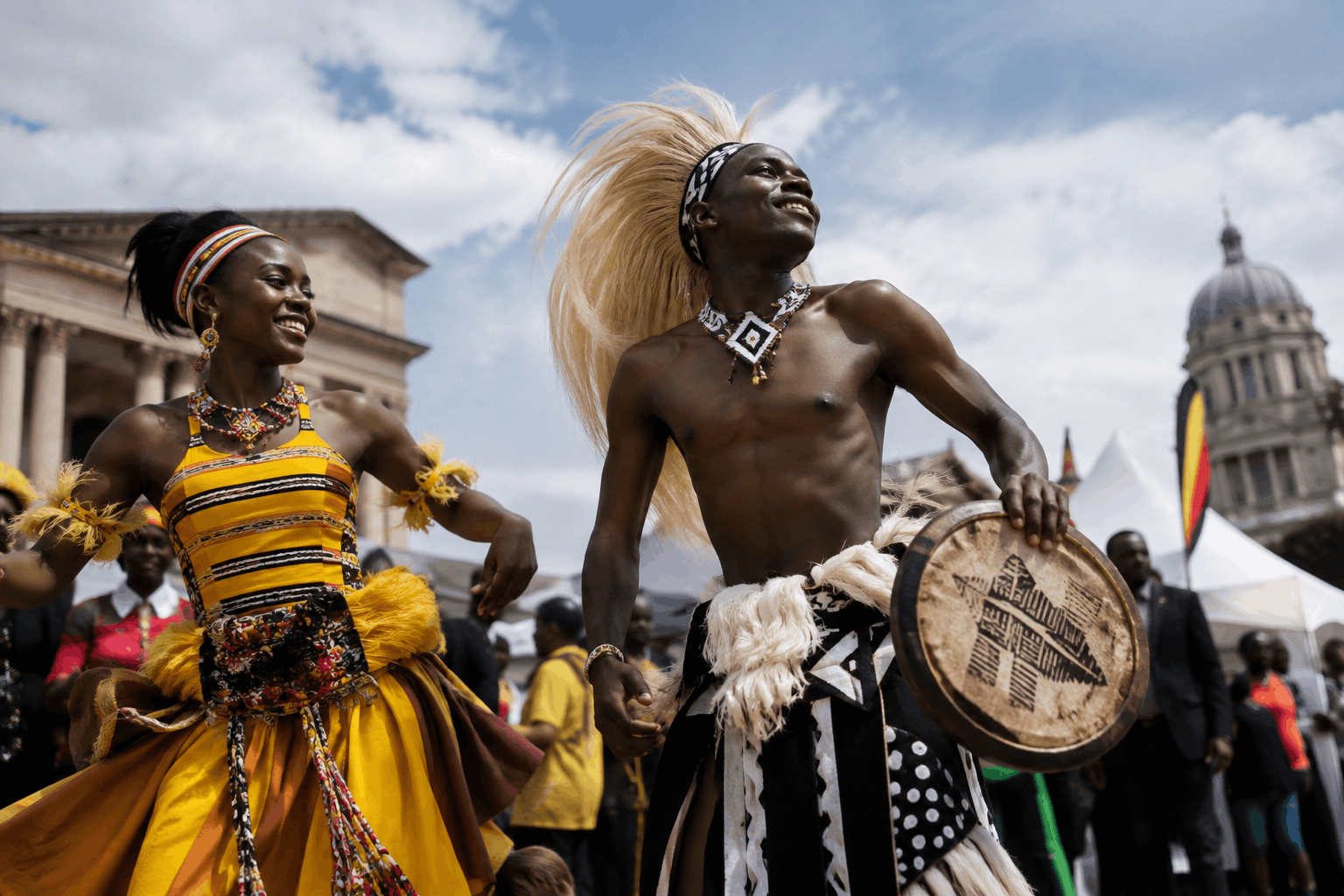
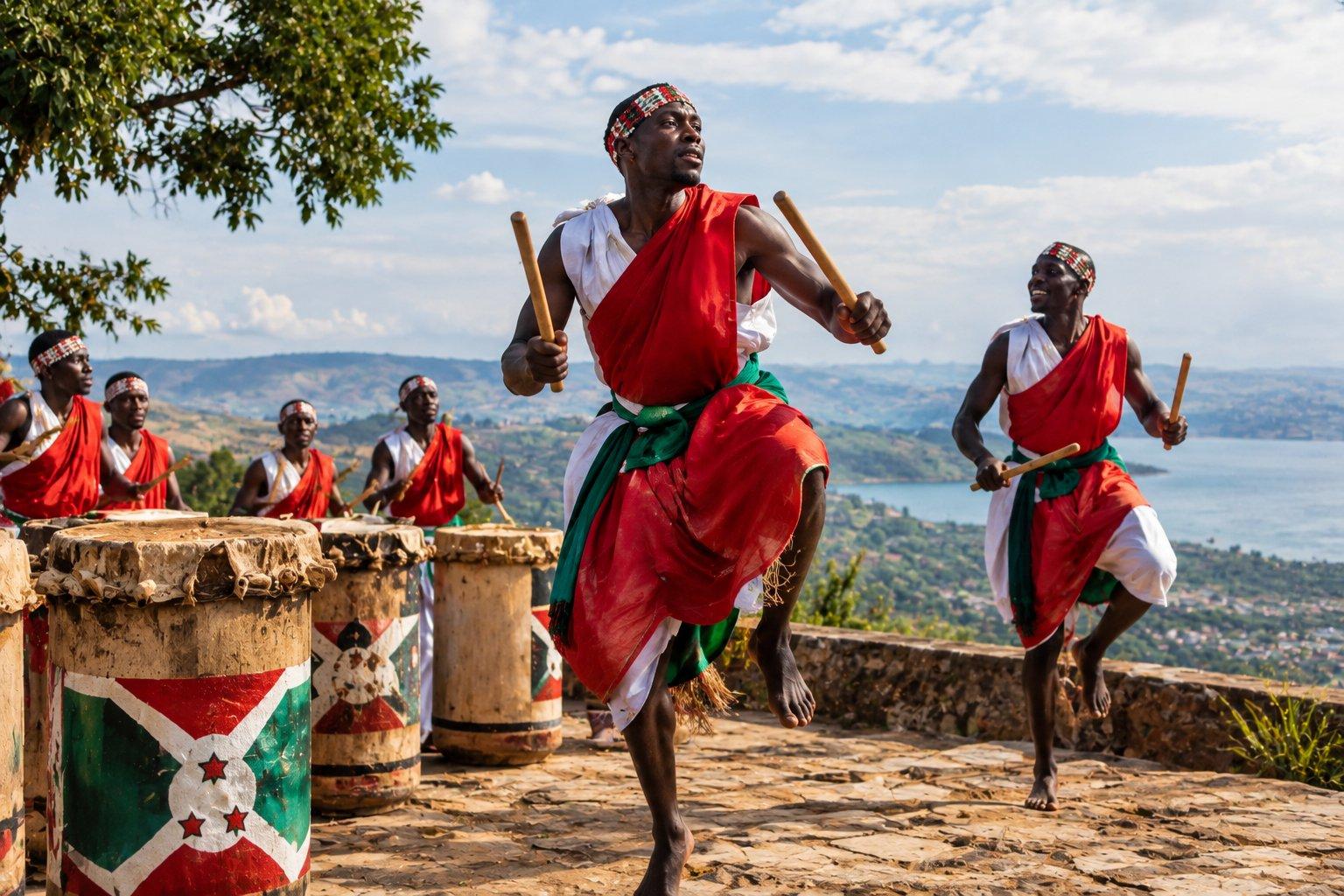
The country's different communities developed their own instruments, rhythms, songs and dances, often linked to ceremonies, work, storytelling, royal courts or religious life.
UNESCO's Ugandan heritage list makes this particularly clear. Bigwala, for example, is the gourd-trumpet music and dance of the Busoga Kingdom. Ma'di communities have their own bowl-lyre traditions. The Batooro, Banyoro, Batuku, Batagwenda and Banyabindi maintain the Empaako tradition, in which particular praise names are used as part of social identity and interaction.
Modern Ugandan popular music draws from this older cultural landscape while also absorbing influences from reggae, dancehall, hip-hop, Afrobeat and other international forms.
Kampala has become an important centre for East African popular culture, with musicians using Luganda, English, Swahili and other languages depending on their audience.
Music has also become part of political life. Bobi Wine, who first became widely known as a musician, later entered electoral politics and became a prominent opposition figure. His career illustrates how popular entertainment and political participation can overlap in contemporary Uganda, although the political significance of his career remains contested and should be understood through his documented political activities rather than through his celebrity status alone.
Traditional institutions still shape modern identity
Buganda's clan system remains important because a clan is not merely a surname.
Clan identity connects individuals to a wider network of ancestry and customary relationships. It can influence questions of marriage, kinship, cultural obligations and social belonging.
The Buganda Kingdom's institutions continue to maintain these relationships even though they no longer constitute a separate governmental state.
This is one reason the restoration of the kingdom in 1993 had meaning beyond the physical return of a royal title.
The institution provided a framework through which people could organize cultural identity after decades in which the monarchy had been officially abolished.
At the same time, Buganda is not frozen in the precolonial past.
Its institutions operate inside a modern republic. Baganda live in cities, attend universities, work in corporations, participate in national politics, use social media and move across national and international borders. Traditional institutions therefore coexist with modern forms of identity rather than replacing them.
The Batwa and the cost of conservation
Uganda's cultural history also contains conflicts that cannot be separated from questions of land.
The Batwa, an Indigenous forest-associated people of the Great Lakes region, lived in and depended upon forests in southwestern Uganda. As forests were converted into protected areas, Batwa communities were displaced from ancestral territories, including areas associated with Bwindi, Mgahinga and Echuya.
The conservation of these forests has been important for protecting biodiversity, including the mountain gorillas of Bwindi and Mgahinga. But conservation also created a profound human-rights problem when communities with longstanding relationships to the forests were excluded from them.
The result is a difficult question with no easy answer:
How do you protect an ecosystem without treating the people who have historically lived within it as though they were simply an obstacle to conservation?
The Batwa have pursued recognition and redress for the loss of their ancestral lands, and the issue has remained the subject of legal and international attention.
It is an important reminder that Uganda's cultural heritage cannot be separated from land, because traditions are often connected to the places where communities lived, farmed, worshipped, hunted or conducted ceremonies.
What the restored kingdoms can and cannot do
Uganda's constitutional arrangement is unusual enough that it is worth stating plainly.
A traditional leader can be recognized by the state.
A cultural institution can own property and maintain administrative structures.
A kingdom can preserve customs, ceremonies, historical sites and cultural institutions.
But a traditional leader cannot exercise Uganda's governmental legislative, executive or administrative powers. The Constitution expressly prohibits that.
This means Buganda's restoration did not reverse the creation of the Ugandan republic.
It restored a cultural institution inside that republic.
That distinction also applies to Uganda's other kingdoms. Their restoration created space for traditional institutions to function again, but not as sovereign states.
The arrangement remains part of Uganda's political history because it represents a compromise between two forms of legitimacy: the authority of the modern constitutional state and the cultural legitimacy traditional institutions retain within their communities.
Uganda's long political story is still unfolding
The return of the kingdoms did not end Uganda's political conflicts.
Yoweri Museveni, who came to power in 1986, remained president for decades. Constitutional amendments changed the rules governing presidential tenure. A 2005 amendment removed presidential term limits, while a 2017–2018 constitutional process removed the presidential age limit. Those changes became central to debates about the concentration and duration of presidential power.
Museveni was sworn in for a seventh presidential term on 12 May 2026, extending his presidency into a fifth decade since he first took power in 1986.
The government's supporters have pointed to the long period without a successful national military overthrow and to Uganda's development since the instability of the 1970s and early 1980s. Critics, including international human-rights organizations, have raised concerns about restrictions on opposition activity, freedom of expression, journalists and political participation.
Those are political arguments rather than questions with one uncontested interpretation. What is historically clear is that Museveni's government has lasted far longer than the governments that preceded it after independence, and that Uganda's current political system is therefore shaped by both the memory of earlier instability and the debate over prolonged incumbent rule.
The kingdom is not the country, and the country is not only its politics
That distinction brings the story back to Buganda.
The kingdom survived British colonial rule, the creation of independent Uganda, the 1966 crisis, its formal abolition in 1967, decades without constitutional recognition, and its restoration in 1993.
But the survival was not a matter of a government secretly continuing to operate unchanged underground.
The political kingdom disappeared.
The cultural system did not.
Clan identities remained. Luganda remained. Historical memories remained. Royal sites remained. Families continued to identify themselves through their clans. Religious and cultural ceremonies continued in different forms. And when the political circumstances changed, there was already a social world into which the restored institution could return.
That is why the constitutional restoration of the kingdom was possible.
There was something to restore.
Uganda's living heritage
Today, Uganda's cultural life extends far beyond the royal institutions of Buganda.
On 3 June, pilgrims travel to Namugongo for Uganda Martyrs' Day. In western Uganda, different communities maintain their own naming and ceremonial traditions. In Busoga, Bigwala music preserves a royal musical tradition. In northern Uganda, communities continue to preserve cultural practices shaped by histories of displacement and conflict. Barkcloth makers continue working with Mutuba trees and wooden mallets. Coffee farmers remain part of one of the country's most important export industries.
And in Mengo, Buganda's institutions continue to operate within the limits of Uganda's constitutional system.
The Lukiiko remains the kingdom's parliament. The Kabaka remains the cultural leader of Buganda. The kingdom maintains its own administrative institutions and works to preserve Baganda cultural practices.
The important point is not that an old political system somehow defeated a modern one.
It did not.
Uganda remains a republic, and the Constitution is clear about where governmental authority lies.
What happened instead is more interesting.
An institution that had once exercised political power was abolished by the state. The state could remove its legal authority, but it could not remove the historical identities, social relationships and cultural practices that had grown around it. Decades later, those surviving foundations made restoration possible.
Uganda's story therefore cannot be reduced to its dictators, presidents, elections or periods of conflict. Those events matter enormously, but they exist alongside older systems of belonging that have continued to adapt.
The same country that experienced the abolition and restoration of a kingdom also has a prehistoric barkcloth tradition recognized by UNESCO, a university that began with 14 technical students in 1922, religious pilgrimage on a massive scale, dozens of languages and cultural traditions, and communities whose identities long predate the borders of the modern state.
Uganda is sometimes described as the "Pearl of Africa," a phrase famously used by Winston Churchill in his 1908 book My African Journey. The description became closely associated with the country's landscapes and natural richness and remains part of Uganda's tourism identity.
But Uganda's history gives the phrase another dimension.
The country contains institutions that have been dismantled and rebuilt, cultures that have survived political upheaval, traditions that have adapted to new religions and economies, and communities still negotiating what should be preserved, what should change and who gets to decide.
Buganda's restored kingdom is one particularly visible example.
It is no longer the government of a sovereign kingdom.
It is something different: an old institution living inside a modern republic, carrying history forward without possessing the political power it once had.
And that may be the most useful way to understand Uganda's cultural history: not as a country where the past survived unchanged, but as one where older institutions have repeatedly adapted to circumstances that changed around them.