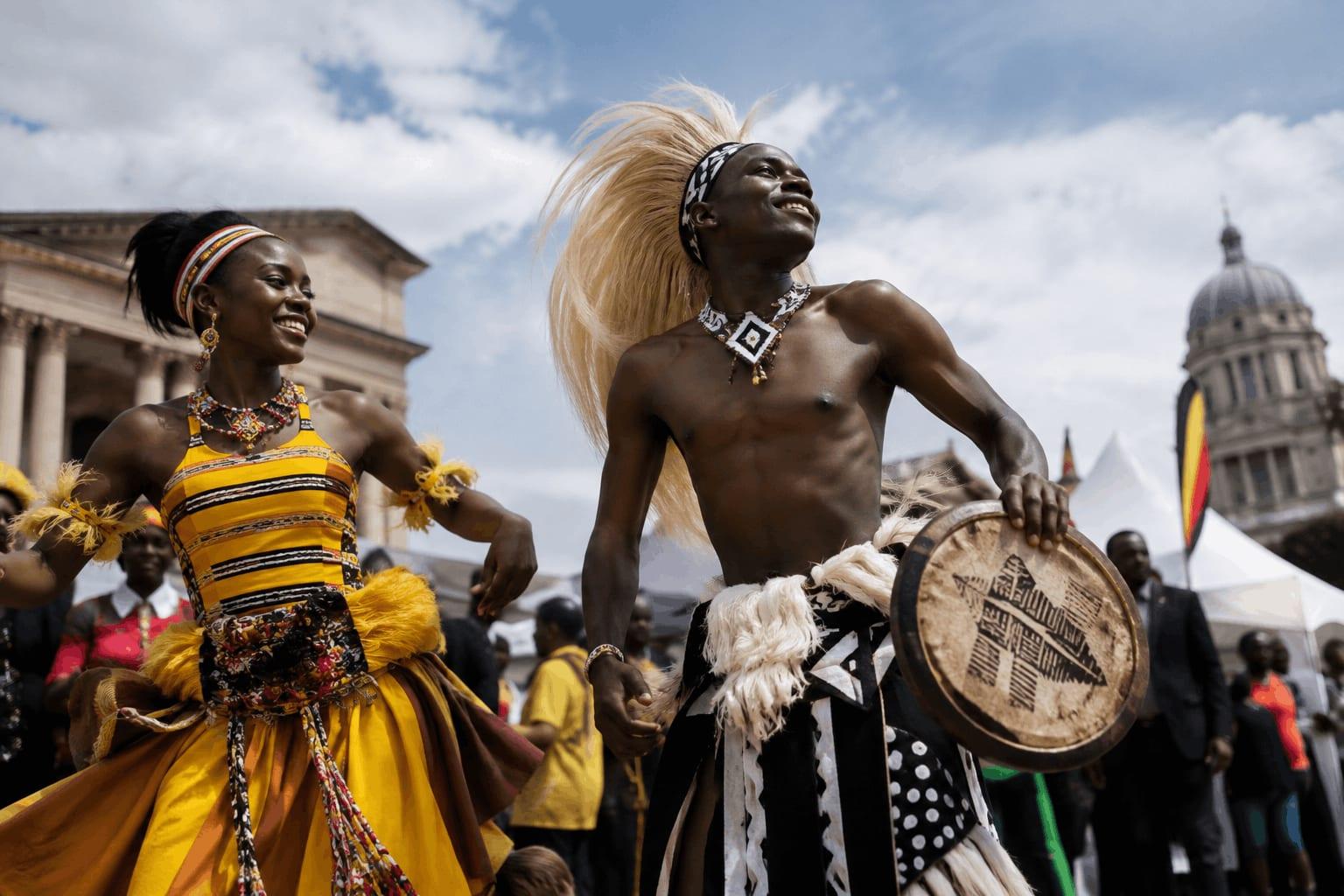
Tourism is more than holidays and tours. Explore how tourism connects people, businesses, culture and markets, supports trade, creates opportunities and can help strengthen economic connections across Africa.
When most people hear “tourism,” they probably picture a tour bus, a beach, a hotel, a museum, a safari or somebody holding up a sign at the airport. And that is tourism. But it is only a very small part of it.
When we talk about trade, we picture something else entirely. Containers moving through ports. Trucks crossing borders. Farmers exporting cocoa. Manufacturers selling products to another country. Businesses negotiating deals. They look like two different worlds. They are not.
Tourism moves people. Trade moves value. And the two are far more connected than we often realize.
This matters particularly for Africa, where we are trying to build economies that are less dependent on exporting raw materials and more capable of creating, exchanging and retaining value within the continent. Because when people move, something else can move with them.
Money.
Products.
Services.
Ideas.
Knowledge.
Relationships.
Opportunities.
Sometimes, even a completely different understanding of another place. And that is where tourism becomes much bigger than creating tours.
First, what exactly is tourism?
In this section
Neither is a restaurant meal, a bottle of water, a flight, a haircut or a visit to a museum.
Tourism isn't a tour. A tour is a product. Someone puts together a route, a guide, transportation, maybe lunch and a few activities, and sells that experience. Tourism is the much bigger system that product sits inside.
The international statistical definition of tourism is broader than most people realize. Under the UN's International Recommendations for Tourism Statistics, a visitor is someone who travels outside their usual environment for less than a year, for a purpose other than being employed by a resident entity in the place they visit.
Look at what that means.
The businesswoman flying to another country to meet a supplier is a visitor.
The person travelling for medical treatment is a visitor.
The student studying abroad is a visitor.
The person attending a conference is a visitor.
The pilgrim travelling for religious reasons is a visitor.
Someone travelling home for a funeral can be a visitor.
A consultant spending two weeks working on a project can be a visitor.
Leisure is just one reason people travel. And a guided tour is just one product people buy when they travel.
Tourism is also not only international. It can be local or regional. In fact, most tourism spending happens within people's own countries.
The World Travel & Tourism Council estimates that Travel & Tourism contributed US$11.6 trillion to the global economy in 2025, about 9.8% of global GDP, and supported 366 million jobs. But look inside that number.
Domestic visitors spent about US$5.63 trillion, while international visitors spent about US$2.02 trillion. So roughly three-quarters of tourism spending did not involve crossing an international border at all.
This means that tourism is not simply about attracting foreigners. A country can have a significant tourism economy because its own people are travelling, eating, staying in hotels, attending events, visiting attractions and spending money in different parts of the country. And tourism does something else that makes it particularly interesting. It cuts across other industries.
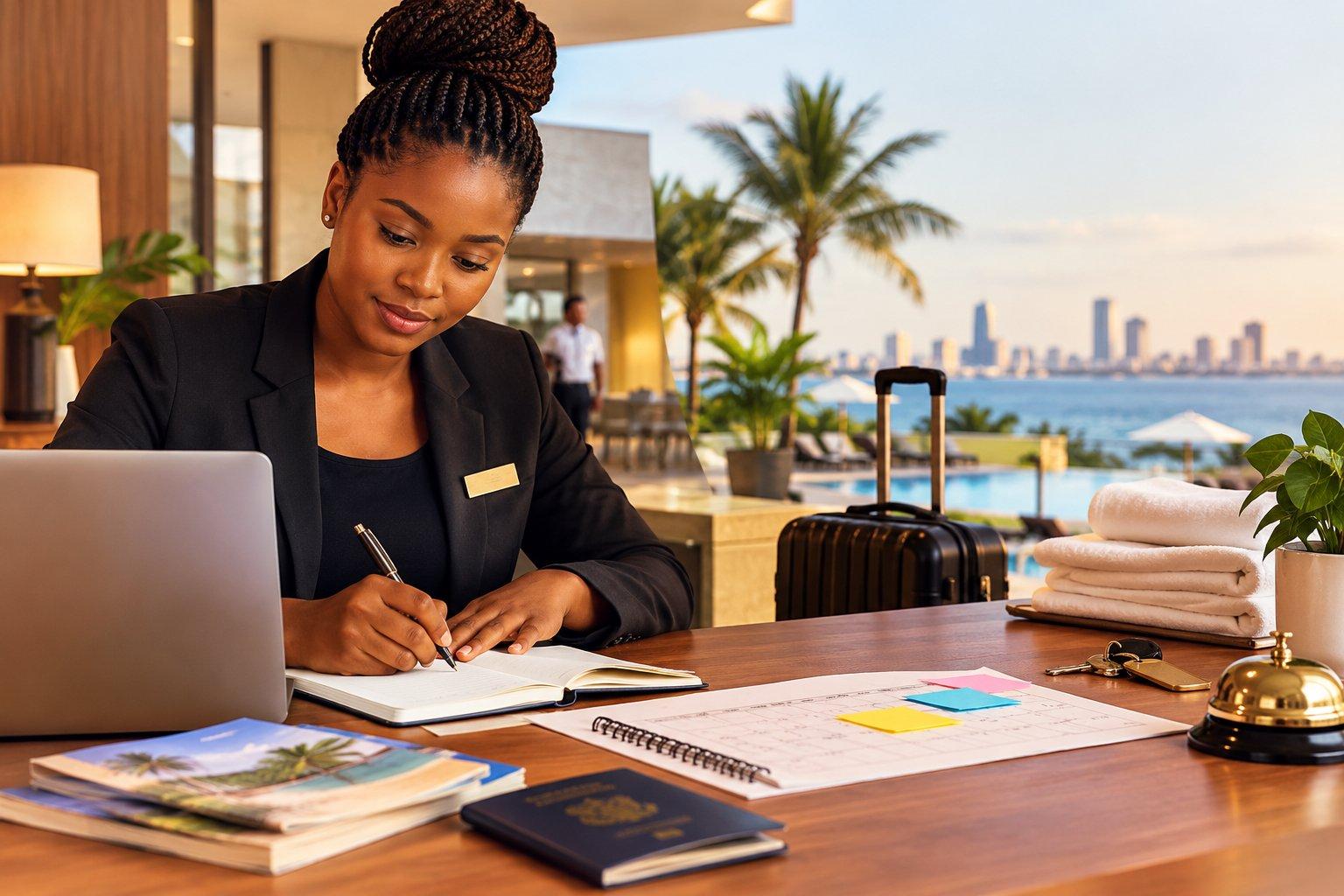
A taxi ride is not normally called a tourism product. Neither is a restaurant meal, a bottle of water, a flight, a haircut or a visit to a museum. But when a visitor buys those things, they become part of tourism spending. That is why tourism touches accommodation, food and beverage, transport, vehicle rental, travel agencies, cultural activities, sports, entertainment, recreation and retail. The visitor is the common factor.
Tourism is already trade
In this section
The visitor crossed the border, but many of the services they consumed did not cross the border to meet them.
The World Trade Organization classifies tourism as part of international trade in services. It is a classic example of what the WTO calls Mode 2 trade, or “consumption abroad,” where a consumer travels to another country to consume a service there. Think about someone travelling from Nigeria to Rwanda.
They stay in a hotel.
They eat at restaurants.
They use local transportation.
They hire guides.
They visit attractions.
They attend an event.
They may buy locally produced clothing, food, art or crafts.
The visitor crossed the border, but many of the services they consumed did not cross the border to meet them. The consumer came to the service. That is still trade.
A hotel room cannot be put in a shipping container and exported to another country. The customer has to come to the hotel.
A local guide cannot package a cultural experience and send it through a port. The visitor has to come and experience it.
Tourism therefore gives countries another way to participate in international trade. And it is not only hotels and tour operators.
Tourism and travel-related services include accommodation, restaurants, travel agencies, tour operators, tourist guides and related services. Tourism also connects closely with transport, cultural and creative services, finance and insurance. So tourism is already part of the services economy. But that is only the beginning.
Tourism creates markets around itself
In this section
Local manufacturing can supply furniture, food, textiles, cosmetics and other products used by tourism businesses.
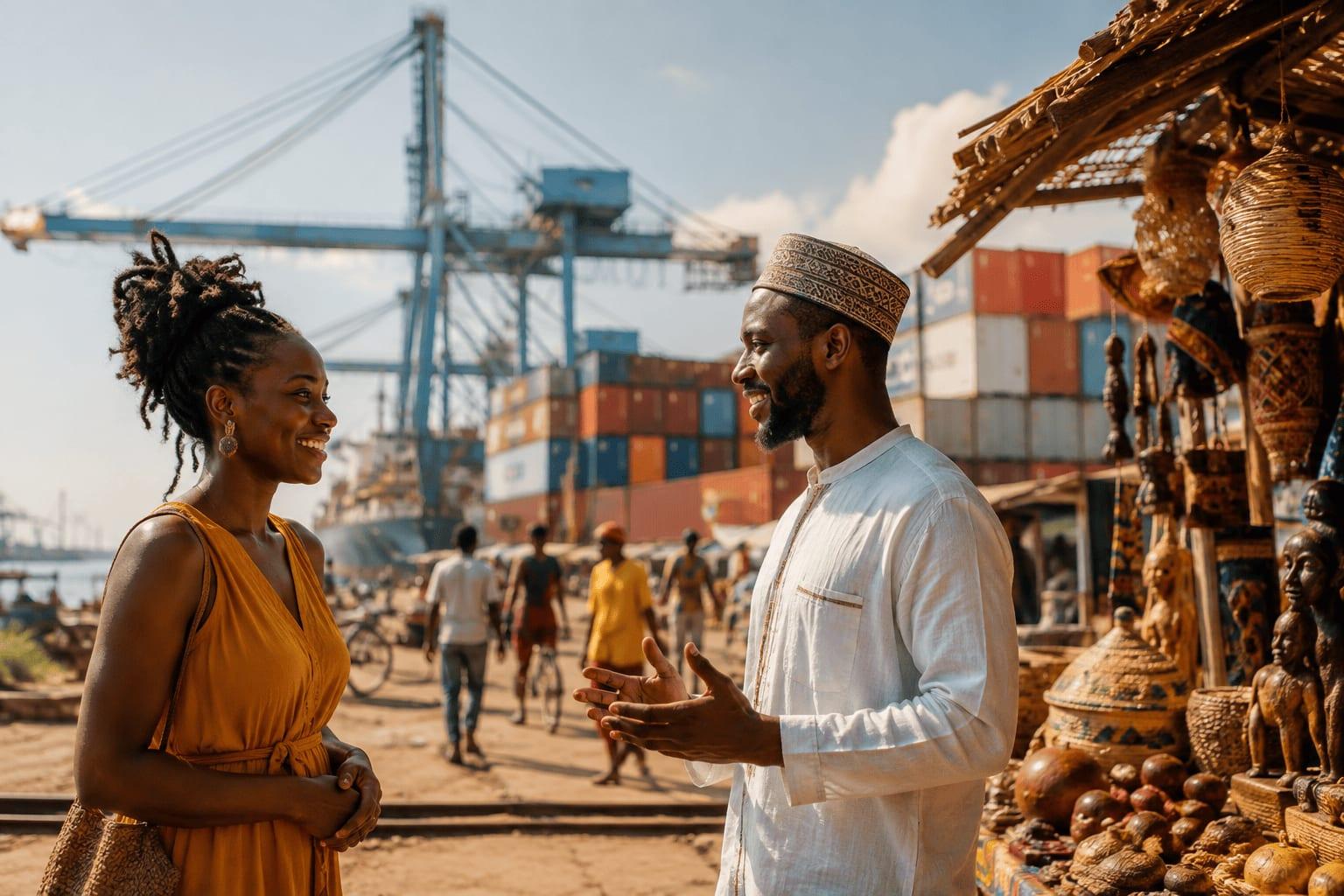
Imagine a visitor arrives in Ghana. They book a locally owned guesthouse. The guesthouse buys vegetables from a farmer. The farmer buys seeds and equipment. The visitor eats at a restaurant. The restaurant employs cooks, cleaners and servers. The restaurant buys fish from a local supplier. The visitor hires a local guide. The guide knows a photographer. The photographer sells prints to visitors. The visitor buys a handmade basket. The basket maker uses the income to support their household and buy more materials.
None of this looks like the traditional image of international trade. There is no container. No cargo ship. No dramatic border crossing. But there is an economic chain. And that chain is one of the beautiful things about tourism. Tourism creates demand for other sectors.
Agriculture supplies hotels and restaurants. Creative industries supply entertainment, design, fashion, music and cultural experiences.
Transportation connects visitors to destinations. Technology enables bookings, communication and payments.
Financial services facilitate transactions. Construction supplies hotels and tourism infrastructure.
Retail gives visitors somewhere to spend. Local manufacturing can supply furniture, food, textiles, cosmetics and other products used by tourism businesses.
In other words, tourism creates a market around itself. And that brings us directly to trade.
But how much of that value stays?
In this section
A tourism economy can grow while much of the value leaks out through imports or external ownership.
A destination can have lots of visitors and still capture relatively little of the value created by tourism.
The hotels may import most of their food.
The furniture may come from somewhere else.
The tour operator may be foreign-owned.
The souvenirs may be manufactured outside the country.
International booking platforms may capture part of the revenue.
Local businesses may remain disconnected from the tourism supply chain.
So the question cannot simply be:
“How many tourists came?”
A better question is:
“How much value did their presence create, and how much of that value stayed within the local economy?”
This is why tourism value chains matter.
Tourism can connect global demand with local suppliers across hospitality, transport, food systems, cultural services and retail.
It can create opportunities for farmers, manufacturers, creatives, small businesses and service providers.
But those connections do not happen automatically.
A hotel can be full while importing most of what it needs.
A destination can attract visitors while local businesses remain spectators.
A tourism economy can grow while much of the value leaks out through imports or external ownership.
So attracting visitors is only one part of the job.
The bigger issue is whether the local economy is prepared to serve them.
Tourism can also stimulate imports
This matters because trade is not only about exports. A growing tourism industry may need equipment, technology, specialized expertise, construction materials, vehicles, hotel supplies and other inputs that a destination does not produce locally. Those things may need to be imported. So tourism can stimulate both exports and imports. Hence, we need to ask:
How much of what tourism needs can the local economy supply, and where are international suppliers necessary?
If local businesses can supply more of the food, furniture, textiles, technology, services and other inputs required by tourism, more of the value generated by visitors can circulate within the economy. If they cannot, a larger share can flow back out through imports.
That is why as a continent (Africa), we need to develop local tourism supply chains. Because local businesses need the capacity and access to serve that market.
Tourism can become a discovery channel for exports
In this section
The same thing can happen with fashion, food, coffee, crafts, art, books, beauty products and other locally produced goods.
This is one of the connections we find particularly interesting and push for.
Imagine a visitor discovers a skincare brand in Senegal. They like the product. They return home.
The trip is over, but the relationship with the product does not necessarily have to end.
They may want to buy it again.
They may tell a friend.
They may follow the company online.
They may introduce it to someone in their own market.
Eventually, that local business could gain a customer outside its domestic market.
The same thing can happen with fashion, food, coffee, crafts, art, books, beauty products and other locally produced goods.
The tourist does not automatically become an importer or investor. But tourism creates something trade needs: exposure.
A person cannot buy what they have never encountered.
A business cannot easily enter a market it knows nothing about.
Tourism puts people physically inside markets.
They can see what is being produced.
They can experience the quality.
They can meet the people behind the product.
They can understand the story and context.
And sometimes, that first encounter becomes the beginning of a commercial relationship.
A visitor may return as a customer.
A customer may become a partner.
A partner may become a distributor.
A distributor may open a new market.
None of this is guaranteed. But it becomes possible because someone moved.
Business tourism makes the connection even clearer
Consider a conference in Kigali, Lagos, Nairobi, Accra or Johannesburg. People fly in. They stay in hotels. They eat in restaurants. They use taxis. They attend meetings. They use event facilities and telecommunications services. All of that creates tourism-related economic activity. But something else is happening inside the conference room.
A Nigerian entrepreneur may meet a Rwandan technology company.
A Kenyan investor may meet a Ghanaian agribusiness.
A South African company may discover a supplier from another African market.
A government representative may meet a potential infrastructure partner.
A founder may meet someone who eventually becomes their distributor in another country.
The conference itself may sit within tourism and travel-related services.
But the relationships created there can become trade, investment and partnerships.
This is why business events are more than hotel occupancy.
They are marketplaces for relationships.
And relationships are often where trade begins.
Sometimes the most powerful form of tourism doesn't look like tourism
Think about international students. UNESCO reports that nearly 7.3 million students were studying outside their home countries in 2024, out of about 269 million students enrolled in higher education globally. International student mobility has tripled over two decades.
Every one of those students is, statistically, a visitor. But they are not simply tourists. They are learning. They are forming relationships. They are experiencing another society from the inside. They are exchanging knowledge and ideas. And their education is also a service being exported by the country they study in.
This is where tourism, education and trade start to overlap. In tourism, there is also the movement of knowledge, skills, relationships and ideas. And much of that movement begins with a person getting on a plane.
But tourism does more than move people. It can change how they see the world.
In this section
Simply being around people who are different from you is not necessarily enough.
People travel with their own experiences, assumptions and ideas about other places. When they encounter different people, cultures, histories and ways of life, those assumptions can sometimes be challenged. There's this phrase we often say; “Travel broadens the mind.” It sounds nice. But does it actually happen? There is this data that shows that interaction between people from different groups can reduce prejudice and improve attitudes.
A major meta-analysis by Thomas Pettigrew and Linda Tropp examined 713 independent samples from 515 studies, involving more than 250,000 people across 38 countries. They found that greater contact between different groups was generally associated with lower levels of prejudice, with about 94% of the studies finding that people who had more contact tended to show less prejudice.
This does not mean that every interaction magically makes someone more tolerant. Simply being around people who are different from you is not necessarily enough. What seems to matter is the nature of the interaction itself: whether people actually engage with one another, have meaningful conversations, share experiences or have the opportunity to see things from another person's perspective. And this is where we need to be careful about applying the research to tourism.
Much of this research is not specifically about tourists. A tourist spending an hour with a local guide, for example, does not automatically create the kind of meaningful contact examined in these studies. So it would be a stretch to say that taking a tour in another country automatically makes someone less prejudiced.
What we can say, however, is that tourism creates opportunities for people from different backgrounds to encounter one another on a very large scale. But the nature of that encounter matters.
A brief interaction while sightseeing may do very little. A deeper experience, where people have the opportunity to talk, learn from one another, work together or spend meaningful time within another community, creates a very different kind of contact. Basically, immersive activities help with this better.
For example; staying with a family, studying abroad, attending a conference, working with a business partner, visiting friends and relatives, collaborating on a project or spending meaningful time inside another community creates a very different kind of contact.
There is a difference between passing through a place and actually engaging with it.
There is a difference between looking at a culture and learning from the people who live it.
There is a difference between taking a picture and having a conversation.
And sometimes, experiencing a place for yourself can change the story you carry about it.
Tourism can make a continent feel smaller
In this section
Someone in East Africa may know very little about the businesses, culture or history of West Africa.
Africa has 54 countries, thousands of languages and extraordinary differences in history, culture, geography and economic systems. Yet Africans do not necessarily know one another well.
Someone in West Africa may know more about Europe or North America than they know about a country a few hours away by air.
Someone in East Africa may know very little about the businesses, culture or history of West Africa.
Part of the problem is movement.
Infrastructure.
Visa requirements.
Air connectivity.
Cost.
Information.
And, sometimes, simply the absence of reasons to go.
Tourism can help change that:
A person from Nigeria can experience Rwanda rather than simply reading about it.
A person from Kenya can visit Senegal.
A person from Ghana can travel to Tanzania.
A person from South Africa can visit Côte d'Ivoire.
And when they do, they are not simply visiting another destination. They are experiencing another market, meeting its people, discovering its businesses and seeing what it has to offer.
They are learning how people live. They are discovering businesses. They are experiencing products. They are building relationships. They are creating a mental map of a continent that is larger than their own country.
That is important for trade. Because it is difficult to build a deeply integrated market when the people and businesses inside that market barely know one another.
And Africa is already moving
In this section
UN Trade and Development puts intra-African trade at around 16% of the continent's total trade.
This is where the connection becomes particularly interesting.
Africa has a well-documented trade problem. We do not trade with ourselves nearly as much as other regions trade within themselves. UN Trade and Development puts intra-African trade at around 16% of the continent's total trade.
The African Continental Free Trade Area is designed to help change that by creating a larger continental market and establishing frameworks covering trade in goods, trade in services, investment and other areas. Now look at tourism. Africans are already moving around Africa.
UNCTAD's analysis of African tourism found that four out of every ten international tourists in Africa came from another African country. That share increased from 34.4% in 2010 to 40.3% in 2013.
Within some regional blocs, the share was even higher, with around 64% of arrivals in the Southern African Development Community coming from fellow member states.
More recent national data points in the same direction.
Statistics South Africa reported in May 2026 that 78.2% of South Africa's international tourists came from SADC countries, led by Mozambique, Zimbabwe and Lesotho.
So Africans are already crossing African borders. They are already spending money in other African countries. They are already experiencing other African markets.
They are already meeting people, discovering businesses, learning how other places operate and building relationships.
The people are moving.
But the goods and services are not following at anything close to the same pace.
That gap is interesting. Because trade does not begin when a container leaves a port. Sometimes it begins much earlier.
It begins when someone discovers a market. When a business owner meets a potential partner.
When an entrepreneur sees a product and thinks, “I could sell this back home.”
When someone trusts a supplier enough to place the first order.
When a company learns how another market works.
Travel can lower some of the barriers involved in doing business because it allows people to see, meet and understand things that are difficult to understand from a distance.
Tourism creates some of the conditions that make trade easier and possible. It allows people to see markets for themselves, meet potential partners, assess products and services, ask questions and build a level of familiarity that can be difficult to develop from a distance.
It creates opportunities for the relationships, knowledge and trust on which trade can eventually be built.
Tourism and connectivity matter
In this section
Just over half of intra-African travel scenarios still require travellers to get a visa before departure.
You cannot build a connected continental market if people cannot easily move around the continent.
Air connectivity matters.
Visa policy matters.
Infrastructure matters.
Safety matters.
Digital payments matter.
Reliable transport matters.
And the distribution of tourism revenue matters.
There has been some progress, but there is still a long way to go.
The African Development Bank and African Union's 2025 Africa Visa Openness Index found that 28.2% of intra-African travel scenarios were visa-free, up from 20% in 2016. Thirty-one African countries now offer e-visas, compared with just nine a decade earlier. Rwanda and The Gambia ranked first for visa openness, with Kenya coming third.
That is progress.
But it is not happening evenly, and it is not moving in one direction all the time.
Just over half of intra-African travel scenarios still require travellers to get a visa before departure. In fact, the number of scenarios requiring some form of pre-departure paperwork increased from 1,348 in 2024 to 1,463 in 2025. And visas are only one part of the problem.
At an African Development Bank and African Union symposium in Addis Ababa, the CEO of Ethiopian Airlines also pointed to the connection between air travel and visa policies, arguing that both need to improve together. That makes sense.
It is difficult to build a connected market when people cannot easily reach one another. And when crossing borders is unnecessarily difficult or expensive, it becomes harder for businesses to meet, build trust, explore opportunities and do business across those borders. If we want Africans to trade more with one another, we also need to make it easier for Africans to move around the continent.
Tourism is not only about making money from visitors
In this section
In Uganda, the permit costs US$800, with 20% of gate revenue allocated to surrounding communities.
There is another part of tourism that deserves more attention: preservation.
Tourism can give countries and communities an economic reason to protect places, wildlife, traditions, architecture and cultural practices. But we should be careful about how we say this.
Tourism does not automatically preserve anything. What matters is how the money is generated, where it goes and whether the people who live around these places actually benefit.
The mountain gorilla is a good example.
Surveys counted 604 mountain gorillas in the Virunga Massif in 2015–2016 and at least 459 in the Bwindi-Sarambwe ecosystem in 2018, bringing the known global population to about 1,063. That was a significant increase from the roughly 240 gorillas recorded in the Virunga population three decades earlier.
In 2018, the IUCN reclassified the mountain gorilla from Critically Endangered to Endangered. At the time, it was the only great ape whose population was increasing.
Tourism has played a role in the conservation model.
In Rwanda, a gorilla trekking permit costs US$1,500, and 10% of national park tourism revenue is allocated to communities around protected areas. In Uganda, the permit costs US$800, with 20% of gate revenue allocated to surrounding communities.
The idea is: If communities living around a protected forest can earn from keeping that forest and its wildlife protected, there is a stronger economic reason to support conservation.
But even this example shows why we should not treat tourism as a magic solution.
The same 2018 survey that recorded the increase in gorilla numbers found that illegal human activity in Bwindi-Sarambwe had not declined since 2011. Survey teams also removed 88 snares.
And conservation challenges extend far beyond gorillas. At UNESCO's World Heritage Committee session in Busan in July 2026, six properties were added to the List of World Heritage in Danger.
So tourism revenue can help fund cultural preservation or preservation of tourist attractions. It can give communities a reason to protect what they have and provide resources for conservation. But it cannot guarantee that something will be preserved.
The system still has to be designed properly, the money has to reach the right places, and the people and environments being protected have to remain at the center of the process.
Tourism can help preserve culture too. The food. Music. Craft. Storytelling. Festivals. Traditional knowledge. Languages. Architecture. Landscapes. And the people who keep those things alive.
Responsible tourism can create demand for some of these things like;
A traditional craft can gain new customers.
A local storyteller can find an audience.
A historic neighborhood can attract investment for preservation.
A national park can generate revenue that supports conservation and nearby communities.
But the community has to remain part of the conversation.
A culture should not have to perform for tourists to deserve protection. And a place should not only be worth protecting because visitors find it beautiful, interesting or marketable.
Tourism can bring money, attention and an economic reason to protect what matters. But it cannot replace good governance, responsible management or the community's own voice in deciding what should be protected and how.
Tourism is also a way of telling stories
This matters enormously for Africa.
For a long time, many stories about Africa have been created and distributed from outside the continent.
Tourism can create opportunities for people to tell their own stories.
A visitor can learn history from someone who lives that history (the citizens of the country).
They can eat food explained by the people who make it.
They can experience a city beyond the five attractions listed on a travel website.
They can hear why a tradition matters instead of simply watching it as a performance.
They can understand that a country is not one story.
That matters because people do not build meaningful relationships with places through statistics alone.
They build them through stories, experiences and people.
And sometimes, changing how someone understands a place can change what they are willing to do with that place.
They may return.
They may recommend it.
They may invest.
They may collaborate.
They may buy.
They may simply stop believing the stereotype they once carried.
All of these listed are not small feats.
So where does trade come in?
Again, this is the part we find most interesting. Tourism can be a leading edge of trade. Not because every tourist becomes an importer. But because relationships often come before transactions. Research using gravity models has found that tourism flows can increase both the likelihood and volume of trade between countries. One reason is that tourism can reduce some of the fixed costs involved in entering another market.
Finding suppliers.
Meeting buyers.
Understanding local regulations.
Assessing quality.
Learning how the market works.
Building trust.
Again, tourism does not automatically create trade. But it can create some of the conditions in which trade becomes easier.
For an exporter in Benin City, Nairobi or Accra, the practical version can be quite simple.
A buyer who has visited may understand the market better.
They have seen the product.
They have met the producer.
They know where it comes from.
They have experienced the place.
And understanding can make business easier.
So what is tourism really doing?
In this section
A country can welcome tourists while making it difficult for businesses to move goods across its borders.
Tourism is not an industry that simply sells tours.
It is a way of moving people, money, ideas, knowledge and experiences.
It creates demand for businesses that may never think of themselves as part of tourism.
It creates jobs.
It brings foreign exchange.
It supports domestic economic activity.
It can fund conservation.
It can create opportunities for cultural preservation.
It can expose people to different ways of life.
It can create relationships between people and businesses.
And those relationships can eventually become trade.
But none of this is automatic.
A country can receive millions of visitors and still fail to create meaningful local economic value. A visitor can spend a week somewhere and leave with all their stereotypes intact. A protected area can generate tourism revenue and still be poorly protected. A country can welcome tourists while making it difficult for businesses to move goods across its borders.
So perhaps the question should not simply be:
“How do we get more tourists?”
It should be:
“What happens because people came?”
Did they discover a local business? Did a partnership begin? Did someone learn something they did not know before? Did a community benefit? Did a cultural practice gain a reason to survive? Did a student build a relationship that lasted beyond graduation? Did a visitor return as a customer, investor, collaborator or friend? Did two businesses that would never have met find each other? Did a local product find a new market? Did someone leave with a better understanding of the place they visited?
These questions tell us much more about the value of tourism than visitor numbers alone.
Because a million visitors spending money in an economy that captures very little of the value they create is a different story from a million visitors creating opportunities across local agriculture, manufacturing, creative industries, services and small businesses. This is one of the things we achieve at Ria's Colony. Using tourism as a means to improve trade and cultural tolerance.
The opportunity is not tourism or trade.
In this section
Perhaps it is also what becomes possible because they came.
It is tourism and trade.
A country should be able to welcome a visitor, earn from their stay, introduce them to local businesses, expose them to local products and create opportunities for relationships that continue after the visitor goes home.
Likewise, a trade strategy should not only think about goods crossing borders.
It should think about the people moving between markets, the services they consume, the businesses they meet, the products they discover and the relationships they build.
Tourism cannot solve Africa's trade challenges by itself.
It cannot replace infrastructure.
It cannot replace efficient borders.
It cannot replace visa reform.
It cannot replace reliable transport, digital payments, strong local industries or sound trade policy.
But it can be part of the infrastructure that connects us.
And perhaps that is the part we overlook.
A person arrives for a holiday;
They discover a place.
They meet its people.
They taste its food.
They see what its businesses can produce.
They learn something.
They tell someone else.
They return.
They buy.
They partner.
They invest.
The journey that began as tourism can eventually lead to commerce.
The relationship can encourage trade.
And the product that was once only consumed by a visitor can eventually find a customer thousands of kilometres away.
That is why I do not think tourism should be reduced to creating tours.
Tourism moves people. Trade moves value.
The opportunity is in building the bridge between them.
And for Africa, that bridge could help us move from simply attracting people to our destinations to creating deeper economic relationships between our countries.
Because perhaps the ultimate value of tourism is not only what a visitor spends while they are there.
Perhaps it is also what becomes possible because they came.
And this is what we do at Ria's Colony; helping women, tourism boards and government agencies enhance trade and cultural tolerance through tourism.