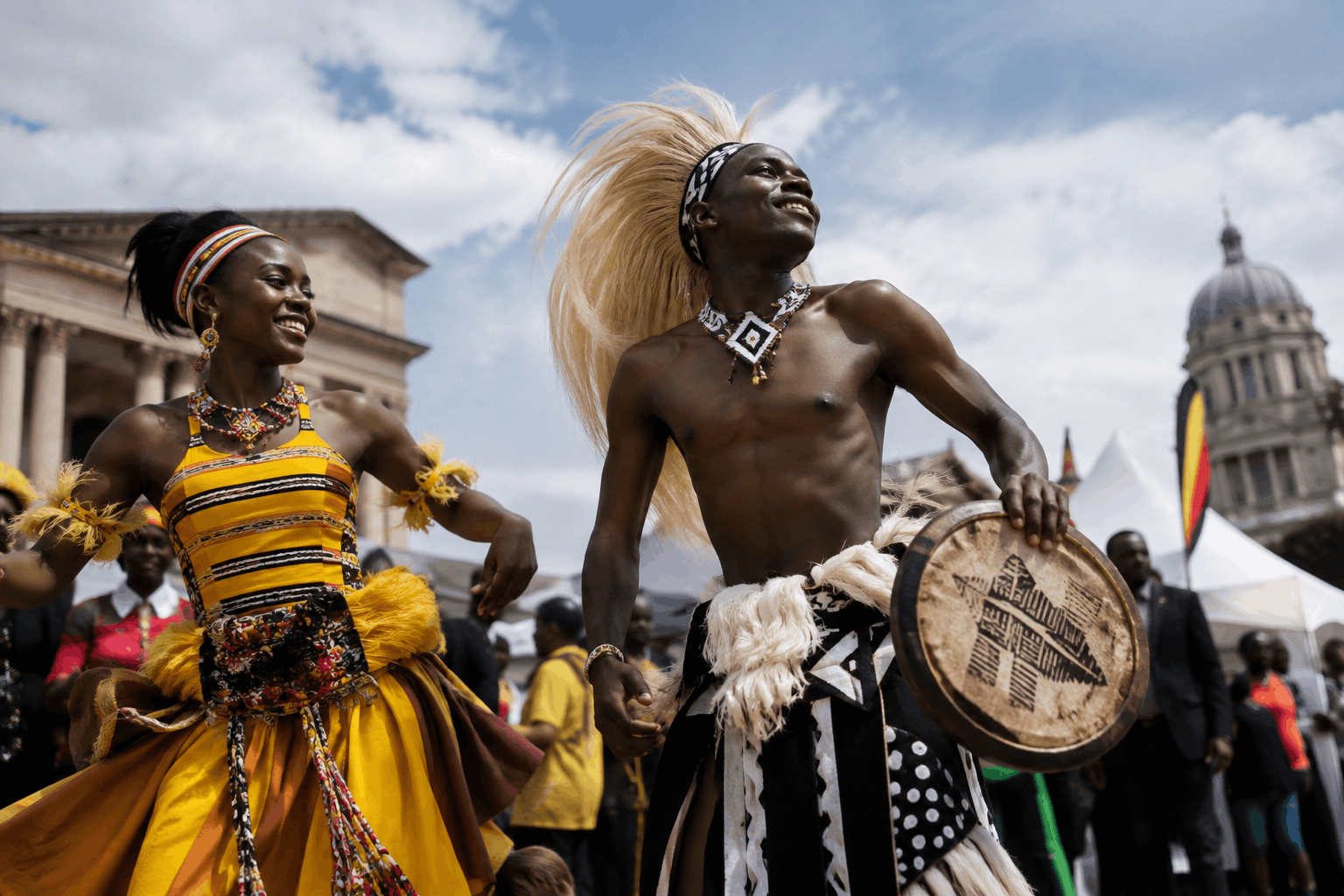
A practical December hospitality planning guide for hotels, short-lets, restaurants and tourism businesses across Africa, covering demand, pricing, staffing, bookings and operations.
Every year, the same thing happens. A hotel, restaurant, salon or short-let business has a wonderful December, more guests and more money than any other month, and then spends January wondering why it felt so chaotic. Rooms overbooked. A generator that gave out on the busiest weekend. A dispute with a guest who flew home before anyone could sort it out.
December in Africa's biggest cities has grown into something that can be measured, planned for and prepared against, and the businesses that treat it that way tend to have a calmer season and a better year afterward.
This guide pulls together the data from the last two or three Decembers across Nigeria, Ghana, Kenya, Tanzania, South Africa and Rwanda, and turns it into a single, practical reference for anyone in hospitality, whether you run a boutique hotel in Lagos, a guest house in Accra, a beach lodge in Zanzibar or a restaurant in Kigali. It covers who is actually coming, when they book, what they will pay, what tends to go wrong, and what to do about all of it, month by month, starting now.
A note on scope before we begin. Most of the hard data on this season comes out of Lagos and Accra, because that is where researchers and governments have measured it most closely. Kenya, Tanzania, South Africa and Rwanda have real December seasons of their own, with their own patterns, and we cover each of them separately. Wherever a figure is specific to one city or one report, we say so, because a plan built on the wrong city's numbers is worse than no plan at all.
What this guide covers
Why December has become a measurable season, and what the last two years of data show
A city-by-city look at Lagos, Accra, Nairobi and the Kenyan coast, Zanzibar and the Tanzanian safari circuit, Cape Town, and Kigali
Who actually shows up: diaspora visitors, wedding parties, business travellers, domestic tourists and leisure travellers, and how their needs differ
When guests actually plan and book, so you know how late is too late
Visas, entry rules and the travel days themselves, including the weather risk few operators plan for
Pricing without damaging your name, with a real case study of what happened when it went wrong
Keeping every promise you make, and what regulators are already watching for
Staffing, building readiness, and protecting your money from chargebacks and scams
Selling more than a room, and watching the regulation now arriving for short-let operators
What to do once the season ends
A month-by-month checklist from September to January
A frequently asked questions section addressing the specific decisions operators face
Why December matters more each year
In this section
Treat the MO Africa figure as an estimate from a private research firm rather than a definitive count.
In Lagos, the Lagos State Ministry of Tourism, Arts and Culture attributed $71.6 million in hospitality, tourism and entertainment economic activity to the 2024 December season. Hotels took $44 million of that and short-let apartments took $13 million.
By 2025, it had grown again. A report by the research firm MO Africa Co, titled The Economics of Euphoria: Lagos' Detty December 2025, estimated that 3.6 million people took part over the 55 days between mid-November 2025 and 10 January 2026, more than 70 percent of them Gen Z or Millennial travellers. Total consumer spending reached ₦396.54 billion. Diaspora visitors, people who live abroad and fly home for the season, accounted for 55 percent of that spending on their own. Hospitality and accommodation took the largest single share, ₦175.40 billion, or 44.23 percent of the total. Entertainment and nightlife followed at ₦129.55 billion, 32.67 percent, and food and dining made up 12.91 percent.
Treat the MO Africa figure as an estimate from a private research firm rather than a definitive count. Different organisations measure the season in different ways, so the value of the figure is less about the exact amount and more about showing how much money was moving through the economy and where that spending was going.
That level of activity also meant that Lagos had to support a much larger population than its normal systems are designed for during the season. The MO Africa report estimated that the city operated at about 238 percent of its designed human capacity, while roughly ₦19 billion was spent on logistics, security and operational support during the period.
The Permanent Secretary of the Lagos State Ministry of Tourism, Arts and Culture told ThisDay that December arrivals into Lagos ran at about ten times a typical tourism period. For businesses, that means guests, staff and suppliers are moving through the same roads and dealing with the same traffic and queues at the same time. Staffing, deliveries and guest movement therefore need to be planned with those conditions in mind.
There is also a significant flow of money from Nigerians living abroad into the country during this period. Nigeria's diaspora sent home $21.806 billion in 2025, according to central bank figures reported by Vanguard, almost unchanged from $21.811 billion in 2024. The fourth quarter, covering October to December, accounted for $5.72 billion, compared with $5.122 billion in the first quarter. These remittances are not the same as December tourist spending. They go to families throughout the year for expenses such as rent, school fees and everyday costs. But the higher fourth-quarter figure means more money was entering the country during the same period that December travel and entertainment activity was at its busiest.
Ghana recorded 141,186 international arrivals in December 2025, up 11.35 percent from 126,791 in December 2024, according to the 2025 Ghana Tourism Report. Across the full year, however, arrivals grew by only 1.4 percent, reaching 1,306,962, while tourism receipts fell from $4.83 billion in 2024 to $4.34 billion in 2025.
The December increase therefore needs to be viewed alongside the full-year figures. A strong peak season does not automatically mean that tourism performed strongly throughout the year. For hospitality businesses, the opportunity is to turn some of those December visitors into guests who return during quieter periods, rather than relying on the same few weeks to carry the business.
The season, city by city
In this section
Some visitors combine both, but the booking patterns, accommodation needs and services they buy are different.
December does not look the same in Lagos, Accra, Nairobi, Zanzibar, Cape Town or Kigali. The visitors are different, the money comes from different places, and in some of these cities the "peak season" has nothing to do with diaspora homecoming at all. Here is what the data shows in each place.
Lagos and the rest of Nigeria
Lagos is the largest and most closely documented example of Nigeria's December tourism economy, with much of its activity driven by diaspora visits, weddings, concerts, nightlife and social events. But the national December market is much broader than Lagos.
Calabar provides a good example. The 2025 Carnival Calabar season ran across December and into early January, with Cross River extending the programme to 32 days. The state Tourism Bureau reported that more than 248,000 visitors came into Calabar during the period, about 24 percent more than the previous year. More than 81 percent of inbound passengers recorded at Calabar International Airport came from other Nigerian states, while about four percent were from the diaspora. The event therefore generated substantial domestic travel alongside international and diaspora visits.
The effect on local hospitality was measurable in the state's own estimates. Hotels recorded average occupancy of 72 percent, rising above 95 percent between December 16 and 30. More than 26,000 room nights were confirmed during December, with hotel booking revenue estimated at ₦3.9 billion. The Tourism Bureau also estimated ₦10.6 billion in transportation spending and about ₦2.05 billion in food, beverage and breakfast revenue. Visits to major attractions across November and December were reported at more than 370,000.
Ota, in Ogun State, provides a different example. Shiloh 2025, the annual convention held at Faith Tabernacle, Canaanland, ran from December 9 to 14 and drew people travelling specifically to attend the event. Reports from the 2025 gathering included visitors travelling from other Nigerian cities, including a participant who flew from Asaba to attend.
The demand created by an event like Shiloh is different from the demand created by Lagos nightlife. Visitors may be looking primarily for accommodation close to the venue, reliable transport, meals and convenient access to the programme rather than restaurants, clubs and late-night entertainment. Hotels and short-let operators in Ota and surrounding areas therefore need to think about the event dates, expected attendance, transport routes and length of stay when planning their inventory.
This is why national Detty December figures can give a misleading picture of the market for a hospitality business outside Lagos. A hotel in Calabar during the Carnival season is responding to a large festival that attracts domestic travellers, international visitors and diaspora guests. A hotel in Ota during Shiloh is responding to several days of concentrated convention travel. A Lagos hotel during the same period may be dealing with a much larger mix of nightlife, weddings, concerts, family visits and diaspora travel.
For businesses in other parts of Nigeria, the better starting point is therefore the local calendar. Look at the events that bring people into your city, when those events take place, where visitors are likely to stay, how they are likely to travel and how long they normally remain in the area. National December spending figures can show the size of the wider opportunity, but the local event calendar is what helps determine how that opportunity reaches your own property or business.
Accra and December in Ghana
Ghana has spent years deliberately building a tourism brand around the end-of-year period. The process gained international attention with the 2019 Year of Return, a campaign focused heavily on reconnecting Ghana with the African diaspora. The Ghana Tourism Authority says the initiative attracted more than 1.18 million visitors from the African diaspora and beyond. It was followed by Beyond the Return, a ten-year programme covering tourism, culture, investment, diaspora engagement and Pan-African heritage. Within that programme, December in GH developed into a recurring tourism product built around events, festivals, concerts, cultural experiences and other activities taking place during the holiday period. The GTA has described December in GH as one of Ghana's tourism products since 2019.
The December brand is now strongly associated with Accra's nightlife and entertainment calendar, but Ghana's visitor data shows that international travel to the country is not mainly about December parties. The Ghana Tourism Authority's 2025 data reports business travel as the largest purpose of international visits at 31 percent. Visits to family and friends accounted for 23 percent, leisure tourism for 11 percent and holidays for nine percent. Conferences made up seven percent, study and training five percent, while other purposes accounted for the remaining 14 percent.
That gives hospitality businesses a wider customer base than the December nightlife image suggests. A hotel in Accra may have guests coming for concerts and social events in December, but it may also be serving business travellers, people visiting relatives, conference delegates and other visitors whose reason for being in Ghana has little to do with the festive calendar. Those customers can have different booking patterns and different expectations. A business traveller may need reliable internet, workspace and airport transfers. A conference delegate may need accommodation close to the venue and transport for several days. Someone visiting family may spend part of the trip with relatives rather than in a hotel.
The visitor profile reported by the GTA also points to a substantial professional and educated segment. About 79 percent of visitors held tertiary qualifications, while 69 percent were executives or professionals. These figures do not mean that every visitor belongs to those groups, but they show that Ghana's international visitor market includes a large number of people travelling for professional, commercial and institutional reasons alongside leisure and family travel.
The December audience itself also has a strong working-age component. The GTA's research found that most December in GH participants were between 18 and 39 years old, while 76 percent were employed or self-employed. That helps explain why the season can support spending across accommodation, restaurants, entertainment, shopping and transport without being limited to one type of visitor.
There is also a geographic point for hospitality businesses. December in GH is not intended to be an Accra-only programme. The Ghana Tourism Authority has encouraged event organisers to develop activities outside Greater Accra and has promoted events across different regions of the country. A hotel in Accra may therefore be responding to a very different December market from a property in Cape Coast, Kumasi or another tourism destination.
For a hospitality business in Ghana, the useful question is therefore not simply how busy December will be. It is which visitors are likely to come to your location, what is bringing them there, where they are staying, how long they are likely to remain and what they need while they are there. December in GH has created a powerful holiday-season brand, but the country's wider tourism market extends well beyond the December party and nightlife crowd.
Nairobi and the Kenyan coast
Kenya's December tourism market draws heavily from both domestic and international travellers, and the 2025 festive-season figures show just how important the domestic market can be. Kenya Wildlife Service reported about 313,500 visits to national parks and reserves during the December 2025 holiday period. Around 231,000 visitors were Kenyan citizens and residents, while 82,500 were non-residents. Domestic visitors therefore accounted for roughly three quarters of the recorded park traffic during the period.
That is useful context for a country often marketed internationally through its safari tourism. During the festive season, Kenyan residents were not simply filling the gaps left by international visitors. They were the larger group visiting the parks. Reporting on the season also found that domestic travellers dominated festive safari bookings, followed by visitors from other East African countries. International tourists were fewer in number but tended to book earlier and choose longer and more premium safari experiences.
Kenya Wildlife Service also ran the Jiachilie in Kenya Parks Festive Season during December. The campaign included incentives designed to encourage people to visit the parks and stay longer. At participating KWS accommodation, visitors who booked three consecutive nights could receive a fourth night free, while other group offers provided free entry for selected children or additional adults depending on the group size and vehicle.
For hospitality businesses, the combination of these two markets creates different booking patterns. An international traveller coming to Kenya specifically for a safari may begin planning months in advance, book a longer itinerary and choose a higher-priced lodge or organised safari. A Kenyan family or group of friends may make a shorter domestic trip during the school and end-of-year holiday period and respond more directly to a local promotion or package. These are general patterns from the 2025 festive season rather than rules that apply to every traveller, but they show why domestic and international customers need to be considered separately when planning December demand.
The location of the property also changes the picture. A hotel in Diani or Mombasa is dealing with a coastal holiday market that includes both Kenyan residents and international visitors. Kenya's coast includes destinations such as Mombasa, Diani, Watamu, Malindi and Lamu, with tourism built around beaches, coastal culture and marine activities. A Nairobi hotel has a broader customer base. Guests may be travelling for business, conferences or city activities, using the capital as a base before or after a safari, or visiting Nairobi National Park and other nearby attractions.
Kenya is also trying to broaden its tourism offer beyond its traditional wildlife and beach products. The country's National Tourism Strategy for 2025–2030 identifies cultural, wellness, sports, adventure, agritourism and MICE tourism as additional areas for development. This means that a December hospitality business should not automatically assume that every potential customer is a safari traveller.
For a hotel, lodge, restaurant or tour company in Kenya, the practical question is therefore where its December customers are coming from and what is bringing them to that particular location. A property on the coast may need to plan around domestic family holidays and international beach travellers. A safari lodge may be dealing with domestic groups, regional visitors and international guests who book much earlier. A Nairobi property may have to account for business, conferences, city stays and safari connections. Treating all of these customers as one December market can make pricing, promotions and staffing decisions less precise.
Zanzibar and Tanzania's safari circuit
Tanzania's December tourism market is shaped by two major types of travel: beach holidays in Zanzibar and safari trips on the mainland. Zanzibar recorded 917,167 international arrivals in 2025, up from 736,755 in 2024. December alone brought 100,729 international visitors, 10 percent more than the 91,611 recorded in December 2024 and 38.3 percent more than November 2025. Visitors stayed for an average of about eight nights in December, and estimated bed occupancy reached roughly 89 percent. The market was overwhelmingly leisure-driven, with 99.6 percent of visitors travelling for holidays.
The mainland had a different kind of December demand. Serengeti National Park recorded an estimated 75,000 to 100,000 visitors in December 2025, around 70,000 of them international tourists. By the middle of December, the park had recorded about 491,000 visitors for the 2025/26 season, with numbers expected to pass 500,000 by January 2026.
For hospitality businesses, these are two different markets even though they are part of the same national tourism industry. A Zanzibar hotel is mainly serving people coming for an island holiday, while a Serengeti lodge, safari operator or Arusha-based travel company is serving people whose main reason for travelling is wildlife and safari. Some visitors combine both, but the booking patterns, accommodation needs and services they buy are different. A business that depends entirely on one market therefore has less protection if demand in that particular segment weakens.
Cape Town and South Africa's summer
South Africa's December market works differently again. December falls in the Southern Hemisphere summer, so Cape Town's peak holiday period brings together South Africans travelling within the country and international visitors arriving from overseas. It is not primarily built around a diaspora-return season. Cape Town's 2025 tourism figures show how large both markets are: the city recorded about 1.44 million foreign overnight visitors and 1.42 million domestic overnight visitors during the year. Foreign visitors stayed for an average of 9.5 nights, while domestic visitors averaged 4.4 nights.
Cape Town International Airport also had a record year. The airport handled more than 3.29 million international two-way passengers in 2025, more than 687,000 above the 2019 pre-pandemic baseline. Industry figures reported that every month outside the winter trough performed better than the corresponding period in the previous year. December was particularly busy, with 1.12 million two-way passengers passing through the airport, including an 11 percent increase in international arrivals and a 6 percent increase in domestic travel.
The accommodation market does not capture all of that growth in the same way. Cape Chamber hospitality stakeholders reported that some formal accommodation providers did not see their bookings rise in line with the increase in visitor numbers. Industry feedback pointed to more visitors staying with friends and family or choosing short-term rentals. Cape Town's earlier festive-season research also found significant use of self-catering accommodation and stays with friends and family alongside hotels and guesthouses.
For a hotel operator, the practical question is therefore not only how many people are coming to Cape Town, but where they are choosing to stay. A visitor can contribute to restaurants, attractions, transport and retail spending without ever booking a hotel room. A rise in total visitors can therefore happen at the same time as weaker-than-expected growth in hotel bookings.
Kigali and Rwanda
Rwanda does not have the same nightlife-driven December identity as Lagos or Accra. Its tourism market is spread across several parts of the year and serves different types of visitors, including leisure travellers, wildlife tourists, business travellers and conference delegates. That makes Rwanda a useful market to look at separately from destinations where December is the main period of intense tourism activity.
The Rwanda Development Board reported 1.49 million visitor arrivals in 2025, a 9 percent increase from the previous year. Tourism revenue reached $685 million, up 6 percent from $647 million in 2024. The country's national parks recorded 155,394 visits during the year, generating $40.8 million in park revenue, with Volcanoes National Park accounting for $35.8 million.
Rwanda's conference and business-events market is another significant source of demand. Its Meetings, Incentives, Conferences and Events sector generated $94.7 million in 2025, up 11.8 percent from 2024. The country hosted 165 international and regional meetings and events that attracted more than 61,000 delegates. For hotels and other hospitality businesses in Kigali, this creates a customer base that is not dependent on the December holiday period. Conference delegates need accommodation, meeting facilities, meals, transport and other services, often for several nights at a time.
Rwanda also has relatively straightforward entry arrangements for visitors. Since 1 January 2018, citizens of all countries have been able to obtain a visa on arrival without applying before travelling. The rules differ by nationality: citizens of African Union, Commonwealth and La Francophonie countries are generally exempt from visa fees for stays of up to 30 days, while EAC citizens can receive a free entry pass for up to six months. Other eligible visitors can also obtain visas on arrival, with standard fees of up to $50 for single entry and $70 for multiple entry.
For a hospitality business considering Rwanda, the useful question is therefore not simply whether December is busy. It is whether the property or service can serve the different sources of demand that keep the market moving throughout the year. A Kigali hotel may be serving conference delegates one week, leisure travellers the next and regional visitors at another point in the year. A tourism operator outside Kigali may be more closely tied to wildlife and nature tourism. Understanding those different customer groups gives a clearer picture of where the business fits within Rwanda's tourism market.
The wider continent, in one dataset
Lagos, Accra, Nairobi, Zanzibar, Cape Town and Kigali are only six of Africa's 54 countries, and December looks different again in Marrakech, Dakar, Victoria Falls or Cairo. For the broader structural picture of which African tourism economies are largest and most tourism-dependent, Ria's Colony's own Tourism at a Glance tool brings together indicators from sources including the World Bank and UN Tourism across the whole continent. On the figures it currently holds, Egypt is the largest by both visitor arrivals, 13 million, and receipts, $4.9 billion, with Nigeria, South Africa, Morocco, Kenya, Mozambique, Tunisia, Botswana, Rwanda and Tanzania also among the larger tourism economies at between 1.5 and 5.3 million arrivals each. São Tomé and Príncipe stands out differently: tourism makes up 18.74 percent of its GDP, the highest share on the continent, alongside the fastest arrivals growth in the dataset. Because countries report tourism data for different years and use different statistical systems, none of this should be read as a live ranking or a same-year comparison. It is more useful for understanding long-term market size and tourism dependence, which is what the tool is built for, than for saying who is biggest this December.
Who is actually coming to your business
In this section
The diaspora is one of the most visible groups in the Lagos December market, but even that group is changing.
It helps to stop thinking of “December visitors” as one group. People may be travelling during the same few weeks for completely different reasons, and those reasons affect what they need from a hotel, restaurant, venue or travel business. A guest returning home for a wedding is making a different trip from someone flying in for a safari. A business traveller may need a quiet place to work, while a family travelling for a reunion may need several rooms, transport and space for everyone to meet.
The diaspora is one of the most visible groups in the Lagos December market, but even that group is changing. According to MO Africa's 2025 Detty December report, travellers whose journeys began in the United States accounted for 27 percent of international arrivals in its Lagos dataset, ahead of the United Kingdom at 24 percent. The rest of Europe accounted for 18 percent, Canada 12 percent, other African countries 11 percent and other origins eight percent. The United States therefore became the largest recorded origin market in the study, although these figures should be understood as a breakdown of the international arrivals measured by MO Africa rather than a complete count of the Nigerian diaspora. (Nairametrics)
For a hospitality business, the useful point is not simply where the guest came from. Many of these visitors have travelled a long way before they reach the property and may have luggage, connecting flights, airport transfers and family or social plans waiting for them. A smooth arrival therefore becomes part of the service. Clear directions, a reliable airport transfer, a room that is ready when promised and a check-in process that does not take an unnecessary amount of time can be more useful than an elaborate welcome ceremony.
Weddings and family events create another important customer group. December is a popular period for Nigerian weddings partly because relatives living abroad can return at the same time as family members travelling from other parts of the country. For hotels and venues, these guests can create group business rather than individual bookings. One wedding can generate a block of rooms, family lunches, welcome dinners, venue hire, transport, late check-outs and additional food and beverage spending. The person making the booking may be one family member, but the actual group can involve dozens of guests. That changes how the property needs to manage availability and pricing. Holding a small number of rooms for a family group, for example, is different from selling those rooms one by one through an online booking platform.
Business travellers form another group that can disappear from view when December coverage focuses heavily on entertainment. Ghana's 2025 tourism report found that business travel was the leading purpose of international arrival, accounting for 31 percent of the country's international arrivals across the year. That is not a December-only figure, but it shows that Ghana's visitor economy includes a substantial business market alongside leisure and festive travel. (Ghana News Agency)
The same applies to Nigeria. Some people travelling during the festive period are combining family visits with work, meetings, investment discussions or business development. A hotel does not need a large conference centre to serve this customer. Reliable Wi-Fi, a desk or quiet seating area, power reliability, airport transfers and a room where a guest can take a private call can be enough to make the property useful to someone working while travelling.
Domestic travellers form another major part of the December market. Kenya provides a particularly clear example. Kenya Wildlife Service reported more than 300,000 visits to national parks and reserves during the December 2025 festive season, including 231,000 Kenyan citizens and residents and 82,500 non-residents. Kenyan citizens and residents therefore accounted for roughly three quarters of the recorded park visits during that period. The figures apply specifically to national parks and reserves, not to all tourism in Kenya, but they show how large the domestic customer base can be during the holidays. (The Star)
Nigeria and Ghana also have domestic December travel. People travel within their own countries for weddings, religious gatherings, family reunions, festivals, holidays and other events, whether or not they have relatives returning from abroad. For a hotel outside a major international arrival hub, these travellers may be just as important as overseas visitors. Their booking window, preferred transport and response to local promotions may also differ from those of international guests.
Leisure and safari travellers make up another distinct group, particularly in Kenya, Tanzania and South Africa. Their main reason for travelling is the destination itself rather than returning home for a family event. A Kenyan safari guest may be travelling to the Maasai Mara or another national park. A Tanzanian visitor may combine a Serengeti safari with several nights in Zanzibar. A South African traveller may be taking a summer holiday in Cape Town or travelling within the country during the Christmas break.
The December weather also needs to be understood by destination. South Africa is in its summer, which coincides with a major domestic holiday period. Kenya and northern Tanzania are around the end of their short-rains periods, with conditions varying by location and year. In Tanzania, December can bring brief rainfall while the landscape becomes greener, and the Christmas and New Year period can still be a busy time for safari and beach travel. (Safarani) These guests are also more likely to organise parts of their trip in advance because their accommodation, transfers, park access and activities may all need to fit together.
The categories overlap, and that is normal. Someone travelling from Houston to Lagos may be coming home for a wedding and also spending a few days at a resort. Someone travelling from London to Ghana may visit family and attend a concert. A Kenyan resident may take a safari during the school holidays. A business traveller may add a weekend at the coast to a work trip. The purpose of dividing the market is not to force every guest into one category. It is to recognise that different reasons for travelling create different needs.
The way guests find a property matters too. MO Africa's research on the 2025 Lagos season highlighted the role of digital platforms and music-driven culture in shaping the decisions of younger visitors. That makes the basic information a property publishes online part of its sales process. Your Instagram page should show the property as it actually looks. Your Google listing should have current contact details, opening information and recent photographs. Your WhatsApp number should be monitored by someone who can answer questions and confirm bookings. December prices, cancellation terms, location and available facilities should be clear before the guest has to ask.
A property does not need a complicated digital strategy to do this well. It needs accurate information, current photographs and someone who responds promptly. During a period when guests are comparing several hotels, short-lets, restaurants and event options at the same time, a business that answers quickly and gives clear information has removed one of the simplest reasons for a potential customer to move on.
Start planning for December before December arrives
In this section
For a hospitality business, the point is this: some of your December customers may already be deciding where they will stay now.
People travelling to Lagos and Accra for the Christmas period often start making their plans several months in advance. Travel guides commonly recommend booking accommodation three to nine months ahead. One guide published in September says that some of the best accommodation can sell out by October, while airfares often become more expensive from November. A Nigerian finance site also recommends August to mid-October as a cheaper period for booking Christmas flights to Nigeria.
For a hospitality business, the point is this: some of your December customers may already be deciding where they will stay now. Do not wait until November to start selling your December rooms.
The dates guests are travelling also affect how you should price your rooms and plan your staff. The 2026 Christmas period runs roughly from mid-December into the first days of January, with the busiest period usually falling around Christmas and New Year.
Major events can make specific nights even busier. Current event listings include Flytime Fest in Lagos from 22 to 25 December, Detty Rave in Accra on 27 December, and AfroFuture in Accra from 28 to 30 December. These dates should be treated as provisional until they have been confirmed directly by the organisers. Event dates, venues and line-ups can change, and some listings may publish placeholder dates before organisers make final announcements.
Once you have confirmed the events that are relevant to your location, look at your December calendar night by night.
You can divide the period into three simple groups:
Heavy event nights: nights when major concerts, festivals, weddings or other events are expected to create particularly strong demand.
Shoulder nights: the nights immediately before and after those events, when people may arrive early or stay an extra night.
Ordinary nights: the remaining dates that do not have a major event or holiday peak.
You can then give each group its own price and booking conditions. For example, you might allow one-night stays on ordinary dates but require a two- or three-night minimum during the busiest part of the season. You may also charge more on the nights when demand is expected to be highest.
The exact prices will depend on your property, location and usual rates. The important thing is to avoid treating every December night as if it will have exactly the same demand.
Kenya requires a slightly different approach
Kenya also has a large domestic market, so not every December customer will be planning their trip months in advance.
A Kenyan resident deciding to take a family holiday within Kenya does not have to arrange an international flight or plan around an overseas trip. They may see a local promotion closer to the holiday and decide to book.
The 2025 Jiachilie campaign is one example. Kenya Wildlife Service promoted offers that encouraged people to stay at participating properties for longer, including a free fourth night for qualifying three-night stays.
For a hotel, lodge or other tourism business that depends partly on Kenyan residents, this means you should not necessarily try to sell every December room as early as possible.
You can sell some rooms months ahead while keeping some availability for customers who book closer to the holiday. A local promotion in November or early December may bring in customers who were not ready to book in September.
So the booking strategy can look different by market. A Lagos property serving international and diaspora visitors may need to start selling December rooms early. A Kenyan property serving a strong domestic market may benefit from keeping some inventory available for later local demand.
Every business in hospitality need to understand the different booking patterns in your market and make sure your pricing, inventory and staffing plan reflects them.
Visas, entry rules and getting guests through the airport
In this section
If you use an ETA Tracker result when planning a trip, treat it as a starting point, not as immigration advice.
A guest cannot spend money at your business if they cannot get into the country, and entry rules across Africa are uneven and are changing faster than most travel content keeps up with.
Ghana has been moving steadily toward openness. There is a long-running tradition, dating to 2022, of easing entry for visitors during the December and January homecoming season, and separate reporting says Ghana opened visa-free travel to all African passport holders from 1 January 2025, extending a privilege that had previously covered a smaller list of around 26 African countries. Treat the exact current rule as something to confirm rather than assume, since visa policy is one of the fastest-moving details in this entire guide and the difference between an outdated and a current answer can strand a guest at check-in.
Rwanda has taken the boldest approach on the continent. Since 1 January 2018, nationals of every country can obtain a visa on arrival, with the fee waived for most travellers: citizens of African Union, Commonwealth and La Francophonie countries get 30 days free, East African Community citizens get up to six months free, and a further list of specific countries gets up to 90 days free. Travelers from outside those groups still get a visa on arrival, but pay $50 for single entry or $70 for multiple entry. Kenya, Rwanda and Uganda also jointly offer the East Africa Tourist Visa, a single $100 application that grants multiple entries across all three countries for 90 days, which is worth knowing if you operate near any of those borders or work with tour operators building multi-country itineraries.
Kenya itself now requires visitors to apply for an Electronic Travel Authorization before arrival rather than a traditional visa. Nigeria, South Africa, Tanzania, Zambia, Morocco, Mozambique, Seychelles and Cabo Verde have each introduced their own pre-travel authorisation or registration systems in recent years, with their own fees, exemptions and validity periods. Ria’s Colony’s African ETA Trackertracks entry requirements for all 54 African countries and is updated when new rules are confirmed. This is useful because visa, ETA and other entry requirements can change, and information published months ago may no longer be correct.
If you use an ETA Tracker result when planning a trip, treat it as a starting point, not as immigration advice. Always check the destination country’s official government or immigration website for the latest requirements before booking your flight.
Once the visa is sorted, the travel day itself carries its own seasonal risk that few operators plan around: harmattan haze. Between roughly November and March, dry, dust-laden winds can blow down from the Sahara and cut visibility at airports across West Africa, including Lagos, Abuja, Kano and Kaduna, and Nigeria's aviation regulator has warned in past years that severe haze can lead to delayed, diverted or cancelled flights.
How bad it gets varies yearly. The 2025 into 2026 season was widely reported in Nigeria as unusually mild, with several outlets describing a harmattan that barely showed up at all, and yet Air Peace still attributed flight delays in mid-January 2026 to "current Harmattan weather conditions" causing reduced visibility at some airports. The lesson is not that harmattan will definitely disrupt your season, it is that you cannot know in September how this particular year will behave, and even a mild season can still produce isolated bad days. Allow extra time for airport pickups and hotel check-ins, especially in the second half of December. Flights may arrive late, baggage may take longer to come out, and traffic can slow the journey from the airport. It is better to leave some extra time than to arrange everything around a perfectly on-time arrival.
Airport congestion can make this even worse during the December rush. In 2025, the president of the National Association of Tour Operators told ThisDay that congestion at Lagos airports, driven partly by the high number of people returning to Nigeria from the diaspora, was one of the season’s major operational problems. Fully booked travel packages also added pressure.
If you are travelling through Lagos in the last two weeks of December, allow more time for airport transfers than a normal Google Maps estimate suggests. Traffic can change quickly, and a journey that normally takes 45 minutes may take much longer during the holiday period.
Pricing without burning your name
In this section
Give past customers an early opportunity to book before releasing all your rooms to online travel platforms.
December 2025 showed what happens when businesses raise their prices significantly without improving the service that comes with them. Guests are willing to pay more during a busy season, but they still expect the experience to match the price.
Across Ikoyi, Victoria Island and Lekki Phase 1, short-let prices rose sharply during the season. BusinessDay reported that some visitors abandoned apartments because of the prices. Screenshots shared on X showed nightly rates of as much as ₦700,000 for a one-bedroom apartment in Lekki Phase 1.
The complaints were not for accommodation alone. An article on ThisDay described several examples of prices rising sharply for customers perceived to be part of the diaspora market. It mentioned a hairdressing service that normally cost ₦70,000 being quoted at ₦200,000, ride-hailing fares of ₦6,000 to ₦7,000 rising through surge pricing, and a two-week short-let stay costing almost ₦3 million.
Prince Femi Fadina, national president of the Association of Tourism Practitioners of Nigeria, also warned publicly about the effect of excessive pricing on the season.
Hotels benefited directly from the backlash against short-lets. Hotel managers told BusinessDay they were seeing more early bookings than usual and expected higher occupancy than the previous year, precisely because guests who normally rented apartments were switching to hotels instead, citing better consistency on breakfast, cleaning and customer support, alongside the price gap itself.
Cowrywise's 2025 season report also recorded significant hotel revenue during the period. It reported ₦94.73 billion for classic hotels and ₦23.67 billion for apartment-style hotels, which it said came from 1,100 keys. The report also noted weaker occupancy in the mass-market short-let segment, while the mass-market short-let segment saw occupancy fall due to service failures.
None of this means businesses should keep their prices the same throughout December. Demand is higher, operating costs can rise, and businesses should be able to charge accordingly.
The important question is what the guest gets for the higher price.
A ₦300,000 room can feel expensive if the guest is paying for nothing more than the same basic room that was ₦150,000 a few weeks earlier. The same price can be easier to justify when the guest knows exactly what is included, such as breakfast, airport pickup, reliable cleaning, security, customer support or a later checkout.
For December, a few changes can help.
Raise rates gradually. Instead of waiting until December and making one large increase, set different rates as the booking date gets closer. You might start with your normal rate 60 to 90 days before arrival, then increase it as demand builds.
Make your cancellation policy clear. A higher December rate is easier for guests to accept when they know the rules before they pay. Avoid making every booking automatically non-refundable unless there is a clear reason for doing so.
Use minimum stays on your busiest dates. If the nights around Christmas and New Year are your strongest period, a three- or five-night minimum stay can make more sense than filling one night and losing the opportunity to sell the remaining nights together.
Watch your actual bookings. Compare your booking pace with the same period last year. If rooms are filling much faster than they did previously, you have evidence that demand is strong. That is a better reason to increase prices than simply seeing what another business is charging.
Reward direct and returning guests. Give past customers an early opportunity to book before releasing all your rooms to online travel platforms. A returning guest already knows your service, and you already know what they expect.
Add things guests actually want. Instead of simply putting a higher price on the same room, consider packages that include useful December extras such as airport pickup, breakfast or late checkout.
There is nothing unusual about charging more when demand is high. However,it becomes a problem when the price rises but the service does not.
Guests remember that difference, and December visitors can become next year's customers or next year's warnings to their friends.
Keep every promise you make
In this section
Put your booking, deposit and cancellation terms in plain language and show them to the guest before they pay.
If you confirm a booking, honour it.
In December 2025, Lagos State Governor Babajide Sanwo-Olu publicly warned hotels, restaurants and event venues against cancelling confirmed bookings because another customer offered to pay more. He said he had met about 250 operators of hotels, clubs and restaurants at the Marina to discuss the issue. He also said the state government would publicly identify businesses that broke confirmed commitments and asked customers with deposit receipts or written booking confirmations to report them.
The Lagos State Consumer Protection Agency also warned hotels and short-let operators about blanket no-refund policies. The agency said it receives frequent complaints from guests during festive periods and would increase monitoring and take action against businesses that violate consumer protection rules. It also advised guests to check the terms before paying, verify their accommodation through genuine photographs or in person, and keep receipts or digital proof of payment.
For businesses, the steps are simple. Put your booking, deposit and cancellation terms in plain language and show them to the guest before they pay. Send written confirmation for every booking, including small ones.
Do not accept more bookings than you can realistically handle. If a confirmed room becomes unavailable, have an arrangement with a nearby hotel where you can move the guest to a comparable room at your own cost.
The guest should not have to pay for a problem that was caused by the business. During December, when demand is high and people are sharing their experiences online, a badly handled booking can quickly become a public complaint.
Staffing for the surge
In this section
Someone who is still learning on your busiest day may struggle to keep up when there are no spare people to help.
Many of the problems hotels face during busy periods come down to staffing. If housekeeping cannot clean rooms quickly enough, guests wait longer to check in. If the front desk is understaffed, guests may have to wait for help. If the kitchen does not have enough people, food takes longer to arrive and mistakes become more likely.
Start preparing your staffing plan at least eight to ten weeks before the busy season. Look at your expected bookings for each day and work out how many people you will need on each shift. This gives you time to hire seasonal staff before the pressure starts.
Do not leave seasonal hiring until the last minute. New staff need time to learn how your business works. Someone who is still learning on your busiest day may struggle to keep up when there are no spare people to help.
It also helps to train staff to handle more than one type of task. A front desk employee should be able to answer basic questions about the area, while kitchen and restaurant staff should understand how room service works. This gives you more flexibility when one department becomes busier than another.
You can also offer a referral bonus to existing employees who recommend seasonal workers who stay for the full season. A new employee who comes recommended by someone already on the team may have an easier start because they already have someone who can help them learn the job.
Give your staff some authority to solve small problems without waiting for a manager. Depending on the situation, that could mean offering a small food or drink credit, a room upgrade or a late checkout. Guests should not have to wait for several levels of approval before a simple problem can be fixed.
Finally, sort out staff leave and December schedules early. Your employees have their own family commitments and holiday plans. Agree on leave dates before the busy period and publish the roster early. This reduces last-minute absences and makes it easier to know that you have enough people working when demand is highest.
Getting the building, and the city, ready
In this section
December makes that cost even more obvious because every disruption affects more customers at the same time.
December affects more than hotels and restaurants. When large numbers of people arrive in Lagos at the same time, traffic, airport congestion, power supply and other services can affect almost every business that serves visitors.
In 2025, the president of the National Association of Tour Operators identified airport congestion as one of the major problems during the season, partly because of the large number of diaspora travellers returning to Nigeria. Lagos State also postponed a planned eight-month rehabilitation of the Lekki-Ajah corridor, while the federal government temporarily opened a 47-kilometre section of the Lagos-Calabar coastal highway to help reduce traffic during the season.
You cannot control the traffic, but you can prepare for its effect on your business.
If you offer airport pickups, give drivers plenty of extra time between trips and make sure they can contact guests if a flight is delayed or plans change. Send guests a message 48 to 72 hours before arrival to confirm their booking and give them a realistic idea of how long the journey from the airport may take during busy periods. Do not rely only on the travel time shown by Google Maps for a quiet day.
If you run a restaurant, decide in advance how long you will hold a table after the reservation time. A guest stuck in traffic should have a reasonable grace period, particularly on your busiest nights.
The same preparation applies to your own facilities.
Service and test your generators well before the December rush. Buy enough diesel and store sufficient water before demand increases. If your internet connection is important to your business, have a backup connection ready.
Fix equipment that has been unreliable for months before your busiest guests arrive. An air conditioner that has been making strange noises for weeks is much easier to deal with before a fully booked December weekend than when a guest is already complaining that their room is too hot.
Power cuts and equipment failures also cost more when you are fully booked. On a quiet day, a short outage may affect a few customers. During December, the same problem can affect dozens of guests at once, disrupt staff and lead to complaints and poor reviews.
In an earlier Ria’s Colony article, Why Infrastructure Changes Everything, we described the cost of relying on private generators as a hidden business expense. December makes that cost even more obvious because every disruption affects more customers at the same time.
Protecting payments and guests from scams
In this section
First, protect your business against payment disputes.
December brings two payment risks that businesses should prepare for: customers disputing legitimate payments after they leave, and scammers taking money from travellers before they arrive.
First, protect your business against payment disputes.
A chargeback happens when a customer asks their bank or card provider to reverse a payment. They may say that the payment was fraudulent, that they did not receive the service, or that there was another problem with the transaction.
Not every chargeback is dishonest. Sometimes a customer may genuinely have been charged incorrectly or had a problem with the service. That is why good records are important for every booking.
Make your cancellation and refund terms clear before the customer pays. Send a written booking confirmation and keep records of the payment, the customer's agreement to the terms, their registration details and your messages with them. Give customers a clear way to contact you if they have a problem so that a billing or service issue can be resolved before it becomes a larger dispute.
You should also pay attention to unusual bookings, particularly very large last-minute bookings or payment details that do not match the guest's information. These are reasons to check the booking more carefully, not automatic proof that a customer is trying to commit fraud.
The second risk is scams targeting travellers.
Some travellers are being scammed before they even arrive in Lagos. In one reported case before the 2025 December season, a diaspora family lost ₦1.3 million after dealing with a fake short-let agent on Instagram. The family received property photos and booking confirmation from someone posing as a housekeeper. After they transferred the money, the account was deleted and the person disappeared.
Travellers should verify who they are paying before sending money. They should check the property, confirm who owns or manages it, use a reputable booking platform where possible, and be careful with requests to transfer money directly to a personal bank account.
For legitimate businesses, making your booking process easy to verify can help reassure customers. Have a verifiable business identity, genuine reviews on platforms you do not control, clear contact details and a proper booking process. Do not rely entirely on Instagram or WhatsApp messages and personal bank transfers to take bookings.
A customer who is worried about being scammed should be able to check your business independently and confirm that the person asking for their money is actually connected to you.
Selling everything beyond the room
In this section
An unlimited cocktail offer also attracted customers who would not normally visit during quieter periods.
Rooms are only one part of what visitors spend money on during December. MO Africa's breakdown of 2025 spending found that food and dining accounted for 12.91 percent of spending, while entertainment and nightlife accounted for 32.67 percent. That means a significant amount of December spending happens outside hotels.
Restaurants, salons, entertainment businesses and other service providers can plan for this demand too.
Chef Imoteda Aladekomo, who managed a restaurant during the December 2024 season, told OkayAfrica that the restaurant saw more group bookings, visitors from outside Lagos and walk-in customers. An unlimited cocktail offer also attracted customers who would not normally visit during quieter periods.
Booking early can make a difference outside the hotel industry too. Akunna Nwala Akano, founder of Kuku's Hair, told CNN that the salon began taking December appointments in August and was fully booked through 31 December. Daily appointments increased from about 15 to as many as 25. The business then closed from 1 to 17 January to give the team time to recover.
The lesson for businesses is simple: open your December calendar early and prepare for a much higher volume of customers. Do not treat December as an ordinary month with a few extra bookings.
You can also create offers around the things visitors are already looking for. A restaurant could offer group dining packages for wedding parties. A hotel could combine airport pickup with accommodation. A tour company could arrange a boat or beach day with a trusted local partner. A salon could create a package for families returning home for the holidays.
Make these offers easy to book. If your customers already use WhatsApp to ask questions and make decisions, let them complete the booking there instead of sending them through a long process.
Keep an eye on new regulations
In this section
The policy is part of a wider concern about residential housing being used for short-term rentals in areas with high demand.
Short-let businesses are receiving more attention from city governments as tourism grows. If you operate a short-let, it is worth paying attention to changes in local rules on property use, registration, taxes, noise, parking and visitor numbers.
Cape Town provides a recent example. Under the city's 2026/27 Rates Policy, a property where more than 50 percent of available room nights are used for short-term stays can be classified as business and commercial property rather than residential property. That can result in a higher property rate. The policy is part of a wider concern about residential housing being used for short-term rentals in areas with high demand.
If you operate a short-let in Cape Town, check how much of your property's available capacity is being used for short-term stays and understand how the city's rules apply to you. The same principle applies elsewhere: check your own city's rules rather than assuming that the rules for hotels and residential properties will remain unchanged.
Other tourism destinations are also introducing measures to manage visitor numbers. Kruger National Park in South Africa introduced daily limits for day visitors during the 2025 holiday period and required those visitors to book online in advance. Overnight visitors staying inside the park were not included in the daily limit.
The rules will be different from one destination to another, but the reason for them can be similar: tourism can put pressure on housing, roads, public spaces and local services when visitor numbers rise quickly.
For businesses, the practical response is to keep up with what your local government and consumer protection agency are announcing. Check for changes before they take effect, make sure your registrations and permits are up to date, and adjust your operations when new requirements are introduced.
It is much easier to prepare for a new rule when you hear about it early than to discover the requirement after you have already received a warning or fine.
What happens after December
In this section
For businesses that remain open, January is a good time to follow up with December customers and learn from the season.
December may be your busiest month, but what you do after December can determine how much value you get from the season.
Once the holidays are over, many visitors leave, demand drops and businesses return to normal. Some businesses may also close for a short period to give their staff time to rest and recover. Kuku’s Hair is one example. After its busy December period, the salon closed for part of January.
For businesses that remain open, January is a good time to follow up with December customers and learn from the season.
Ask guests who had a good experience to leave a review while they still remember their stay. Keep a record of customers who give you permission to contact them again. You can then reach out later with offers that make sense for quieter periods, such as a January rate, an Easter package or another seasonal offer.
December can also give you useful feedback about your business. Look at the complaints you received, the questions guests asked, the services they used most and the things they praised. Use that information to decide what needs to change before the next busy season.
The goal is not to keep December-level demand going all year. It is to make sure the customers, reviews and information you gained during your busiest period continue to be useful after the season ends.
A month-by-month checklist, September through January
In this section
Finish your staffing forecast by day and by shift, and begin hiring seasonal staff now rather than waiting.
Now, in September. Confirm your December dates against official event pages rather than social media chatter. Publish your rates, deposit terms and cancellation policy in plain language before you take a single booking. Set up your rate ladder so the earliest bookings get the best price. If you rely on the Kenyan domestic market specifically, hold back inventory rather than committing everything to the long international booking window.
Early October. Finish your staffing forecast by day and by shift, and begin hiring seasonal staff now rather than waiting. Book your generator servicing and test run. Start outreach to wedding planners, event organisers and past guests for room-block business.
Mid-October. This is roughly when travel guides say the best accommodation in Lagos and Accra is already selling out, so treat any inventory you are still holding as inventory you may be pricing too low or marketing too quietly. Confirm your airport-pickup and grace-period policies with your front-of-house team.
Through November. Track your booking pace daily against the same period last year, and raise rates only where you are genuinely running ahead of that pace. Begin sending pre-arrival messages as guests get closer to their travel dates, factoring in realistic peak-hour transfer times. Reconfirm every event date you built pricing around, since line-ups and schedules can still shift this close to the season.
First two weeks of December. Run refresher training with your full team, including seasonal hires, and walk the entire guest journey yourself from pickup to checkout to catch small problems before a guest does. Stock diesel, water and any fast-moving F&B inventory ahead of the price spikes that always accompany this window. Brief your team specifically on harmattan-related flight delays so pickups are not scheduled to the minute.
During the season itself. Check booking pace and occupancy daily rather than weekly. Resolve every complaint on the spot where you can, using the small-gesture authority described earlier. Keep a complete payment and communication record for every guest, not only the ones who seem likely to dispute a charge later.
January. Ask every satisfied guest for a review while the stay is still fresh. Give your team real rest, not just a lighter schedule. Send a genuine, personal follow-up offer to guests worth keeping in touch with, rather than a generic mailing list blast. Take an honest look at what broke this season, whether that was a generator, a booking system or a staffing gap, and fix it while the memory is still sharp rather than waiting until next November.
Frequently asked questions
Is it worth hiring extra staff for just one month?
For most businesses expecting the kind of occupancy jump this guide describes, yes, but hire early and cross-train rather than hiring in bulk at the last minute. A single poorly trained seasonal hire during your busiest week risks more in guest complaints and reviews than the wage saved by waiting to hire.
Should I match the price increases everyone around me is doing?
Not automatically. The 2025 backlash against short-let pricing in Lagos, hairdressing quoted at nearly three times the normal rate, apartments approaching ₦3 million for two weeks, shows that guests notice when a price rise is not matched by anything extra, and they switch providers when they can. A price increase tied to a visible extra, breakfast, airport pickup, better security, holds up far better than one that is not.
Should I require a deposit, and should it be non-refundable?
A deposit protects you against a booking that never shows up, which matters enormously during a season this short. Make the terms plain and visible before payment rather than burying them in fine print, since Lagos's own consumer protection agency has specifically warned businesses against blanket no-refund policies that surprise guests after the fact.
What if a guest disputes a legitimate charge after flying home?
Keep a signed registration or digital consent, an itemised bill and a saved copy of your messages with that guest as routine practice for every booking, not only the ones that look risky in hindsight. That record is what turns a dispute in your favour with the card network or payment provider.
Does any of this apply if my business is outside Lagos or Accra?
Yes, but adapt it to your own local calendar. A guest house near the Calabar Carnival or the Shiloh programme in Ogun State faces a genuinely different visitor pattern than a hotel in Victoria Island, even though both sit inside the same broad "Nigerian December" story. Map the actual events and travel patterns near you before applying any Lagos-specific figure to your own planning.
Is a hotel or a short-let a better business to be in for December?
The 2025 data leans toward hotels and managed apartment-hotels specifically, which is a shift from prior years. Classic hotels earned ₦94.73 billion in Lagos during the season, and apartment-style hotels earned ₦23.67 billion from just 1,100 keys, while independent short-lets saw occupancy fall as guests grew wary of price spikes and inconsistent service. That does not mean short-lets are finished as a category, but it does mean the ones that survive the trust gap by offering hotel-like consistency, verified listings, responsive support, honest photos, are positioned better than ones competing on price alone.
Should I price in US dollars, or in the local currency?
Quoting in a stable foreign currency can feel safer against local currency swings, but it also makes your price directly and instantly comparable to every other listing a diaspora guest is scrolling past, which is exactly the comparison that fuelled the 2025 backlash. Whichever currency you quote in, make sure the total a guest actually pays is clear before they commit, with no surprise conversion or fee added at checkout.
Do I need to worry about my guests' visa situation?
Not directly, but a guest who cannot enter the country is a guest who cannot pay you, so it costs little to mention entry requirements in your booking confirmation and point them toward an official source or a resource like our own African ETA Tracker to confirm current rules themselves, since requirements across the continent have been changing fast enough that outdated advice online is common.
How late is too late to still prepare properly?
If you are reading this in September or October, you are on schedule for the full checklist above. By mid-November, focus on the pricing, staffing and booking-pace steps rather than trying to start everything at once. Even in the first week of December, confirming your cancellation terms, testing your generator and briefing your team on harmattan-related delays are all still worth doing and still make a real difference.
In conclusion...
In this section
Lagos has a large diaspora return, busy nightlife and strong demand for short-lets, restaurants and entertainment.
December does not look the same across Africa.
Lagos has a large diaspora return, busy nightlife and strong demand for short-lets, restaurants and entertainment. Ghana has its own mix of homecoming, tourism and business travel. Kenya gets significant demand from local travellers as well as international visitors. Cape Town has a summer holiday season that attracts both domestic and international tourists.
Businesses should therefore prepare for the December season they actually experience, rather than assuming that what works in another market will work for them.
The past two December seasons also show how quickly demand can change. Higher prices do not always mean higher earnings if guests feel they are not getting enough value. More visitors do not automatically mean more hotel bookings if people are choosing short-lets or other types of accommodation.
The businesses that prepare early have more time to look at their prices, staffing, bookings, supplies, transport, facilities and customer service before demand reaches its peak.
If you are preparing for December, September is a good time to start. By the time the busiest weeks arrive in December, many of the decisions that affect your guests' experience will already have been made.