For decades, success in tourism was measured by one number: visitor arrivals.
The more tourists a country welcomed, the more successful it was considered. Governments celebrated record breaking arrivals. Tourism boards competed to attract larger audiences. Airlines opened new routes, hotels expanded, and destinations proudly announced that they had welcomed more visitors than the year before.
On paper, this made perfect sense. More visitors meant more jobs, more hotel occupancy, more restaurant customers, and more foreign exchange earnings. Tourism became one of the world's largest industries because its impact reached far beyond hotels and tour operators, supporting transport, agriculture, construction, retail, and thousands of small businesses along the way.
Then something changed.
Cities that had spent decades convincing the world to visit began asking a question that would have sounded strange twenty years ago.
Have we become too successful?
In 2024, Barcelona saw large public protests over concerns that its roughly 32 million annual visitors were driving up housing costs and disrupting daily life for residents. That same summer, an estimated 20,000 people demonstrated in Palma de Mallorca against the pressures of mass tourism. Santorini, a Greek island with about 15,000 permanent residents, has reported cruise ship days bringing in up to 18,000 passengers at once. Venice has gone further than protest. In 2024 it became the first city in the world to charge day trippers a fee simply to enter, and by 2025 the scheme covered 54 days a year, generated more than five million euros, and is set to expand again in 2026.
Alongside these formal measures, a quieter and more personal shift has taken hold. Instead of proudly sharing hidden cafes, quiet beaches, and scenic trails online, many residents in popular destinations have stopped recommending them altogether. Some deliberately avoid revealing where they spend their weekends. This behaviour has earned its own name: tourism gatekeeping.
The thinking behind it is simple. If the internet never discovers a place, perhaps it can remain the place people love.
It is a striking reversal. For years, tourism marketing encouraged destinations to become as visible as possible. Today, some communities are quietly choosing invisibility instead.
At first glance, this debate might seem far removed from Africa. Many African countries are still working to attract more international visitors, not fewer. Their challenge is increasing awareness, improving accessibility, and encouraging investment.
That is exactly why this conversation matters now, rather than later.
Africa has something that many established tourism destinations no longer have: time. Time to prepare. Time to learn. Time to build differently. Rather than waiting for success to create problems, African governments, tourism boards, and hospitality businesses have the rare opportunity to study what worked elsewhere, understand what failed, and build destinations that stay attractive for generations rather than decades.
The goal should never be to avoid growth. The goal should be to grow wisely.
Overtourism Is Not About Numbers
In this section
A destination built for fifty thousand daily visitors may struggle at two hundred thousand.
One of the biggest misunderstandings about overtourism is the belief that it simply means too many tourists.
That is not how the concept is actually defined. UN Tourism (the successor to the World Tourism Organization) describes overtourism as the impact of tourism on a destination that excessively and negatively affects the perceived quality of life of residents, the quality of the visitor experience, or both.
The emphasis is on impact, not volume.
This distinction matters. Dubai and Singapore both welcome enormous numbers of visitors every year, yet neither is typically cited as a textbook example of overtourism, largely because both have invested continuously in infrastructure and visitor management. Meanwhile, a historic town with narrow streets, limited housing, and ageing infrastructure can become overwhelmed by a fraction of the visitor numbers a modern city handles comfortably.
A destination built for fifty thousand daily visitors may struggle at two hundred thousand. A destination built for two hundred thousand may comfortably absorb even more. The problem is rarely tourism itself. It is a failure to prepare for it.
That reframes the whole conversation. Instead of asking how many tourists a country should attract, the better question is this: how many visitors can this destination sustainably support without reducing quality of life for residents or the quality of the experience for visitors?
That question turns tourism from a marketing exercise into a governance exercise, and from a short-term economic strategy into a long-term nation-building one.
How the Pressure Built Up
Several forces accelerated the strain on popular destinations over the past decade, and none of them are inherently negative on their own.
Social media reshaped travel discovery. Platforms like Instagram and TikTok can turn a quiet village or hidden beach into a global attraction overnight, sending thousands of visitors to places that were never designed for international tourism. This effect is significant enough that researchers now refer to "Instagram tourism" as a recognized driver of overtourism.
Affordable air travel expanded who could visit and how often. The rapid growth of short-term rental platforms converted homes in some cities into holiday accommodation, which created income for property owners but also contributed to housing shortages and rising rents in certain neighborhoods. Cruise tourism added a further layer of pressure, delivering thousands of visitors into historic centers within a matter of hours, centers that were built centuries before modern tourism existed.
None of these developments are the villain of the story. Travel creates jobs, supports local businesses, and encourages cultural exchange. The problem arises when visitor growth outpaces planning.
Is It Fair to Blame the Tourists?
Not entirely.
Tourists generally visit the places that governments, airlines, tourism boards, and travel platforms actively encourage them to visit. When a destination spends millions on international marketing, it should not be surprised when people show up.
Visitors do not decide how many cruise ships dock in a harbour each day. They do not regulate short-term rental platforms, design public transport systems, or set housing policy. Those responsibilities sit with governments and destination managers, and questions like these deserve answers long before visitor numbers reach record levels:
How many visitors can this destination comfortably accommodate. Can local transport handle increased demand. Are there enough public facilities. How will waste be managed. How will housing remain affordable for residents. How will cultural heritage be protected. How will tourism revenue actually benefit local communities.
These are not the exciting questions that come with launching a new campaign, but they are the ones that determine whether tourism becomes a long-term asset or a long-term liability.
What Africa Can Learn from Dubai
In this section
Airports, roads, public transport, and visitor services were expanded ahead of demand, not in reaction to it.
Dubai is often mentioned in these conversations because it has become one of the world's most visited cities, yet it is rarely used as a case study of overtourism. The reason is straightforward: Dubai spent decades preparing for growth before that growth arrived.
Rather than depending on one famous attraction, the city diversified deliberately. Visitors can explore the historic Al Fahidi district, shop in Downtown Dubai, relax at Jumeirah Beach, experience the desert, or take in waterfront developments spread across different districts. This spreads pressure away from any single location and encourages visitors to stay longer.
Infrastructure came first, not last. Airports, roads, public transport, and visitor services were expanded ahead of demand, not in reaction to it.
Consistency also matters. Visitors quickly learn that local rules around cleanliness, public conduct, and respect for shared spaces apply to everyone, resident and tourist alike. None of this makes Dubai immune to tourism pressure. Peak season still brings congestion at its busiest attractions and roads, and rapid growth continues to test its infrastructure. But the difference is one of preparation rather than perfection: the city built ahead of demand instead of scrambling to catch up with it. African countries do not need to copy Dubai's legal system or its skyline. What is transferable is the underlying principle: tourism flourishes where laws are clear, fair, and consistently enforced, and where infrastructure is built ahead of the visitors who will use it.
Culture Is an Asset, Not an Obstacle
In this section
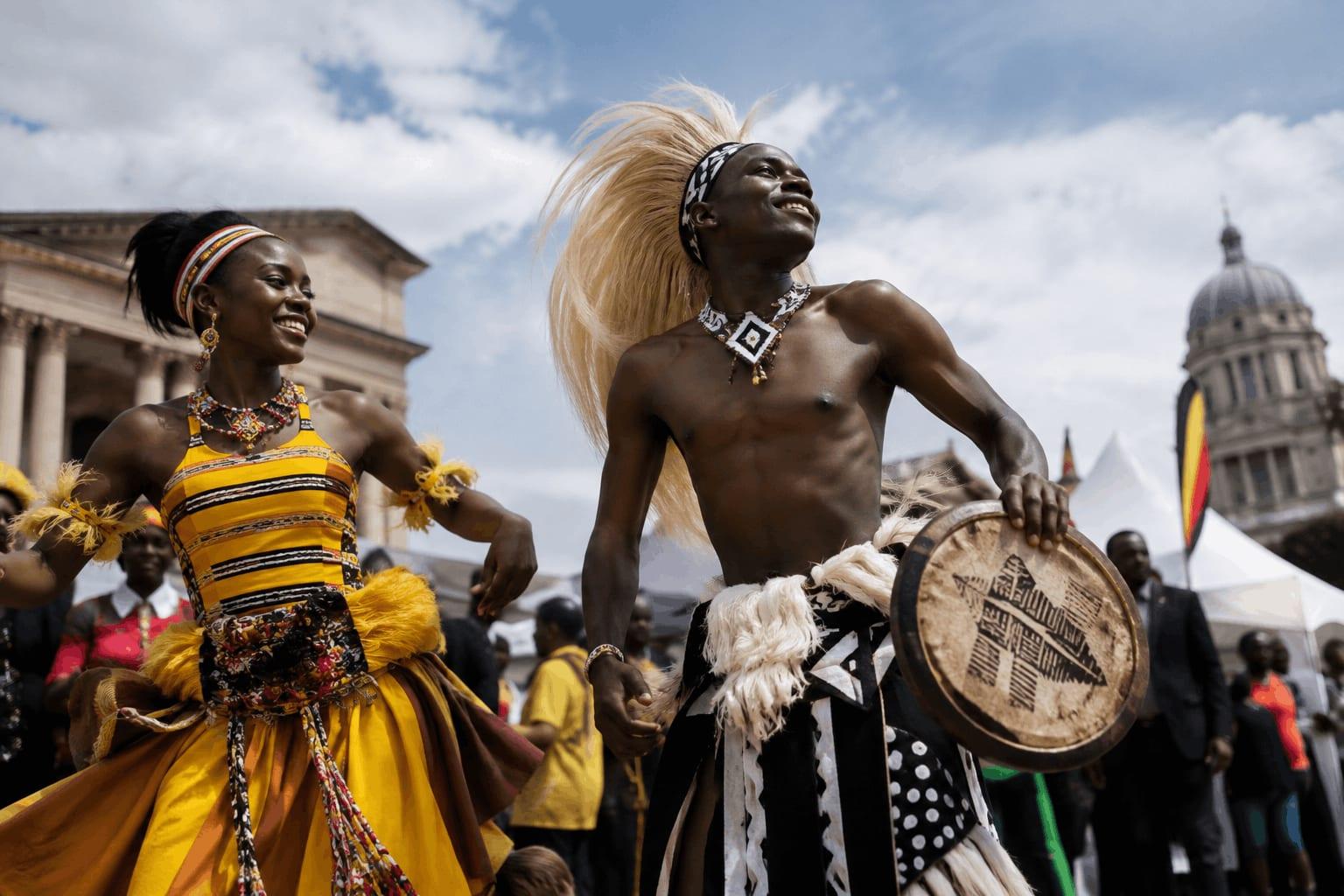
Africa's cultural diversity, its languages, music, festivals, cuisine, craftsmanship, and architecture, is not simply a backdrop for tourism.
One of the most persistent misconceptions in tourism development is the idea that a destination must become more generic, or more Western, in order to attract international visitors.
The evidence points the other way. People travel to Japan because it feels distinctly Japanese. They travel to Morocco for its architecture, cuisine, and markets. They travel to Rwanda partly because it has built a reputation for being clean, organized, and unmistakably Rwandan, a reputation reinforced by policies like its strictly limited gorilla trekking permits in Volcanoes National Park. Those permits, priced at 1,500 US dollars for most international visitors, deliberately cap the number of people who can trek each day, protecting an endangered species while channeling a share of the revenue into surrounding communities.
Bhutan offers an even more deliberate example. Its Sustainable Development Fee, a nightly charge currently set at 100 US dollars per adult visitor, funds healthcare, education, and conservation, and is the financial backbone of a "high value, low volume" tourism strategy built explicitly to avoid the pressures now facing more heavily visited destinations.
Africa already has its own version of this thinking. Since the 1990s, Botswana has restricted lodge capacity and concession numbers across the Okavango Delta and Chobe, deliberately keeping visitor volumes low to protect a fragile wetland ecosystem while charging premium rates that fund conservation and local employment. It is not a flawless model, and Botswana-based researchers have raised valid questions about whether it does enough to include local citizens in ownership rather than just employment. But as a demonstration that scarcity, done deliberately, can be a tourism strategy rather than a failure of ambition, it is a homegrown example worth studying alongside Rwanda's.
Africa's cultural diversity, its languages, music, festivals, cuisine, craftsmanship, and architecture, is not simply a backdrop for tourism. It is one of the continent's most valuable economic assets. Preserving it, rather than smoothing it over into something more universally familiar, is what will make African destinations memorable rather than interchangeable.
A Tourism Readiness Checklist
Before investing heavily in destination marketing, governments and tourism boards should ask a more fundamental question: are we actually ready to welcome more visitors?
Infrastructure
- Reliable roads connecting major attractions
- Airports capable of handling future demand
- Public transport that visitors can navigate easily
- Consistent electricity, water, and internet connectivity
Visitor Services
- Clear signage and multilingual visitor information
- Public toilets in major tourism areas
- Visitor information centers and accessible emergency services
- Well trained hospitality professionals
Environmental Management
- Effective waste collection and recycling
- Protection of beaches, forests, wetlands, and wildlife habitats
- Visitor limits in ecologically fragile areas
- Environmental impact assessments for new developments
Culture and Heritage
- Preservation of historic sites and traditional architecture
- Active support for local festivals and artisans
- Tourism planning that includes cultural practitioners, not just tour operators
Community Inclusion
- Local businesses able to participate in the visitor economy
- Protection against displacement and unaffordable housing
- Tourism revenue that visibly circulates back into local infrastructure
Governance
- Clear, consistently enforced tourism regulations
- Reliable tourism data collection
- Long-term destination management plans that outlast political cycles
If several of these remain unchecked, increasing visitor numbers should not be the priority. Improving readiness should.
Marketing Can Only Amplify What Already Exists
Country branding matters. Beautiful campaigns inspire people to travel, and compelling storytelling can reshape how the world sees a place.
But branding can only amplify reality. If roads are poor, visitors will experience poor roads. If attractions are neglected, that is what visitors will remember. If communities feel excluded from the benefits of tourism, that frustration eventually becomes part of the destination's story, whether or not any campaign mentions it.
Marketing may persuade someone to visit once. A genuinely good experience is what persuades them to return, and to tell others to go.
Do Not Overlook Domestic Tourism
Much of the conversation around African tourism strategy focuses on attracting international visitors, and understandably so, given how much foreign exchange international travel brings in. But a market built only on international arrivals is also a market exposed to every shock outside its own borders: a pandemic, a currency crisis, a visa dispute, a change in airline routes. Domestic tourism, residents exploring their own country's beaches, parks, festivals, and heritage sites, builds demand that holds steady through those disruptions. It also does something marketing campaigns cannot: it builds a population that values and protects its own natural and cultural heritage, because it has actually experienced it. Countries that cultivate strong domestic tourism alongside international marketing tend to have more resilient, more year-round tourism economies, not just a busier high season.
The Opportunity Before Africa
In this section
What remains to be decided is whether tourism growth improves life for residents as much as it improves the experience for visitors.
Africa already possesses extraordinary natural landscapes, diverse cultures, and some of the richest biodiversity on the planet. Those assets are not in question.
What remains to be decided is whether tourism growth improves life for residents as much as it improves the experience for visitors.
The countries that lead African tourism over the coming decades may not be the ones with the highest mountains or the longest coastlines. They are more likely to be the ones that invest in infrastructure before demand arrives, protect cultural identity instead of diluting it, involve local communities from the start, and enforce rules fairly and consistently. Tourism, in the end, is a reflection of governance.
The world's overtourism debate is not a warning Africa needs to fear. It is a blueprint the continent has the rare privilege of reading in advance.
Tourism is not built at the airport. It is built in the decisions governments make every day, long before a visitor books a flight.
At Ria's Colony, we believe tourism should do more than bring visitors through the door. It should create opportunity, strengthen communities, preserve culture, and support sustainable development. As Africa's tourism landscape continues to evolve, the choices made today will shape how the world experiences the continent for decades to come. The time to prepare is before the crowds arrive.
References
- UN Tourism (UNWTO), "'Overtourism'? Understanding and Managing Urban Tourism Growth beyond Perceptions," and UNWTO Glossary of Tourism Terms, for the definition of overtourism as the impact of tourism that excessively and negatively affects residents' quality of life and visitors' experiences.
- CNN, "Venice doubles daytripper entry fees for 2025," February 2025.
- The Independent, "Venice's day trip entry fee will return for even longer in 2026."
- Frommer's, "In 2025, Venice's Access Fee Will Cost Double If You Don't Reserve Ahead."
- RoadGenius, "What is Overtourism? Statistics & News," on Barcelona, Palma de Mallorca, and Santorini visitor pressures, 2024.
- Rwanda Development Board, gorilla trekking permit pricing for Volcanoes National Park (approximately 1,500 USD for most international visitors).
- Tourism Council of Bhutan / Bhutan Department of Tourism, Sustainable Development Fee structure (100 USD per adult per night, reduced rate through 2027).
- Botswana's high-value, low-volume tourism policy for the Okavango Delta and Chobe, as documented in academic and industry analyses including Mbaiwa's research through the University of Botswana's Okavango Research Institute.
Note
tourism fees and permit prices change periodically. Figures above reflect the most recently published rates at the time of writing and should be reconfirmed against official government or tourism board sources before publication or reuse.