Every April 7, Rwanda begins Kwibuka, a period of national mourning marking the start of the 1994 Genocide against the Tutsi. Over roughly one hundred days, more than 800,000 people were killed. Most were Tutsi, but Hutu and others who opposed the genocide were also among those murdered. Government forces, soldiers, gendarmes, politicians, militias and other perpetrators took part in the killings, as did civilians in some communities.
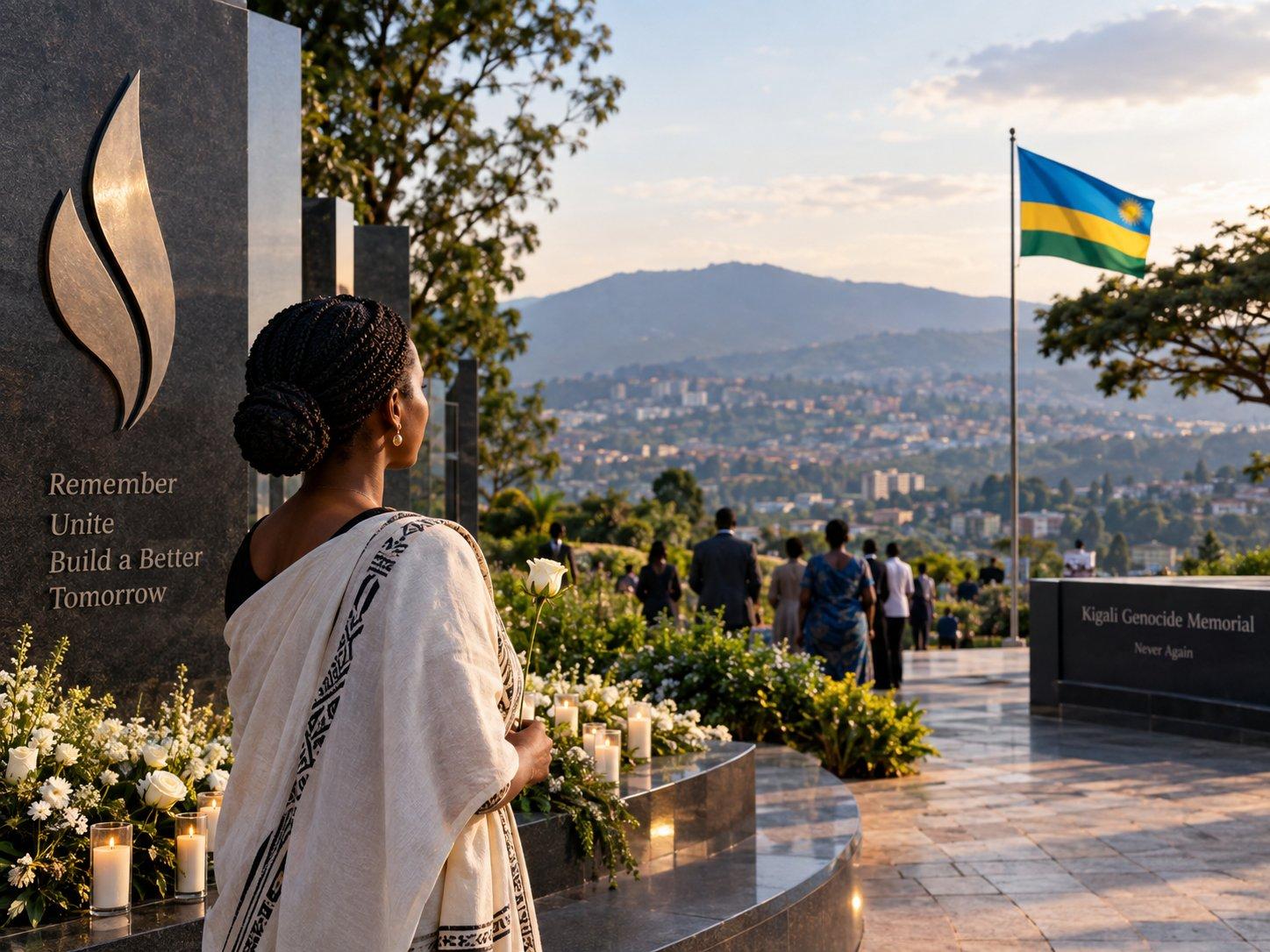
Kwibuka means "to remember" in Kinyarwanda. During the commemoration period, Rwanda holds memorial ceremonies, testimonies, lectures, music, candlelit vigils and other events. The Kigali Genocide Memorial is one of the country's main places of remembrance and is also the final resting place of more than 250,000 victims.
There is another part of Rwanda's approach to the past that is less immediately obvious. The country remembers the genocide very publicly, while at the same time trying to move away from the ethnic labels that were used to divide Rwandans. Ethnic labels were removed from national identity documents, and the government has promoted a shared Rwandan identity instead of making Hutu and Tutsi identity central to public and political life.
That combination can be difficult to understand from the outside. Rwanda has chosen to remember what happened while also trying to make sure the categories that helped drive the violence do not become the basis of political life again.
Understanding Rwandan culture without understanding 1994 is not really possible. The genocide and its aftermath have influenced national identity, justice, politics and the way communities have been encouraged to live together. But Rwanda's culture did not begin in 1994 and does not end there either. It is a small, densely populated, mountainous country with a shared language, long traditions of dance, poetry, storytelling and craft, and a national culture that existed long before the genocide and continues to develop today.
The history behind Rwanda's cultural identity
The history of the people who became the Twa, Hutu and Tutsi is more complicated than a simple story of three groups arriving one after another. The Twa are generally recognized as one of the region's oldest communities, while historians have debated the timing and nature of the movements and social changes that shaped Hutu and Tutsi identities.
Before European colonial rule, the three groups spoke Kinyarwanda and shared many cultural practices and institutions. Hutu and Tutsi were not completely fixed categories. Social mobility was possible, and intermarriage also occurred. Rwanda eventually developed a centralized kingdom in which the Nyinginya royal lineage became increasingly powerful, particularly during the nineteenth century.
That history matters because the ethnic system that later became so rigid was not simply an unchanged feature of Rwandan society. European colonial rule changed how those identities were recorded and used.
German and then Belgian colonial administration hardened the distinctions between Hutu and Tutsi, particularly under Belgian rule. Belgian authorities required ethnic identity to be recorded on identity cards and promoted racial theories that portrayed Tutsi as a distinct and supposedly superior group. The colonial administration used the existing Tutsi monarchy and hierarchy to govern Rwanda, while education and administrative systems reinforced the distinction.
In the late 1950s, political power shifted toward the Hutu majority during what is commonly called the Hutu Revolution. The change brought violence, the overthrow of the Tutsi monarchy and waves of Tutsi displacement into neighboring countries. Ethnic violence and refugee displacement continued at different points over the following decades.
In 1990, the Tutsi-led Rwandan Patriotic Front, made up largely of descendants of Rwandan refugees, invaded Rwanda from Uganda. A civil war followed. Then, on April 6, 1994, President Juvénal Habyarimana's plane was shot down. The killings began almost immediately and developed into the nationwide genocide against the Tutsi.
The genocide ended in July 1994 when the Rwandan Patriotic Front took control of the country. The RPF has remained the dominant governing political force since then. Paul Kagame, a leading figure in the RPF who served as vice president and minister of defense after the genocide, became president in 2000.
Since 1994, Rwanda has recorded major gains in areas including economic growth, health, infrastructure and public administration. At the same time, its government has faced sustained criticism over restrictions on political opposition, civil society, journalists and freedom of expression.
The aftermath also extended beyond Rwanda's borders. Rwanda became deeply involved in the conflicts in the Democratic Republic of Congo, partly because former Rwandan government forces and extremist militias had fled into eastern Congo after the genocide. But the Congo wars also involved wider regional, political, military and economic interests. They caused enormous loss of life, much of it through disease, hunger and displacement as well as direct violence. Rwanda's role in eastern Congo remains a major source of regional tension.
The people and languages of Rwanda
Before the genocide, Rwanda's population was commonly estimated at roughly 85 percent Hutu, 14 percent Tutsi and about 1 percent Twa, although figures varied depending on the source and period.
Those numbers can make the three groups sound more separate than they actually were. Hutu and Tutsi lived in the same communities, spoke the same language and shared many customs. Social mobility and intermarriage also occurred. Colonial rule made the categories more rigid by turning them into official administrative identities.
After the genocide, the government deliberately moved in the opposite direction. Ethnic labels were removed from national identity documents, and the government began promoting a shared identity based on being Rwandan. Public discussion of ethnicity is also regulated, particularly where authorities believe it could encourage division.
Supporters of this approach argue that it helps prevent a return to the ethnic politics that contributed to violence. Critics argue that restrictions on political speech can also make it harder to discuss Rwanda's history and present-day politics openly.
The Twa are Rwanda's smallest historically recognized population group and have long faced social and economic marginalization. Historically associated with forest environments and hunting and gathering, many Twa communities experienced major changes to their livelihoods as forests were converted to farmland or protected areas. Today, Twa communities remain disproportionately affected by poverty and limited access to land and other economic opportunities.
Kinyarwanda is Rwanda's common language and is spoken throughout the country. Rwanda has four official languages: Kinyarwanda, English, French and Kiswahili.
Kinyarwanda is also spoken beyond Rwanda's borders, particularly in eastern Democratic Republic of Congo and parts of Uganda. So although Rwanda has a defined national boundary, the language itself belongs to a much wider Great Lakes cultural and linguistic region.
Religion in Rwanda
Christianity makes up the overwhelming majority of religious affiliation in Rwanda. The 2022 census recorded Catholics at about 39.9 percent of the resident population, Protestants at about 35.9 percent and Adventists at about 12.2 percent. Smaller Christian groups, Muslims, people with no religion and followers of other religions make up the remainder.
Christianity became deeply established during the colonial period through missionary activity. That history is complicated by what happened during the genocide. Some Catholic clergy and other religious figures were accused or convicted of involvement in the killings, while other religious leaders and institutions protected people at great personal risk.
Rwanda also has a smaller Muslim population, predominantly Sunni. Accounts of the genocide document cases in which Muslims sheltered people across ethnic lines, although experiences differed between communities and individuals.
Before Christianity and Islam became dominant, Rwandan religious life included belief in a supreme creator associated with the name Imana, along with practices connected to ancestors, clans and the royal court. Those older traditions did not simply disappear overnight. Elements of them remain in some cultural practices and expressions, even though most Rwandans today identify with Christianity, Islam or another modern religious tradition.
What people eat
Ugali and other maize-based dishes, bananas, beans, sweet potatoes and cassava have long been part of everyday Rwandan diets. What people eat varies by household, region, income and agricultural conditions.
Isombe, made from pounded cassava leaves, is another well-known Rwandan dish. Brochettes, or skewered grilled meat, are common in restaurants and social settings, while fish from Lake Kivu is eaten particularly in communities around the lake.
Cattle have also played an important role in Rwanda's history. They were valuable economically and socially in precolonial Rwanda, while long-horned Inyambo cattle were associated with the royal court. Milk and cattle therefore have a place in Rwanda's cultural history that goes beyond food alone.
Urwagwa, a traditional banana beer, remains part of Rwandan food and drink culture. Coffee has also become one of the country's important agricultural exports.
Rwandan coffee is grown by smallholder farmers in several parts of the country. Since the early 2000s, Rwanda has invested in improving coffee processing and quality, including through washing stations and specialty-coffee production. These changes helped some producers move into higher-value specialty markets and made coffee an important part of Rwanda's agricultural export economy.
Music, dance and art
Intore is one of Rwanda's best-known traditional dances. The dancers are arranged in lines representing warriors on a battlefield, and their movements imitate combat with an invisible opponent. Performers leap, move their feet in precise patterns and use spears and shields as part of the choreography.
The tradition is connected to Rwanda's historical warrior and royal culture. Performers were selected and trained through institutions known as Itorero, where they learned cultural values, public speaking, traditional games, governance principles and performing arts.
Today, Intore is practiced much more widely. It appears in schools, universities, families, communities and organized dance groups, and is performed at weddings, festivals, harvest celebrations and events welcoming distinguished guests. UNESCO added Intore to its Representative List of the Intangible Cultural Heritage of Humanity in 2024.
Dance is only one part of Rwanda's artistic tradition. Oral storytelling, praise poetry, historical narratives, songs and proverbs have also played important roles in preserving knowledge.
Before written records became widespread, specialist court performers and storytellers helped pass information about royal history, communities, values and important events from one generation to another. Those traditions continue to influence Rwandan cultural performance today.
Crafts that carry Rwanda's history
Imigongo is one of Rwanda's most distinctive traditional art forms. It uses cow dung mixed with natural pigments to create raised geometric designs on surfaces such as wooden panels. The technique is particularly associated with eastern and southeastern Rwanda and has developed into a recognizable form of contemporary Rwandan decorative art.
Basket weaving is another important Rwandan craft tradition. Agaseke baskets are tightly woven baskets known for their geometric patterns and careful construction. Handwoven baskets are sold within Rwanda and internationally, providing income for many artisans and cooperatives.
Some basket-making cooperatives and development projects have also connected the craft with programmes supporting women, survivors and community development. In some specific projects, baskets have been used in peacebuilding and reconciliation initiatives, although basket production as a whole is not a genocide-reconciliation programme.
Traditional Intore costumes are another visible part of Rwanda's cultural presentation. Performers may wear elaborate headpieces and other elements associated with the historical presentation of warriors. Traditional drums and horns remain part of performances, while pottery and other crafts continue to be produced by artisans and community workshops.
How Rwanda remembers and comes together
Kwibuka is Rwanda's major annual period of remembrance for the 1994 Genocide against the Tutsi. The commemoration begins on April 7 and continues for one hundred days, corresponding to the period during which the genocide took place.
During this period, Rwanda holds memorial ceremonies, testimonies, educational programmes, public discussions and other events focused on remembering the people who were killed and teaching younger generations about what happened.
Another very different national practice happens throughout the rest of the year.
Umuganda is a monthly community work programme held on the last Saturday of the month. People take part in collective activities such as cleaning public spaces, maintaining roads, planting trees and carrying out other community projects. The modern programme draws on older traditions of communal work but was also developed and formalized as part of Rwanda's post-genocide approach to community participation and reconstruction.
Then there is gacaca.
Gacaca was a community-based justice system adapted from traditional Rwandan dispute-resolution practices and used after the genocide to deal with the enormous number of genocide-related cases. Conventional courts could not process the entire caseload quickly, so gacaca brought proceedings into communities, where locally selected judges heard testimony and considered cases.
The system formally closed in 2012 after processing more than 1.9 million cases.
Gacaca was praised by some observers because it allowed Rwanda to process a huge number of cases while involving communities in justice and truth-telling. It was also criticized over due-process concerns, witness protection, the quality of evidence and the legal protections available to defendants compared with conventional courts.
These institutions show the different ways Rwanda has dealt with the aftermath of 1994. Some are about remembering. Some are about justice. Others are about getting people to work together in ordinary community life.
Why the word "genocide" became so important
The word "genocide" was coined by Polish-Jewish lawyer Raphael Lemkin in 1944 in his book Axis Rule in Occupied Europe. Lemkin developed the concept while thinking about the destruction of national, ethnic, racial and religious groups, including the mass atrocities committed during the Second World War.
The word later became part of international law through the 1948 Genocide Convention.
In Rwanda in 1994, the international response to the killings was disastrously inadequate. The United States government and other international actors were reluctant to publicly describe what was happening as "genocide." Internal U.S. government discussions show that officials debated the legal and political consequences of using the term.
The problem was not simply what the killings were called. Governments had information about the scale of the violence while it was happening, yet the international response failed to stop it.
That failure remains an important part of Rwanda's history because it helps explain why the country's post-genocide government has placed such a strong emphasis on self-reliance, national institutions and the responsibility of the state to protect its people.
What Rwanda's culture looks like today
Rwandan culture today is not a museum version of the past. Traditional practices continue, but they are also being used, adapted and presented in new ways.
Basket weaving remains an important craft and source of income for artisans. Some cooperatives have connected basket-making with programmes supporting women, survivors and community development.
Intore is still performed across the country, from national cultural presentations to weddings, festivals, schools and community events. The dance has changed with the society around it, but its central visual language remains recognizable: performers move together, imitate warriors and use music, movement and traditional instruments to tell a story about strength and victory.
And every April, Rwanda remembers the Genocide against the Tutsi through Kwibuka. At the same time, the country continues to promote a shared Rwandan identity rather than formal ethnic identification in public life.
That creates a difficult question that Rwanda continues to live with: how do you remember an atrocity whose perpetrators and victims were identified through ethnic categories while building a society in which those categories are no longer supposed to determine political identity?
Rwanda has answered that question through a combination of remembrance, national identity policies, justice programmes, community work and cultural institutions. Whether those approaches will continue to evolve, and how much space there will be for open debate about the country's history and politics, remains part of Rwanda's story today.