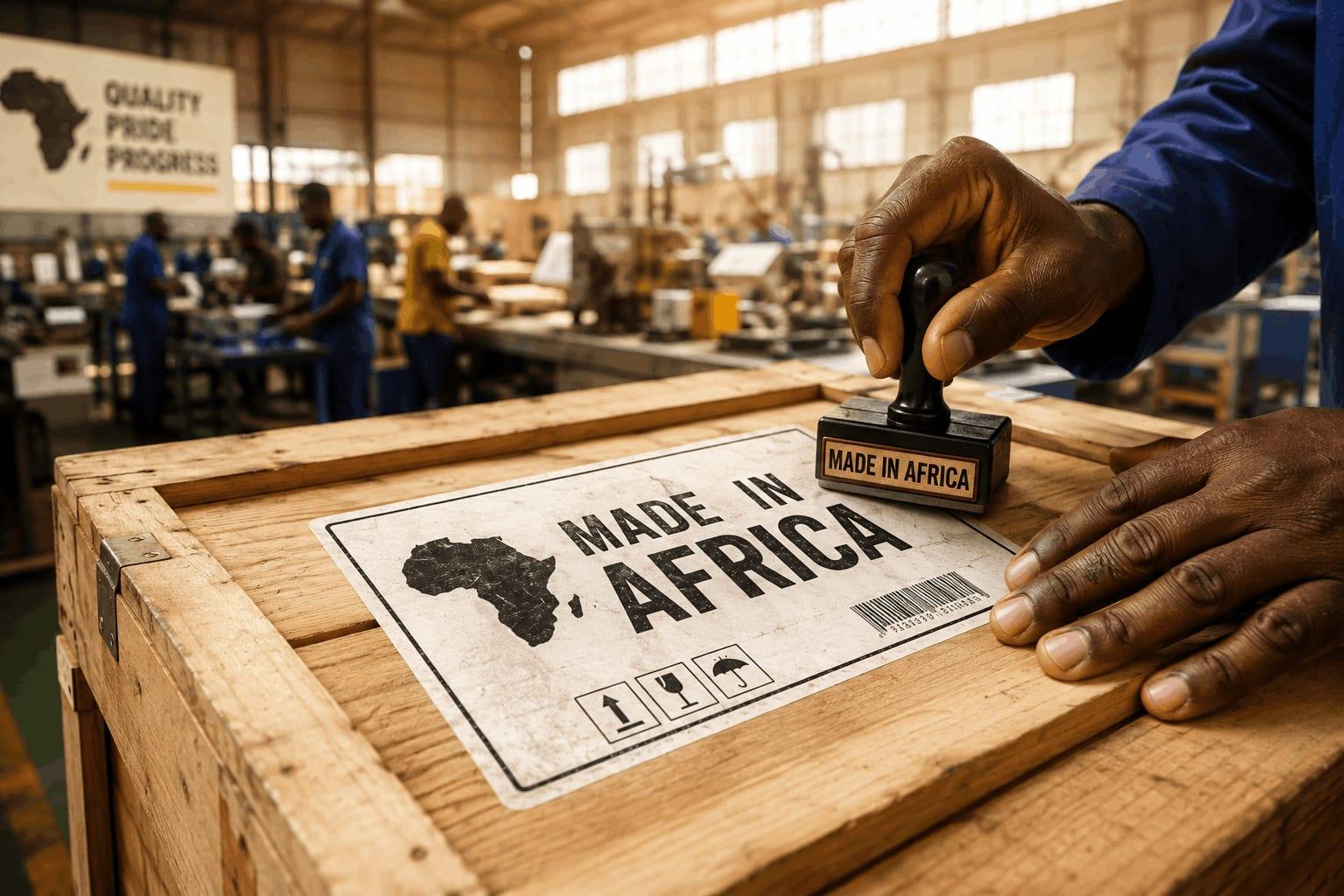
Made in Germany" began as a British insult in 1887. Here's how Germany, Japan and South Korea turned tainted labels into trusted ones, and what it means for a future "Made in Africa" mark.
"Made in Germany" was not Germany's idea. The British invented it, in 1887, as a warning.
Under the Merchandise Marks Act, which passed the UK Parliament on August 23, 1887, Britain required goods coming in from Germany to carry that phrase in plain sight. The point was not to help German manufacturers. It was to help British shoppers avoid them. German industry, especially the fast-growing factories of the Ruhr region, had built a reputation for cheap copies and shoddy goods, and knife makers in Sheffield were particularly angry about German imitations flooding their market. Lawmakers wanted the label to work like a warning sticker, something that made people think twice before buying.
For a while, it worked exactly as planned. German officials at the time reportedly found the label humiliating. But sixty years later, that same phrase had become one of the most trusted marks on earth. It still is today.
This did not happen because someone in Berlin came up with a clever slogan. It happened because German industry spent decades doing the unglamorous work of making the label actually true. They treated an insult as a specification to meet, not an accusation to argue with. The same basic pattern, a label meant to shame a country ends up becoming a badge of honor, played out again with Japan and then with South Korea over the course of the twentieth century. Each time, the record of how the turnaround actually happened is fairly well documented. And for anyone thinking about how Africa might build something like a trusted "Made in Africa" mark, that record is worth studying closely. It is more specific, and far more demanding, than most modern branding advice tends to admit.
Germany: turning a warning label into a promise
In this section
Sixty-six percent of respondents associated it with quality, ahead of Switzerland at 64 percent and Japan at 63 percent.
Britain's 1887 law worked as designed, at least at first. German manufacturers in the late 1800s had a reputation for lower-grade goods, and stamping "Made in Germany" onto every export was meant to keep British buyers loyal to British-made products instead.
German industry didn't respond with an ad campaign. It responded with an industrial one. Over the following decades, Germany built a dual vocational education system, one that combined classroom learning with structured, paid apprenticeships inside real workplaces. That model still underpins German manufacturing today. Germany also formalized national engineering and product standards through what became the German Institute for Standardization, founded in 1917. That gave German industry something concrete to be measured against, rather than just a phrase to repeat. By the time West Germany's postwar economic recovery was in full swing during the 1950s, the label had already finished its transformation from warning to guarantee.
You can still see the scale of that transformation in how people rank the label today. A survey of 20,000 consumers across ten countries, carried out in March 2025 by the Nuremberg Institute for Market Decisions for Statista's Made-In-Country Index, found that Germany is still the most trusted "Made in" label in the world. Sixty-six percent of respondents associated it with quality, ahead of Switzerland at 64 percent and Japan at 63 percent. It took roughly sixty years to go from a legally forced shame stamp to the top of that list, and getting there meant rebuilding education, standards and industrial habits from the inside. Simply changing what the label said would never have done it.
Japan: from cheap toys to two American statisticians
In this section
In the early 1950s, the Union of Japanese Scientists and Engineers invited two American statisticians, W.
Japan's version of the story started later and moved faster, but it followed a similar shape. Through the late 1940s and into the 1950s, "Made in Japan" was, in much of the world's imagination, shorthand for cheap and short-lived goods: toys, ceramics, textiles and transistor radios, produced quickly as the country tried to rebuild its economy after the war. The phrase carried roughly the same weight that "Made in China" carried for a lot of Western shoppers decades later.
The turning point is well documented. In the early 1950s, the Union of Japanese Scientists and Engineers invited two American statisticians, W. Edwards Deming and Joseph Juran, to teach the chief executives of Japan's biggest industrial companies about statistical quality control. This is the discipline of building consistency into a manufacturing process itself, rather than catching defects after the product is already built. American industry, at the time, mostly shrugged off these same lessons. Japanese industry took them seriously and built them into how companies were run.
Over the following three decades, companies like Sony, Honda, Toyota and Nikon combined that quality thinking with products designed around what American and European buyers actually cared about: low failure rates, durability, safety and fair prices. By the 1980s, Japanese cars and electronics were widely seen as more reliable than their American and European rivals, a real reversal of the postwar reputation. Today Japan sits third in the Made-In-Country Index's global trust ranking. That result came from roughly thirty to forty years of steady, unglamorous investment in manufacturing discipline, not from a single ad or campaign.
Korea: a bonfire of 150,000 phones
In this section
The phones destroyed that day were worth roughly 50 billion Korean won, about 36 million US dollars at the time.
South Korea's turnaround is the most recent of the three, and its most dramatic moment is unusually well recorded. Through the 1970s and 1980s, Samsung and Hyundai built their export businesses on cheap, high-volume manufacturing, and both spent years being the butt of jokes in American markets over reliability. Hyundai's early cars sold in the US were widely mocked for poor build quality, and Samsung's electronics division trailed well behind Japanese rivals like Sony and Panasonic on almost every measure that buyers actually cared about.
The break came from the top. In June 1993, on a flight from Tokyo to Frankfurt, Samsung Group chairman Lee Kun-hee met with his executives to discuss problems flagged in a report from the company's Japanese counsel. That meeting led to what became known as the "New Management" declaration, a directive telling executives to change everything about the company except their own families, with quality replacing sheer volume as the measure that mattered most.
The speech alone didn't move much. In 1994, a rushed product launch pushed the defect rate on Samsung's mobile phones up to 11.8 percent. Lee decided that speeches weren't getting through. In March 1995, he had 150,000 defective phones, including early Anycall models, piled up at Samsung's factory in Gumi, in front of around 2,000 employees. Ten workers, some wearing headbands that read "Quality First," smashed the pile with sledgehammers. What was left was set on fire, and bulldozers cleared away the remains. The phones destroyed that day were worth roughly 50 billion Korean won, about 36 million US dollars at the time. It was a deliberately public, deliberately expensive act, aimed as much at Samsung's own workforce as at anyone outside the company.
It worked. By the end of that same year, Samsung's share of the domestic Korean phone market had jumped from fourth place to first.
What followed over the next two decades built directly on that foundation. Samsung and Hyundai spent the rest of the 1990s and 2000s closing the reliability gap with Japanese manufacturers. Once that industrial credibility existed, Korea's cultural exports arrived on top of it rather than instead of it. K-pop, Korean film and Korean television did not need to first convince the world that Korean-made things could be trusted. Samsung and Hyundai had already spent twenty years proving that. Global hits like "Parasite" and "Squid Game," and groups like BTS, rode in on credibility that industry had already built. The culture made Korea feel exciting to the world. The manufacturing had already made it feel reliable, and once both existed side by side, they reinforced each other.
What none of these three had in common with Africa's starting point
In this section
Africa does not currently have its own entry in the Made-In-Country Index, and that absence tells you something on its own.
Line up all three stories and a pattern holds. Each turnaround took decades, not years. Roughly sixty years for Germany. Thirty to forty for Japan. Twenty to thirty for Korea, if you count from Lee Kun-hee's 1993 declaration to Hallyu's global peak. Each one required real, structural investment before the label meant anything at all: vocational education and national standards for Germany, statistical quality control taught by outside experts for Japan, a company-wide culture change forced from the very top for Korea. And in every case, the cultural or reputational payoff came only after the underlying product had actually become reliable. Never before.
Africa does not currently have its own entry in the Made-In-Country Index, and that absence tells you something on its own. The global surveys that rank Germany, Switzerland and Japan at the top, and China, Mexico and India nearer the bottom, simply don't yet include a "Made in Africa," "Made in Nigeria" or "Made in Kenya" category with enough international name recognition to bother surveying. That's not a judgment on the actual quality of what African manufacturers produce. It's a description of how little consumer-facing branding work has been done so far, work that would give international buyers, and African buyers too, a clear sense of what an African-made product actually means.
The lower end of that same survey is worth sitting with for a moment. China, Mexico and India, three of the largest manufacturing economies in the world by volume, still sit at 31 percent, 28 percent and 27 percent trust respectively. That's proof that manufacturing scale alone doesn't automatically buy consumer trust. Trust has to be built on purpose, on top of scale, not assumed to follow from it automatically.
The pieces that already exist, just not combined yet
In this section
ARSO's standards are technical, and mostly invisible to the ordinary shopper walking through a market.
Africa isn't starting from zero, and it's worth being precise about what already exists rather than implying nothing has been done. Rwanda's Made in Rwanda policy, launched in 2016, has delivered real, measurable results. Between 2017 and 2019, Rwanda's industrial output grew at roughly 10.7 percent a year, up sharply from about 4 percent annually in the years before the policy. Between 2015 and 2017, the country's trade deficit shrank by 36 percent, driven by exports rising 69 percent while imports fell 4 percent.
South Africa's Proudly South African campaign has an even longer track record. It was founded in 2001, growing out of a 1998 Presidential Job Summit convened by Nelson Mandela, and it functions as a real membership-based quality mark rather than a slogan. Only companies that pass an audit confirming both local content thresholds and quality standards are allowed to use its logo.
The African Organisation for Standardisation, meanwhile, has already harmonized close to 1,900 regional standards across the continent since it was founded in 1977.
What none of these has done yet is what Germany's DIN standards, Japan's quality movement, and Korea's Samsung turnaround eventually achieved together: combine into one recognizable, continent-wide mark that a buyer, anywhere, inside Africa or outside it, could trust on sight, no matter which of the 54 countries actually made the product. Made in Rwanda is Rwandan. Proudly South African is South African. ARSO's standards are technical, and mostly invisible to the ordinary shopper walking through a market. Each one is a real, working piece of the eventual answer. None of them, on its own, is the answer.
Africa's culture may already be running ahead of its manufacturing reputation
In this section
Africa's cultural exports are, in some ways, already running ahead of its manufacturing reputation, rather than following behind it.
There's one place where Africa's position looks genuinely different from where Japan and Korea started, and it's worth naming directly because it runs against the usual order of things.
Afrobeats streaming grew 22 percent globally in 2025 alone, according to Spotify's own reporting, and streams of the genre are up roughly 5,022 percent since 2021. Listenership is climbing sharply, and not just in North America and Europe. It's rising in Brazil, Indonesia, Egypt, India and the Philippines too. Nigeria's Nollywood film industry, which produces more than 2,500 films a year, is projected to generate close to 14.82 billion US dollars in 2025, up from around 4 billion dollars in 2013.
Korea's sequence ran manufacturing credibility first and cultural soft power second, with the two reinforcing each other only once both were in place. Africa's cultural exports are, in some ways, already running ahead of its manufacturing reputation, rather than following behind it. That isn't necessarily a problem. But it is a real difference worth planning around instead of ignoring.
Cultural goodwill doesn't automatically transfer into trust in a physical product carrying a "Made in Nigeria" or "Made in Africa" label. It transferred for Korea only because Samsung and Hyundai had already put in twenty years of unglamorous reliability work first. If Africa wants its current cultural momentum to eventually lift its manufacturing reputation, the same way Korea's industrial reputation ended up lifting its cultural exports, the industrial side of that equation still has to get built. The standards, the vocational training, the quality control, all of it. It has to be built for real, not assumed to follow automatically just because a song is topping charts in São Paulo.
What it would actually take
In this section
None of the three countries in this piece got their trust mark by simply asking for it.
Put together, the honest version of this playbook is less comfortable than most nation-branding advice tends to be, and it's worth stating plainly.
A shared African quality mark would need real teeth behind it. Audited local content and quality thresholds, the kind Proudly South African already requires, not just a logo that anyone can print on a box.
It would need continental standards, not only national ones. That means ARSO's harmonization work has to keep expanding, and it eventually needs to anchor a consumer-facing seal, not just sit inside a technical committee's paperwork.
It would need the kind of decades-long patience that Germany, Japan and Korea all needed, along with an honest acceptance that a "Made in Africa" mark launched in 2026 will probably not carry real global trust before the 2040s or 2050s, going by how long every earlier version of this story took.
It would benefit from Africa's existing cultural momentum, but only if that momentum is treated as a head start on visibility, not a substitute for the underlying manufacturing quality work that still has to happen.
And, if Samsung's example holds any lesson at all, it may need at least one moment of genuine, costly, visible institutional commitment. Not necessarily a bonfire. But something that signals to African manufacturers themselves, not just to outside buyers, that quality is now the standard being enforced, not merely the standard being promised in a speech.
None of the three countries in this piece got their trust mark by simply asking for it. They earned it by rebuilding the very thing the label was supposed to describe, and then waiting long enough for the rest of the world to notice. That's a harder, slower story than most branding conversations want to tell. It's also, based on the actual record, the only version of the story that has worked, in Europe, in East Asia, and in every case examined here.
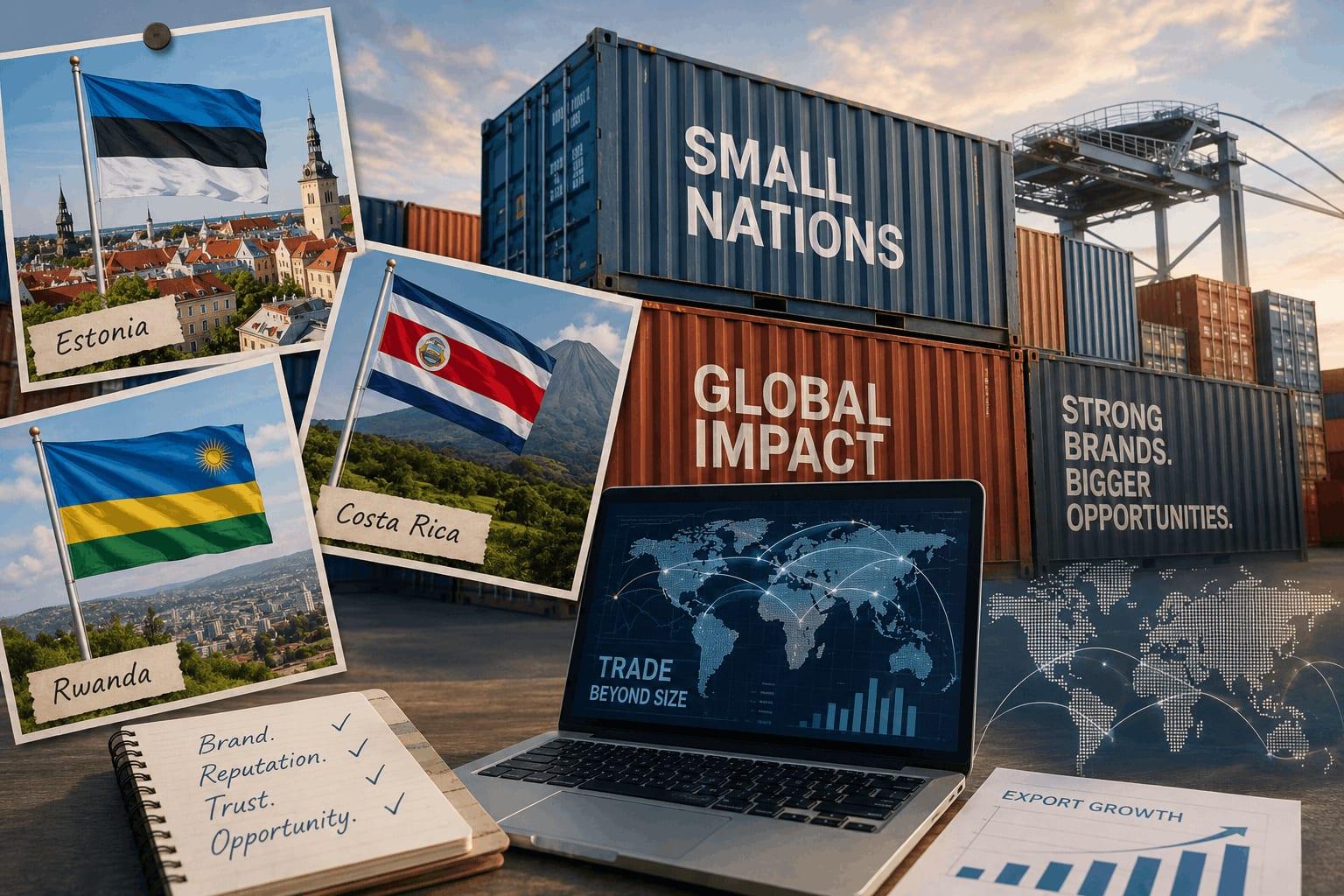
This closes out the "Borrowed Blueprints" series looking at what Africa can learn from how other regions built trust in their own trade and integration projects: from Europe's single market and Erasmus generation, to Estonia, Costa Rica and Rwanda's nation-branding playbooks, to ASEAN's shared flag and anthem, to the decades it took Germany, Japan and Korea to turn a label into a promise.
Sources: Merchandise Marks Act 1887 (UK Parliament); Wikipedia, "Made in Germany" and "Merchandise Marks Act 1887"; Supply Studies, "The Making of 'Made in'"; Bundesverband Deutscher Patentanwälte, "130 Jahre 'Made in Germany'"; Statista and the Nuremberg Institute for Market Decisions, Made-In-Country Index, March 2025 (via Visual Capitalist); W. Edwards Deming Institute; Union of Japanese Scientists and Engineers historical records; The Asia Business Daily, "The 1993 'New Management' Declaration"; KED Global, "Why Lee set fire to over 150,000 mobile phones"; Fast Company, "Samsung's Chairman Lee ordered a bonfire of defective phones in 1995"; TechCrunch, "How Samsung Got Big"; Ministry of Trade and Industry, Rwanda, Made in Rwanda Policy 2016; IMBERE, "Made In Rwanda: Objectives, pillars, achievements and challenges"; Proudly South African, campaign history; African Organisation for Standardisation; Spotify, "Culture in Motion" and Wrapped 2025 Afrobeats data; Premium Times Nigeria and BusinessDay NG, Nollywood revenue projections.