Ask most people to name a solo travel destination and Kigali rarely comes up first. Ask anyone who has actually been there, and it comes up almost immediately. Why is that though? We find that interesting.
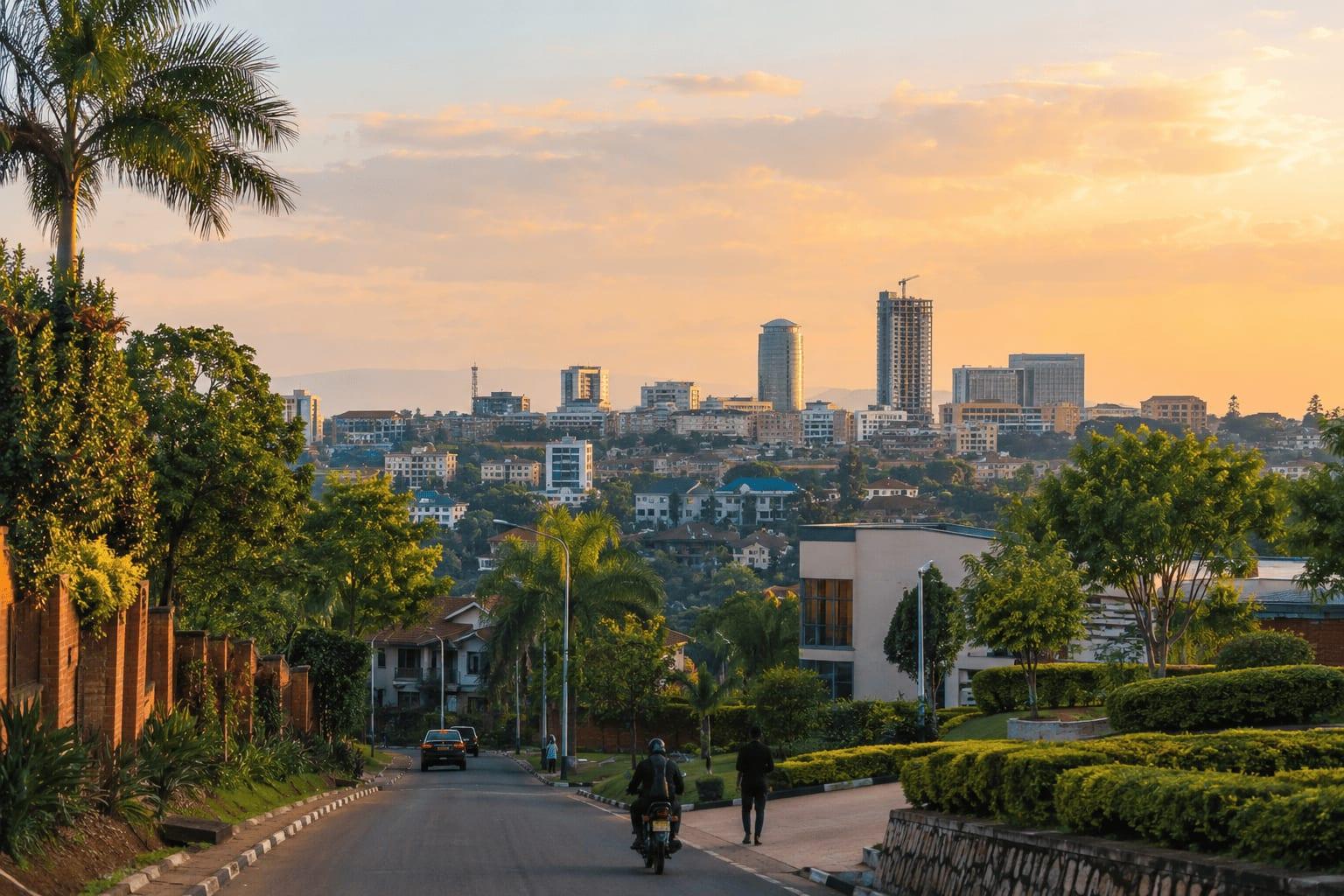
Kigali is not usually the city people put at the top of a solo travel list. It does not have the global tourism profile of Cape Town, Nairobi or Marrakech. It is also not a city that needs to constantly convince you that something exciting is happening. You notice something else instead.
It is orderly. It is relatively calm. It is easy to move through once you understand how the city works. And for someone travelling alone, those things matter more than a long list of attractions.
This is the gap Aerial View exists to close: the distance between a place's reputation and what it is actually like to walk through it alone. So, before you book, here are somethings you need to know ma'am!
Getting into Rwanda is simpler than you might expect
Rwanda allows citizens of every country to obtain a visa on arrival. You can also apply for a visa online before travelling if you prefer to have that sorted in advance.
The standard single-entry visitor visa can cost up to US$50, although this does not apply equally to everyone. Citizens of African Union, Commonwealth and La Francophonie countries are eligible for a free 30-day visa, while some nationalities have longer visa-free arrangements. The rules are worth checking against your nationality before you travel because visa requirements are not one-size-fits-all.
For most travelers, the bigger point is that Rwanda does not make getting into the country unnecessarily complicated. You can arrive at Kigali International Airport or enter through a land border, complete the relevant immigration process and begin your trip.
The last thing you want when travelling somewhere unfamiliar is for the first part of the journey to involve a complicated entry process you could have avoided, especially as a solo traveler.
The safety reputation is not something to dismiss
Kigali has a reputation for being one of the more secure capitals in Africa, and it does not mean crime does not happen. Current travel advice still warns about theft, mugging, burglary and other ordinary risks, particularly after dark. You should therefore use the same basic judgement you would use anywhere else: keep your belongings secure, pay attention to your surroundings and think about how you are getting home before you go out.
But being able to travel independently without constantly feeling overwhelmed by your surroundings is different from being guaranteed complete safety. Kigali tends to give you the former.
You can walk around, sit somewhere alone, go out for food and explore different parts of the city without the entire experience feeling like a logistical exercise or a combative mode.
Kigali is the city where you can reasonably make your own decisions without feeling like you have to second-guess every one of them.
But Kigali is still a city
This sounds obvious, but travel content often forgets it. Kigali is not a resort. It is not a theme park designed around the visitor experience.
People live there. They work there. They commute there. They run businesses there. They have ordinary days that have nothing to do with tourism. That is part of what makes the city interesting.
You will sometimes find yourself in places where there are very few other tourists. You may sit in a café surrounded by people who are there because it is simply part of their day. You may move through a neighborhood where nobody is trying to sell you an experience.
The hills will change your plans
Kigali is also a hilly city. That sounds like a small detail until you try to walk somewhere that looked very close on a map. Distances can be deceptive because the city rises and falls constantly. A route that looks perfectly reasonable on Google Maps may feel very different when you are actually walking it. So do not plan your entire trip around walking from one attraction to another.
Spend time in one area before moving to another. Give yourself enough time between plans. Use transport when the distance or terrain makes walking impractical. This is one of those things you understand faster once you are physically in the city, but knowing it beforehand makes your first few days easier.
You do not need to fill every hour
This might be one of the most important things to know about Kigali. Do not arrive with an itinerary so packed that you spend the entire trip moving from one location to another. The city rewards slower travel.
Have breakfast somewhere and stay a little longer. Sit with a coffee. Explore a neighborhood without needing to turn every stop into content. Talk to someone if a conversation naturally starts. Leave enough room for the day to change.
Rwanda has a significant coffee industry, and coffee culture has become part of the experience of spending time in Kigali. But the value is not simply that there are cafés to visit. It is what happens when you stop moving.
As a solo traveler, you have something a group does not always have: you can change your mind.
You can stay because you like the place.
You can leave because you do not.
You can spend two hours somewhere that was supposed to take twenty minutes.
That is one of the quiet advantages of travelling alone.
Transport requires a little common sense
Kigali has buses, cars and motorcycle taxis, commonly known as moto taxis. The motos are a normal part of getting around the city, rather than something created specifically for tourists. Rwanda also has regulations around motorcycle taxis, including helmet requirements.
If you are new to Kigali, ask your accommodation or someone you trust about getting around before you start moving between unfamiliar neighborhoods.
At night, plan your return journey before you leave rather than assuming you will figure it out later. This is not because Kigali suddenly becomes impossible after dark. It is because good travel planning is usually less about avoiding an entire category of experience and more about removing unnecessary uncertainty.
The city deserves more than one night
One of the easiest mistakes to make when planning Rwanda is treating Kigali as the place where you sleep before heading somewhere else. The country's wildlife experiences understandably receive much of the international attention. Gorilla trekking, Akagera National Park and Nyungwe National Park can all become major parts of a Rwanda itinerary.
But Kigali is not simply an airport with restaurants around it. The city has its own history, food, creative scene, businesses, neighborhoods and everyday rhythms. And Rwanda's history deserves attention too. The 1994 Genocide against the Tutsi is inseparable from understanding modern Rwanda. The Kigali Genocide Memorial is therefore not just another attraction to add to an itinerary because a travel website says you should visit it.
Go when you are prepared to engage with what it represents. You may leave with a different understanding of the country than the one you arrived with. That is what travel can do at its best.
If you want to trek with gorillas, plan that separately
If gorilla trekking is the reason Rwanda is on your list, plan it before you build the rest of the trip. It is a completely different experience from spending a few days in Kigali, and it requires its own planning around permits, availability, transport and accommodation. Do not assume you will arrive in Kigali and decide at the last minute. If it is important to you, make it one of the first things you organize. Then build Kigali around it rather than trying to squeeze the city into whatever time remains.
What actually makes Kigali good for solo travel?
Kigali does not require you to have a group before you can enjoy yourself. You can sit at a restaurant alone. You can explore a neighborhood alone. You can spend an afternoon in a café without needing someone else to make the experience worthwhile. Because the city is relatively calm, you have room to pay attention.
You notice how people move around the city. You notice the businesses. You notice what people are wearing. You notice how different neighborhoods feel. You begin to understand that the country you imagined before arriving is not necessarily the country you are experiencing. That is difficult to get from a list of attractions.
But you should also know what Kigali is not
Kigali may not be the right destination if you want a huge nightlife scene, constant activity or an itinerary packed with major attractions. It can feel quiet. And depending on what you are used to, that quietness can either be the best part of the trip or the thing that makes you wonder what you are supposed to be doing. There is nothing wrong with either reaction. The point is to know what you are booking.
Kigali is better suited to someone who wants to experience a city rather than simply consume it. Someone who is happy to slow down. Someone who wants conversations, food, neighborhoods, history and ordinary moments alongside the more obvious tourist experiences. Someone who does not need every part of a trip to be spectacular to find it valuable.
So, should you go alone?
If you have been overlooking Kigali because it does not appear on enough "best solo destinations" lists, that may be exactly why you should look at it again.
It is not perfect.
You still need to plan your transport. You still need to pay attention to your surroundings. You still need to understand the terrain, the weather, the visa rules and the parts of Rwanda you actually want to see. But none of those things require you to have a group around you. And perhaps that is the more useful definition of a solo-friendly destination. A place where you can reasonably figure things out for yourself.
It's easy to reset, and have a retreat in Kigali, hence our Buhoro Buhoro Retreat. Interested? Express your interest HERE
See you there!