Most travel content answers the same questions for you.
-
What should you photograph while you're there?
-
A top ten list of attractions.
-
A map of must-see stops.
-
A reel of the same landmarks that appears in everyone else's feed.
Those are great. They help you not to start from scratch. But at Ria's Colony, we believe tourism should be deeper than simply visiting beautiful places.
Tourism should be an avenue to educate ourselves and broaden our minds, helping us understand other cultures while freeing ourselves and our minds from the mental prisons we've inherited.
Beyond the cute pictures are the experiences, the lessons, and the memories, because that's where learning happens.
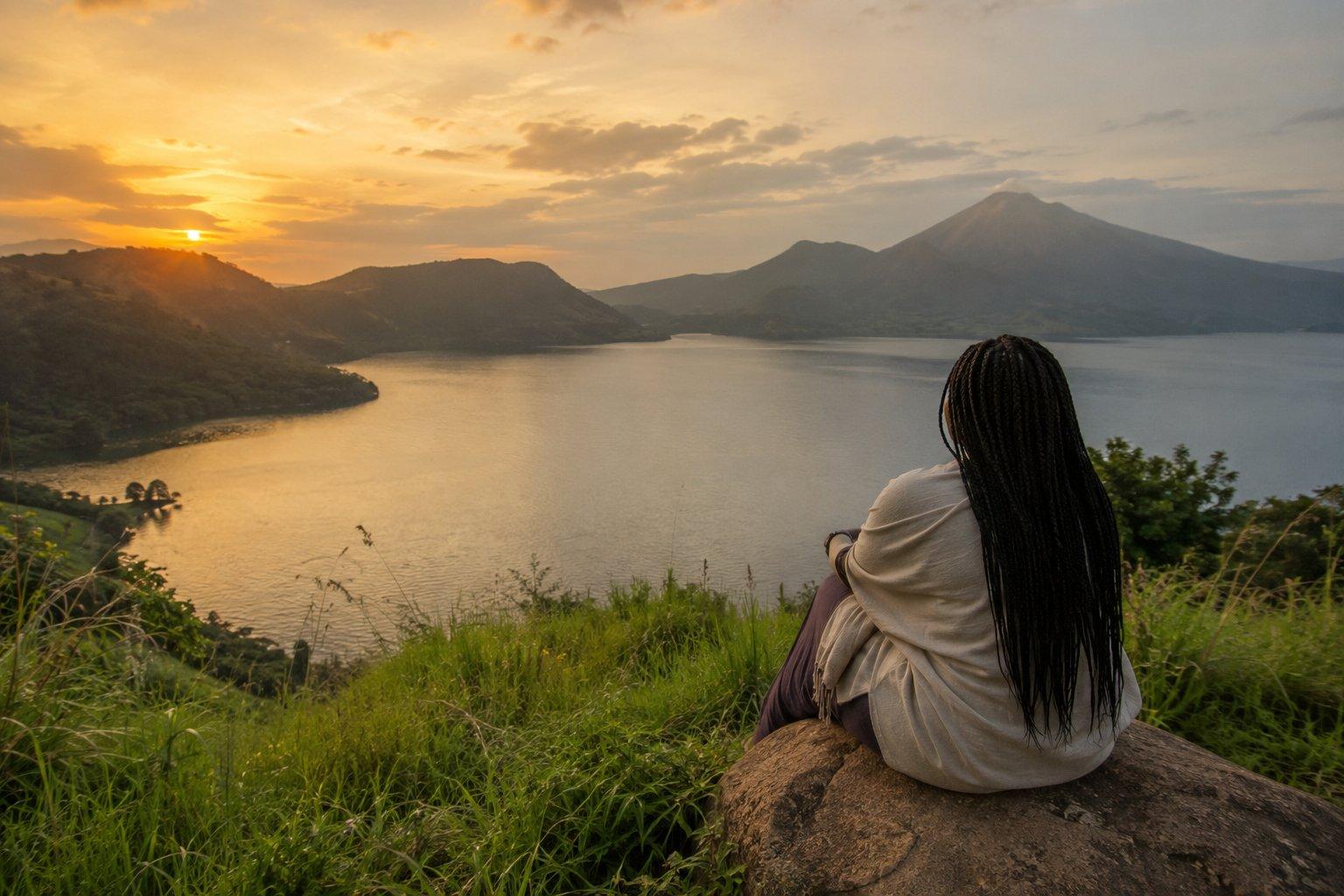
There is a phrase in Kinyarwanda, the language of Rwanda, that we at the Colony love saying to visitors: Buhoro buhoro.
Buhoro means "slowly." Buhoro buhoro means "slowly, slowly."
This is one of the first phrases many visitors pick up within their first few days in Rwanda. If someone is speaking too quickly, you can say, vuga buhoro buhoro - "speak slowly, little by little."
We love it because tourism is an act of self-care beyond just travelling. Amidst the sightseeing, the packed itineraries, and the million and one things you want to tick off your list, please catch your breath. Look around. Embrace new things. Allow yourself to notice what's around you instead of rushing to the next attraction.
Rwanda reminds us to pause. Yes, life can be fast-paced, but we still need to slow down, catch our breath, and remember: Buhoro buhoro.
There is a proverb built on the same words: buhoro buhoro ni rwo rugendo, which translates roughly to, "Slowly, slowly is still the journey."
The idea is simple: progress that feels too slow to matter is still progress, and it is often the kind that lasts.
Rwandans say this to one another and to newcomers when someone is struggling to keep up, whether with a language, a task, or an unfamiliar place.
So, dear tourist, buhoro buhoro.
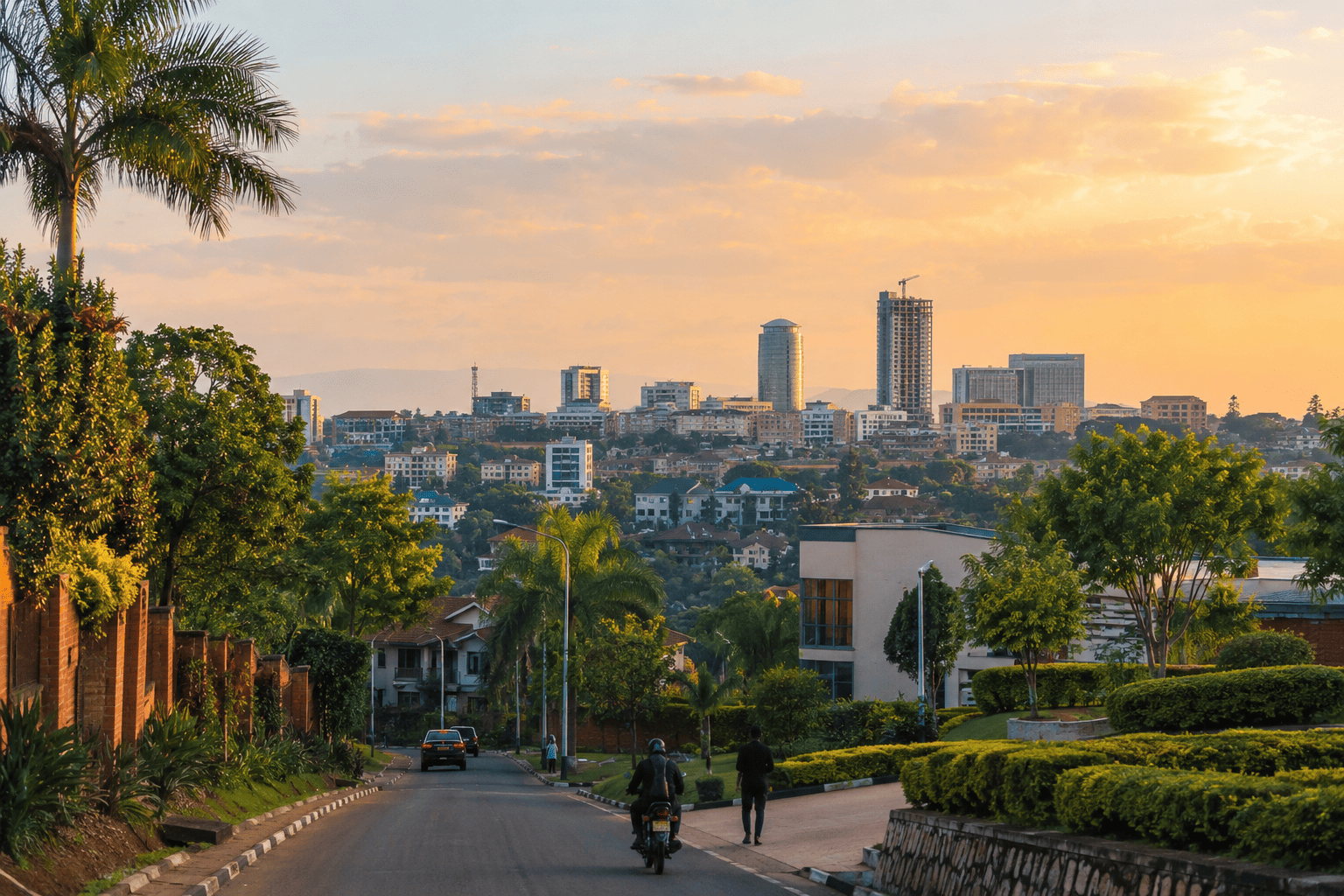
Pause to understand what it is actually like to be in a place. Listen to how a city sounds at seven in the morning before the heat settles in. Notice the etiquette at a family-run restaurant tucked away from the tourist attractions. Pay attention to how people talk about their own home when no one is performing for visitors.
That is almost always what travellers remember years later, long after the landmark photos have blurred because you've taken newer pictures or visited even bigger attractions.
But the lessons you learn from a culture stay with you. They stay with your children. They stay with your family.
That is exactly what Buhoro buhoro did for us at the Colony.
We learned to appreciate even what seems like slow progress. Rwanda, the country, lives this philosophy. More than 30 years after the genocide, its economy has grown remarkably and continues to compete confidently on the global stage.
Why the List Version Keeps Winning Anyway
Lists are easy to produce and easy to consume. They compress a place into ten decisions instead of a hundred small ones, which is genuinely useful when you're planning quickly.
We're all for the list, but it shouldn't become the entire experience. A visit shouldn't become more about ticking boxes than actually experiencing the place.
What Learning a Place Actually Requires
If tourism is going to be a way of learning rather than simply consuming places, then it asks something different of us.
It asks us to care about history, not just scenery. Every neighbourhood, every street, and every building has become what it is because something happened there. Those stories are often invisible. A market square may look beautiful today, but knowing it was rebuilt after war or disaster changes how you see it. The view hasn't changed, but your understanding has. That kind of knowledge doesn't come from spending four minutes at a viewpoint before moving on to the next stop.
It also asks us to listen to local voices, not just admire local landscapes. The people who live somewhere should have the chance to tell their own stories rather than appearing as extras in someone else's.
That idea shaped the travel and food publication Roads & Kingdoms. Instead of relying mainly on visiting journalists, it became known for publishing thoughtful essays written by local writers who understood the places they were describing from the inside.
Its founders often spoke about wanting to publish the moments that traditional travel writing leaves out: the tiny café around the corner, the conversation that lasted longer than expected, and the neighbourhood bar with incredible live music that never makes the guidebooks.
The publication went on to win major awards, including the James Beard Foundation's Publication of the Year in 2017 and a National Magazine Award in 2019. Anthony Bourdain also became a partner and investor because he believed in that vision. None of that happened overnight. It was built buhoro buhoro through trust, curiosity, and relationships.
Learning through travel also means making peace with complexity.
Every place has contradictions. Every city has beauty alongside hardship, moments of pride alongside painful history. If all you see is the beautiful version that fits neatly into a postcard or an Instagram caption, then you're probably seeing a place that has been packaged for you rather than one you've genuinely encountered.
More than anything, slow travel assumes that we are capable of holding that complexity. We don't need every place to be simplified into something easy or reassuring. We can appreciate beauty while acknowledging history. We can enjoy a destination without pretending it is perfect. In doing so, we show respect not only for the places we visit but also for ourselves as travellers willing to learn instead of simply passing through.
In that learning, business ideas and solutions often emerge. What may be difficult in one country might already be an everyday solution in another.
Unlearning Is the Harder Half
Learning a place is only half of what buhoro buhoro asks of us. The other half is unlearning, and it's the part people tend to skip.
It means unlearning what needs to be unlearned so there's room to grow.
As tourists, we need to unlearn the instinct to rush to the next stop before we've fully experienced the one we're in. We need to unlearn the assumption that a place should immediately make sense to us, when the truth is that it usually doesn't, at least not on the first day, and that's perfectly okay. We need to unlearn the idea that discomfort or confusion in an unfamiliar culture means something has gone wrong, when it often means we're finally paying attention. We also need to unlearn the habit of measuring a trip by how much we saw instead of how much we understood. We need to unlearn the need to compete against ourselves or tear down a culture we are used to and aren’t harmful to anyone neither does it infringe on the rights of anyone.
This is the part that mirrors how Rwandans actually use the phrase.
It isn't said to someone who's already fluent. It's said to someone who's stumbling, mispronouncing a word, feeling behind, and beginning to get frustrated with themselves.
In that moment, buhoro buhoro isn't really about speed. It's permission to still be learning.
A traveler who can extend that same permission to themselves, whether they're learning a culture, a language, or a history they didn't grow up with, is doing the unlearning half of the work. The part where you let go of needing to already understand so you can actually begin to.
The traveler who wants depth is not looking for a shortcut. She is looking for enough real information to make her own decisions once she arrives, rather than following someone else's itinerary and hoping it fits her. That matters even more now that so much of what circulates as a "recommendation" may never have been checked against the actual place at all.
What This Means for How a Place Gets Written About
A destination guide built around depth takes more time to create. It's harder to reduce to a quick caption or a list of highlights. But it gives travelers something far more valuable: the ability to understand what they're seeing instead of simply recognizing it because they've ticked it off a list.
That's the difference this is built on.
Not another "Top Ten" roundup that anyone, or increasingly, any AI, can piece together from existing articles without ever setting foot in the place.
The difference is depth.
The kind that comes from paying attention, asking questions, and treating a destination as something to understand, not simply somewhere to visit.
Need to slow down, pause, and catch your breath?
That's exactly why we're organizing our three-day Buhoro Buhoro Retreat in Rwanda.
This isn't just another holiday. It's an opportunity to experience Rwanda beyond the itinerary, to learn from its people, understand its remarkable journey, and return home with more than beautiful photographs.
For those who want to stay longer, we also have seven-day immersive experiences.
You'll explore Rwanda beyond the usual attractions, learn how the country has become a global reference point in areas like gender equity and governance, and discover lessons that can inspire your own life, work, and community.
Be inspired.
Be empowered.
Strengthen your regional perspective.
Interested?
Fill out the enquiry form below and we'll be in touch. Only 15 spots are available.