A familiar strand of travel content answers one narrow question: what should you photograph while you're here. A top ten list of attractions. A map of must-see stops. A reel showing the same three landmarks that everyone else's reel already has. This kind of content is useful, the same way a checklist is useful before you pack a suitcase. But it's rarely the reason anyone comes home from a trip actually changed by it.
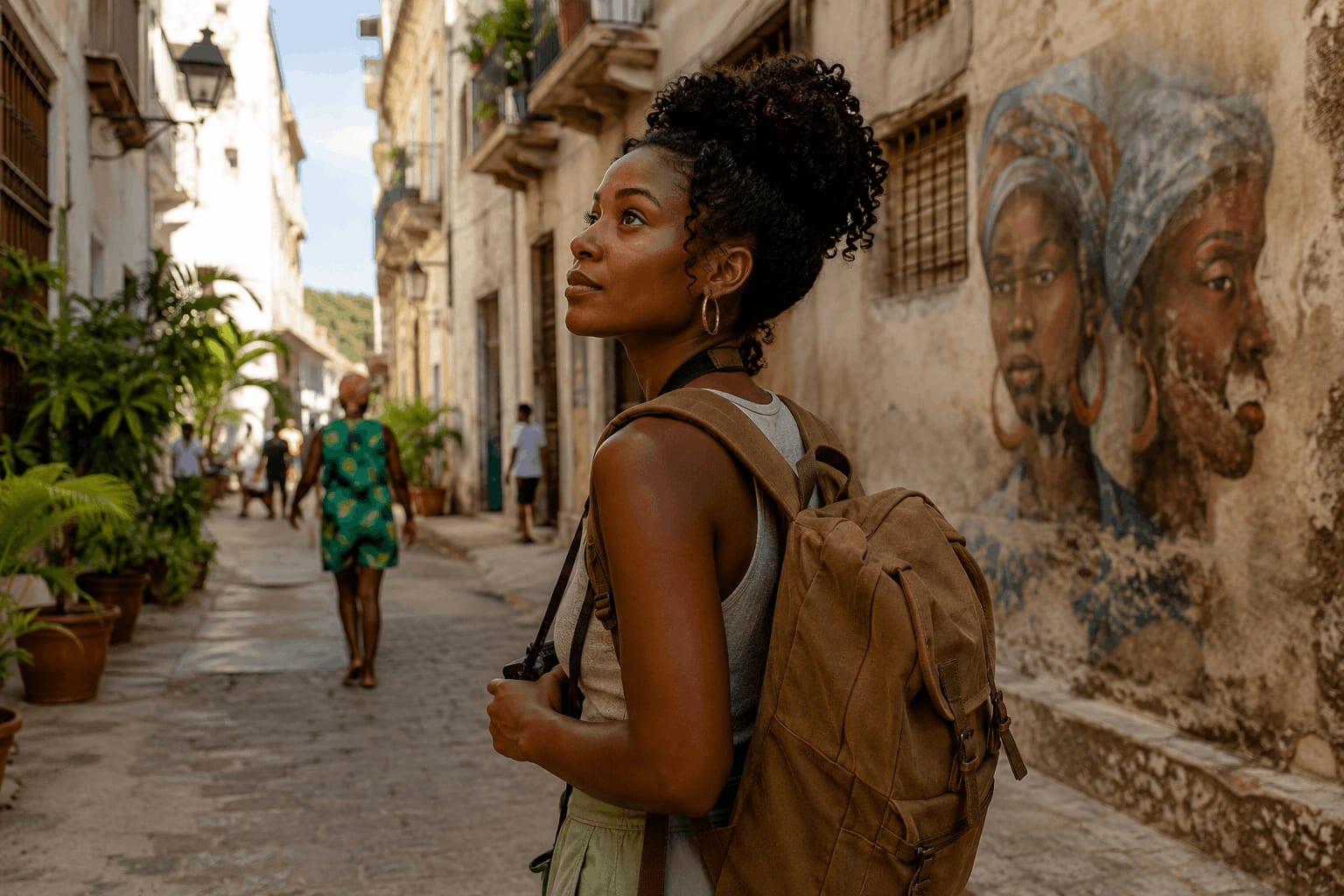
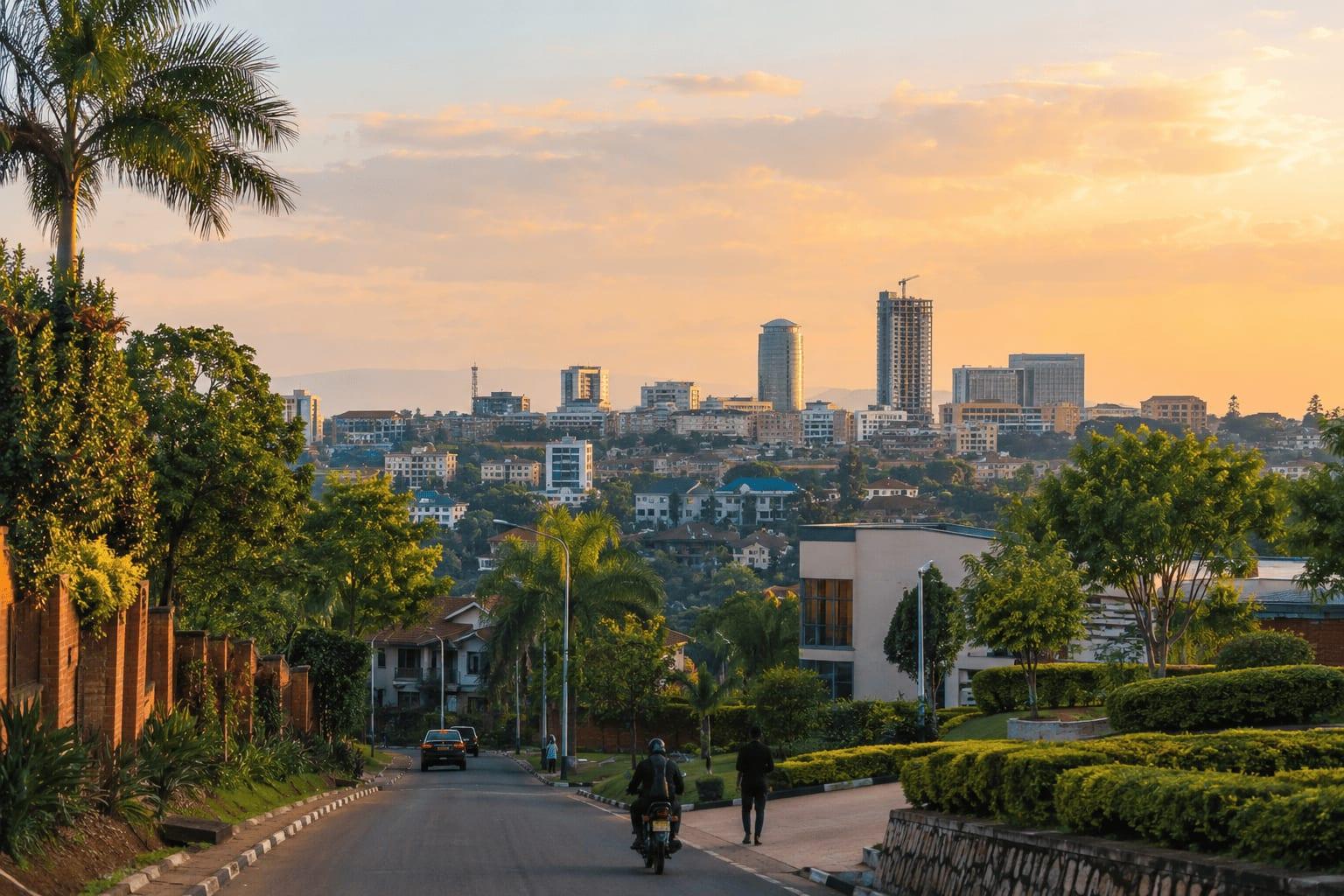
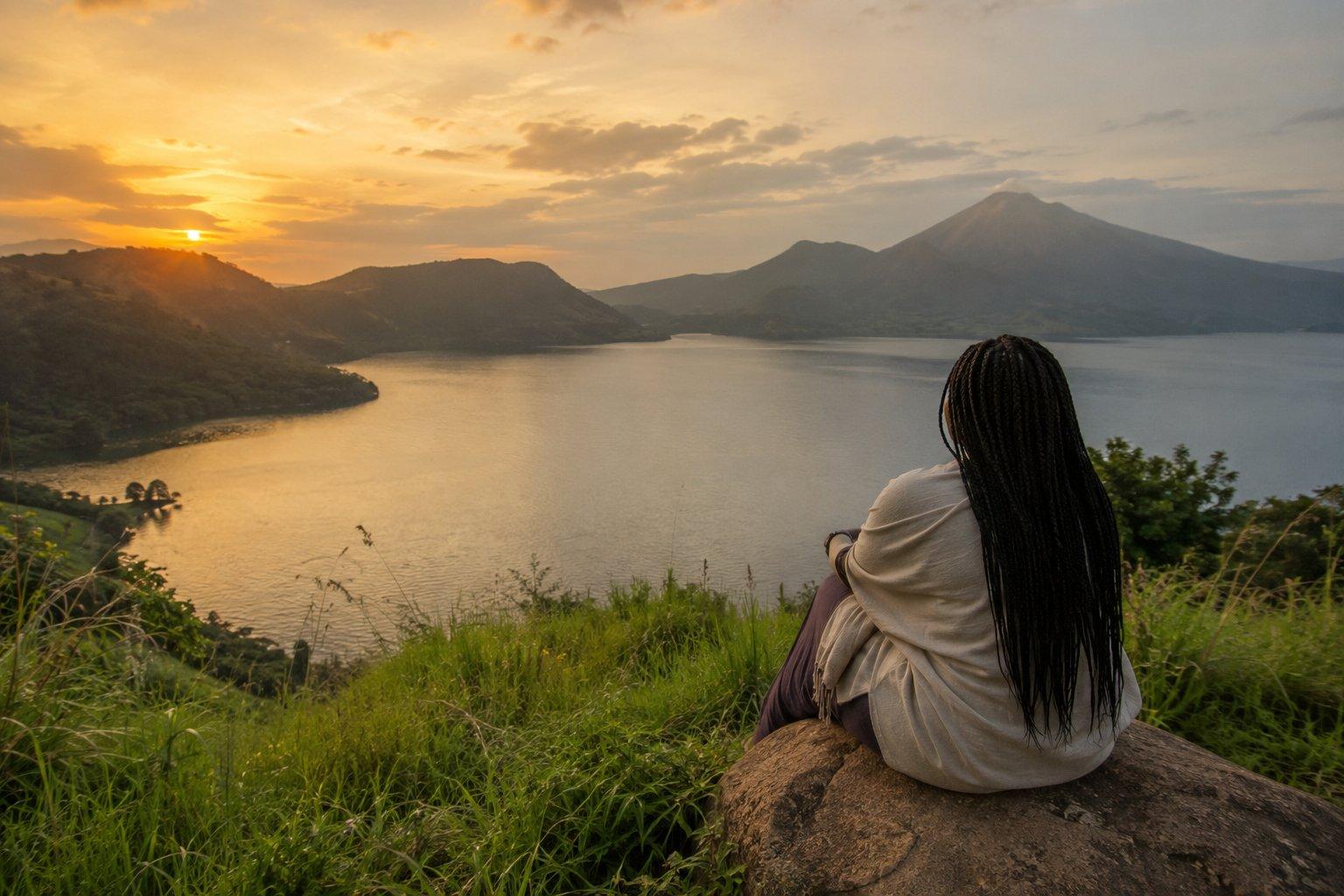
The feel of a place is a completely different thing to capture. It isn't about what to photograph. It's about what it's actually like to be there. How a city sounds at seven in the morning before the heat sets in. What the real etiquette looks like at a family-run restaurant that nobody put on a list. How people who live somewhere talk about their own home when nobody is performing a tour for a visitor. That kind of detail rarely photographs well. But it's often what a traveler remembers years later, long after the landmark photos have blurred into everyone else's version of the same shot.
Lists are cheap to produce and easy to consume. They compress a place into ten decisions instead of a hundred small ones, and that's genuinely useful when you're planning a trip in a hurry. The problem was never that lists exist. The problem shows up when the list becomes the whole experience, when visiting a place turns into a sequence of ticking boxes that could have been put together by someone who had never actually set foot there. Increasingly, some of them are.
This isn't a hypothetical worry. In 2023, the New York Times reported on a wave of AI-generated travel guidebooks flooding Amazon, complete with fake author photos, invented biographies claiming decades of travel experience, and inflated five-star reviews to make them look trustworthy. One guide for New York recommended a nonexistent New York phrase, told readers a Cambodian temple was the 9/11 Memorial, and lifted hotel photos from a completely different property in Asia, according to reporting by AMPYX Cyber and Explore. These weren't obscure, one-off scams. They were common enough that Amazon had to publicly respond about its content moderation efforts.
That matters because it shows exactly what's lost when a place gets described by someone (or something) that has never actually stood in it. A list can be assembled from other lists. The feel of a place can't. It has to come from someone who has spent enough time there to notice what only becomes visible after the third visit, not the first. The gap between a top ten list and a real sense of a place is usually the same gap between a place described by someone passing through it and a place described by someone who stayed long enough to see past the surface.
The data backs up how much lists actually drive behavior
It's worth being honest about why list-style content dominates: it works, at least at getting people to show up. A 2024 study published in the International Journal of Research and Innovation in Applied Science surveyed 300 travelers aged 18 to 40 and found that 73.7% chose their travel destinations based on content they saw on social media, with Instagram responsible for half of that influence and YouTube for another quarter. Separate research citing Statista found that over 60% of travelers now use social media specifically to research where to go next.
None of that is inherently bad. Discovering a place through a video or a photo is not the problem. The problem is what happens after arrival, when the traveler's entire framework for understanding the place is still just the highlight reel that got them there in the first place. A destination image built entirely from curated, high-contrast, color-graded photos sets an expectation that the place itself often can't live up to, and it leaves very little room for anything the algorithm didn't already flag as photogenic.
What it actually takes to get a place right
In this section
Honesty about the complicated parts, not just the beautiful ones.
Getting past the surface requires a few specific things that a list format structurally can't deliver.
History, not just headlines. Understanding why a neighborhood looks the way it does matters more than knowing that it photographs well. A market street laid out a certain way, a building style repeated across a district, a public square used a particular way on Sundays: these things usually have a reason behind them, and that reason is often more interesting than the view.
Local voice, not just local scenery. This means letting people who actually live somewhere describe it in their own words, rather than treating them as background extras in someone else's narration. A shopkeeper explaining why a certain dish is only made on weekends tells you more about a place than a drone shot of its skyline ever will.
Honesty about the complicated parts, not just the beautiful ones. A place that gets described as only beautiful is a place being sold to you, not a place being explained to you. Every destination has friction somewhere: crowding, cost, seasonal problems, cultural tension, economic strain. Leaving that out doesn't make the place better. It just makes the writer less useful.
Treating the reader as someone who can handle complexity. The traveler chasing an honest picture of a place isn't looking for a shortcut. She's looking for enough real information that she can make her own calls once she's actually there, instead of following someone else's itinerary exactly and hoping it happens to fit her.
What this actually looks like in practice
In this section
By sunset it has been rearranged for visitors, and the two are almost different places.
It helps to make this less abstract. Picture two versions of the same guide to a coastal town.
The list version says: visit the old fishing harbor at sunset, eat at the seafood restaurant with four thousand reviews, buy the ceramic bowls from the market stall, and end the day at the viewpoint above the bay. All four of those things might genuinely be worth doing. None of them require the writer to have spent more than an afternoon there.
The version written by someone who actually stayed a while says something closer to this: the fishing harbor is loud and functional at six in the morning, not photogenic at all, because that's when the boats actually come in and the men unloading crates are not interested in being part of anyone's video. By sunset it has been rearranged for visitors, and the two are almost different places. The seafood restaurant with four thousand reviews raised its prices three years ago when a well-known food account posted about it, and locals now eat two streets over, at a place with no sign and a menu that changes based on what came in that morning. The ceramic bowls in the market are made an hour away, not in the town itself, and the stall owner will tell you that himself if you ask, because he'd rather you know than assume otherwise. The viewpoint above the bay is genuinely worth the climb, but it's better at sunrise, when there's nobody else up there and the light does something the sunset crowd never sees.
Both versions could describe the same four locations. Only one of them tells you anything you couldn't have gotten from a caption.
Overtourism shows what happens when the list wins completely
In this section
When enough people arrive chasing the same ten photos, the place itself starts to buckle under it.
There's a real-world version of this problem playing out across some of the world's most photographed destinations, and it's not subtle. When enough people arrive chasing the same ten photos, the place itself starts to buckle under it.
Hallstatt, a small Austrian village of around 800 residents, was drawing roughly 10,000 visitors a day during peak season by 2023, largely driven by its resemblance to a famous animated film. Locals eventually protested, holding signs reading "tourism yes, mass tourism no," according to reporting compiled by Hotelbeds' travel insight team. Venice, home to around 250,000 residents, receives an estimated 20 million tourists a year, prompting the city to introduce a day-visitor entry fee of 5 to 10 euros starting in 2024 specifically to manage crowding, according to CNN and Inside Travel News. Peru suspended visits to parts of Machu Picchu in 2023 after overtourism caused visible erosion to the stone structures, and Athens capped daily visitors to the Acropolis at 20,000 to protect the UNESCO World Heritage site. Japan erected a physical barrier near Mount Fuji in 2024 specifically to block a photo spot that had become a magnet for crowds and traffic problems in a nearby convenience store parking lot.
None of these places lack information about themselves. If anything, they suffer from the opposite problem: an enormous, highly repetitive volume of content pointing at the exact same handful of spots, with almost nothing pointing anywhere else. That's what happens when travel content optimizes purely for what looks good in a square photo instead of for what a place is actually like to live in or move through.
The slow travel response
In this section
Interestingly, there's a countertrend that suggests travelers themselves are starting to notice this gap.
Interestingly, there's a countertrend that suggests travelers themselves are starting to notice this gap. Slow travel, a movement that grew out of the slow food movement started in Italy in the 1980s as a protest against a McDonald's opening near Rome's Piazza di Spagna, has been gaining real traction. Euromonitor's 2025 travel trends research describes a shift among consumers away from what the industry had been calling "revenge travel" (traveling as often and as much as possible after pandemic restrictions lifted) toward fewer trips that last longer and go deeper into fewer places.
Hilton's 2025 trends report found that a majority of surveyed travelers now specifically want recommendations from locals rather than from algorithmic feeds, and separate industry research puts the figure at 74% of travelers actively seeking local input and 73% prioritizing authentic experiences over efficient ones. That's a meaningful signal. It suggests the appetite for something deeper than checklists isn't a niche preference limited to travel writers who think lists are beneath them. It's a real, measurable shift in what a growing share of travelers actually want out of a trip, even if the marketing engine around travel still defaults to the list format because it's simpler to produce and easier to monetize.
What this means for how a place gets written about
In this section
Someone who only has a list of ten stops walks in with ten destinations and no context for any of them.
A destination guide built this way takes longer to write and it's genuinely harder to compress into a caption. That's not an accident, and it's not a flaw either. It's the actual cost of doing it properly.
But it does something a list can't do. It prepares a traveler to actually understand what she's looking at when she gets there, instead of just confirming that she showed up and got the photo. Someone who reads about why a market operates the way it does, or what a certain gesture means in a particular culture, or why a neighborhood feels different from the one next to it, walks into that place already equipped to notice things a checklist would never have mentioned. Someone who only has a list of ten stops walks in with ten destinations and no context for any of them.
This also changes what a writer actually owes the reader. Doing this kind of writing responsibly means being specific about sources: naming who told you something, being clear about what's your own experience versus what's local reputation versus what's your own interpretation. It means resisting the urge to smooth over the complicated parts of a place just because the beautiful parts make for a cleaner narrative. And increasingly, in a media environment where AI-generated content can convincingly fabricate an author, a biography, and a set of confident-sounding recommendations for places that may not even exist as described, it means being someone who has actually been there long enough to know the difference between what's true and what merely sounds true.
The actual difference this comes down to
In this section
Anyone can do this job, including, as it turns out, software that has never left the server room it runs on.
The real split isn't between good travel writing and bad travel writing, or between long articles and short ones. It's between two entirely different jobs that both happen to look like travel content from the outside.
One job is to compile. Pull together the ten most photographed spots in a city, order them by popularity, add a sentence of context to each, and publish it before anyone else does. Anyone can do this job, including, as it turns out, software that has never left the server room it runs on. It's not worthless work. It gets people to airports and it fills in gaps for someone with three days and a tight budget. But it's a compression of a place, not an explanation of one.
The other job is to actually understand somewhere before writing about it. That means spending real time there, talking to people who live there and not just people who serve tourists, learning the history behind what you're looking at instead of just describing its surface, and being willing to say the honest, less flattering things alongside the beautiful ones. It's slower. It's harder to summarize into a ten-second video. It will never outcompete a list for sheer speed of production.
But it's the only version of travel content that treats a destination as something worth understanding, rather than just somewhere worth checking off. And based on where a meaningful share of travelers seem to be heading, away from crowded ten-spot itineraries and toward slower, locally guided, more grounded trips, that difference is starting to matter to more people than the industry's list-heavy default might suggest.
There's also a practical argument here, separate from the philosophical one. A traveler who only has a list is completely dependent on that list being accurate and current. If the restaurant closed, if the viewpoint got fenced off, if the market moved streets, the whole plan falls apart with no way to improvise. A traveler who actually understands why a place works the way it does can adapt on the spot. She knows what to look for instead of a specific address. She can ask a stranger a useful question instead of just checking a map pin. That kind of resilience doesn't come from a checklist, no matter how well researched it is. It comes from context, and context is exactly what gets stripped out when a place gets reduced to ten bullet points.
None of this means lists should disappear. They're still the fastest way to get someone oriented in an unfamiliar city, and there's nothing wrong with wanting a fast, reliable answer when you land somewhere with three days and a full schedule. The issue was never the format itself. The issue is mistaking the list for the whole picture, and treating a compressed, secondhand summary of a place as if it were the same thing as actually knowing it. It isn't, and the growing pile of overcrowded landmarks, priced-out neighborhoods, and worthless AI-written guidebooks is a fairly direct consequence of forgetting that distinction on a large scale.
The traveler who remembers a trip years later usually isn't remembering the tenth stop on somebody's list. She's remembering a conversation with a stranger, an unexpected smell, a small mistake that turned into the best part of the day, something nobody could have put in a caption because it only existed for the hour she was standing there. That's what the feel of a place is. It isn't decoration on top of good travel writing. It's the entire point of it, and it's the one thing a place can't hand you secondhand.
Sources
- Ismarizal & Kusumah, "The Instagram Effect on Tourist Destination Choices," Journal of Consumer Sciences, 2023: https://pdfs.semanticscholar.org/f28b/d407a00e948aa25dd3ad06e55eddf147c2e5.pdf
- "How Social Media Influences the Choice of New Travel Destinations among Tourists," International Journal of Research and Innovation in Applied Science: https://rsisinternational.org/journals/ijrias/articles/how-social-media-influences-the-choice-of-new-travel-destinations-among-tourists/
- "What is Overtourism? Statistics & News 2024," RoadGenius: https://roadgenius.com/statistics/tourism/global-overtourism/
- "Overtourism was the buzzword of 2024. This summer looks to be just as crowded and chaotic," CNN: https://www.cnn.com/travel/overtourism-2025-summer-crowded-chaotic
- "2024 Travel Trends: Overtourism: The Importance of Promoting Sustainable Tourism," Hotelbeds: https://discover.hotelbeds.com/resources/insight/2024-travel-trends-overtourism-importance-promoting-sustainable-tourism
- "Tackling overtourism in 2025: What are destinations doing about it?," Inside Travel News: https://insidetravel.news/tackling-overtourism-in-2025-what-are-destinations-doing-about-it/
- "Mass Market Adopts Slow Travel Features in 2025," Euromonitor International: https://www.euromonitor.com/article/mass-market-adopts-slow-travel-features-in-2025
- "Slow Travel," 2025 Hilton Trends Report: https://stories.hilton.com/2025trends/slow-travel-the-growing-desire-to-travel-like-a-local
- "Slow movement (culture)," Wikipedia: https://en.wikipedia.org/wiki/Slow_movement_(culture)
- "Fake authors are swindling people with shady AI travel guides," AMPYX Cyber: https://ampyxcyber.com/newsarchive/fake-authors-are-swindling-people-with-shady-ai-travel-guides
- "Avoid Getting Scammed By Fake Travel Guides Generated By AI With These Tips," Explore: https://www.explore.com/1427896/avoid-getting-scammed-fake-travel-guides-generated-ai-tips/