What the blue economy and coastal tourism really mean, how they support jobs and growth, which African countries are leading, and the challenges every coastal destination must face.
Introduction
When people picture African tourism, they usually picture a safari. Lions on the plains. A hot air balloon over the Serengeti. A lodge overlooking a waterhole. That picture is accurate, but it is incomplete.
Africa has more than thirty coastal and island states. Their beaches, reefs, ports, and fishing communities support millions of livelihoods and attract a growing share of global travelers. Governments across the continent have started to treat these coastlines not just as scenery, but as economic infrastructure. This shift has produced two terms that now appear constantly in policy documents, tourism board reports, and investment pitches: coastal tourism and the blue economy.
These words are related, but they are not the same thing, and most articles that use them never explain the difference clearly. This article does. It explains what each term means, why governments have become so interested in them, which African countries are getting real results, where the model breaks down, and what the risks are that few people talk about openly.
What Is Coastal Tourism?
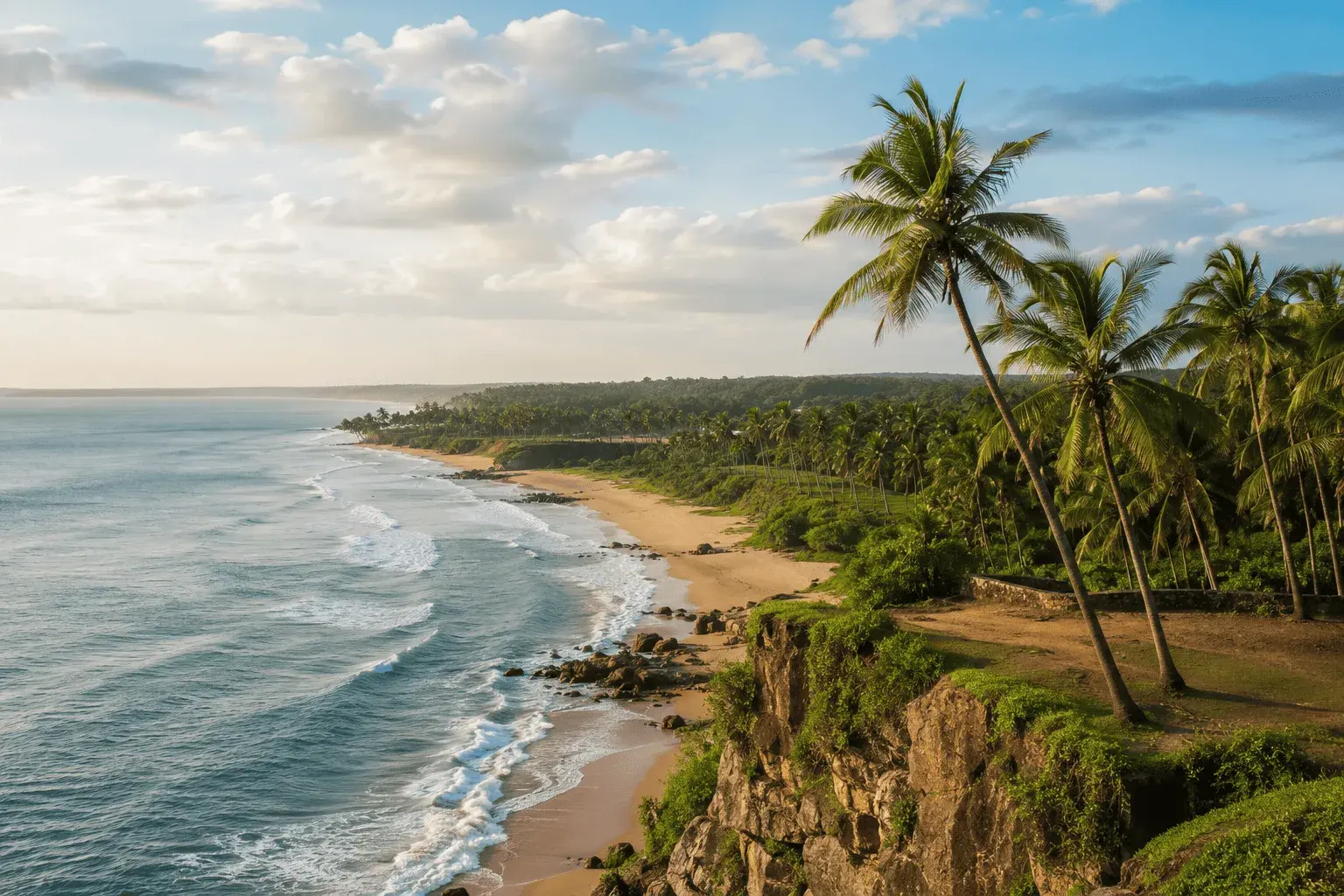
Coastal tourism is any form of travel that depends on the presence of the sea, a lake shore, or a river delta. It includes beach holidays, but it is much wider than that single image.
Many people assume coastal tourism and beach tourism are interchangeable terms. They are not. A beach holiday is one product inside coastal tourism, built around sun, sand, and relaxation. Coastal tourism as a category also includes diving, sailing, cruise stopovers, sport fishing, coastal heritage tours, and visits built around marine wildlife. A traveler who goes diving on a reef, boards a dhow to visit a Swahili ruin, or takes a boat out to watch whales is still practicing coastal tourism, even if they never lie on a beach.
This distinction matters for planning. A country that thinks only in terms of beaches will build hotels and swimming pools. A country that understands the full range of coastal tourism will also invest in dive operators, marine guides, small boat licensing, and heritage preservation, which spreads income across more of the local economy.
What Is the Blue Economy?
In this section
In 2021, the African Union Commission created a dedicated Blue Economy Division to carry the strategy forward.
The blue economy is a much broader idea than coastal tourism. The World Bank, which has become one of the leading institutional voices on the subject, defines it as the sustainable use of ocean resources for economic growth, improved livelihoods, and job creation, while preserving the health of ocean ecosystems.
The concept was introduced at the Rio+20 United Nations Conference on Sustainable Development in 2012, put forward by coastal and island nations who wanted the world to pay closer attention to the damage caused by unmanaged coastal development. The World Bank formally adopted the term in 2016 and has since built dedicated financing tools around it, including the PROBLUE multi-donor trust fund.
The African Union has its own framework. It developed the Africa Blue Economy Strategy between 2018 and 2019, and launched it in Addis Ababa in February 2020 under the banner of increasing momentum for the continent's blue growth. The strategy sits inside Agenda 2063, the African Union's long-term development plan, alongside the 2050 Africa's Integrated Maritime Strategy. In 2021, the African Union Commission created a dedicated Blue Economy Division to carry the strategy forward. The United Nations Economic Commission for Africa has also worked extensively on the topic, treating oceans, lakes, and rivers as underused assets for jobs, food security, and industrial growth across the continent.
Tourism is only one piece of the blue economy. The full picture also includes fisheries and aquaculture, shipping and ports, offshore energy, marine biotechnology, and ocean research. A country's tourism ministry and its fisheries or maritime authority increasingly have to coordinate, because a coral reef that supports a diving business is the same reef that supports a fishing community, and decisions in one sector affect the other.
Coastal Tourism Is Much Bigger Than Beaches
In this section
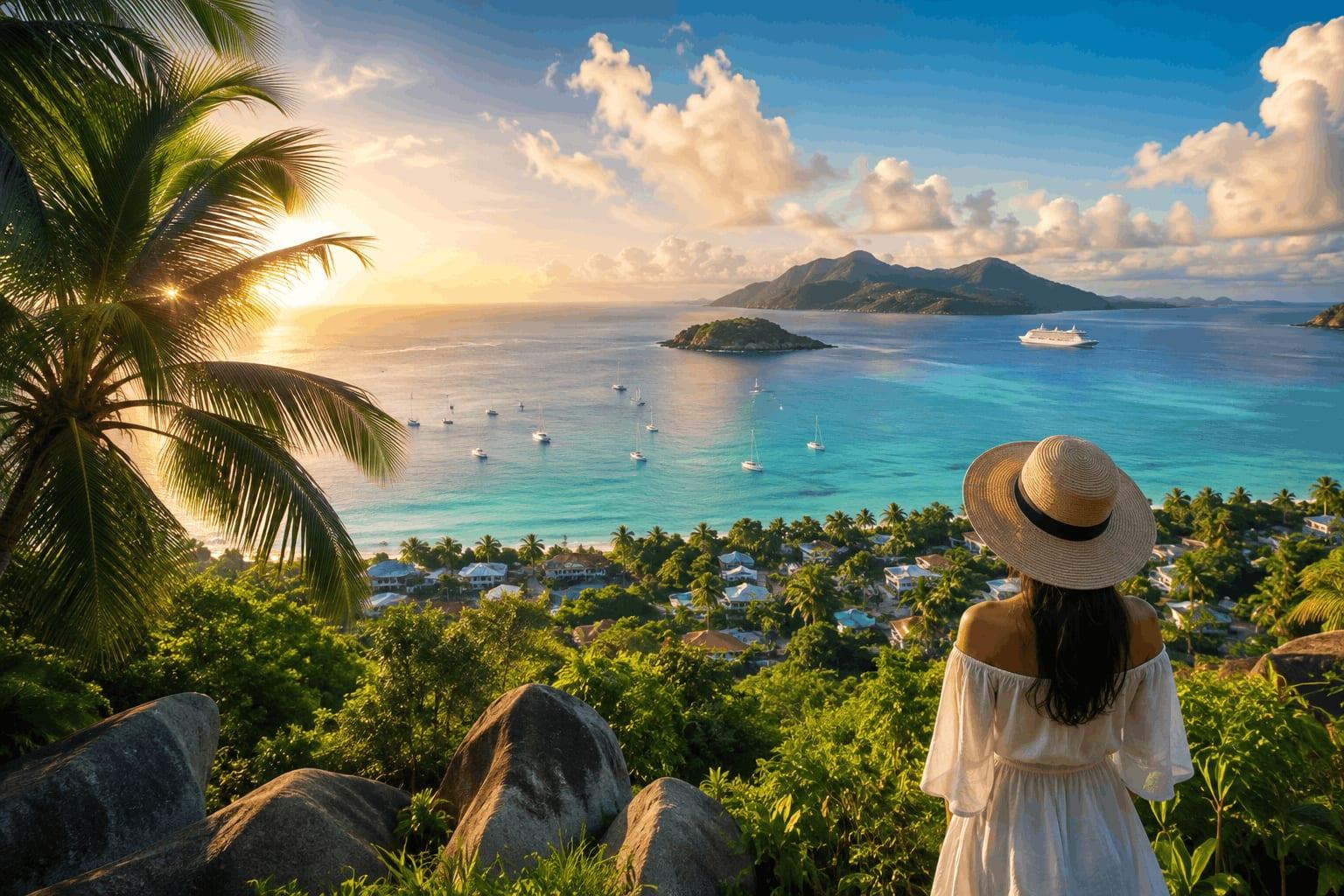
Island tourism is centered on offshore islands reached by boat or small aircraft, often positioned for exclusivity.
Once the beach myth is set aside, coastal tourism opens into several distinct products, each with its own infrastructure needs and its own type of traveler.
Marine tourism covers activities built directly around ocean wildlife and underwater environments, such as diving and snorkeling on coral reefs. Kenya's Watamu Marine National Park, established in 1968 as one of the first marine parks in Africa, protects a reef system home to hundreds of fish species and draws visitors specifically to see what locals call the marine big five: turtles, whale sharks, dolphins, whales, and rays.
Cruise tourism brings large ships that dock briefly at coastal cities, generating income for ports, tour operators, and retail businesses during short windows of time.
Island tourism is centered on offshore islands reached by boat or small aircraft, often positioned for exclusivity. Mozambique's Bazaruto and Quirimbas archipelagos are built around this model, offering low-volume, high-value stays on protected island chains.
Fishing tourism includes both sport fishing for big game species and cultural visits to working fishing communities, an increasingly popular niche for travelers who want an authentic view of coastal life rather than a resort experience.
Surf tourism depends on specific coastlines with reliable swell. Namibia's Skeleton Coast, where the cold Benguela Current produces powerful and consistent breaks such as Skeleton Bay, has built a niche reputation among surfers despite conditions too rough and cold for ordinary beach holidays.
Adventure tourism on coastlines includes activities like kitesurfing, sea kayaking, and shark cage diving, which has become one of South Africa's most recognizable coastal products around Gansbaai and Mossel Bay.
Historical coastal tourism draws on centuries of maritime trade. Zanzibar's Stone Town, the Swahili coast's old trading ports, and Mozambique Island all attract travelers interested in the history left behind by dhow trade routes, colonial ports, and the Indian Ocean slave and spice trade.
Food tourism on the coast centers on seafood and the specific culinary traditions of fishing communities, from Swahili coconut fish curries to South African braai-style seafood.
Marine wildlife tourism includes whale watching, which has turned the small South African town of Hermanus into one of the best land-based whale watching sites in the world during the July to November season, when southern right whales come close to shore to calve.
Each of these products draws a different kind of traveler with different spending habits, and a country that develops several of them at once builds a more resilient tourism sector than one that depends on a single type of visitor.
What Makes Coastal Tourism Successful?
In this section
Good roads connecting airports to the coast reduce transfer time and improve the visitor experience.
Two countries can have identical beaches and produce completely different results. The difference usually comes down to the same list of underlying conditions.
Reliable air access matters more than almost anything else, because most coastal destinations depend on international arrivals rather than domestic tourism. Good roads connecting airports to the coast reduce transfer time and improve the visitor experience. Clean beaches and functioning waste management protect the very asset the whole industry depends on. A strong hotel base, ranging from budget guesthouses to luxury resorts, allows a destination to capture different market segments rather than only the wealthiest travelers.
Local businesses matter just as much as large hotels, because tour operators, boat owners, restaurants, and craft sellers are what keep tourism income circulating locally instead of leaving the country. Visitor safety, both from crime and from natural hazards like strong currents, shapes a destination's reputation more than almost any marketing campaign can. Marine conservation protects reefs and fish stocks that are the actual product being sold. Community involvement in tourism planning tends to produce more sustainable outcomes than top-down development driven purely by foreign investors. Consistent government policy, rather than a new tourism plan every time the administration changes, gives businesses the confidence to invest for the long term. Finally, targeted marketing that positions a destination clearly, rather than copying a rival country's brand, helps travelers understand what makes a place worth visiting in the first place.
Countries that get most of these rights tend to succeed regardless of natural beauty alone. Countries that only have beautiful coastlines but weak infrastructure tend to attract fewer visitors than their natural assets would suggest.
Tourism accounts for roughly sixty percent of the country's GDP, an extraordinary concentration for any economy.
Several African nations have built coastal tourism sectors that outperform their size, and each has done it through a different strategy rather than a single shared formula.
Seychelles has built its brand entirely around exclusivity and conservation. Tourism accounts for roughly sixty percent of the country's GDP, an extraordinary concentration for any economy. Rather than chasing volume, Seychelles committed to protecting thirty percent of its exclusive economic zone as marine protected area, an area larger than Germany, through a debt-for-nature deal supported by The Nature Conservancy. The strategy keeps visitor numbers relatively low but spending per visitor high, and ties the country's conservation credentials directly to its luxury positioning.
Mauritius built its reputation on water sports, honeymoon travel, and consistent international branding. Tourism contributes around twelve to fifteen percent of the country's GDP depending on the year measured, and beach-based leisure still accounts for the large majority of visitor activity. Mauritius has paired this with steady infrastructure investment and strong air connectivity from Europe, Asia, and the rest of Africa, which has helped it recover tourist numbers close to pre-pandemic levels.
Tanzania, through Zanzibar, has pursued one of the most explicit blue economy strategies on the continent. Zanzibar created a dedicated Ministry of Blue Economy and Fisheries, has grown its marine tourism arrivals well past pre-pandemic levels, and has expanded its hotel base and international flight connections significantly since 2020. Zanzibar has also diversified beyond tourism into seaweed farming, which employs tens of thousands of people, mostly women, and has made the islands one of Africa's leading seaweed producers.
Kenya built its coastal identity around marine parks rather than beaches alone. Watamu and Kisite marine national parks protect reef systems that draw divers and snorkelers specifically to see whale sharks, manta rays, dolphins, and turtles during their seasonal migrations between October and February. This marine wildlife draw complements Kenya's inland safari circuit, giving the country a combined ocean-and-savannah pitch that few destinations can match.
South Africa has built a diversified coastal offering that blends adventure with wildlife. Cape Town and the Garden Route combine shark cage diving near Gansbaai, described locally as the shark diving capital of the world, with land-based whale watching in Hermanus, one of the best sites for it globally, alongside penguin colonies, wine routes, and city tourism, giving visitors reasons to stay longer and spend across several sectors at once.
Mozambique has leaned into low-volume, high-value island tourism. The Bazaruto Archipelago, Mozambique's oldest marine protected area, and the more remote Quirimbas Archipelago further north, both position themselves around exclusivity, conservation, and untouched reefs rather than mass arrivals. Bazaruto is now managed in partnership with the conservation organization African Parks, which has focused on curbing illegal fishing and poaching while building tourism revenue that funds conservation.
Namibia offers a completely different kind of coastal identity. The Skeleton Coast is not a swimming destination. Its waters are cold, shaped by the Benguela Current, and its coastline is dominated by fog, shipwrecks, and desert dunes rather than palm trees. Namibia has turned this into a strength, marketing the region around scenic flights, desert-adapted wildlife, surfing, and a stark sense of remoteness that beach-focused competitors cannot replicate.
What connects all seven is not a shared formula. It is that each country built its coastal tourism sector around what its own coastline actually offers, rather than copying a template designed for somewhere else.
Is Coastal Tourism Becoming Too Competitive?
This is a question that rarely gets asked directly, but it matters. Almost every coastal or island nation on earth now markets white sand, clear water, and marine life in nearly identical language. A beach in one country looks much like a beach in another on a brochure page.
This has pushed successful destinations toward differentiation built on more than scenery. Travelers increasingly choose a coastline based on the story attached to it: the culture of the fishing communities, the specific marine species they might encounter, the food traditions of the region, the conservation work happening offshore, or the history embedded in old trading ports. A beach alone is no longer enough to build a durable tourism brand, because beaches are, in a strict sense, a commodity. What is not easily copied is a country's particular combination of ecosystem, history, and community, which is exactly why the countries above succeeded through different routes rather than the same one.
Can Every Country Build Coastal Tourism?
No. A coastline is potential, not an industry, and turning one into the other requires conditions that many countries currently lack.
Some countries lack reliable international air access, which makes them expensive and time-consuming to reach regardless of how attractive their coast is. Others lack basic infrastructure such as paved roads, electricity, and clean water supply near the coast, all of which are necessary before any hotel investment makes sense. Political instability or weak security discourages both travelers and investors, even where the natural setting is excellent. Some coastlines suffer from poor environmental protection, meaning the very asset that would attract tourists, whether a reef or a mangrove forest, has already been degraded by unregulated development or overfishing before any tourism plan exists. A shortage of hotel capacity, trained hospitality staff, and functioning airlines further limits what a country can realistically offer, and without consistent government support and long-term planning, private investors tend to avoid committing capital at all.
A coastline by itself, however beautiful, does not create jobs or attract visitors. It only creates the possibility of a tourism industry, and that possibility has to be built deliberately.
The Risks Nobody Talks About
In this section
Overfishing, driven partly by demand from hotels and restaurants, continues to strain fish stocks in several coastal regions.
Coastal tourism has real and well-documented downsides, and many articles skip past them to focus only on the economic opportunity.
Overdevelopment along popular coastlines has damaged the same natural features that attracted tourism in the first place, with hotel construction sometimes destroying the dunes, mangroves, and wetlands that protect the coast from erosion. Plastic pollution is a global problem that concentrates in tourist-heavy coastal waters, and coral reef destruction from anchor damage, careless snorkeling, and warming seas has already affected dive destinations across East Africa. Coastal development has also displaced fishing communities in some locations, pushing local people away from the shoreline to make way for resorts. Overfishing, driven partly by demand from hotels and restaurants, continues to strain fish stocks in several coastal regions. Climate change compounds all of this, since rising sea levels and beach erosion threaten the physical land that coastal tourism depends on, and freshwater shortages in dry coastal zones are worsened when hotels compete with local communities for the same limited supply. In some destinations, a small number of large hotel groups have come to dominate the market, limiting how much benefit flows to smaller local businesses.
The least discussed risk of all is tourism leakage, the process by which money spent by a tourist leaves the destination country rather than staying in the local economy. Estimates from bodies including UNCTAD and UNEP suggest that leakage in developing economies commonly runs between forty and sixty percent of gross tourism earnings, and can be higher still in small island economies, compared with ten to twenty percent in large, diversified economies. This happens through two main channels. Import leakage occurs when a destination cannot supply what tourists expect, forcing hotels to import food, drinks, and equipment from abroad. Export leakage occurs when hotels, airlines, and tour operators are foreign-owned, so profits flow back to shareholders outside the country rather than remaining with local businesses. In some well-documented cases, such as all-inclusive resort packages, the majority of what a traveler pays never reaches the destination's economy at all. This is one of the central reasons why some destinations with very high visitor numbers still see limited improvement in local livelihoods, and it is a key argument for building tourism around locally owned businesses rather than only attracting large international chains.
Yes, and several of the strongest examples on the continent prove it. Seychelles has tied its entire national brand to marine conservation, financing thirty percent ocean protection through a debt-for-nature arrangement while keeping tourism as the backbone of its economy. Rwanda has taken a similar approach on land, funding gorilla conservation directly through high permit fees paid by a smaller number of high-value visitors rather than chasing mass tourism. Botswana follows a comparable low-volume, high-value model in its wildlife tourism, deliberately limiting visitor numbers to protect its ecosystems while keeping per-visitor revenue high. Mozambique's Bazaruto Archipelago now channels tourism revenue directly into anti-poaching and anti-illegal fishing operations through its partnership with African Parks.
The pattern across these examples is consistent. Conservation works best when it is built into the tourism product itself, funded by the visitors who come specifically to experience it, rather than treated as a separate cost competing against tourism revenue.
Why the Blue Economy Matters Beyond Tourism
Governments do not invest political attention in the blue economy purely because of tourism. Tourism is simply the most visible part of a much larger picture.
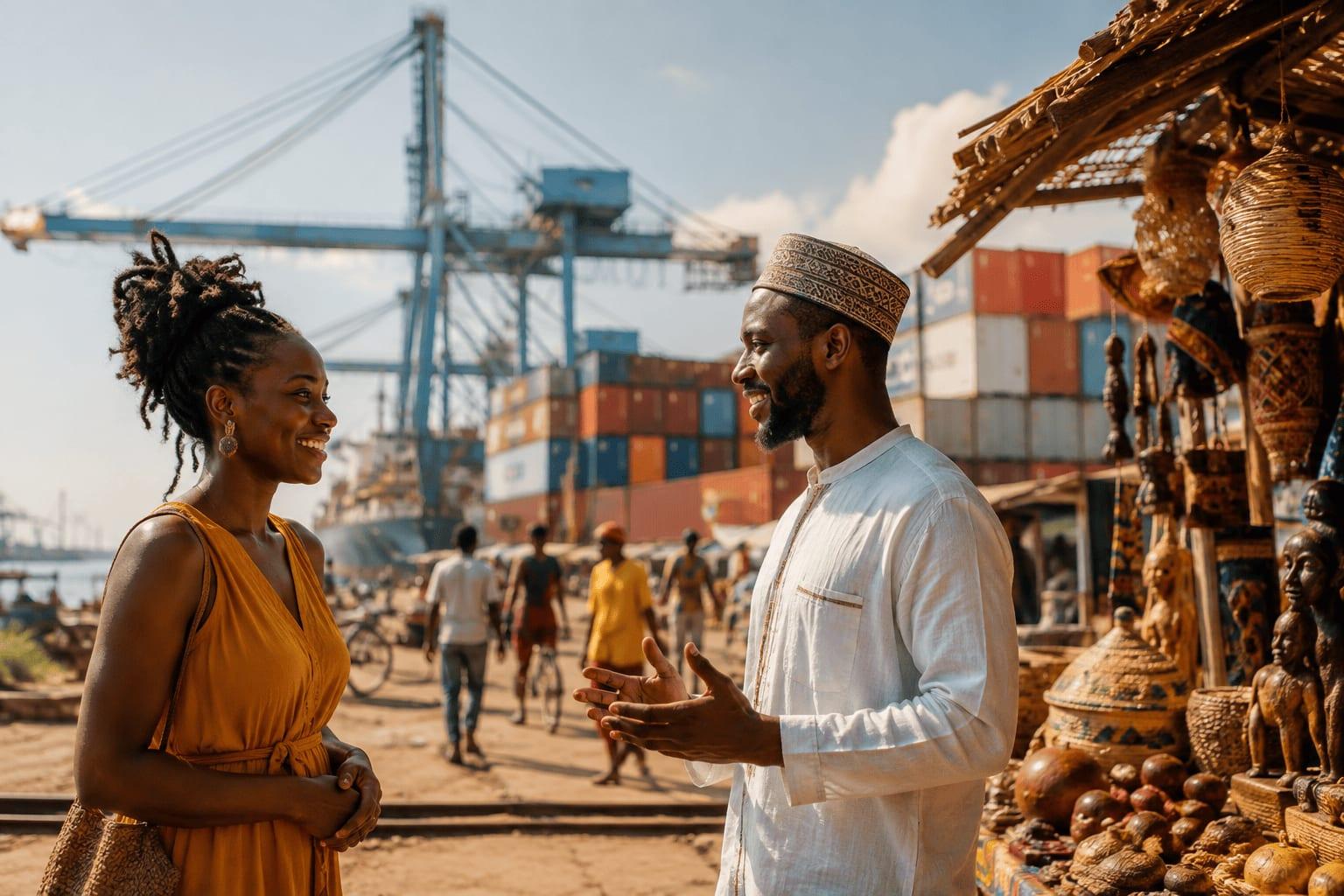
Ports and shipping infrastructure carry the vast majority of Africa's international trade by volume, making maritime transport a foundation of the wider economy rather than a side issue. Fisheries support food security directly, feeding coastal populations and, in places like Zanzibar, providing tens of thousands of jobs through activities such as seaweed farming. Offshore energy, including both oil and gas exploration and emerging renewable projects, represents a growing share of blue economy investment. Marine research and biotechnology are smaller in scale today but are increasingly recognized as long-term growth areas tied to ocean health. This is precisely why tourism ministries across the continent now coordinate with fisheries departments and maritime authorities rather than operating independently, since a decision that affects reef health or fish stocks inevitably affects tourism revenue as well, and vice versa.
What Africa Should Do Next
The temptation for any country building a coastal tourism strategy is to copy whichever destination looks most successful. This rarely works, because every coastline arrives with a different starting point.
Every country has a different coastal ecosystem, a different colonial and precolonial history, a different set of coastal communities, and a different relationship between its coast and its interior. Namibia's success did not come from trying to look like the Maldives. It came from embracing what its cold, foggy, shipwreck-strewn coast actually offers. Seychelles did not try to compete on visitor volume with larger nations. It built its entire model around scarcity and conservation. The lesson for the rest of the continent is not to imitate Dubai, the Maldives, or Zanzibar, but to look honestly at what a specific coastline, its history, and its communities can genuinely support, and to build a tourism identity around that reality rather than a borrowed one.
Final Thoughts
Africa has more than thirty coastal countries, yet much of the world still associates the continent with safaris alone. The next chapter of African tourism will likely be written along its coastlines, through the reefs, ports, fishing villages, and island chains that have supported life and trade for centuries before tourism ever arrived. Telling that fuller story, beaches included but not limited to them, is where the opportunity now lies.
Frequently Asked Questions
In this section
Destinations that build local ownership into their tourism industry tend to retain more of what visitors spend.
Is coastal tourism the same as the blue economy?
No. Coastal tourism is one activity that takes place on or near the sea. The blue economy is a broader framework covering fisheries, shipping, energy, and marine research, alongside tourism. Tourism is a part of the blue economy, not the whole of it.
Why have African governments started paying more attention to this?
Coastlines can create jobs, attract foreign investment, and support food security through fisheries, all without requiring the same land area or capital as other industries. International bodies such as the World Bank and the African Union have also built dedicated financing and policy frameworks around the blue economy, which has pushed the concept higher up national agendas.
Which African country earns the most from coastal tourism relative to its size?
Seychelles stands out, with tourism contributing roughly sixty percent of its GDP, the highest concentration of any African economy. Its model depends on high spending per visitor rather than high visitor volume.
Does more tourism always mean more benefit for local communities?
Not automatically. Tourism leakage, where a large share of visitor spending leaves the country through foreign-owned hotels, airlines, and imported goods, can significantly reduce the local benefit of even a large and busy tourism sector. Destinations that build local ownership into their tourism industry tend to retain more of what visitors spend.
Can a landlocked African country be part of the blue economy?
Yes. Uganda, which has no coastline, has adopted its own national blue economy strategy covering lakes, rivers, and groundwater resources, showing that the concept extends beyond ocean coastlines to inland water systems as well.
Key Takeaways
Coastal tourism is a broad category built around beaches, reefs, islands, fishing communities, and marine wildlife, not a single product. The blue economy is a wider framework that treats oceans, seas, and inland waters as economic assets to be developed sustainably, with tourism as just one sector inside it. Success on the coast depends on infrastructure, policy consistency, and community involvement, not natural beauty alone. African countries such as Seychelles, Mauritius, Tanzania, Kenya, South Africa, Mozambique, and Namibia have each built distinct and successful coastal tourism identities by working with what their own coastline offers, rather than copying another country's model. The risks, from coral reef damage to tourism leakage, are real and deserve as much attention as the opportunities, since a coastline that is degraded or a tourism sector where most revenue leaves the country delivers far less than its potential suggests.
References
World Bank, What is the Blue Economy? and PROBLUE program overview
World Bank and United Nations Department of Economic and Social Affairs, The Potential of the Blue Economy (2017)
African Union, Africa Blue Economy Strategy (2020 to 2030) and Agenda 2063
United Nations Economic Commission for Africa, work on Africa's blue economy
UNCTAD and UNEP research on tourism leakage in developing economies
The Nature Conservancy, reporting on Seychelles marine protected area commitments
African Parks, reporting on Bazaruto Archipelago National Park management
Kenya Wildlife Service, Watamu Marine National Park and Reserve
World Travel and Tourism Council, Mauritius economic impact reports