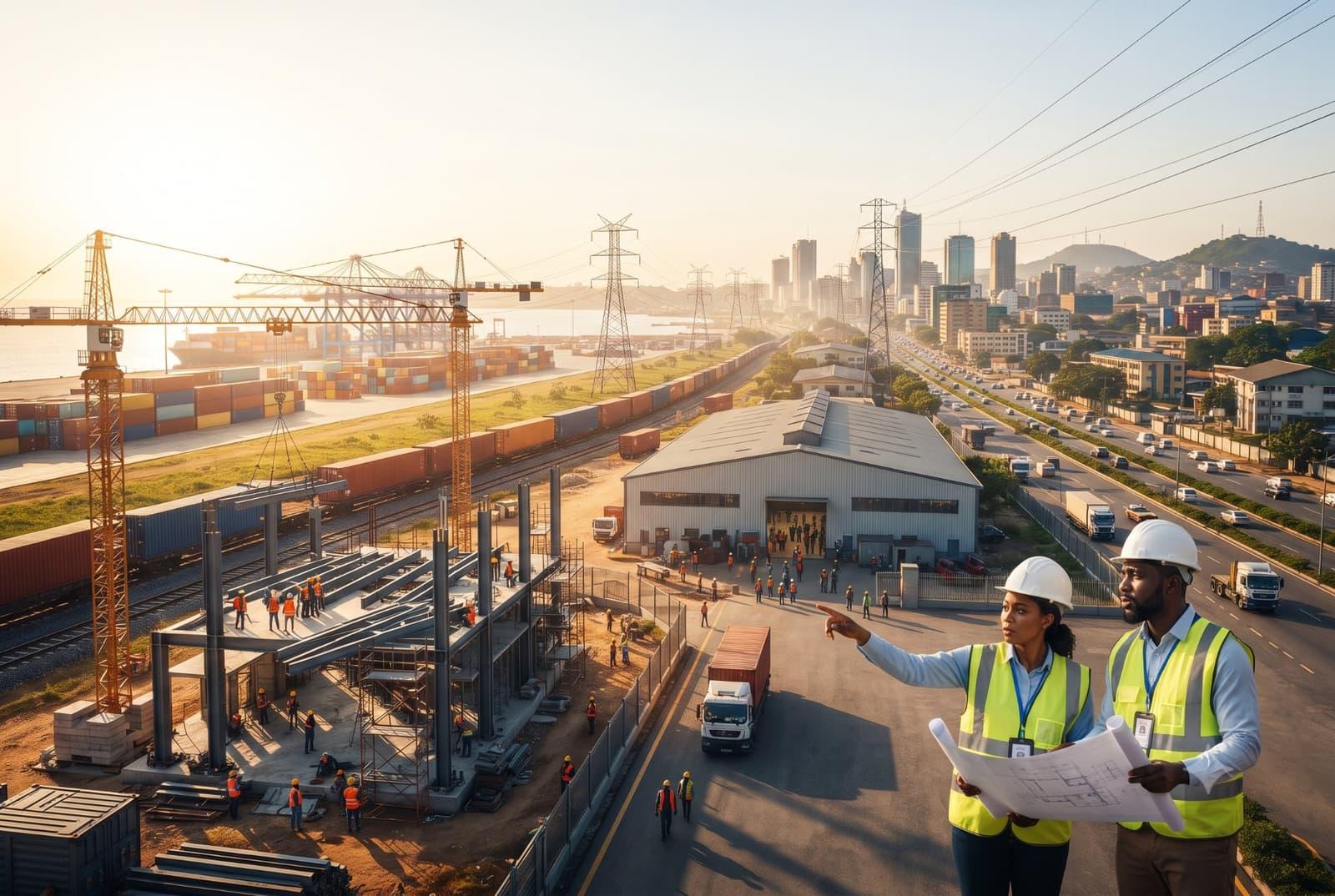
A factory produces nothing on the day it opens, nor does it produce anything during the two or three years it took to build. The land, the machinery, the workers who built the foundation: all of them and the infrastructure got paid for long before the factory gets to manufacture or sell a product. the gate.
The same goes for a port before its first ship docks, a power plant before it delivers its first unit of electricity, a fibre-optic cable before it carries its first byte of data. We've covered industrialization, infrastructure, trade, and technology in this series and we can all agree that all of these innovations or manufacturing depend on the same thing happening first: someone spending money long before it comes back.
This article is about where that money comes from, and how well the continent, Africa uses the money that's already inside it.
Why growth needs money before it needs ideas
That money has a name: capital. It's money set aside today in exchange for a claim on income later, whether that's the return on a loan, a share of future profits, or, for a government, the tax and toll revenue a finished road eventually brings in.
A country can have fertile land, mineral deposits, and millions of people willing to work, and still have no factories, mines, or farms at scale, because none of those things exist until someone covers the upfront cost first. Natural resources and good ideas don't build anything on their own. Capital is what turns them into something real.
It works the same way at small businesses. Someone opening a bakery still needs an oven and flour before a single loaf of bread is produced or sold. The pattern is the same across all business sizes and industries, especially product based business: Spend first, earn later: that's the rule everything else comes back to.
Where Africa's financing comes from today
In this section
Pension funds collect part of workers' pay every month and invest it so it grows into a retirement income over decades.
Africa is funded through various means, and each funding source plays a different role.
Commercial banks are the most familiar source. They take deposits from customers and lend a portion of that money to businesses and governments, though not in the same way. Businesses usually have to offer collateral, an asset pledged as security, before a bank will lend to them; government borrowing runs instead through bonds and treasury bills backed by the state's own credit. Either way, banks tend to prefer shorter repayment periods, which limits how much of their lending ends up funding long-term projects, for businesses and governments alike.
Pension funds collect part of workers' pay every month and invest it so it grows into a retirement income over decades. Because that money isn't needed back for many years, pension funds are naturally suited to long-term investment. African pension funds now manage more than $700 billion in combined assets, a figure some industry estimates expect to grow toward $7 trillion by 2040 as more workers join formal pension schemes.
Sovereign wealth funds work on a similar principle, except governments control them instead of pension savers, and the money behind them doesn't always come from the same place. Nigeria's and Botswana's follow the model: a share of oil or diamond export revenue gets set aside and invested instead of spent, so there's still something left once those resources eventually run out. Ethiopia works differently. Instead of resource revenue, it pools the government's ownership stakes in state-run companies, Ethiopian Airlines and Ethio Telecom among them, into a single fund. Either way, the goal is the same: turn money the state already controls into something that keeps generating value later, instead of spending it all now. Together, Africa's sovereign wealth funds hold an estimated $130 billion, which sounds substantial until you set it against the roughly $14 trillion these kinds of funds manage worldwide: African funds make up less than one percent of that.
Insurance companies invest the premiums their customers pay, holding that money until claims come due, which for life insurance can be decades away. Like pension funds, this makes insurers natural long-term investors.
Development finance institutions work differently again. Organisations such as the African Development Bank, the International Finance Corporation, Afreximbank, and the Africa Finance Corporation exist specifically to fund projects that commercial banks and private investors see as too risky, too long-term, or too large to finance alone. They're usually backed by governments and blend public money with private capital to make projects viable that wouldn't otherwise attract funding.
Foreign direct investment, money that investors from outside Africa put directly into building or buying stakes in businesses on the continent, gets the most attention but is also the least dependable of these sources. Africa attracted about $70 billion in foreign direct investment in 2025, down from $94 billion in 2024, and that money stays concentrated in a small number of countries and sectors, mainly energy, minerals, and infrastructure. Foreign investors respond to global interest rates, commodity prices, and conditions in their own economies, none of which African policymakers control, which is why an economy leaning mainly on foreign capital stays exposed to swings it never had a hand in causing.
Add it all up and you get the pool of capital available to African economies. Size isn't the only thing that matters, though. Whether the type of capital on offer actually fits what a project needs matters just as much.
Not all capital moves at the same speed
In this section
Investors looking for their money back within two or three years can't offer that, no matter how sound the underlying project is.
A shop selling imported electronics might turn a profit within a year of opening. A rail line connecting two cities, or an irrigation system for a farming region, might take ten or fifteen years to generate enough revenue to repay what it cost to build. Both businesses need capital, but not the same kind due to differences in business and amount needed. An ordinary loan might cover the set up of the shop, including buying the electronics. The rail line and the irrigation system need something willing to wait far longer: what's called patient capital.
Patient capital is money committed for long periods, on the understanding that the returns will take years to show up, matched to the actual time a project needs to pay off. Investors looking for their money back within two or three years can't offer that, no matter how sound the underlying project is.
That's part of why the kind of institution behind the money matters, as much as, how much money there is. Pension funds and sovereign wealth funds don't need their capital back quickly, which makes them well suited to financing long-horizon infrastructure and industrial projects that bank loans, built around shorter repayment periods, aren't designed for. Development finance institutions exist partly to fill the same gap, absorbing risk that private investors won't carry for a decade or more.
When most of a country's available capital is short-term, sitting in bank deposits or foreign portfolio investment that can be pulled out quickly, long-term projects struggle to get built, even when the overall supply of money looks fine on paper. The problem often isn't how much capital exists. It's how much of it is patient.
Why Africa still struggles to finance itself
In this section
Political and regulatory uncertainty discourages the kind of patient capital these projects need most.
Even with banks, pension funds, sovereign wealth funds, and development institutions all operating on the continent, Africa's own financing system still falls short of what its economies need, and the gap is easiest to see in infrastructure. The African Development Bank estimates the continent needs $130 billion to $170 billion a year to build the roads, power plants, and ports its economies require, and an estimated $68 billion to $108 billion of that goes unfunded every year.
Part of the shortfall comes down to how small Africa's own pools of investable capital still is. The sovereign wealth funds mentioned earlier is one sign of that. Local stock and bond markets tell a similar story: in most African countries, they're too shallow to give companies much of an alternative to a bank loan.
Project preparation is a less visible constraint, but just as important. Before any investor, foreign or domestic, commits money to a road or a power plant, they need a feasibility study, clear cost estimates, secure land rights, and a credible projection of future demand. Preparing all of that costs money and requires specialised expertise, and plenty of promising projects stall right there, long before financing even comes up.
Currency risk adds another layer. A factory might borrow in dollars but sell to local buyers in naira, or a farm cooperative might borrow in dollars but get paid in cedis, and either way, every time the local currency weakens against the dollar, the loan gets more expensive to repay. Investors know this going in, and many price it into the deal by demanding higher returns or avoiding long-term local-currency projects altogether.
Political and regulatory uncertainty discourages the kind of patient capital these projects need most. An investor committing money for fifteen years is also betting that today's rules on taxes, land, and moving profits out of the country will still hold in year ten. Where that confidence is thin, even well-designed projects struggle to attract long-term financing, no matter how sound the underlying economics are.
Why small businesses struggle to get funded
In this section
Businesses that trade across borders run into a related problem called trade finance.
A small manufacturer has to buy raw materials before it can produce anything to sell, and pay its workers before customers pay their invoices. The money that covers that gap between paying costs and collecting revenue is called working capital, and running short of it is one of the most common reasons small businesses fail, even when their product is clearly in demand.
Banks that lend this kind of money usually want collateral in return, and many small or newer businesses simply don't own the property or equipment banks accept as security, this causes a barrier to funding for SMEs. The International Finance Corporation estimates small and medium-sized businesses in the region could productively use about $331 billion more in financing than they're currently able to access, and about half the region's small businesses say they can't get the credit they need to grow.
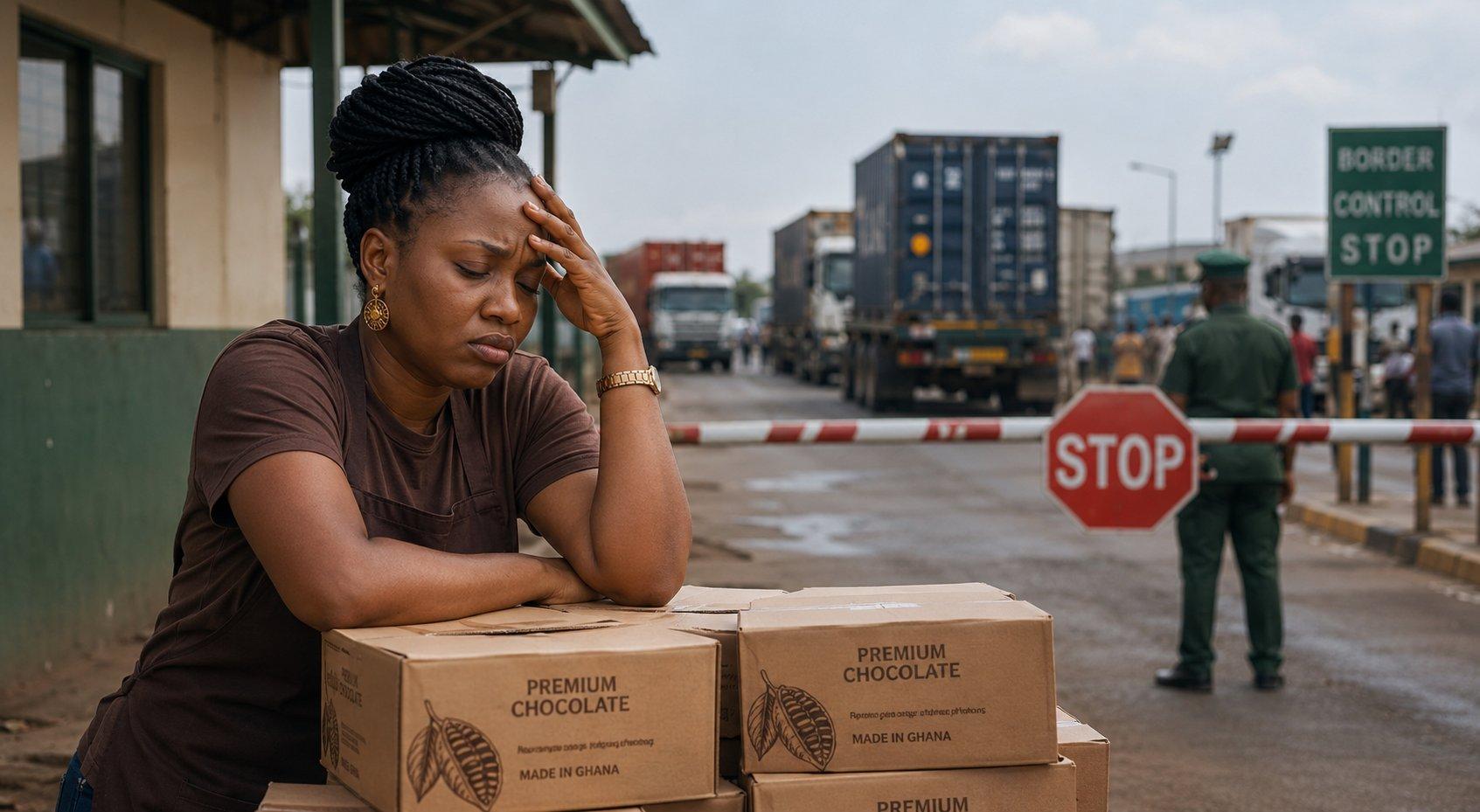
Businesses that trade across borders run into a related problem called trade finance. Say a cocoa exporter in Ghana ships a container to a buyer in the Netherlands: the exporter has already paid its farmers, its processors, and its shipping costs before that container even leaves port, but the buyer might not pay until the shipment arrives and clears inspection, weeks or sometimes months later. A bank or specialised lender bridges that gap, for a fee, in one of two ways. It can guarantee the payment, promising to pay the exporter itself if the buyer doesn't. Or it can advance most of the money upfront, paying the exporter as soon as the goods ship instead of making them wait, then collecting from the buyer once payment eventually comes through. Without it, cross-border trade gets a lot riskier for smaller firms that can't absorb months of unpaid costs the way larger companies can.
That risk shows up in the numbers, though not evenly. Africa's trade finance gap currently sits at around $74 billion a year, and smaller firms are hit hardest by it: African Development Bank data puts their trade finance rejection rate at around 37 percent, well above the rejection rate for trade finance overall.
Women and the financing gap
Among the businesses that struggle most to access capital, women-owned businesses face a financing gap of their own: an estimated $42 billion across Africa.
Much of this traces back to the same obstacles already covered here, just distributed unevenly. Collateral requirements disadvantage women disproportionately in countries where they're less likely to hold land or property in their own name, and many women-owned businesses also operate in the informal economy, which makes it harder to build the transaction and credit history formal lenders rely on to judge risk.
This is an economic issue as much as a social one. The World Economic Forum estimates that closing the gap could add $316 billion to Africa's economic output, because too many capable ones still can't get access to the capital they need.
What it would look like to get this right
An economy that finances its own future doesn't stop attracting foreign investment. It just stops depending on foreign capital as its main source of growth.
In that economy, pension funds and insurance companies put more of their money into local infrastructure, businesses, and long-term projects, instead of parking most of it in government bonds. Growing companies raise capital through local stock and bond markets instead of relying almost entirely on bank loans that were never designed to fund long-term expansion. Lenders look past collateral and use transaction history, cash flow, and business performance to decide who deserves credit, which gives more viable businesses a chance even if they don't own expensive assets.
Businesses trading across the continent get the trade finance they need to move goods with confidence. And the financing gap facing women-owned businesses closes, not because anyone gets special treatment, but because the barriers behind it (collateral, informality, thin credit histories) get fixed for everyone.
None of this replaces foreign direct investment or development finance. It just changes their job: from primary source of growth capital to backup for a system that can mostly fund itself.
Where this leaves things
Capital makes growth possible. Where it goes determines who actually benefits from that growth.
Financing decides which factories get built, which roads get paved, and which businesses get the chance to grow, but building a factory isn't the same as creating a job, and financing a road doesn't automatically raise anyone's income. Investment only turns into prosperity when it creates jobs and raises what people earn.
That's where this series goes next: jobs.