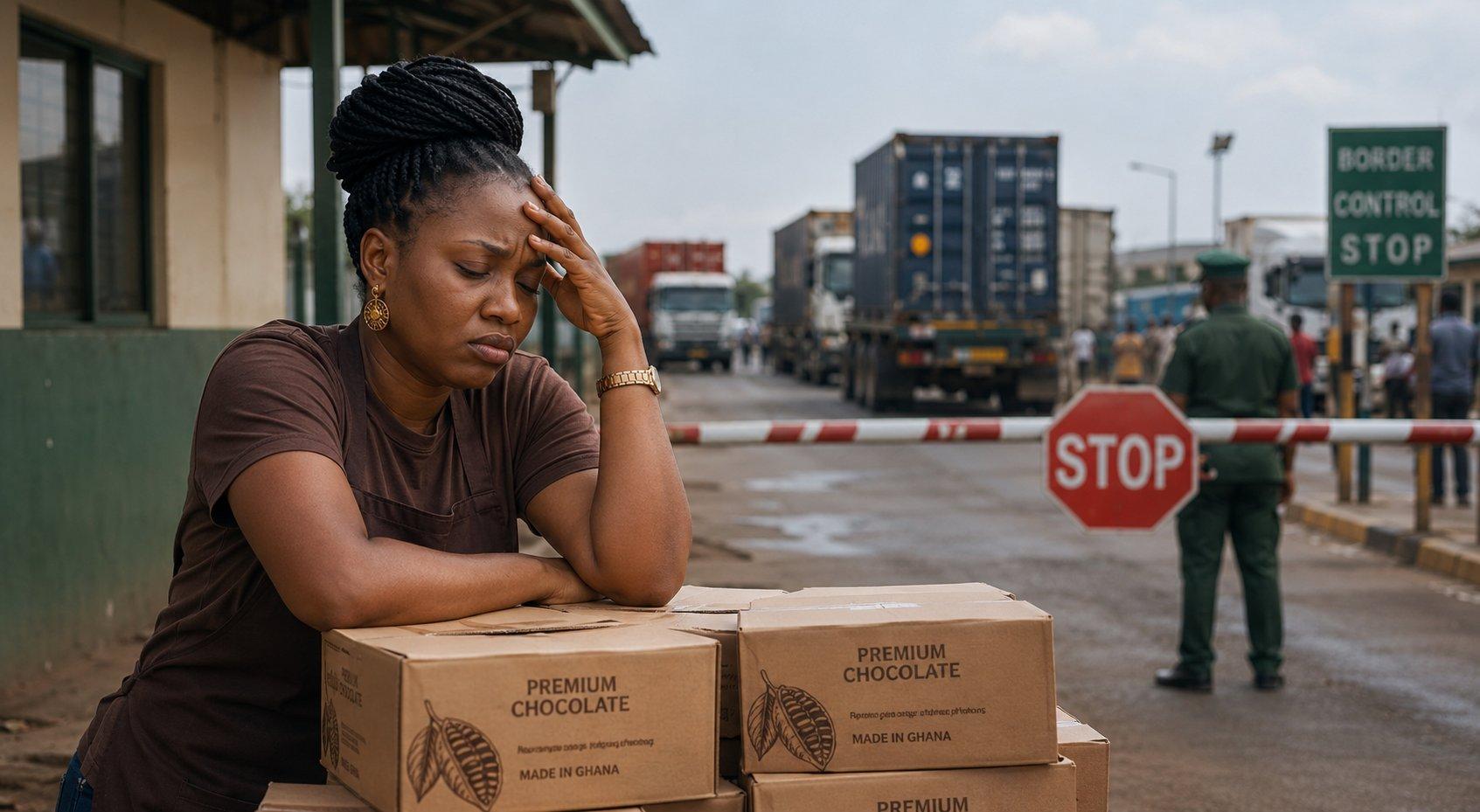
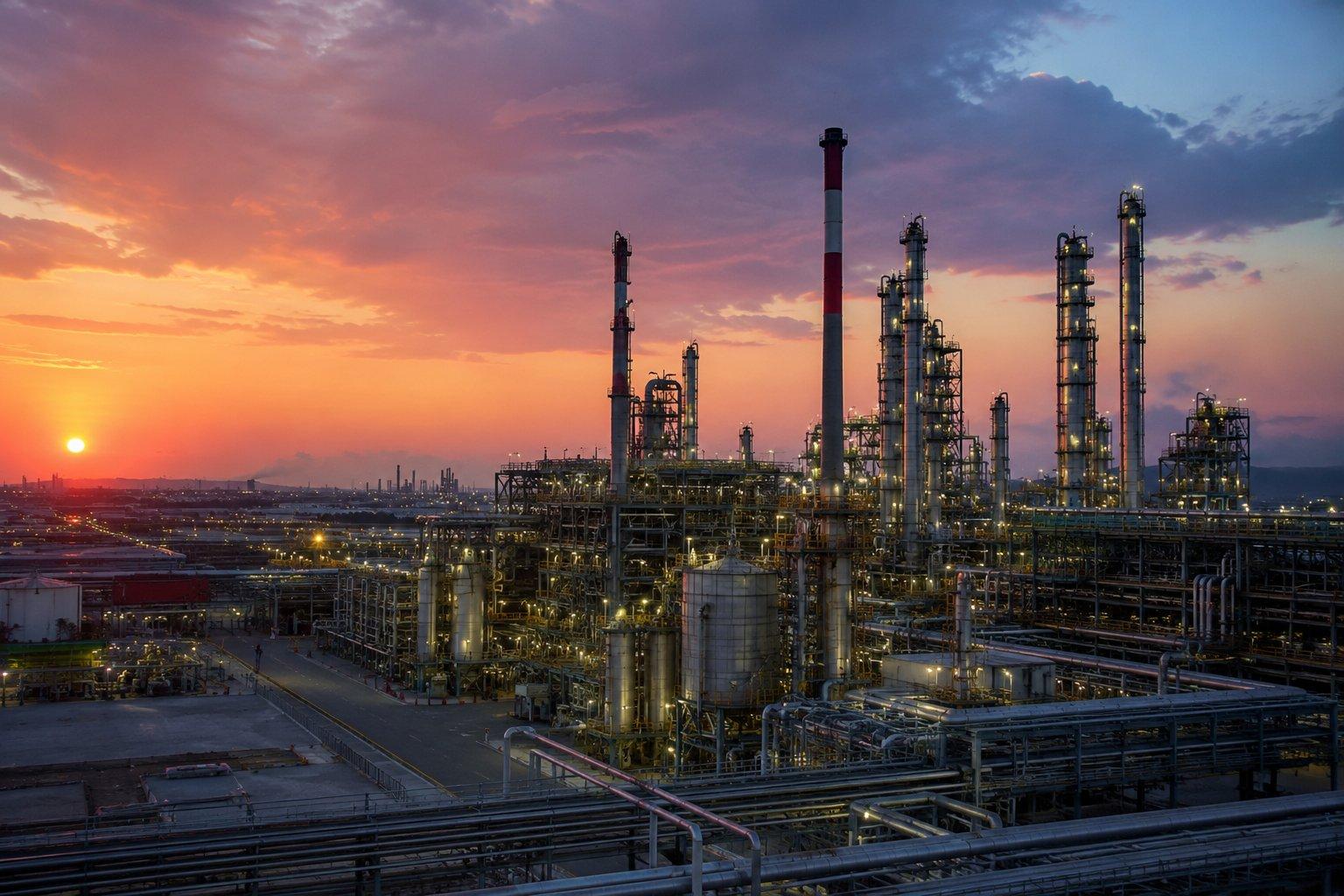
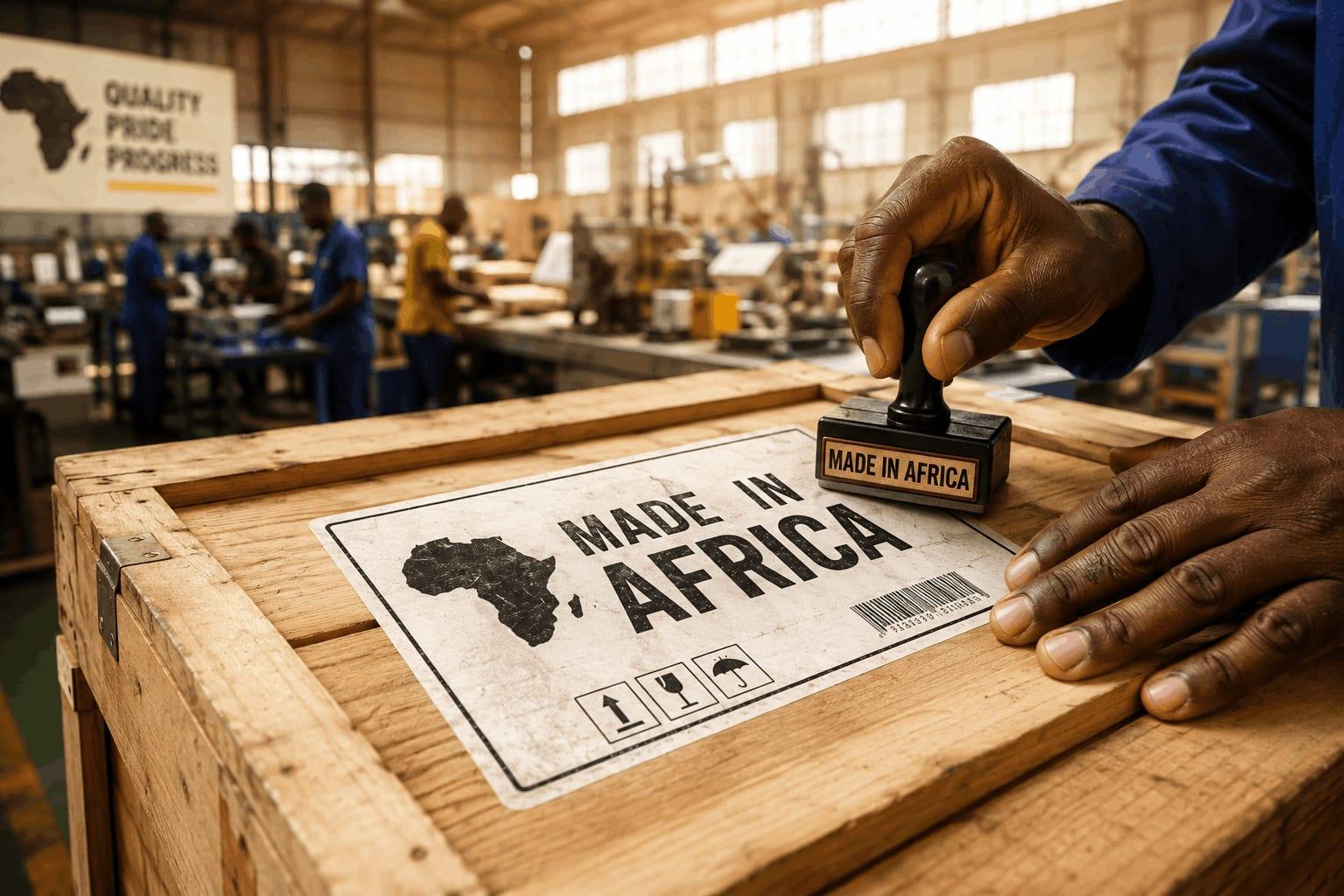
For generations, Africa has helped build the modern world. The continent supplied the crude oil that powered economies, the cocoa that filled supermarket shelves, the copper that carried electricity, the lithium powering today's batteries, and countless other resources that fueled global industry.
Yet much of that value was created somewhere else.
That imbalance has shaped Africa's place in the global economy for decades. It generated real wealth. Most of it just didn't stay on the continent.
Something different is starting to take shape. Conversations about infrastructure, industrialization, artificial intelligence and regional trade are no longer happening as separate stories. They are becoming part of a much bigger question: how does Africa actually create value, build industries that can compete, and hold on to more of what it produces.
The shift is still in its early stages, but the direction is becoming clearer. This is not simply a story about economics. It is about where factories are built, where businesses choose to invest, where high-paying jobs are created, where new technologies emerge, and ultimately where prosperity stays. The decisions being made today about infrastructure, manufacturing, technology and trade will shape the continent for decades to come. They will also shape where investment flows, where businesses choose to expand, and which countries emerge as Africa's next industrial and innovation hubs.
Progress is neither guaranteed nor immediate. It depends on sustained investment, political follow-through, and countries choosing cooperation over isolation. But the pieces are coming together in a way that's worth paying attention to.
Build the foundations first
In this section
Without it, everything downstream gets harder and more expensive, from running a factory to keeping a hospital open.
Every economy that's made this leap has done one thing first. Before industries take off, the basic infrastructure underneath them has to exist.
Reliable power, decent roads, and logistics that actually work aren't side projects. They're what everything else depends on.
A factory can't run efficiently on unreliable power. A farmer can't get produce to market on bad roads. A manufacturer can't compete internationally if the nearest port is a bottleneck.
The African Development Bank puts the continent's total infrastructure investment need at somewhere between $130 billion and $170 billion a year, against roughly $80 billion currently being invested. That leaves an annual gap in the range of $70 billion to over $100 billion, a figure that's been fairly consistent across AfDB estimates for the past few years.
A joint OECD and African Union Commission report released in late 2025 sharpened that picture. It found that raising annual infrastructure investment from around $83 billion to $155 billion could add 4.5 percentage points to Africa's yearly GDP growth, enough to double the continent's total GDP by 2040. The report singled out roads, railways, fibre optic cables, and solar power as the investments that deliver the most economic return per dollar spent.
Electricity remains the most urgent piece. Roughly 600 million people across Africa still lack access to power, out of a population of about 1.4 billion. That's not far off half the continent. Without it, everything downstream gets harder and more expensive, from running a factory to keeping a hospital open.
Infrastructure is often viewed as a cost. In reality, it is the platform every productive economy is built upon. Without it, industrial policy, trade agreements and technological innovation struggle to deliver their full potential.
Move up the value chain
In this section
In other words, when they stop exporting raw materials and begin transforming them into products worth far more.
Infrastructure creates the conditions for prosperity. It does not create prosperity on its own.
Prosperity emerges when countries use that infrastructure to produce, manufacture, innovate and trade. In other words, when they stop exporting raw materials and begin transforming them into products worth far more.
The clearest example right now is the Dangote Refinery outside Lagos. For decades, Nigeria exported crude oil while importing most of the refined fuel its own population used, despite sitting on some of the largest crude reserves in the world. Refining happened somewhere else, and so did most of the profit.
The refinery has begun changing that equation. Nigeria still exports crude, but it no longer has to send all of it away unprocessed. The refinery reached its planned processing capacity of around 650,000 barrels per day in early 2026, making it the largest single-train refinery in the world. Instead of exporting crude and buying back refined fuel, Nigeria can now produce diesel, petrol, jet fuel, and petrochemicals domestically, cutting its reliance on imports by a wide margin.
Economists have a name for what's happening here: moving up the value chain. Instead of exporting a raw commodity at whatever price the market sets, a country holds on to more of the production process itself, and captures the higher-value product, the better-paying jobs, and the industrial capacity that come with it.
The same logic applies well beyond oil. Cocoa beans become chocolate. Cotton becomes finished textiles. Lithium and cobalt become battery components instead of raw exports. Each step up the chain keeps more money, more skilled jobs, and more industrial capacity inside the country doing the processing.
Don't just use AI, build it
In this section
China moved from importing technology to building its own research and manufacturing base over roughly two decades.
Physical infrastructure isn't the only foundation that matters anymore. Digital infrastructure is becoming just as central to how economies compete. In the twenty-first century, countries compete not only on roads and ports, but on computing power, digital talent, research capacity and data. Artificial intelligence is becoming a general-purpose technology in much the same way electricity transformed the Industrial Revolution, improving almost every sector it touches, from agriculture and healthcare to manufacturing, education and finance.
Robert Tama Lisinge, who directs the technology, innovation, connectivity and infrastructure division at the UN Economic Commission for Africa, made a pointed distinction in a July 2026 interview: Africa's opportunity isn't in becoming a bigger user of AI tools built elsewhere. It's in building the capacity to create its own.
That's a much bigger ask than downloading an app. It means data centers, research institutions, computing power, and people trained to build and train models, not just operate them.
Two numbers from that interview stand out. Less than 1 percent of internet content exists in African indigenous languages. And only about 2 percent of African data is currently stored on the continent itself. Put those together and you get AI systems that are, by default, built around languages and contexts that leave out most of the continent's population. A 2025 academic comparison of large language models found only a handful of African languages, Amharic, Swahili, Afrikaans and Malagasy among them, get handled with any real consistency, out of more than 2,000 languages spoken across Africa.
Lisinge pointed to China's own development path as one worth studying, not copying wholesale. China moved from importing technology to building its own research and manufacturing base over roughly two decades. The argument isn't that Africa should import Chinese AI products. It's that African countries could learn from how China built the underlying capacity to produce its own. The lesson is less about choosing a geopolitical partner and more about understanding that technological leadership is built through long-term investment in people, research and infrastructure.
Think beyond borders
No single African country has every resource, every industry, or every capability it needs to compete on its own. The continent does, collectively.
The African Continental Free Trade Area exists to connect those pieces, linking 54 countries into a single market. But free trade only works if goods can actually move. Trucks need to cross borders without delay. Ports need to function. Power needs to stay on. None of that happens without the infrastructure investment discussed earlier.
Whether or not every proposed project materializes, the bigger idea is already taking shape. Africa's future industrial projects are increasingly being imagined as regional rather than national investments. Discussions around a potential second refinery in Lamu, Kenya, sourcing crude from Kenya, Uganda, the Democratic Republic of Congo and South Sudan, offer an example of what that kind of cooperation could look like at scale. Imagine a battery manufacturer in Zambia sourcing lithium from the Democratic Republic of Congo, graphite from Mozambique, and selling finished products across Kenya, Ghana and Nigeria. Regional trade is what lets that entire value chain exist within Africa, instead of leaning on markets outside the continent for every link in it.
People are the other half of the equation
None of this works without workers, entrepreneurs, and consumers to drive it.
Development economist Joe Studwell, author of How Africa Works, has argued that Africa's demographics are shifting into the same range that powered Asia's growth decades ago. Africa's population density in 1960 matched Europe's in 1500. By 2030, it's projected to reach the density Asia had in 1960, right before decades of rapid growth there.
Urbanization compounds that effect. Cities make infrastructure cheaper to deliver per person, cluster businesses together, and let people specialize in ways that raise overall productivity. Studwell also points out that a young population only becomes an economic asset if there are actual jobs waiting for it. Without that, rapid population growth becomes a strain rather than an advantage.
Demographics create potential. Productivity is what determines whether that potential turns into prosperity. History shows that no country becomes prosperous because it is young. It becomes prosperous because it gives that generation productive work to do.
The pattern underneath all of it
In this section
Infrastructure, artificial intelligence, manufacturing and regional trade all point in the same direction.
Africa currently has more than $2 trillion sitting in pension funds, insurance companies and sovereign wealth funds, and less than 3 percent of it is invested in infrastructure. That's not primarily a money problem. It's a shortage of projects investors consider bankable: clear financial projections, credible sponsors, and a realistic path to generating returns. Closing that gap matters as much as finding new sources of capital.
Viewed separately, these developments seem unrelated. Viewed together, they tell a very different story.
Infrastructure, artificial intelligence, manufacturing and regional trade all point in the same direction.
Africa is beginning to move from an economy built on extraction to one built on value creation.
Roads and power plants make factories possible. Factories create demand for better technology. Artificial intelligence makes those industries more competitive. Regional trade expands the markets they can serve. A young, growing population supplies the talent to keep all of it running.
None of these investments matter much in isolation. Their real value comes from how they reinforce each other.
For decades, Africa's place in the global economy was largely defined by what it extracted. The next chapter will be defined by what it builds.
Infrastructure. Factories. Research centers. Digital networks. Regional supply chains. Home-grown technologies.
None of these alone will transform the continent. Together, however, they represent the foundations of a more integrated, value-driven economic model than Africa has pursued at continental scale before.
That transformation is still unfolding. Its outcome is not predetermined.
But it has already begun. So, the question now is not whether Africa can create more value. It is whether it can do so quickly enough to shape its own future rather than simply respond to it.
Sources and further reading
- African Development Bank, African Economic Outlook and infrastructure financing reports
- OECD and African Union Commission, Africa's Development Dynamics 2025
- United Nations Economic Commission for Africa, July 2026 interview with Robert Tama Lisinge (Xinhua)
- African Continental Free Trade Area Secretariat
- Joe Studwell, How Africa Works: Success and Failure on the World's Last Developmental Frontier
- International Energy Agency, electricity access and energy investment data for Africa
- Dangote Group public announcements and operational updates
This is the first in a series looking at how Africa is rebuilding itself from the ground up. Next: inside the Dangote effect and what it means for African manufacturing. Stay with Ria's Colony for the rest of the story.