What does it mean to leave ECOWAS? Here’s what Mali, Burkina Faso and Niger’s 2025 withdrawal means for travel, trade, currency, security and citizens.
If you have been following West African news lately, you have probably seen headlines about Mali, Burkina Faso, and Niger "leaving ECOWAS." Maybe you nodded along like you understood it, but deep down you were not sure what it actually meant for the countries involved or for everyday people. You are not alone. A lot of people hear this and picture something like a country literally packing up and moving away, when really it is about membership in an organization, similar to a country pulling out of a trade agreement or a club it once belonged to.
This article breaks the whole thing down in plain terms. What ECOWAS is, what it means to leave it, how the process actually works, what happens afterward, and why some countries decide it is worth doing despite the costs. We will also look at the one country that did this before, back in 2000, so you can see this is not entirely new, even though the current situation is bigger and more dramatic than anything ECOWAS has dealt with before.
First, What Is ECOWAS?
In this section
ECOWAS later moved to remove the 90-day limitation, although implementation of that decision remained incomplete.
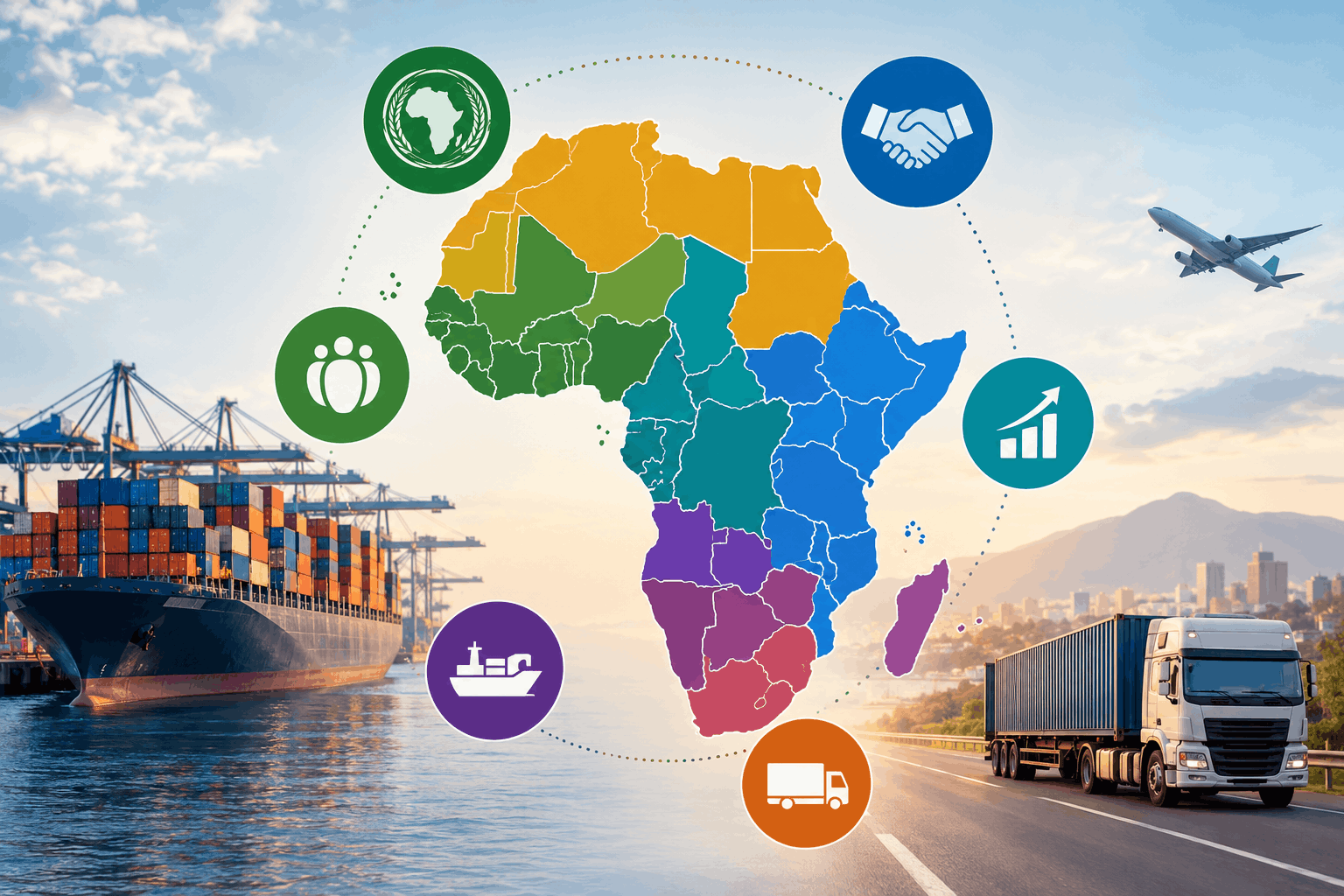
ECOWAS stands for the Economic Community of West African States. It was created on May 28, 1975, through a treaty signed in Lagos, Nigeria, by 15 West African countries. The goal was simple on paper: get these countries working together economically, allow people, goods, and money to move more freely across borders, and build a stronger, more unified region instead of 15 small, disconnected economies competing against each other. Cabo Verde joined ECOWAS in 1977, bringing the membership to 16 before Mauritania later withdrew.
Over the decades, ECOWAS grew into more than just a trade group. It became the main political and diplomatic body for the region too. It has stepped into crises, sent peacekeeping troops into countries like Liberia and Sierra Leone during their civil wars, imposed sanctions on governments that seized power through coups, and pushed for democratic elections across the region.
Before the recent departures, ECOWAS had 15 member states: Benin, Burkina Faso, Cabo Verde, Ivory Coast, Gambia, Ghana, Guinea, Guinea-Bissau, Liberia, Mali, Niger, Nigeria, Senegal, Sierra Leone, and Togo. One of its biggest achievements was the Free Movement Protocol, adopted in 1979, which established visa-free entry for Community citizens for stays of up to 90 days under the first phase of the protocol and provided a broader framework for residence and establishment. ECOWAS later moved to remove the 90-day limitation, although implementation of that decision remained incomplete. The free-movement system has shaped daily life for millions of traders, students, workers, and families who cross borders regularly.
So What Does "Leaving ECOWAS" Actually Mean?
In this section
A member state has to formally notify the ECOWAS Commission in writing that it intends to withdraw.
When a country leaves ECOWAS, it means that country is formally withdrawing its membership from this regional bloc. It stops participating as a member in ECOWAS institutions and decision-making and is no longer covered by the rights and obligations that come specifically from membership. But the practical consequences do not necessarily appear all at once, because ECOWAS can negotiate transitional arrangements with a departing country.
Think of it a bit like a country pulling out of the European Union, similar to what the United Kingdom did with Brexit, except ECOWAS is more focused on trade and regional integration and has a much less extensive supranational legal structure than the EU. Still, the core idea is the same: a member state decides to withdraw from a regional organisation and its shared legal and institutional framework.
Leaving is not something a country can do overnight. There is an actual legal process laid out in the ECOWAS treaty itself, specifically under Article 91 of the Revised Treaty. A member state has to formally notify the ECOWAS Commission in writing that it intends to withdraw. From that point, the country remains bound by the treaty and its obligations for one full year. Only after that year passes does the withdrawal take effect.
This one-year rule exists for a reason. It gives both sides time to negotiate and work out the details of separation, including what happens to ongoing projects, institutional arrangements, and the practical rights of citizens and businesses.
The Recent Case: Mali, Burkina Faso, and Niger
In this section
In Niger's case, ECOWAS went further and threatened military intervention to reinstate Bazoum.
This is the situation most people are asking about right now, so let's walk through exactly what happened, step by step.
How we got here. All three countries went through military coups within a few years of each other. Mali had two coups, in August 2020 and May 2021, which removed elected President Ibrahim Boubacar Keïta and eventually installed a military-led transitional government. Burkina Faso had two coups of its own in 2022, in January and September, removing Presidents Roch Marc Christian Kaboré and later Paul-Henri Sandaogo Damiba. Niger's turn came in July 2023, when the military overthrew elected President Mohamed Bazoum.
ECOWAS responded to the coups with different measures, including suspensions, political pressure and, in Mali and Niger's cases, major economic and financial sanctions. In Niger's case, ECOWAS went further and threatened military intervention to reinstate Bazoum. That threat was never carried out and became one of the major sources of tension between Niger's junta and the regional bloc.
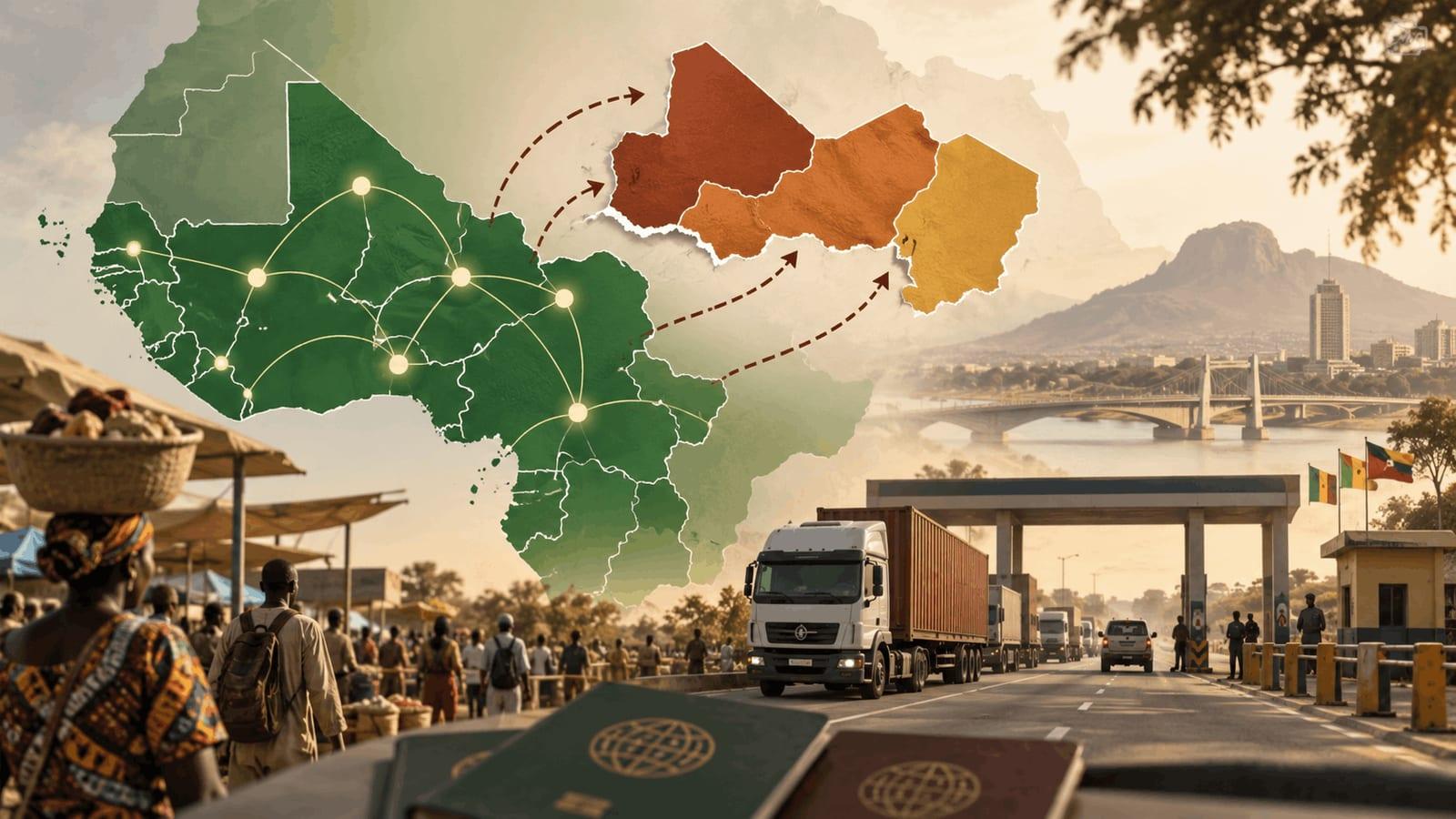
The announcement. On January 28, 2024, the three countries issued a coordinated joint statement, read out on national television in each country, announcing that they were withdrawing from ECOWAS "without delay." Their reasoning centered on a few core complaints: they said ECOWAS had failed to help them fight the jihadist insurgencies plaguing the Sahel region, that the sanctions imposed on them were harming ordinary citizens, and that ECOWAS had become too influenced by foreign powers, particularly France, the former colonial power in all three nations.
The one-year clock. Even though the three governments declared their exit "without delay," the ECOWAS treaty's withdrawal procedure still applied. That meant the formal withdrawal process required one year's notice. The three countries therefore remained members during that notice period, with the withdrawal eventually taking effect on January 29, 2025.
The grace period. As the one-year deadline approached, ECOWAS made an attempt at reconciliation. At its 66th summit, held in Abuja on December 15, 2024, the bloc agreed to keep its doors open for dialogue with the three countries for six months, from January 29, 2025, to July 29, 2025. Senegalese President Bassirou Diomaye Faye and Togolese President Faure Gnassingbé were tasked with helping facilitate dialogue and keeping the possibility of a return open. Importantly, this six-month period did not postpone the legal withdrawal date; it was a transitional period for dialogue and negotiations after the withdrawal took effect.
The exit becomes official. Despite that gesture, Mali, Burkina Faso, and Niger held firm. On January 29, 2025, ECOWAS Commission President Omar Alieu Touray confirmed that the withdrawal of all three countries had become effective. ECOWAS said it would keep its doors open for dialogue and instructed its institutions and member states to avoid unnecessary disruption to ordinary people and businesses during the transition.
What happened with the grace period. The six-month dialogue period ran out on July 29, 2025. The three countries did not reverse their decision. By then, they had already established their own regional political and security framework through the Alliance of Sahel States, or AES.
The Alliance of Sahel States: What They Built Instead
In this section
Alongside building the AES, the three countries pulled away from several Western-linked security partnerships.
Long before the formal ECOWAS exit was finalized, Mali, Burkina Faso, and Niger were already laying the groundwork for their own regional bloc. In September 2023, they signed the Liptako-Gourma Charter in Bamako, creating the Alliance of Sahel States, often shortened to AES, as a mutual-defence alliance. The idea was simple: an attack on one member would be treated as an attack on all three.
By July 2024, they upgraded this from a defence alliance into a full confederation, with its own treaty. Since then, the AES has continued building out its institutions. In December 2025, the three countries launched a Unified Force of about 5,000 troops in Bamako, intended to provide a joint military response to armed groups operating across their territory. They have also launched a shared television channel and continued discussions about a common currency that could eventually reduce their dependence on the CFA franc. No AES common currency has replaced the CFA franc, however.
Alongside building the AES, the three countries pulled away from several Western-linked security partnerships. They ended the French Operation Barkhane counterterrorism presence, shut down US drone operations that had been based in Agadez, Niger, and reduced or ended several forms of security cooperation with Western partners. In their place, they turned toward Russia, including security cooperation involving Russia's Africa Corps, along with expanding partnerships with Turkey, China, and Gulf states for financing, trade, and other forms of cooperation.
Mali also cut ties with the Organisation internationale de la Francophonie, the international body for French-speaking countries, announcing its withdrawal from that group in March 2025 as well, citing what it called selective sanctions.
What Actually Changes for People and Businesses
In this section
Leaving ECOWAS creates uncertainty over the three countries' long-term access to the bloc's trade arrangements.
This is probably the part most people care about the most: what does leaving ECOWAS actually change on the ground?
Travel and visas. This is where the reality is more complicated than simply saying "they left, so visas are now required."
Under ECOWAS rules, member-state citizens have traditionally enjoyed visa-free entry and broader rights of residence and establishment in other member states. But when Mali, Burkina Faso, and Niger's withdrawal became effective on January 29, 2025, ECOWAS specifically instructed its remaining members to continue allowing citizens of the three countries to enjoy visa-free movement, residence and establishment until further notice. It also instructed them to continue recognising national passports and identity cards bearing the ECOWAS logo.
That means the legal membership relationship changed on January 29, but ordinary travellers did not suddenly arrive at ECOWAS borders and discover that their old rights had disappeared overnight. ECOWAS deliberately maintained these arrangements to avoid confusion and disruption while the future relationship was being negotiated.
The long-term question is therefore not simply whether visa-free travel "ended." It is what permanent arrangements will eventually replace the rights that previously came automatically from ECOWAS membership.
Trade. The same distinction applies to trade. Leaving ECOWAS creates uncertainty over the three countries' long-term access to the bloc's trade arrangements. But ECOWAS did not immediately impose a new tariff regime on them. When the withdrawal took effect, ECOWAS instructed its member states to continue treating goods and services from Burkina Faso, Mali and Niger under the ECOWAS Trade Liberalization Scheme (ETLS) and its investment policy until further notice.
Long term, being outside the bloc means the three countries no longer participate as members in the ECOWAS framework that governs regional economic integration. That matters particularly for landlocked countries like Mali, Burkina Faso, and Niger, which depend heavily on ports and trade routes running through coastal West African neighbours like Ivory Coast, Ghana, Togo, and Benin.
Currency. All three countries still use the CFA franc for now, the currency shared by several West African countries through the separate West African Monetary Union. Leaving ECOWAS does not automatically remove them from that monetary arrangement, because membership in the monetary union is governed separately from ECOWAS membership. As of 2026, the BCEAO still lists Burkina Faso, Mali and Niger among the eight members of the West African Monetary Union.
However, the AES has discussed plans for its own currency down the road, which would be a much bigger and more complicated move than simply leaving ECOWAS. For now, no AES currency has replaced the CFA franc.
Passports and identity. This is another area where the change has been gradual rather than immediate. The three countries have begun moving toward AES-branded travel documents, but existing ECOWAS-logo passports did not simply become invalid when membership ended. ECOWAS instructed its members to continue recognising those passports and national identity cards until further notice. At the same time, AES countries began introducing their own passports for citizens who wanted or needed the new regional documents.
Diplomatic representation. Leaving ECOWAS also means these countries no longer participate as member states in ECOWAS decision-making or vote as members on regional decisions. They no longer have the same institutional rights that come with membership, although ECOWAS can still engage with them diplomatically. In fact, the bloc has repeatedly said that its door remains open for dialogue and possible future engagement.
And then there is the security question.
The three countries left amid frustration over the fight against jihadist groups operating across the Sahel. But those groups have not disappeared since the withdrawal. Groups like JNIM, a jihadist coalition tied to al-Qaeda, have carried out major attacks even in previously safer areas, including a major attack in Mali's capital, Bamako, in September 2024, and a deadly attack on the northern Burkinabe town of Djibo in May 2025 that killed dozens of people. The figures reported for the Djibo attack varied, with JNIM claiming a much higher number of deaths than could be independently verified. This matters because fighting terrorism more effectively was one of the reasons these countries gave for leaving ECOWAS in the first place, and the security threat has continued.
Has This Happened Before? Yes, Mauritania in 2000
In this section
Following the one-year notice rule that exists today, Mauritania's withdrawal became official in 2000.
People often assume the Sahel trio's exit is completely unprecedented, but there is actually a historical example. Mauritania was one of the founding members of ECOWAS back in 1975. In December 1999, Mauritania formally notified ECOWAS that it was withdrawing from the organisation. Its withdrawal became official on December 26, 2000.
Mauritania did not publicly give a single definitive reason for its withdrawal. Contemporary analysts linked the decision partly to dissatisfaction with ECOWAS's movement toward deeper monetary and customs integration, while Mauritania also had stronger institutional and geopolitical ties to North Africa, including its membership in the Arab Maghreb Union.
Following the one-year notice rule that exists today, Mauritania's withdrawal became official in 2000. Its exit reduced ECOWAS from 16 members to 15. Interestingly, Mauritania did not stay completely cut off. In August 2017, it signed a new associate-membership agreement with ECOWAS, showing that leaving does not have to mean permanent, total separation. Relationships can be rebuilt in different forms later on.
The comparison to Mauritania is useful because it shows that ECOWAS withdrawals are not just about crisis and confrontation. Sometimes a country decides its economic or political interests point in a different direction. What makes the Mali, Burkina Faso, and Niger situation so much bigger is the scale (three countries at once, not one), the reason (military coups, sanctions, sovereignty concerns and security disputes rather than a single economic disagreement), and the broader geopolitical realignment that has come along with it.
Why Would a Country Choose to Do This?
In this section
First, there is the sense that ECOWAS sanctions punish ordinary people more than they punish the juntas in charge.
It is worth stepping back and asking why any government would take on the real costs of leaving a bloc like ECOWAS. Based on what the AES governments themselves have said, the reasoning generally comes down to a few things.
First, there is the sense that ECOWAS sanctions punish ordinary people more than they punish the juntas in charge. Sanctions can restrict trade, freeze assets, and cause real hardship for regular citizens, while doing little to actually push military leaders out of power.
Second, there is frustration over security. All three countries face brutal, ongoing insurgencies from extremist groups. Their leaders argued that ECOWAS, despite being a security and economic bloc, was not providing the kind of support needed to fight that threat, and that ECOWAS's response to Niger's coup, including the threat of military intervention, actually made the security situation worse rather than better.
Third, there is the sovereignty argument. The juntas have consistently framed their departure as a rejection of foreign, particularly French, influence over West African affairs, arguing that ECOWAS decisions have too often lined up with the interests of former colonial powers rather than the people living in the region.
Whether you find those arguments convincing or not, they are the stated reasons, and they help explain why the AES governments have stuck with their decision even through a six-month transition period specifically designed to keep dialogue open and give them an opportunity to reconsider.
What Does the Future Look Like?
In this section
Algeria said the drone had entered its airspace, while Mali and its AES allies condemned the incident.
As of September 2026, the situation remains fluid. The AES has spent several years building institutions of its own, while Mali, Burkina Faso and Niger have been outside ECOWAS since January 2025. The confederation has established a joint military structure, launched shared media initiatives, continued discussions about a common currency, and pushed to develop trade and diplomatic relationships outside the traditional ECOWAS framework.
At the same time, the insurgency that originally justified much of the security realignment has not been defeated, and there are still questions about whether the AES can sustain itself economically and militarily without relying heavily on outside powers such as Russia, Turkey, China and Gulf states.
There have also been some diplomatic bumps along the way. Relations between the AES countries and Algeria soured badly after Algerian forces shot down a Malian military drone near their shared border during the night of March 31–April 1, 2025. Algeria said the drone had entered its airspace, while Mali and its AES allies condemned the incident. The dispute led the three AES countries to recall their ambassadors from Algeria for consultations and marked a significant deterioration in relations between the two sides.
For now, ECOWAS has said its door remains open if any of the three countries ever want to return. Whether that happens is anyone's guess. What is clear is that leaving a regional bloc like this is not a single event but a long, layered process, legally, economically, and diplomatically, and the full effects tend to show up gradually over years rather than all at once.
The Bottom Line
In this section
Mali, Burkina Faso and Niger officially left ECOWAS on January 29, 2025, after the required one-year withdrawal period.
Leaving ECOWAS means a country walks away from membership in a decades-old regional organisation covering economic integration, trade, free movement and political cooperation. It is a formal legal process requiring a full year's notice, not something that happens overnight, and it changes a country's rights and obligations within the bloc.
But leaving does not mean every practical benefit disappears at the exact moment membership ends. Mali, Burkina Faso and Niger officially left ECOWAS on January 29, 2025, after the required one-year withdrawal period. ECOWAS then maintained temporary arrangements allowing their citizens to continue enjoying visa-free movement, residence and establishment, while their ECOWAS-logo passports and identity cards continued to be recognised and their goods and services continued to receive treatment under existing ECOWAS trade arrangements until further notice.
The three countries chose this path after years of tension with ECOWAS over coups, sanctions, sovereignty, foreign influence and the fight against extremist violence in the Sahel. They have since built the Alliance of Sahel States as an alternative regional framework and continued moving toward closer political, economic and military cooperation among themselves.
It is the most significant rupture in ECOWAS membership since the organisation was founded in 1975, but it is not the first time a country has left. Mauritania did the same thing back in 2000, for different political and economic reasons, and even returned to a looser relationship with the bloc years later. Whether history eventually repeats itself with the Sahel trio is something only time will tell.