For many years, conversations about Somalia have focused on security, humanitarian challenges and political rebuilding. Tourism has rarely been part of that discussion.
That may slowly be beginning to change.
Somalia and Tanzania are strengthening cooperation in tourism, natural resources and the blue economy through a planned Memorandum of Understanding (MoU) and a series of official knowledge exchanges. While the agreement is only one step in a much longer journey, it signals that Somalia is beginning to look at one of its greatest natural assets with fresh ambition, its coastline.
For travelers, tourism professionals and investors, this is more than another diplomatic meeting. It raises an important question.
Could Somalia become one of Africa's next emerging coastal tourism destinations?
The answer will not come overnight, but the conversation is worth having.
What Is the Cooperation About?
The cooperation is centered on sharing knowledge rather than building projects.
Recently, a delegation of Somali officials visited Tanzania to learn about the country's experience in developing its blue economy. The discussions covered areas such as coastal tourism, fisheries management, marine conservation and sustainable use of ocean resources. At the same time, both governments have announced plans to strengthen cooperation through an MoU covering tourism, natural resources and other sectors.
In simple terms, Tanzania is sharing lessons from its own experience while Somalia explores how those lessons might be adapted to its own coastline.
This is common in international development. Governments often learn from countries that have already faced similar opportunities and challenges instead of creating new systems entirely from scratch.
Why Tanzania?
Tanzania is one of Africa's strongest tourism destinations.
The country is known globally for attractions such as Serengeti National Park, Mount Kilimanjaro and Zanzibar. While wildlife tourism often receives the most attention, Tanzania has also built considerable experience in managing coastal tourism, marine conservation and island destinations.
Zanzibar, in particular, has become one of Africa's leading beach destinations, attracting visitors with its white sand beaches, rich cultural heritage and marine experiences.
For Somalia, Tanzania provides a practical example of how tourism can grow alongside environmental protection and community development.
Somalia's Coastline Is One of Africa's Least Known Tourism Assets
When people think about African tourism, destinations such as Kenya, Tanzania, South Africa or Rwanda often come to mind.
Somalia rarely appears on that list.
Yet Somalia possesses something many countries would consider a major advantage.
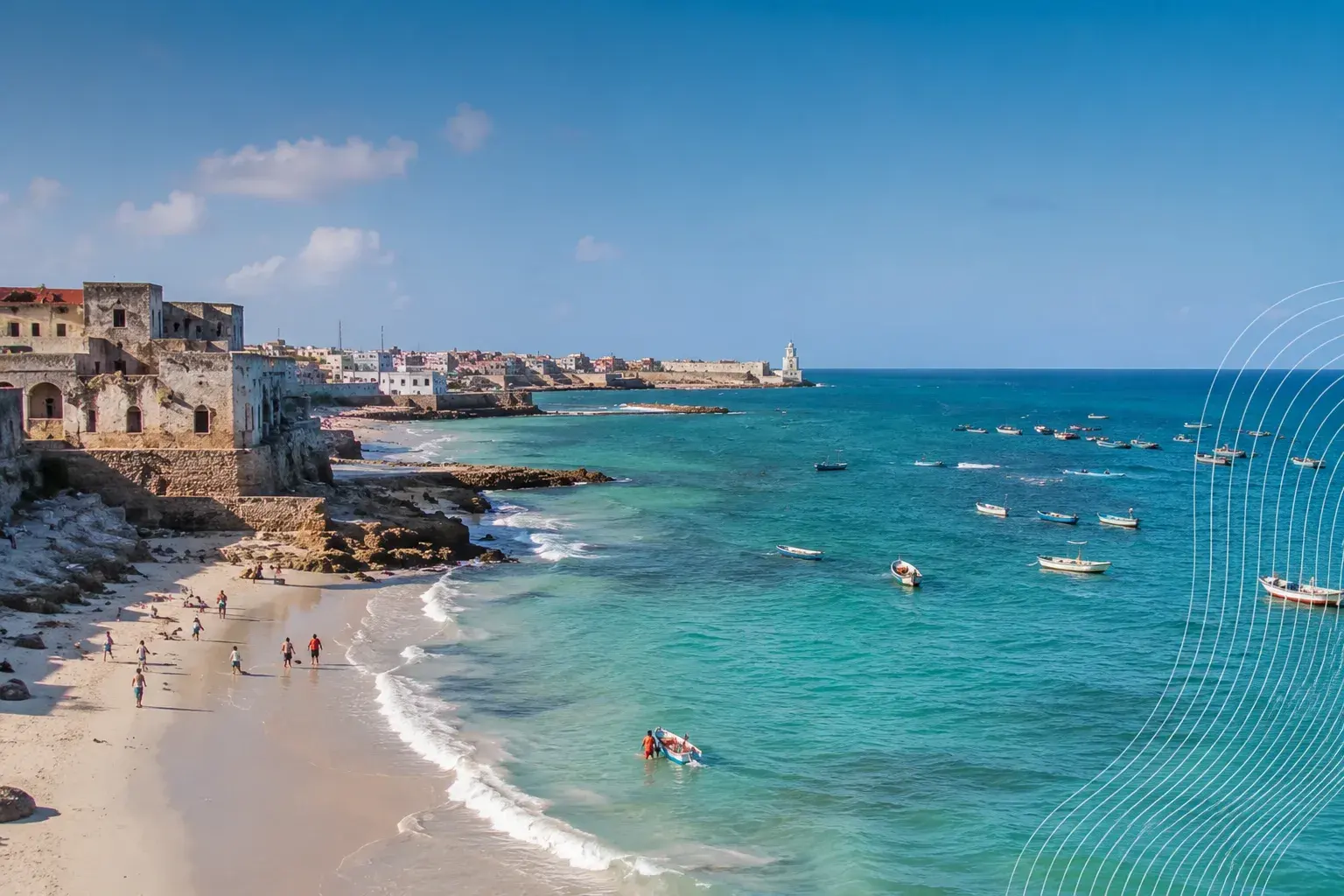
The country has the longest mainland coastline in Africa, stretching approximately 3,300 kilometers along the Indian Ocean and the Gulf of Aden.
Along this coastline are beaches, coral reefs, fishing communities, historic ports and marine ecosystems that remain largely unexplored by international tourism.
These natural assets cannot build a tourism industry on their own, but they provide a strong foundation if supported by careful planning and investment.
What Is the Blue Economy?
The phrase "blue economy" appears frequently in government announcements, but it is often left unexplained.
Blue economy is the sustainable use of oceans, seas and coastal resources to create jobs, support businesses and grow the economy while protecting the environment.
It brings together industries such as:
- Coastal tourism
- Fisheries
- Aquaculture
- Shipping
- Marine transport
- Port development
- Ocean conservation
- Marine research
The idea is straightforward. Healthy oceans support healthy economies. If coastlines are protected, they continue to attract visitors, support fishing communities and provide opportunities for future generations.
Why This Matters Beyond Somalia
It reflects a broader trend taking place across East Africa. Countries across the region are investing in tourism in different ways.
- Kenya continues to strengthen its safari and coastal tourism sectors.
- Tanzania combines wildlife tourism with beach destinations such as Zanzibar.
- Rwanda has positioned itself as a leader in luxury conservation tourism, meetings and conferences.
- Uganda continues to develop adventure tourism and wildlife experiences.
- Ethiopia is investing in cultural and heritage tourism.
Now Somalia is beginning to explore how tourism could contribute to its long-term economic development.
Each country offers something different. Together, they make East Africa one of the continent's most diverse tourism regions.
Could Somalia Become East Africa's Next Tourism Success Story?
In this section
Eco-tourism is responsible travel to natural areas that protects the environment while supporting local communities.
We'd say, yes! It has a propensity to. Somalia could focus on experiences that travelers increasingly value today.
These include:
Largely Undeveloped Beaches
Largely undeveloped beaches are beaches that have seen little commercial development. They often have few hotels, restaurants or tourism facilities, allowing visitors to experience the coastline in a more natural setting.
Examples:
- Parts of Somalia's Indian Ocean coastline
- Skeleton Coast in Namibia
- Some beaches along Mozambique's northern coast
Untouched Coastline
An untouched coastline refers to coastal areas that have experienced very little human development or environmental change. These areas often retain their natural landscapes, wildlife and ecosystems.
Examples:
- Sections of Madagascar's remote coastline
- Parts of Mozambique's Quirimbas Archipelago
- Protected coastal areas in Seychelles
Natural Beaches
Natural beaches are beaches that have retained their original features, including sand dunes, vegetation and marine ecosystems, without extensive construction or artificial modifications.
Examples:
- Watamu Beach, Kenya (protected sections)
- Cape Vidal Beach, South Africa
- Beaches within marine parks in Tanzania
Well-Preserved Coastal Landscapes
These are coastal areas that have been protected from significant environmental damage or overdevelopment. They continue to maintain their natural beauty and ecological importance.
Examples:
- iSimangaliso Wetland Park, South Africa
- Mafia Island Marine Park, Tanzania
- Bazaruto Archipelago, Mozambique
Less Developed Coastal Areas
These are coastal regions where tourism and infrastructure are still limited. Visitors may find fewer hotels, roads and commercial attractions, but more opportunities to experience local communities and natural environments.
Examples:
- Large parts of Somalia's coastline
- Coastal villages in Guinea-Bissau
- Northern Mozambique
Pristine Beaches
Pristine beaches are exceptionally clean, well-maintained and environmentally healthy beaches with little visible pollution or human disturbance.
Examples:
- Anse Source d'Argent, Seychelles
- Le Morne Beach, Mauritius
- Some beaches within protected marine reserves in Zanzibar
Tourism Experiences
Marine Adventures
Marine adventures include activities that allow visitors to explore and enjoy the ocean.
Examples:
- Sailing around Zanzibar
- Kayaking through mangroves in Kenya
- Dolphin watching in Mozambique
- Deep-sea fishing in South Africa
Diving
Diving allows visitors to explore underwater environments using specialized equipment.
Examples:
- Mnemba Atoll, Zanzibar
- Sodwana Bay, South Africa
- Ras Mohammed National Park, Egypt
- Mafia Island, Tanzania
Visitors can see coral reefs, sea turtles, whale sharks and colorful fish.
Snorkeling
Snorkeling is a water activity where people use a mask and breathing tube to observe marine life while swimming near the surface.
Examples:
- Watamu Marine National Park, Kenya
- Chumbe Island, Zanzibar
- Seychelles Marine National Parks
Cultural Heritage
Cultural heritage refers to the traditions, history, architecture, languages, customs and historical sites that reflect the identity of a community or country.
Examples:
- Stone Town, Zanzibar
- Lamu Old Town, Kenya
- The Rock-Hewn Churches of Lalibela, Ethiopia
- The Pyramids of Egypt
Visitors experience local food, music, festivals, architecture and traditional crafts.
Eco-tourism
Eco-tourism is responsible travel to natural areas that protects the environment while supporting local communities.
Examples:
- Gorilla trekking in Rwanda
- Community conservancies in northern Kenya
- Chumbe Island Coral Park, Tanzania
- Okavango Delta, Botswana
Coastal Tourism
Coastal tourism includes travel experiences that take place along the coast.
Examples:
- Beach holidays in Zanzibar
- Surfing in Cape Town
- Boat cruises in Mombasa
- Seafood tours in Mozambique
- Visiting fishing villages along the Swahili Coast
Blue Economy
The blue economy is the sustainable use of oceans, seas and coastal resources to support economic growth while protecting marine ecosystems.
It includes industries such as:
- Tourism
- Fisheries
- Shipping
- Ports
- Marine transport
- Offshore renewable energy
- Marine conservation
Example:
Tanzania's blue economy includes tourism in Zanzibar, commercial fishing, port operations in Dar es Salaam and marine conservation projects that protect coral reefs while supporting tourism.
Marine Conservation
Marine conservation involves protecting oceans, coral reefs, marine wildlife and coastal ecosystems.
Examples:
- Protecting sea turtles in Watamu, Kenya
- Coral reef restoration in Zanzibar
- Whale shark conservation in Mafia Island, Tanzania
- Marine protected areas in Seychelles
Maritime Heritage Tourism
Maritime heritage tourism focuses on the history and culture connected to the sea.
Examples:
- Stone Town, Zanzibar, which was an important Indian Ocean trading port
- Lamu Old Town, Kenya, one of the oldest Swahili settlements
- Fort Jesus in Mombasa, Kenya
- Historic ports along Somalia's coast such as Zeila and Mogadishu, which were once major centres for trade across the Indian Ocean
Visitors learn about ancient trade routes, seafaring traditions, coastal architecture and the cultural exchange that connected Africa, Arabia and Asia for centuries.
If developed responsibly, these experiences could help Somalia build a distinctive tourism identity instead of trying to imitate another destination.
The Road Ahead Will Not Be Easy
The cooperation with Tanzania does not solve Somalia's challenges overnight, because developing a successful tourism sector will require years of sustained effort.
Among the priorities are:
- Improving transport infrastructure.
- Expanding quality accommodation.
- Strengthening security and traveler confidence.
- Protecting marine ecosystems.
- Training tourism professionals.
- Encouraging responsible private investment.
- Supporting local communities so they benefit from tourism growth.
Questions Worth Asking
As this cooperation develops, several questions will shape its success. Questions like:
- Will Somalia continue investing in coastal tourism?
- Can environmental protection remain a priority as development increases?
- Will international hotel groups and tourism investors begin to explore opportunities?
- Can local communities become active participants rather than spectators?
- Could Somalia eventually become one of East Africa's most exciting emerging coastal destinations?
In some years time, we'd know!
Why This Matters for Africa
One of the most encouraging aspects of this story is not the agreement itself. It is the fact that one African country is looking to another African country for expertise.
Too often, discussions about tourism development focus on examples from Europe, North America or Asia. Yet Africa already has successful tourism models that can be adapted across the continent.
Knowledge sharing between neighboring countries can strengthen institutions, improve policies and accelerate development without every country having to start from the beginning.
This is OUR biggest TAKE AWAY from this MOU.
Conclusion
In this section
Subscribe for thoughtful travel insights, tourism analysis and stories that help you see the bigger picture.
Somalia's growing cooperation with Tanzania does not guarantee that the country will become a major tourism destination. It does, however, signals a willingness to learn, collaborate and think differently about its future.
Whether this becomes a turning point will depend on what happens after the meetings, the announcements and the headlines.
If the momentum continues, Somalia's coastline could become one of Africa's most closely watched tourism stories in the years ahead.
Key Takeaways
- Somalia and Tanzania are strengthening cooperation through knowledge exchange and a planned MoU covering tourism, natural resources and the blue economy.
- Somalia has the longest mainland coastline in Africa, giving it significant but largely untapped tourism potential.
- Tanzania's experience offers practical lessons in coastal tourism, marine conservation and sustainable development.
- The cooperation is about sharing knowledge, not Tanzania building Somalia's tourism industry.
- Success will depend on long-term investment, infrastructure, environmental protection and effective governance.
References
- Somalia Ministry of Foreign Affairs. Joint Communiqué on Cooperation Between Somalia and Tanzania.
- Tanzania Fisheries Corporation (TAFICO). TAFICO Hosts Somali Blue Economy Experts for Knowledge Exchange.
- United Nations Economic Commission for Africa. Africa's Blue Economy: A Policy Handbook.
- Travel And Tour World. Somalia Explores Tanzania's Successful Marine Tourism Model Through Blue Economy Knowledge Exchange.
Tourism stories are not only about where people travel. They are also about the ideas, partnerships and decisions that shape destinations long before visitors arrive.
At Ria's Colony, we look beyond the headlines to explain what is happening, why it matters and what it could mean for Africa's future.
Subscribe for thoughtful travel insights, tourism analysis and stories that help you see the bigger picture.