
The Sand That Squeaks: The Story of Nkwichi Lodge
On the remote shores of Lake Niassa in Mozambique, Nkwichi Lodge began with an ambitious idea: to build a conservation project in partnership with local communities. From its humble beginnings on a beach known as “the sand that squeaks” to its role in supporting local livelihoods, protecting indigenous forests and promoting community ownership, Nkwichi tells a story of tourism with a purpose.
In 1994, two brothers sat in a pub in London talking about what they wanted to do with their lives.
Paul and Patrick Simkin did not yet know where the conversation would take them. But after a few drinks, they had arrived at an idea: they would try to create a conservation area somewhere in Africa.
There was one condition.
Whatever they built would have to involve the people who already lived there. The local communities would not simply be neighbours to a conservation project. They would be partners in it, sharing in its benefits and, eventually, having a stake in its future.
It was an ambitious idea. At the time, they had little more than enthusiasm.
Over the next three years, the brothers went in different directions to make the idea possible. Paul concentrated on finding investors and funding. Patrick gained experience in conservation management in Swaziland and travelled through Africa looking for a place where their vision might work.
Then came a suggestion that would change everything.
One of their first investors, Lola Castro, had been working with the UN World Food Programme and had spent considerable time flying over northern Mozambique, helping communities returning after the country's civil war ended in 1992.
She told them they should look there.
So, in 1996, Patrick travelled to northern Mozambique and spent two weeks following the shores of Lake Niassa — the Mozambican side of what is also known as Lake Malawi.
He eventually reached an area called Ponta de Mala.
Something about it stayed with him.
A year later, Patrick returned, this time with his father, Peter, and his university friend Jim Hitch. Before they explored the land, they met with the local community. Permission was sought. The ancestors were consulted. Sugar and cigarettes were offered.
Only then did the small expeditionary party begin to explore.
What they found was almost untouched.
The forest was largely intact. The lake was pristine. Wildlife was still present, although its numbers had been depleted. Across roughly 250,000 hectares lived only about 20,000 people.
The place was poor in financial terms, but extraordinarily rich in nature.
The dream suddenly seemed possible.
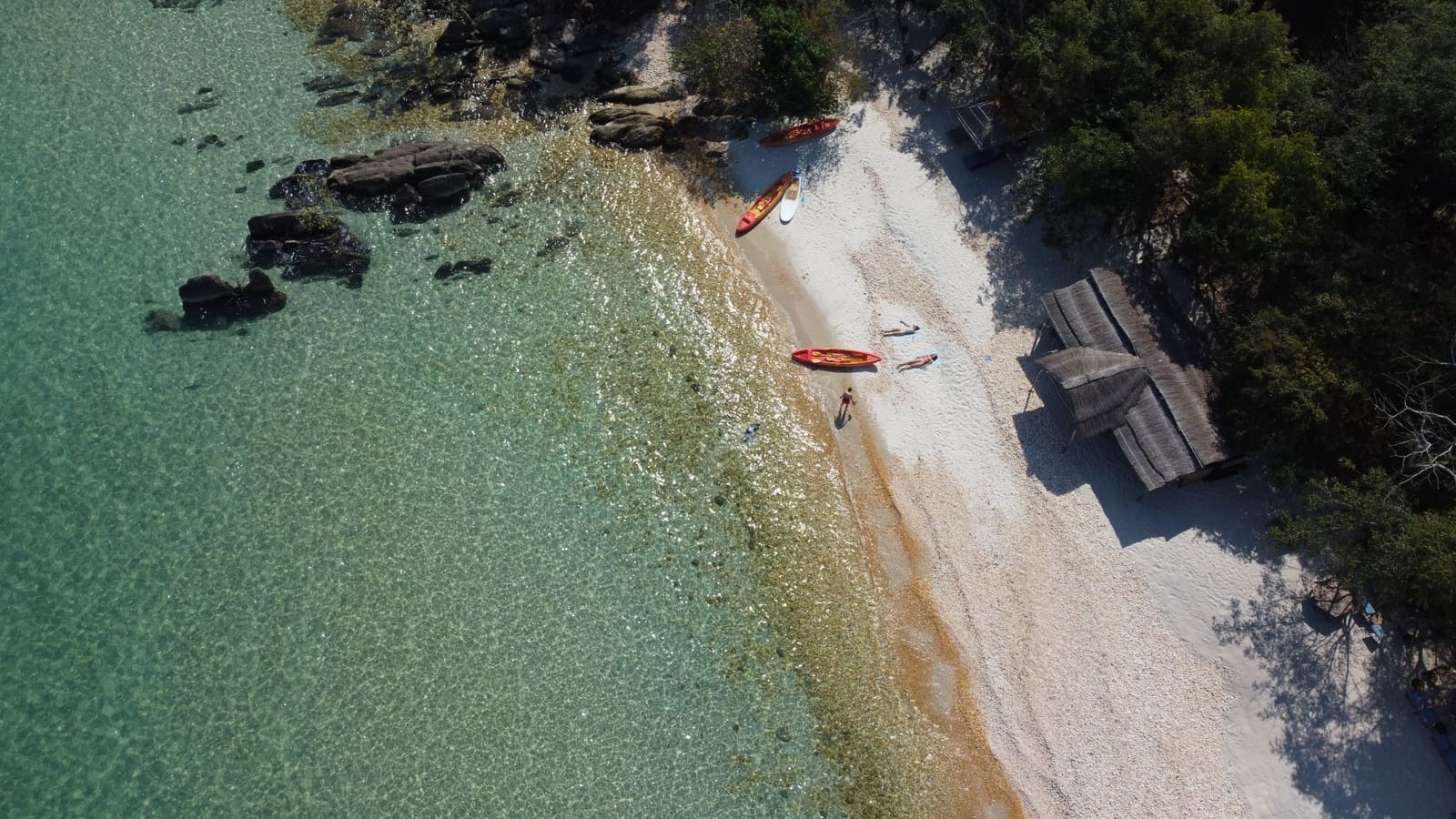
Patrick and Jim returned soon afterwards. But instead of setting up at Ponta de Mala, they chose a long white beach a few kilometres away.
The beach had a name.
Mchenga Nkwichi.
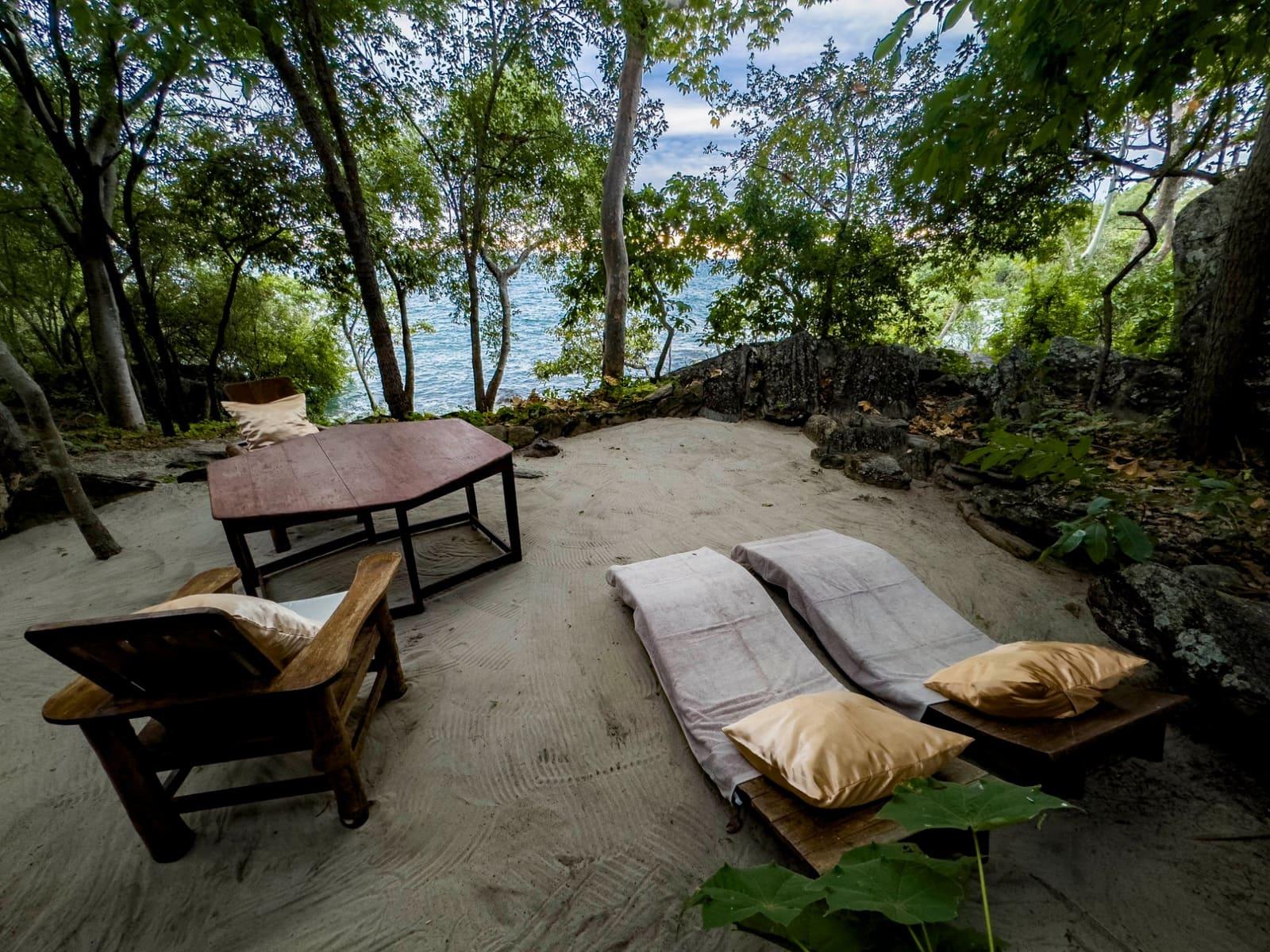
In ChiNyanja, it means “sand that squeaks” — a reference to the distinctive sound the fine sand makes when you drag your feet across it.
That name would eventually become the name of a lodge.
But there was no lodge yet.
There was barely anything.
Patrick and Jim arrived by hired dhow carrying a wooden box filled with food supplies that would have to last for weeks. The local community had been contracted to build a simple mud hut before their arrival.
It was fully finished. So they put up tents beneath the trees on the beach and started anyway.
For months, they walked.
They travelled from village to village, visiting all 16 communities in the area and talking to people about an idea that was unusual for the time: creating a community-owned conservation area.
For months, they walked.
They travelled from village to village, visiting all 16 communities in the area and talking to people about an idea that was unusual for the time: creating a community-owned conservation area.
The conversations were the beginning of a partnership. Slowly, the communities came together around the idea, and the Manda Wilderness Conservation Area began to take shape.
Eventually, the communities secured land titles to their own land, a landmark achievement and, at the time, the first of its kind in Mozambique.
But while the conservation project was taking shape, another challenge remained.
How do you build a lodge in a place where almost nothing exists?
There were no established roads to rely on. No electricity. No developed supply chain. No skilled construction workforce waiting to be hired.
The communities had survived decades of war largely through fishing, cassava farming and the resources around them. Many people had little formal education and few had formal building skills.
But they knew their environment.
They knew which materials were available. They knew how to work with them.
So Nkwichi was built around that knowledge.
Local people were employed wherever possible. Volunteers came to share skills. Patrick brought what he had learned. And everyone learned along the way.
Building was slow.
Mistakes were made. Things had to be corrected.
Women carried sand and water in buckets on their heads. Men carried locally harvested tree trunks on theirs.
And getting materials there was a journey in itself.
The road from Lichinga, the provincial capital, to Cobue was only usable for around six months of the year. During the rains, it became a mud bath, with three destroyed bridges making the journey impossible.
So supplies initially came by ferry from Malawi.
It took four days.
A single bag of cement might be picked up and put down six times before it finally reached the place where it would be used.
Nkwichi grew out of this kind of improvisation.
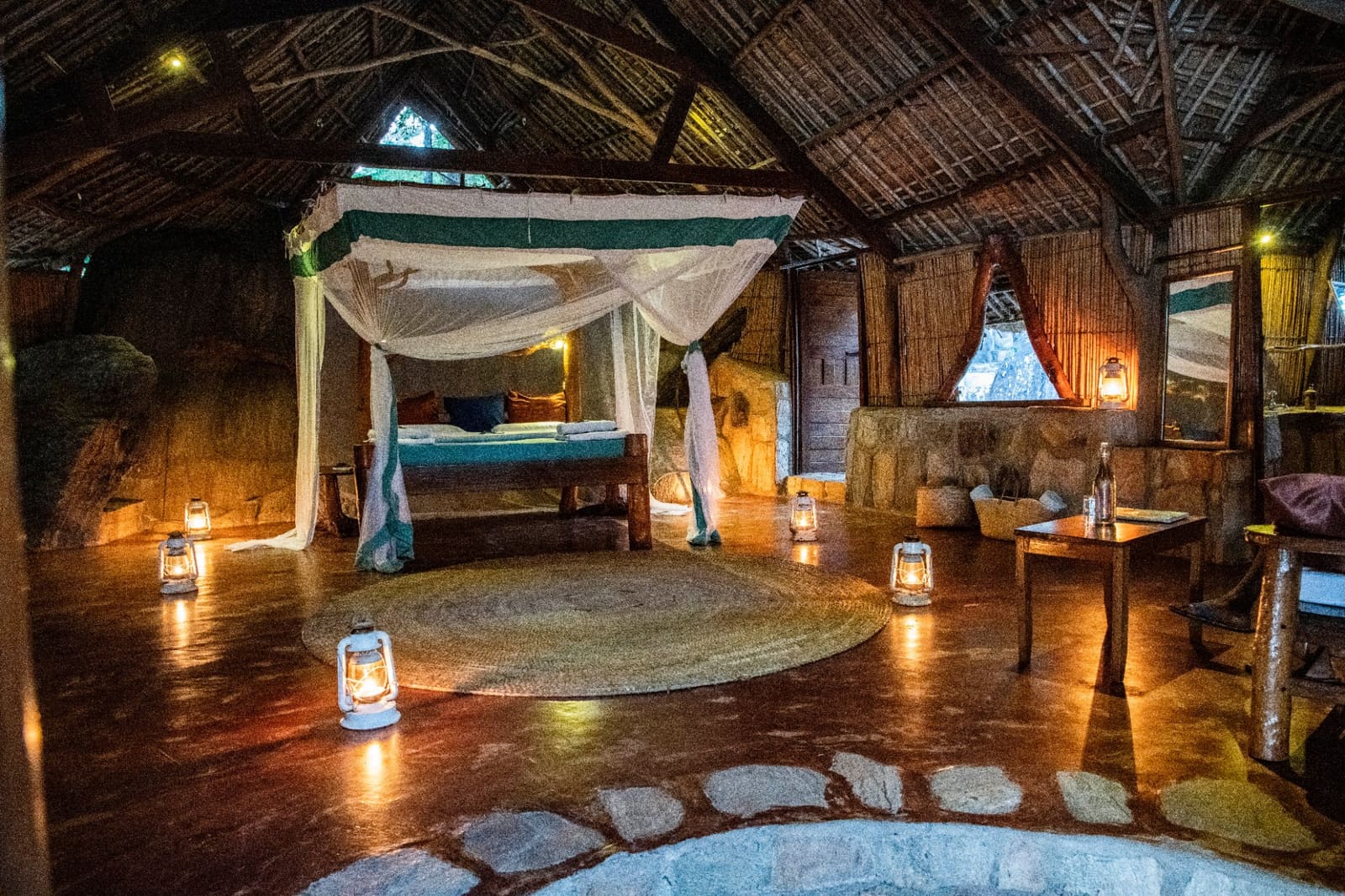
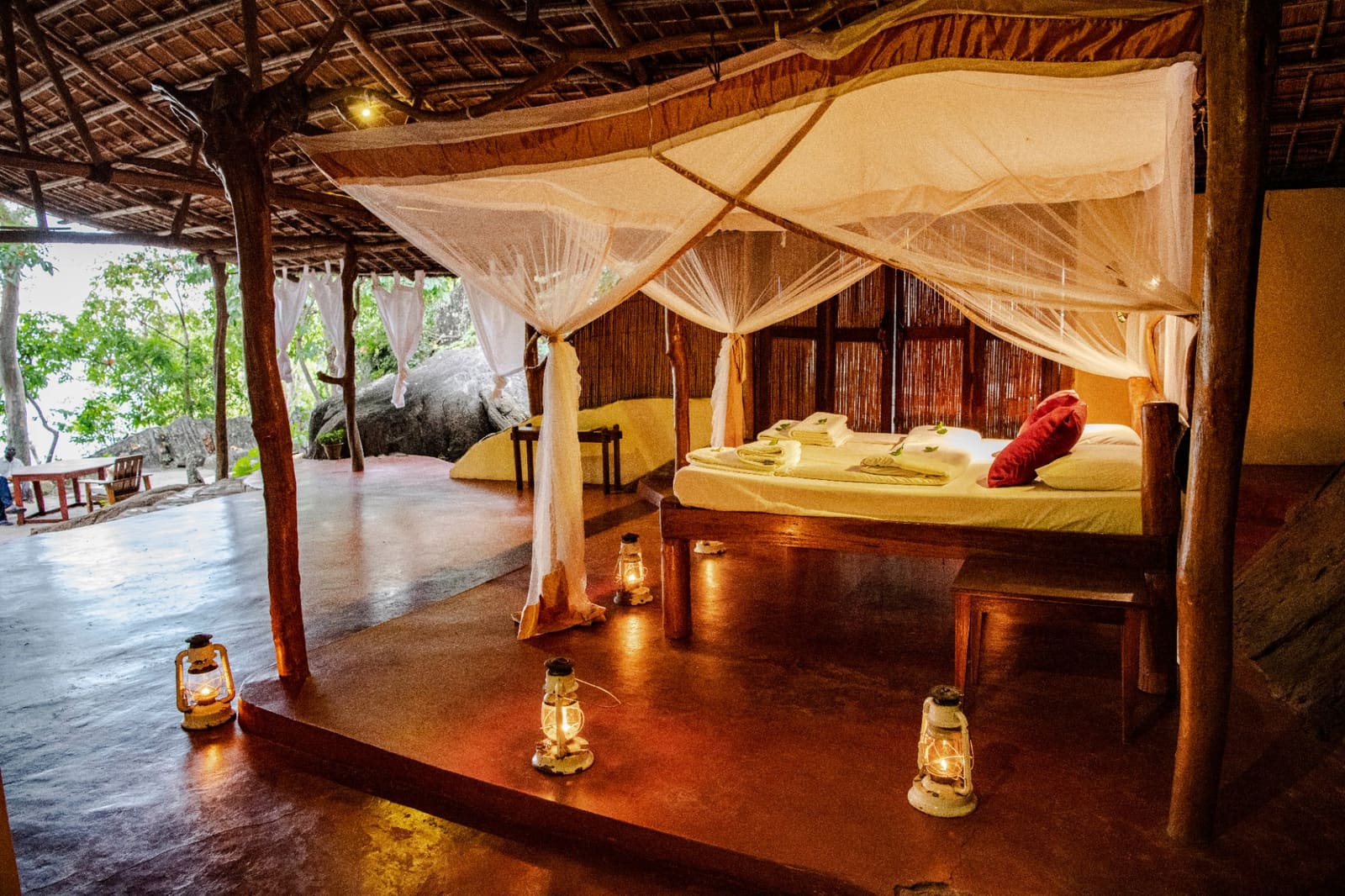
Its buildings were designed around the landscape rather than imposed upon it. Existing rocks were incorporated into structures. Large trees were avoided. Walls were made from reeds, roofs were supported by wooden poles and thatch was used wherever possible.
When they discovered that there were no local thatchers who could produce roofs that were reliably waterproof, they invented their own solution: a thin layer of grass, black plastic for waterproofing, and another layer of thatch over the top.
It looked traditional.
It was also practical.
The lodge itself became a reflection of the place around it.
And slowly, the people building it were gaining skills that would follow them long after construction ended.
Carpenters. Builders. Chefs. Guides. Hosts.
People who had never had formal training were acquiring skills that would later make them employable elsewhere.
But running Nkwichi was another story altogether.
There was no road to the lodge.
The final approach was and remains, by foot or boat. Cobue, the nearest road access, was around 10 kilometres away. From there, reaching the nearest bank and reliable electricity could take hours. Crossing the lake to Malawi could take an entire day.
Water came from the lake.
Power came from the sun, and from human effort.
Communication began with planning everything weeks in advance. People simply had to agree on where and when they would meet.
Then came what felt like a technological miracle: a VHF radio system that could send and receive email.
It could take hours to download a single message.
Nobody seemed to mind.
Eventually came satellite communications, and now Starlink.
But even today, making a mobile phone call requires a roughly 45-minute walk up a hill to find a signal.
This is the kind of place Nkwichi has always been.
Remote not as a marketing description, but as a fact of daily life. A true representation of locals who live within that legion and that is what tourism is all about. Nkwichi was never meant to be an isolated luxury lodge sitting beside a beautiful lake.
From the beginning, the ambition was beyond being rich. The goal has always been to ensure the communities around it benefit from it.
Before COVID, more than 60 people worked at Nkwichi, all from surrounding villages. When the pandemic forced the operation to shrink, the lodge was reduced to a skeleton crew of just six.
For the people who lost their jobs, the consequences were immediate and visible in the villages.
But the lodge survived.
The relationship between Nkwichi and the surrounding communities had never been limited to employment.
The project helped establish the Manda Wilderness Conservation Area. It supported the communities in securing their land rights. It helped bring greater government attention and investment to this remote part of Mozambique.
Over the years,
-
16 schools were built.
-
A maternity clinic.
-
A maize mill.
-
Farmers were trained in alternative agricultural practices. Village football teams competed in an annual league organised through the community trust.
-
The lodge also created a market.
-
Farmers now have somewhere to sell vegetables and fruit. Fishermen have a customer for their catch. Local craftspeople, builders, carpenters and thatchers have opportunities to earn.
-
And people trained at Nkwichi discovered that the skills they acquired could take them elsewhere.
-
Some found work in other hotels and companies.
-
Others opened small guesthouses, backpacker lodges and bars of their own.
The results have not always been perfect. Some businesses succeeded. Others did not.
Nkwichi is very beautiful and a picture of what tourism should be about. Tourism should not stop at the lodge.
The people living around it should have a reason to want it there. They should benefit from it. And they should have a role in protecting the place that makes the lodge possible in the first place.
Today, the communities manage the Manda Wilderness Conservation Area through their own structures. Nkwichi is no longer responsible for running it, although its leadership is still consulted and the lodge remains willing to advise and assist.
Around the lodge itself, Nkwichi protects approximately 650 hectares of indigenous forest and 200 metres of lakeshore, restricting fishing in that area to help preserve fish stocks for the future.
It is an arrangement built on a certain kind of interdependence.
Nkwichi needs its neighbours.
Its neighbours need Nkwichi.
And both depend on the forest, the lake and the land surviving.
That relationship has become even more important as the challenges have grown.
COVID changed the business.
Mozambique's northern insurgency has affected travel confidence. Malawi's economy has struggled. And simply getting to Nkwichi remains an undertaking.
For a place this remote, visitors are not a luxury.
They are part of what makes the entire model financially possible.
More guests mean a stronger lodge. A stronger lodge means more capacity to employ people, buy locally, protect the surrounding forest and contribute to the community.
It is a delicate balance.
The more successful Nkwichi becomes, the more it can give back. But the very remoteness and environmental sensitivity that make the place special also make operating there difficult.
Nearly three decades after two brothers made a plan in a London pub, the question is no longer whether their idea could work.
Something has already been built.
A lodge on a remote beach.
A conservation area.
Communities with land rights.
People with skills they did not have before.
Schools, a clinic and a maize mill.
Farmers and fishermen with a local market.
And a forest and coastline that people are still working to protect. .
There is still much to do.
The Manda Wilderness is ultimately meant to remain in the hands of the communities who live there. Nkwichi's role, looking ahead, is less about controlling that future than helping the communities navigate it — as an adviser, fundraiser and guide to the possibilities available to them.
Perhaps that is the most interesting part of the Nkwichi story.
It began with two brothers looking for somewhere in Africa to build a conservation project.
They found a beach where the sand squeaked.
And in trying to build something there, they ended up becoming part of a much larger story; one about land, conservation, tourism, opportunity and the complicated work of making sure that when visitors come to experience a beautiful place, the people who call it home are not left behind.
“We depend on our neighbours and they on us”
In pictures
Reviews
No reviews yet. Been here? Be the first to say how it was.
Apply
Want your story told here?
Fill in the application form. Our editors read every one, and if your story is a fit, we'll get back to you.