
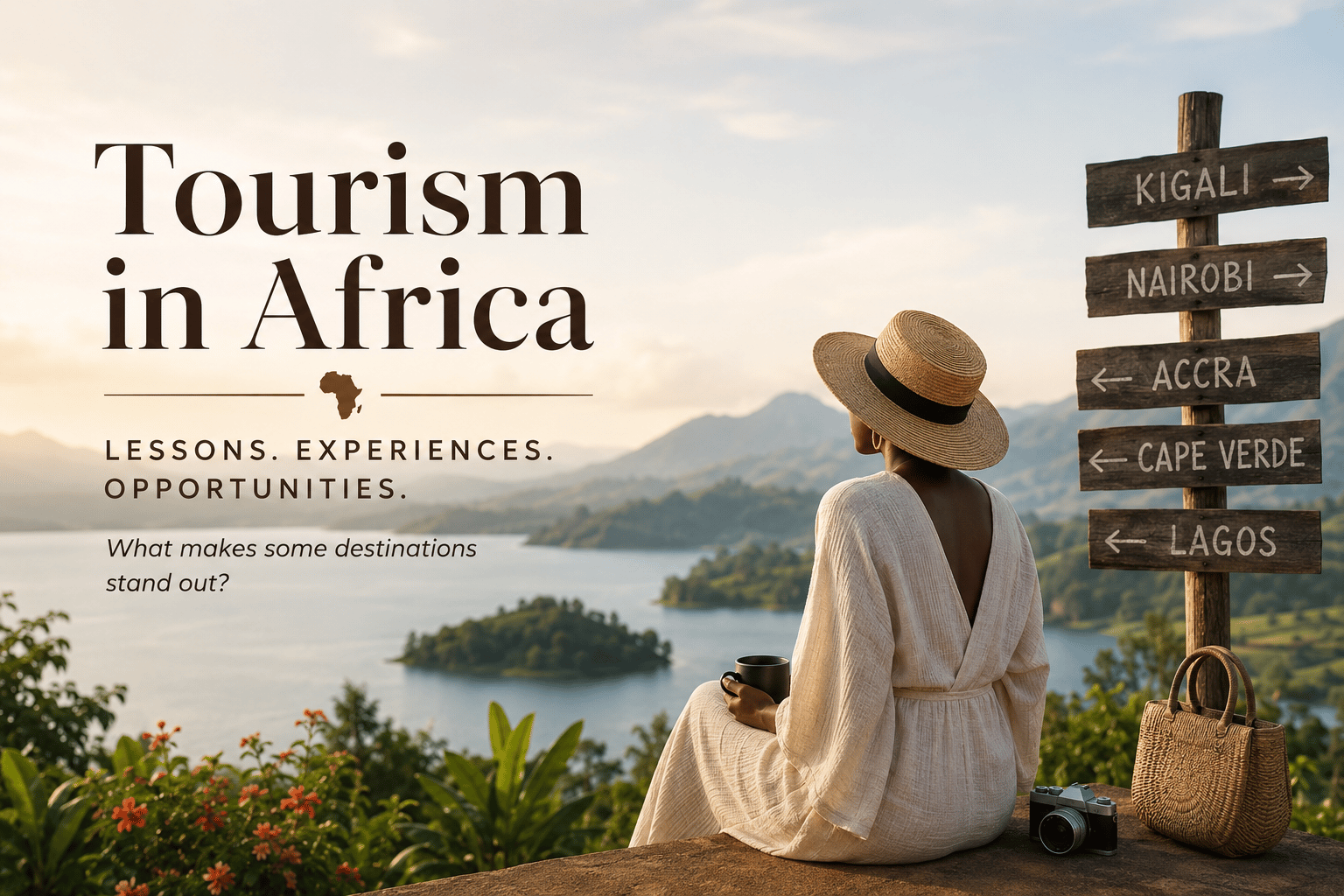
When conversations about holidays in Africa come up, a familiar group of countries usually dominates the list. Rwanda, Kenya, Mauritius and Seychelles are often the first names people mention, whether the conversation is happening in Lagos, London or Los Angeles.
It is less common to hear someone say they are planning a holiday in Nigeria, Benin, Sierra Leone or even Ghana, despite the incredible history, culture and natural beauty these countries offer.
That raises an interesting question.
What have some East African countries understood about tourism that many others across the continent are still working towards?
The more we have studied tourism across Africa, the clearer one thing has become. Success is rarely determined by beautiful landscapes or luxury hotels alone. Every region of the continent has remarkable places to discover. The difference often lies in the experience visitors have before they arrive, while they are there and long after they return home.
Tourism is not built around a single attraction. It grows through hundreds of thoughtful decisions that make travelling feel simple, welcoming and memorable. Those decisions influence whether visitors recommend a destination to friends, return for another trip or choose somewhere else entirely the next time they travel.
Tourism starts long before the flight
Many people think tourism begins when a visitor lands at the airport. In reality, it starts much earlier.
It starts when someone searches for information online and finds clear answers about visas, transportation, accommodation and safety. It continues when booking a flight feels straightforward, immigration procedures are easy to understand, and visitors know what to expect before they arrive.
Every small point of uncertainty creates hesitation. Every obstacle increases the chances that someone will choose another destination instead.
Countries that understand this often focus as much on reducing friction as they do on promoting attractions.
Rwanda has made tourism part of its national strategy
Rwanda is one of the clearest examples of this approach.
Rather than treating tourism as a side industry, the country has made it part of its long-term economic development strategy. Tourism has become one of Rwanda's largest sources of foreign exchange, supporting hundreds of thousands of jobs while attracting investment into hotels, transport, hospitality and conference facilities.
One decision that attracted attention across the continent was Rwanda's visa-free policy for African travelers. Making travel easier sends a powerful message that visitors are welcome.
That policy alone does not explain Rwanda's success, but it reflects a broader way of thinking. The visitor experience matters from the very beginning.
The country has also invested heavily in conference tourism, conservation, infrastructure and destination branding, creating multiple reasons for people to visit throughout the year.
Kenya has continued to build on its strengths
Kenya offers another example of how consistency shapes a tourism industry.
Its wildlife, beaches and national parks have earned global recognition over many decades, but the country's success is not based on scenery alone.
Continuous investment in hospitality, aviation, conservation and international marketing has helped Kenya remain one of Africa's leading tourism destinations. Visitors know what the country offers, and many leave with experiences they want to recommend to others.
That kind of reputation is built over time.
Great tourism is made up of small moments
Some of the world's strongest tourism brands succeed because they pay attention to details that many people overlook.
Dubai is a good example.
When we first heard people constantly talking about Dubai, we assumed the excitement would eventually fade. Instead, the city became even more intentional about improving the visitor experience.
Many travelers receive a complimentary SIM card when they arrive at the airport, making it easier to connect with family, book transport or access maps immediately.
Hotels place a strong emphasis on service, often making guests feel genuinely valued regardless of how long they are staying.
People travelling for medical treatment frequently speak about efficient systems, short waiting times and responsive healthcare providers.
Clean streets, reliable transport, visible security and clear visitor information all contribute to an experience that feels organized and welcoming.
None of these things are extraordinary on their own.
Together, they create the kind of experience people tell their friends about when they return home.
That is how destination marketing really works. Advertising may convince someone to visit once, but a positive experience is what keeps recommendations flowing.
Africa has enormous potential
According to the World Travel & Tourism Council, tourism could contribute an additional US$168 billion to Africa's economy over the next decade if countries continue investing in infrastructure, connectivity, destination marketing and easier travel across the continent.
That figure represents much more than visitor spending.
It represents jobs for young people, opportunities for local businesses, stronger creative industries, increased foreign exchange and greater global visibility for African countries.
Tourism supports photographers, chefs, artisans, transport providers, tour guides, event organizers, musicians, fashion designers and countless small businesses that visitors may never even realize are connected to their journey.
It has the power to strengthen entire local economies.
Every region has something to learn
This is not about suggesting that one part of Africa has all the answers.
West Africa has vibrant music, rich history, remarkable food and cultural traditions that draw visitors from around the world. Ghana's Year of Return in 2019 is a good example of what can happen when a country builds a clear story around its identity. The campaign welcomed more than a million visitors over the year and encouraged people across the African diaspora to reconnect with the country through history, culture and heritage. It demonstrated how a shared vision, backed by consistent promotion and collaboration between government and private businesses, can reshape international perception.
Cape Verde has built a strong island tourism economy that attracts visitors looking for beaches and relaxation, while countries such as Senegal and The Gambia continue to welcome travelers interested in culture, music and coastal experiences.
The opportunity is not for African countries to compete against one another. It is to learn from one another.
If one country discovers a better way to simplify visa processes, improve airports, strengthen hospitality or tell its story to the world, those lessons can benefit the entire continent.
Africa is not short of destinations worth visiting.
The challenge is making those destinations easier to discover, easier to access and easier to recommend.
Why we keep talking about Rwanda
As we have spent more time researching tourism across Africa, Rwanda has continued to stand out. We have explored government reports, spoken with travelers and paid close attention to the choices that have helped position the country as one of Africa's most recognized destinations.
That research eventually became a practical guide because we wanted to bring together the information we wish more people had before planning a visit.
The guide goes beyond recommendations for places to stay or things to do. It provides practical information, local context and helpful insights that can make travelling around Rwanda feel easier and more rewarding.
Africa deserves to be experienced more deeply.
The more we travel across the continent, the more we discover that every country has a story worth telling. Some countries have simply become better at inviting the world to listen.
If you enjoy stories about travel, culture and the people shaping Africa's future, subscribe to the Ria's Colony newsletter. We share thoughtful travel insights; destination guides and conversations that encourage people to explore the continent with curiosity and confidence.